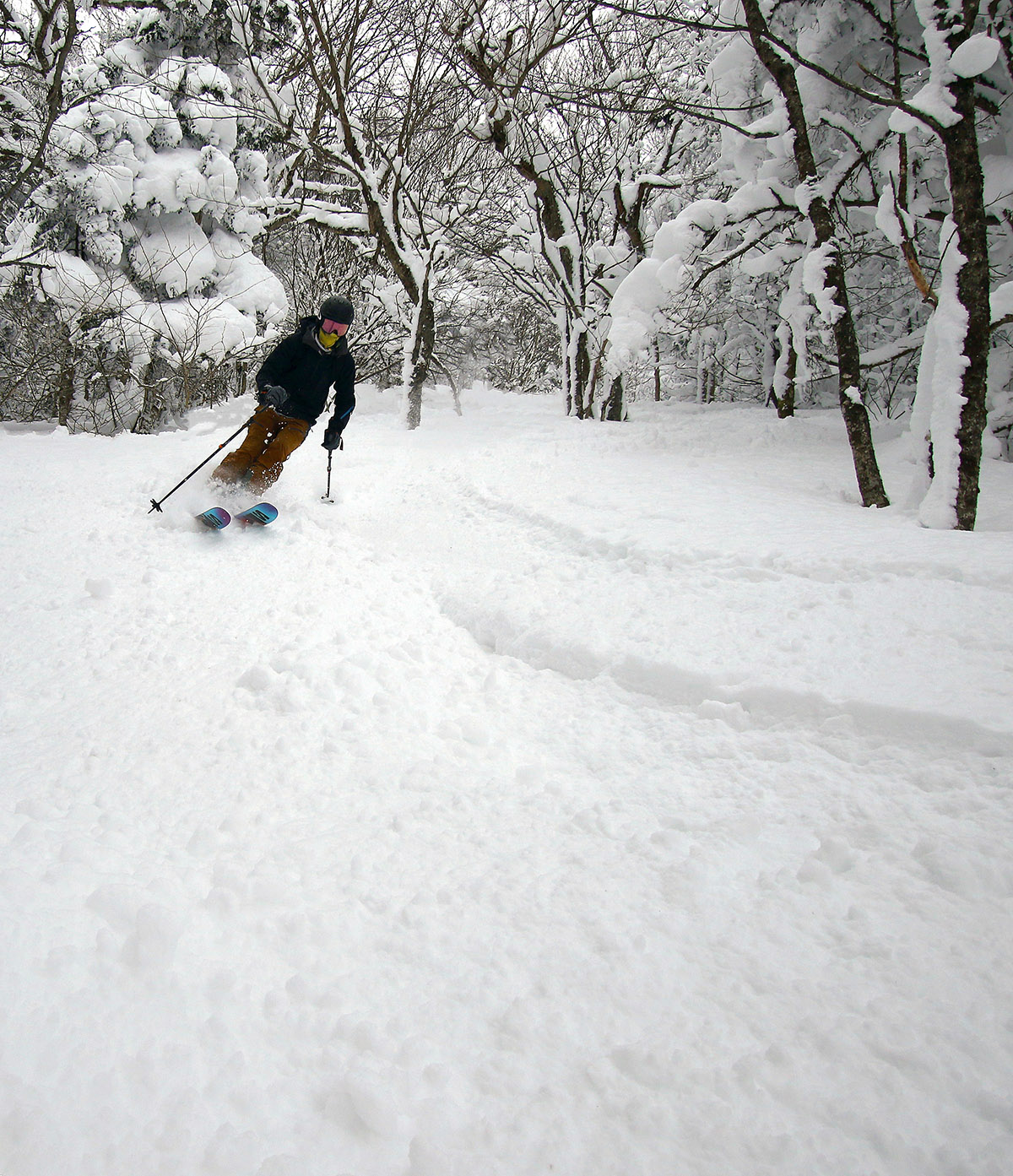
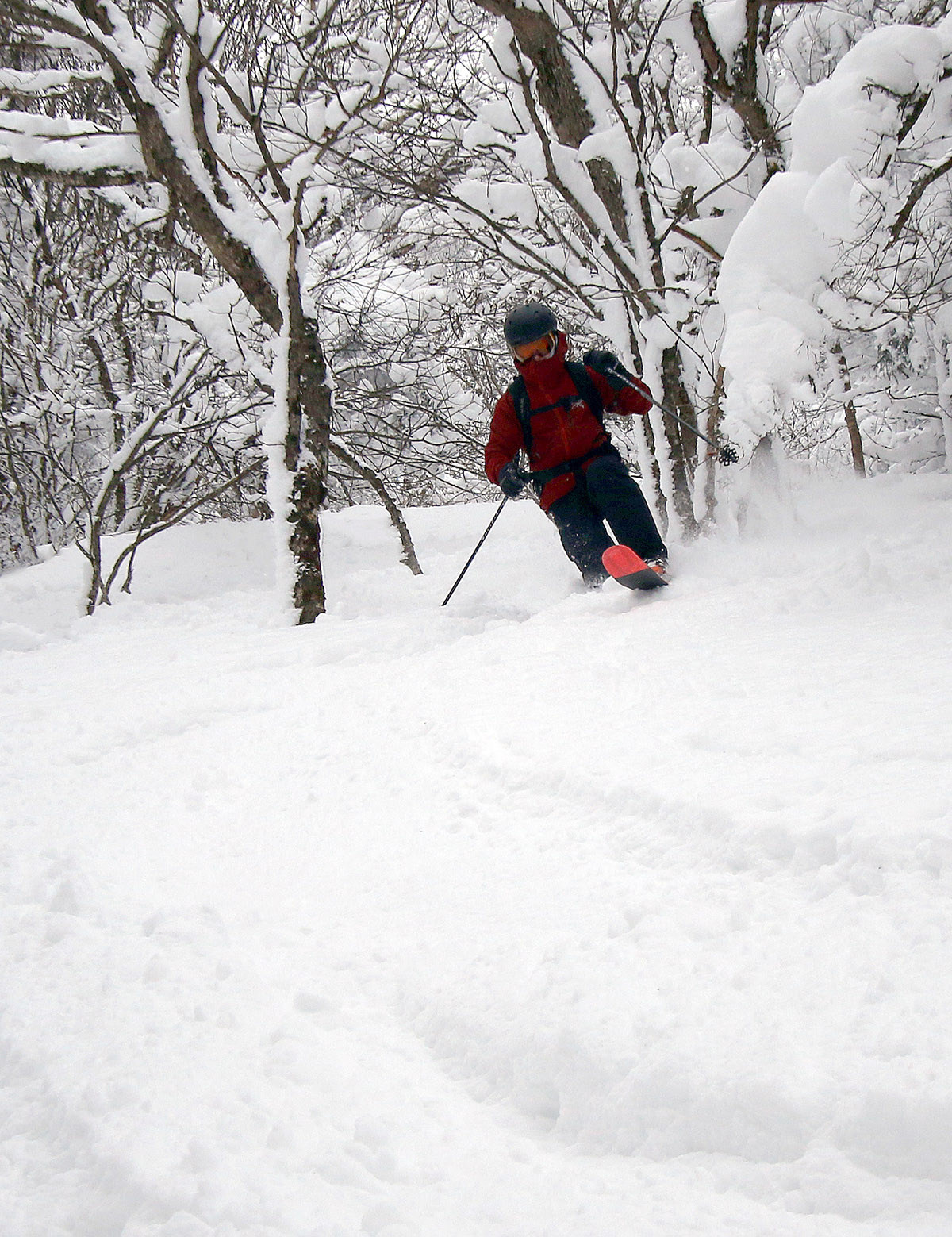
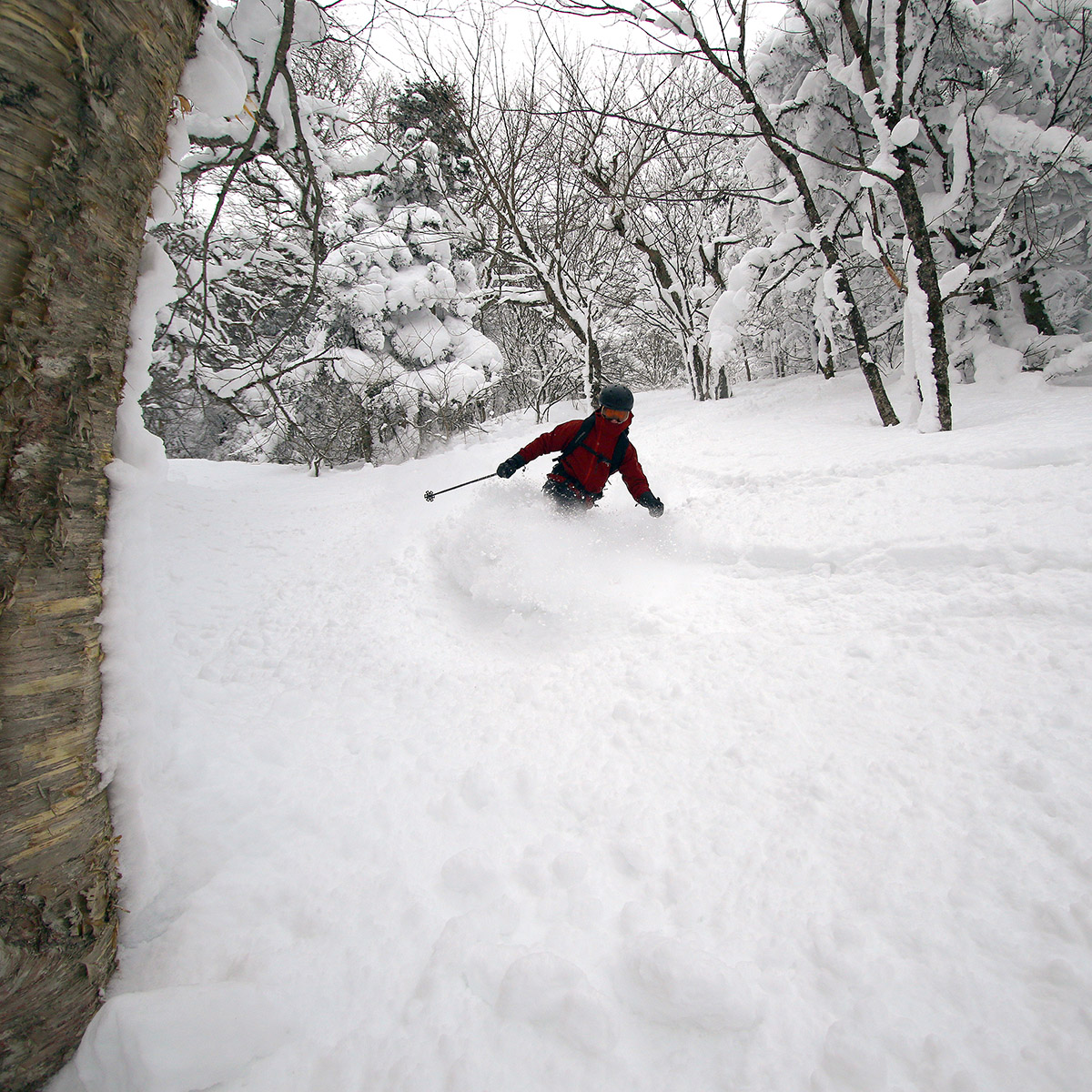
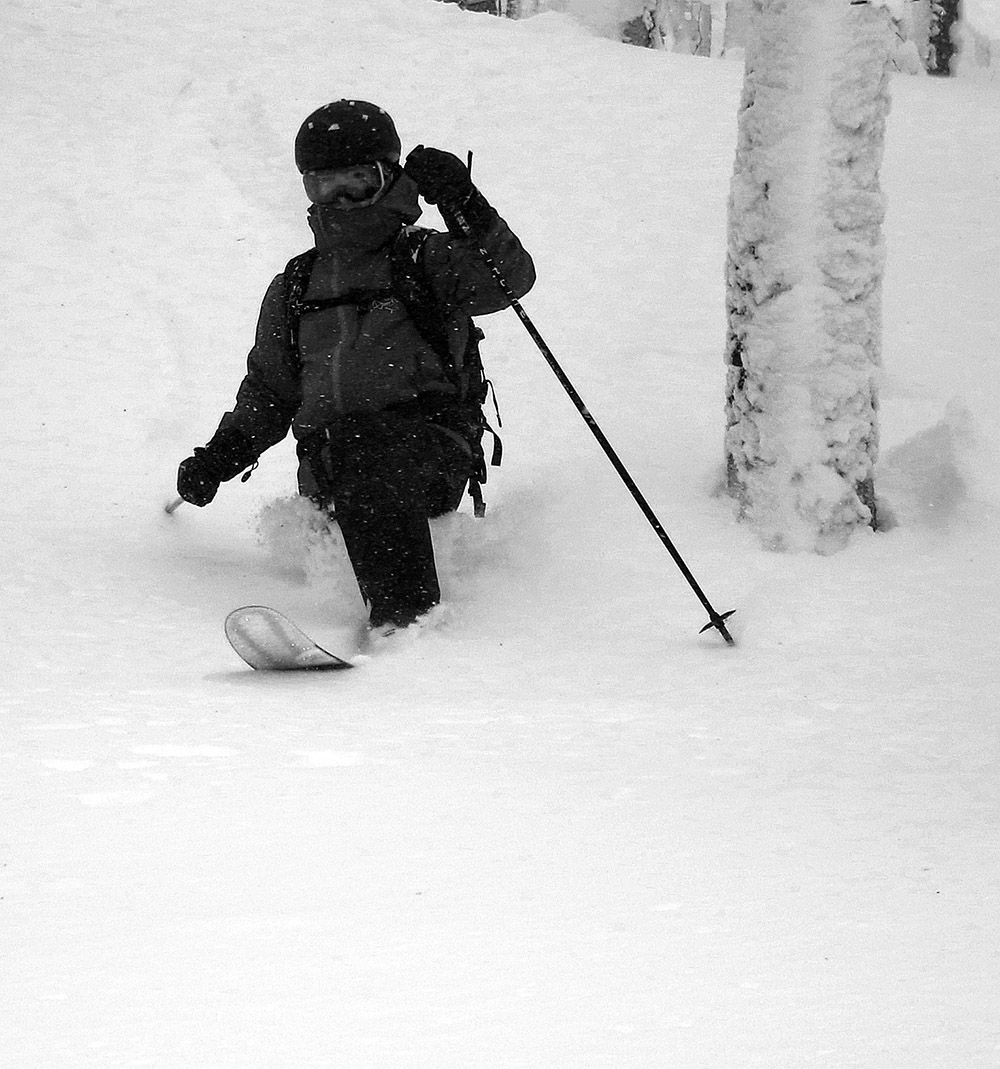
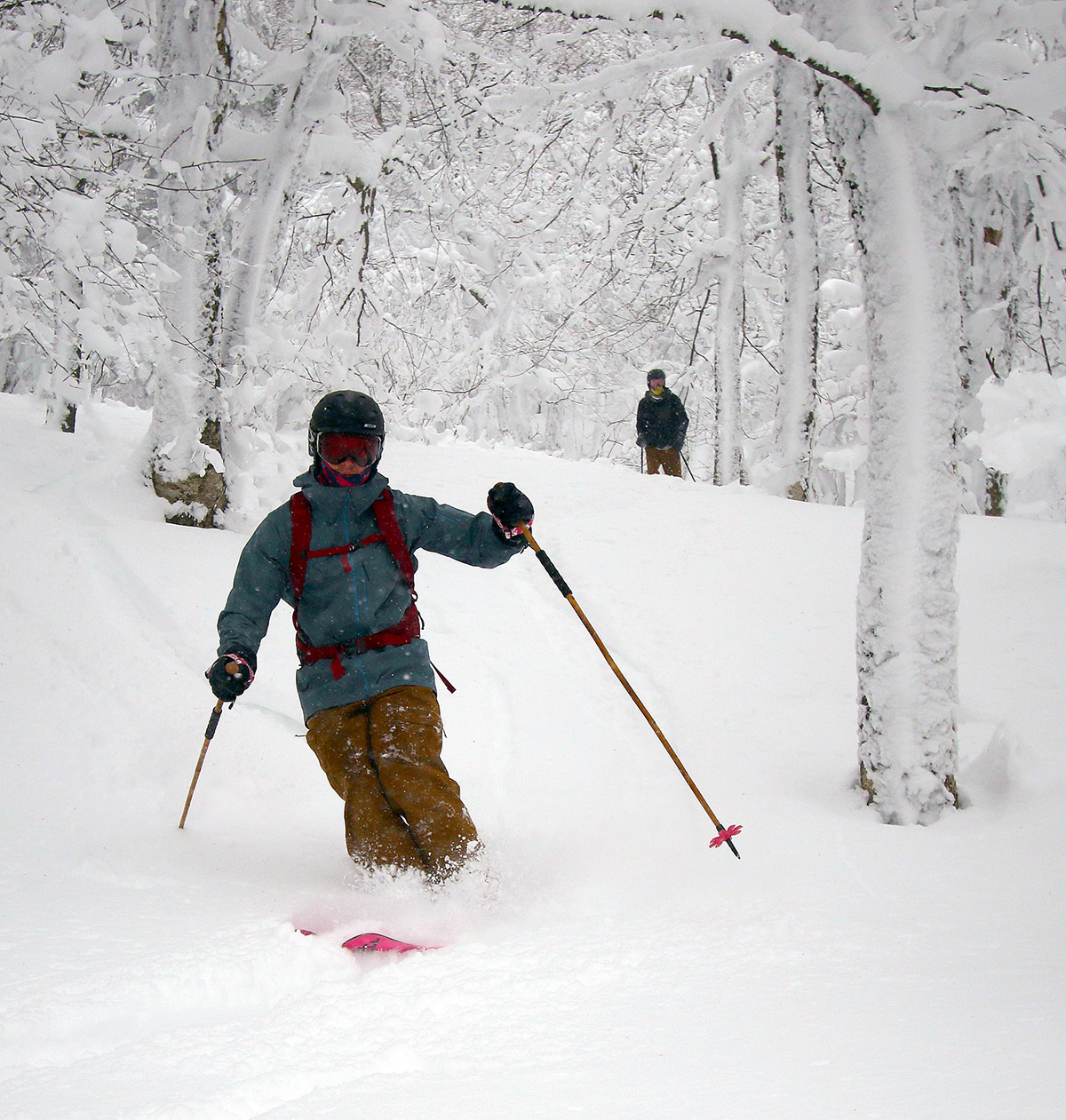
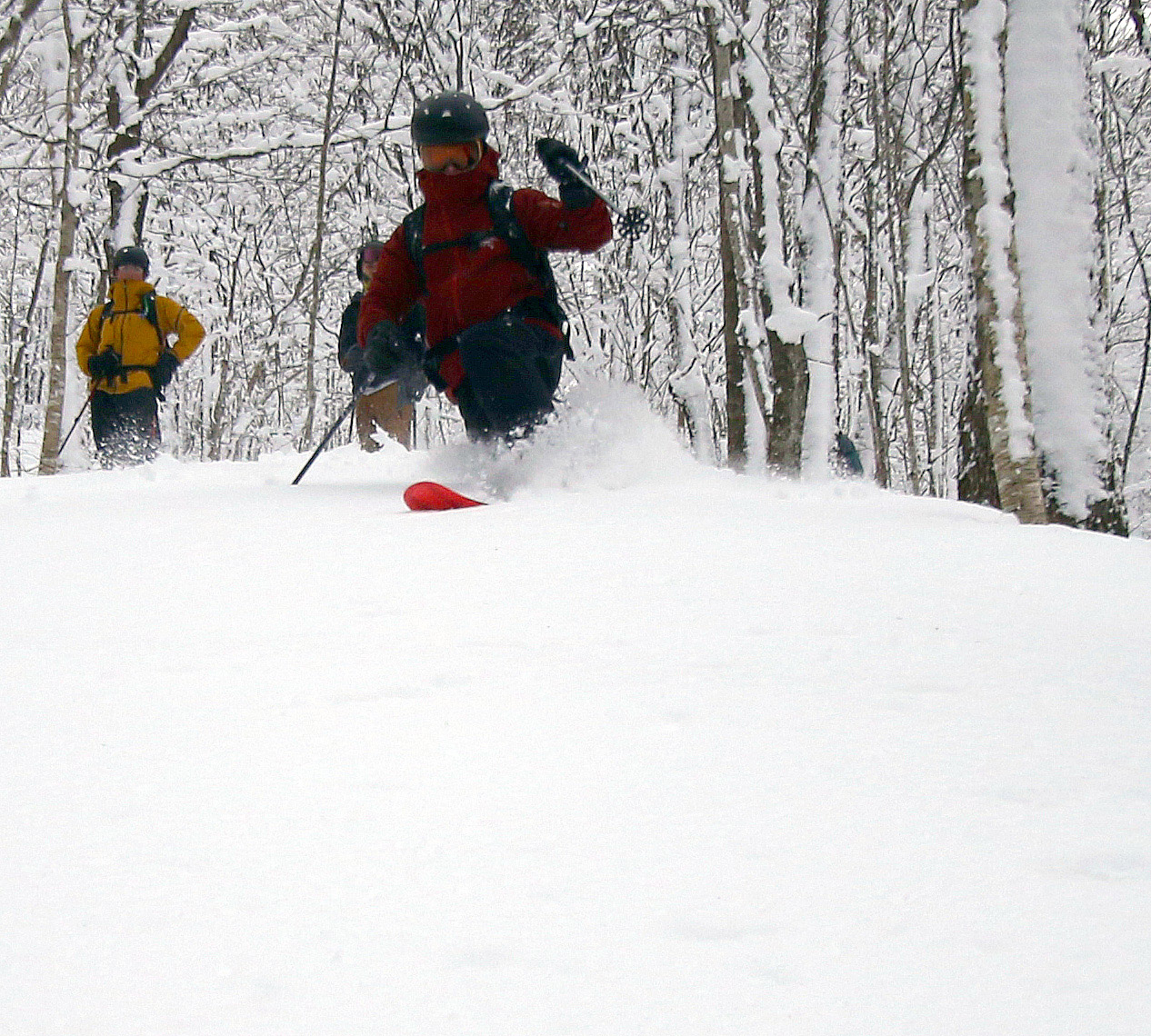
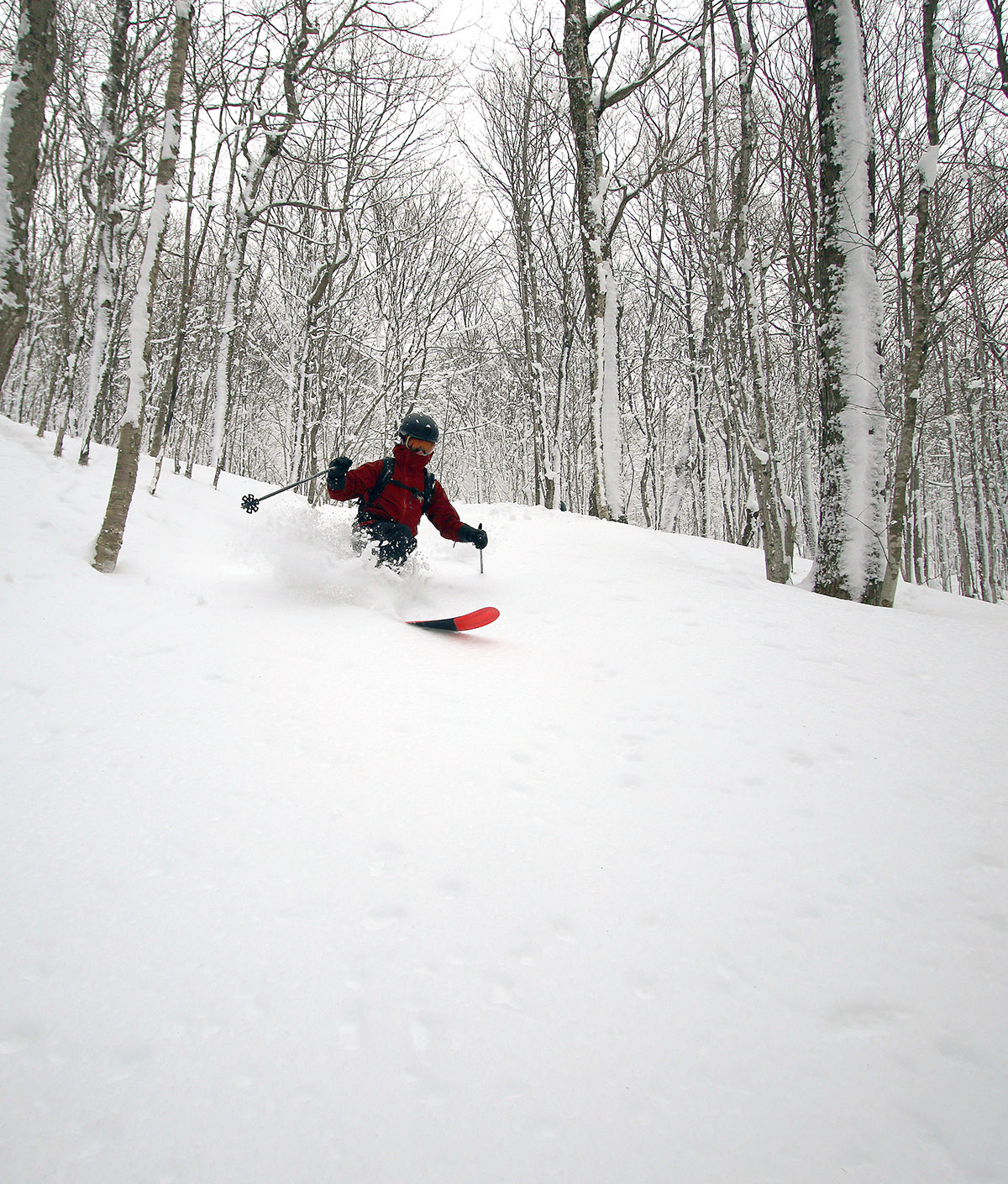
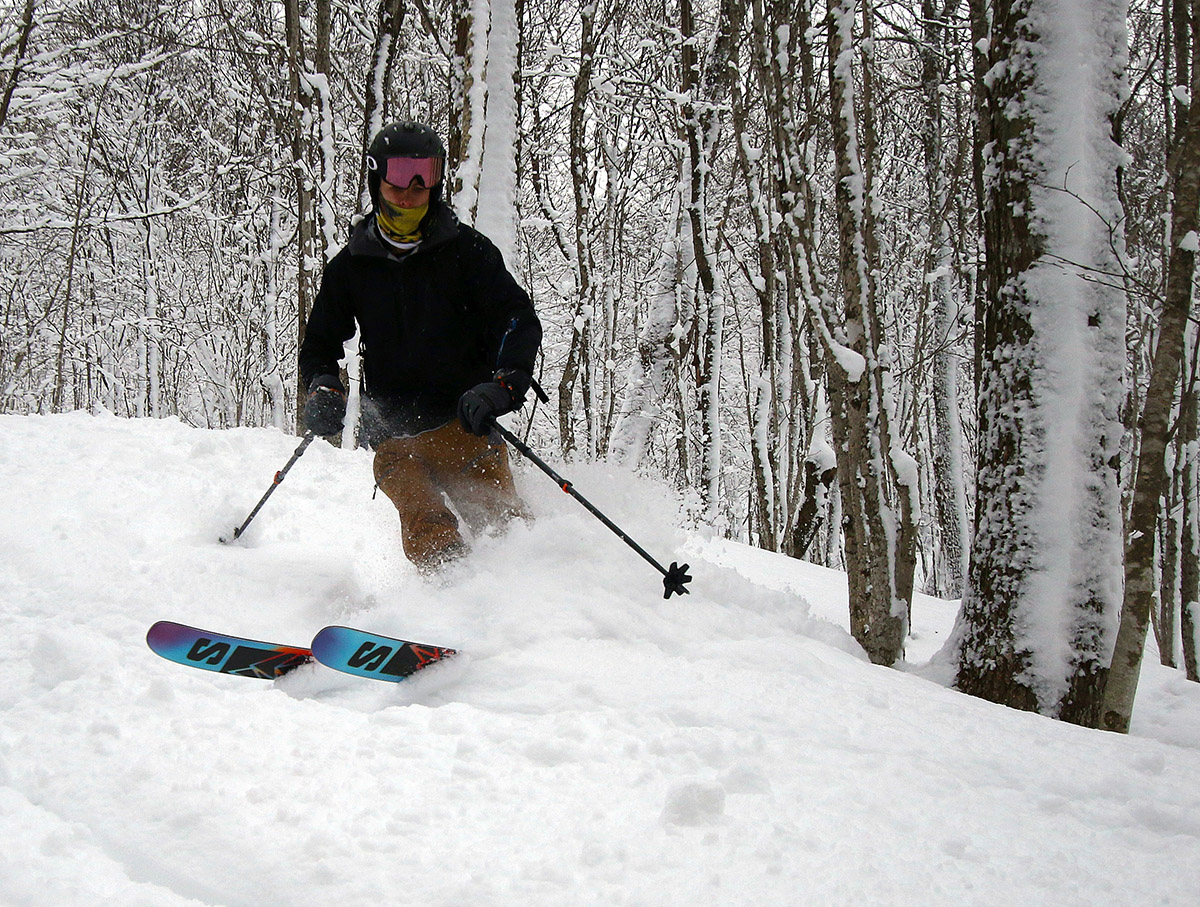
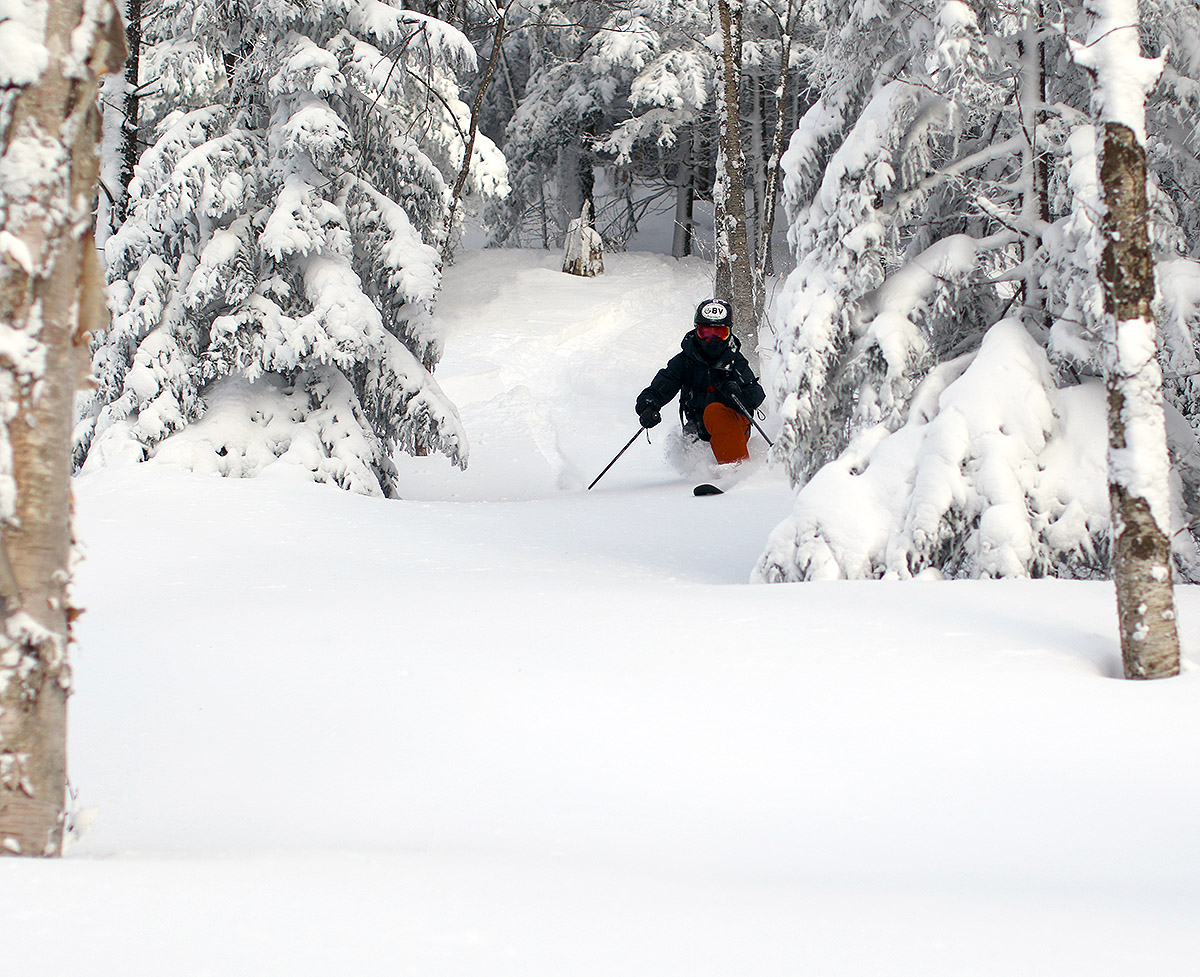
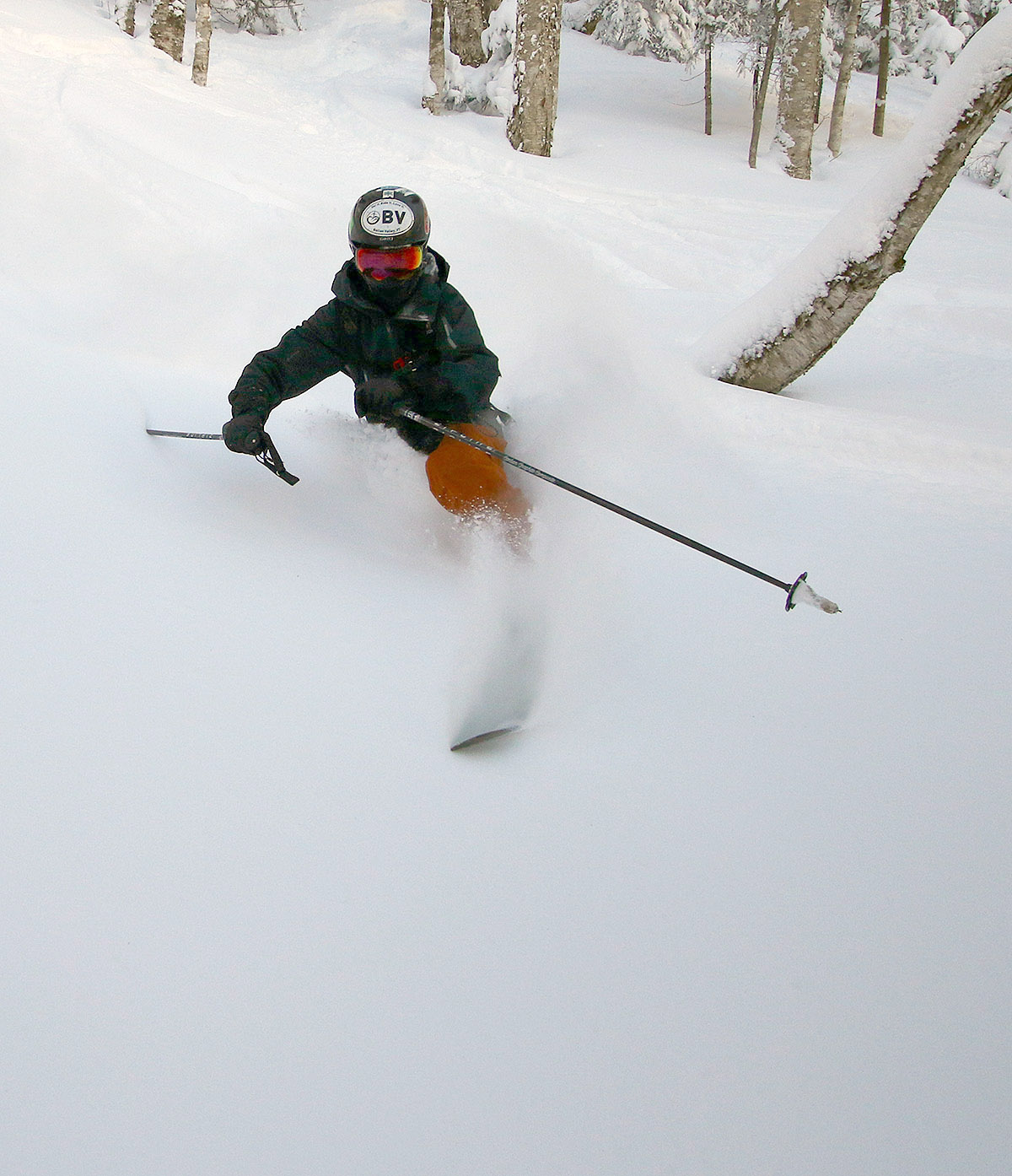
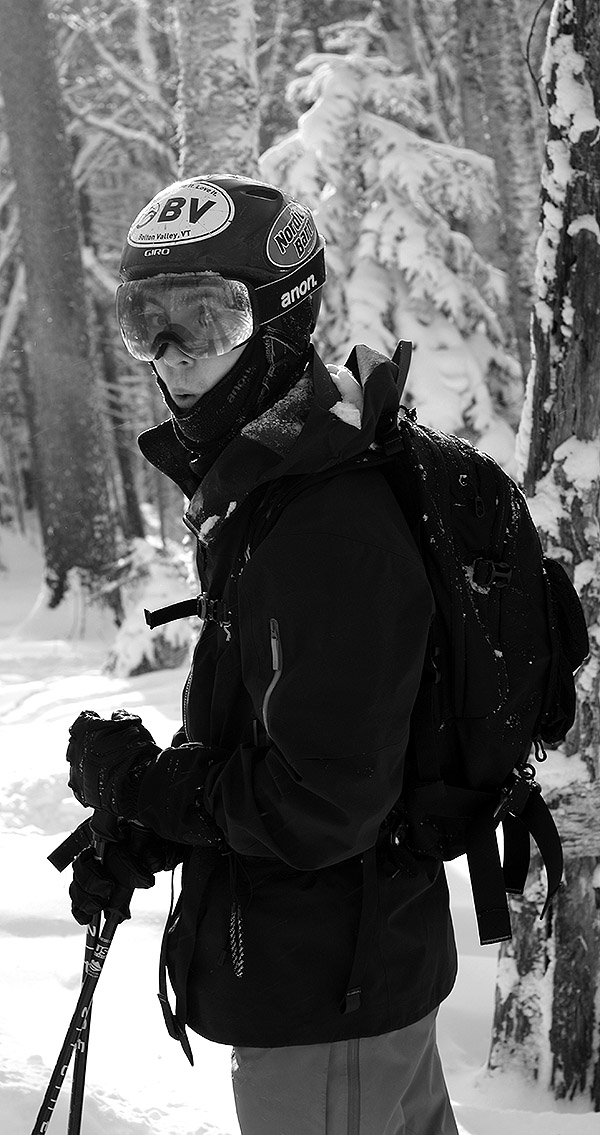
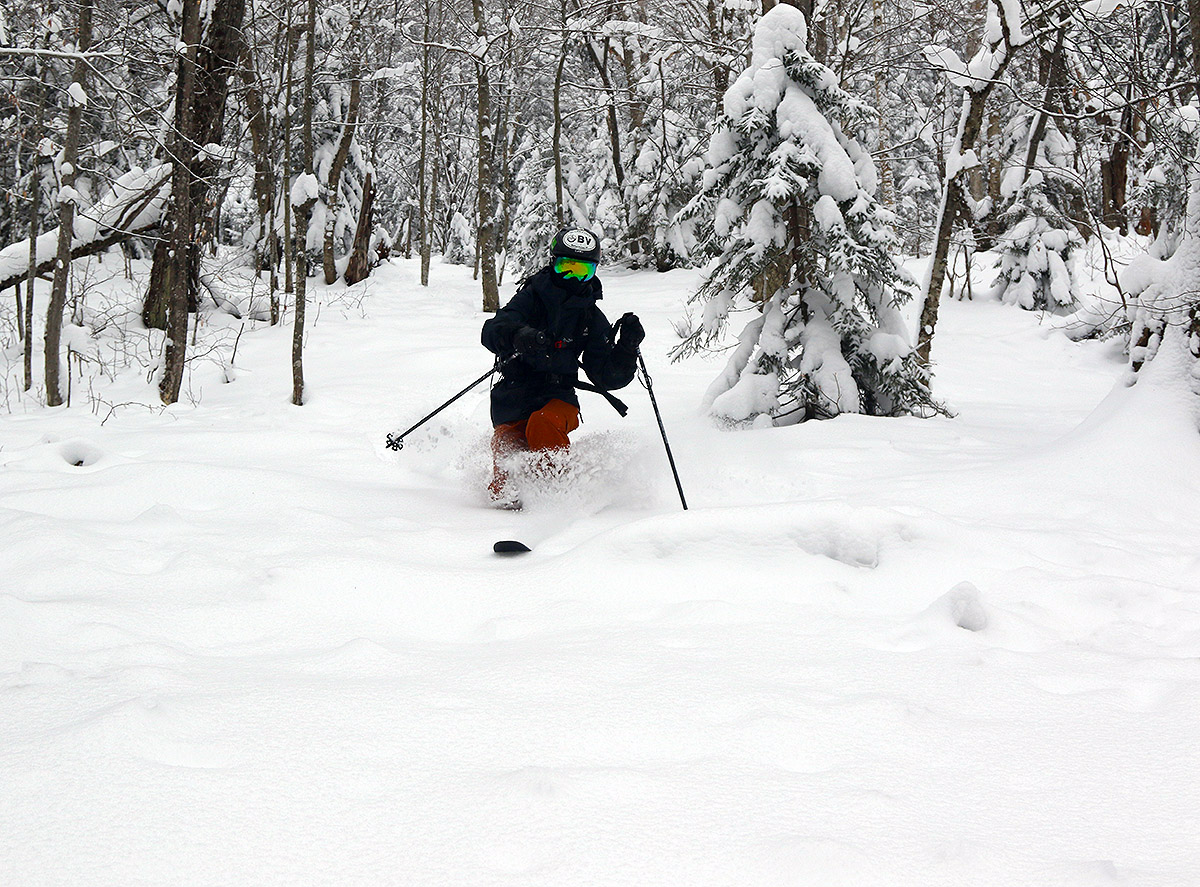
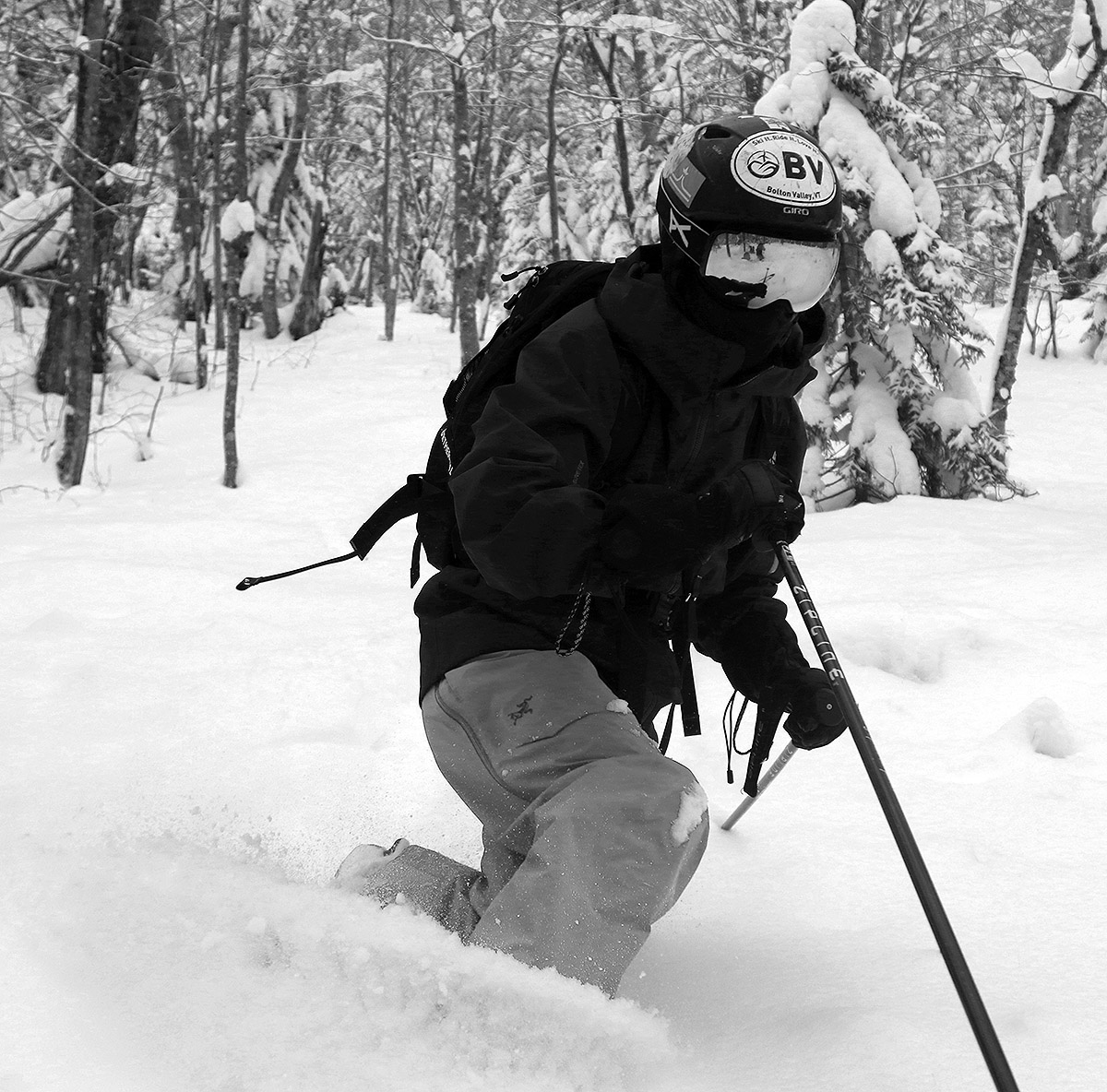
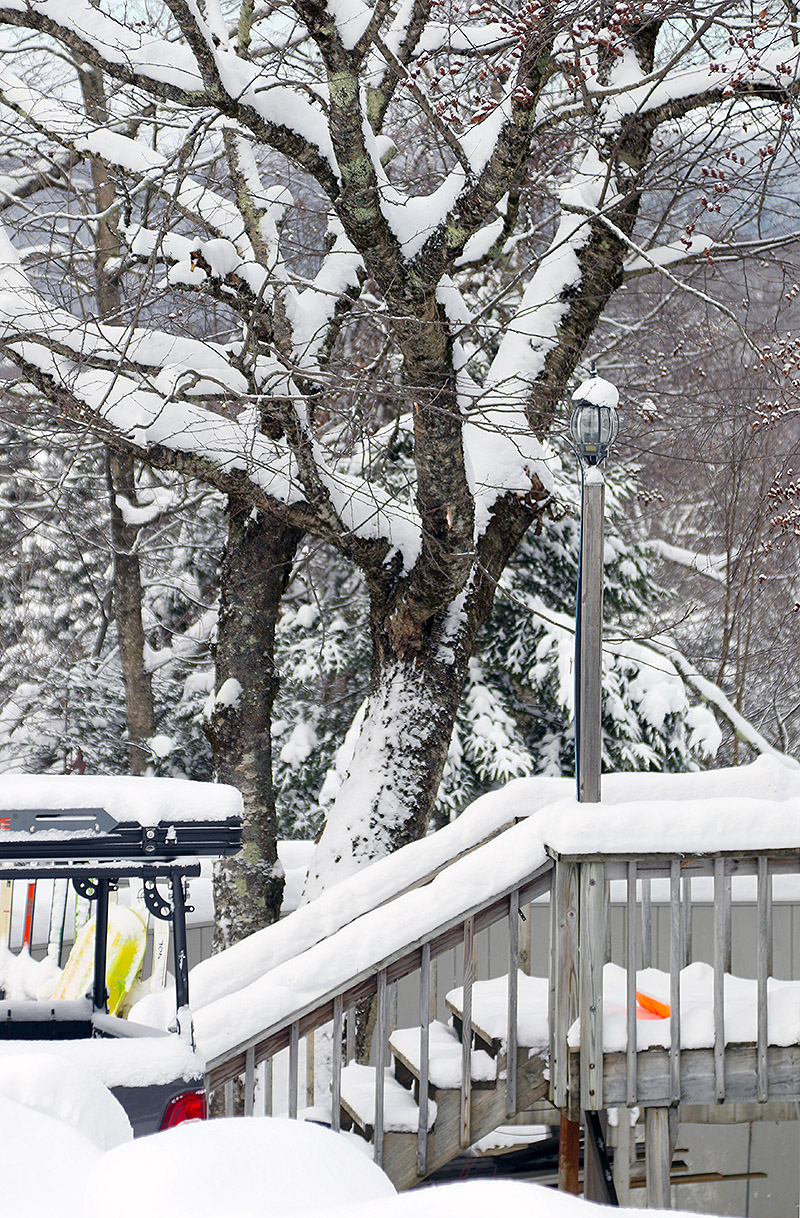
Light snow falls in the Bolton Valley Village in the fading afternoon light as Ty and I finish up our ski tour today.
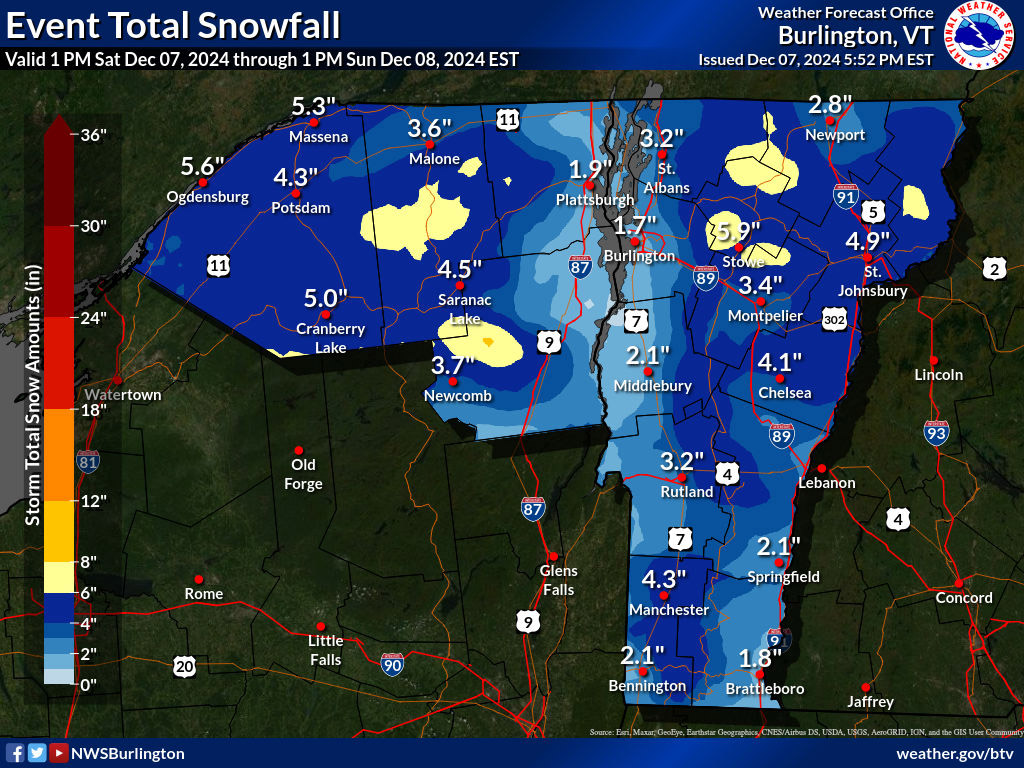
It was Winter Storm Bellamy that hit parts of the Midwest fairly hard yesterday to become TWC’s second named storm of the season, and then the system continued its eastward trek and started to affect our area by early this morning. Throughout the day it brought light snow to the area, and by the afternoon we’d picked up about an inch of accumulation in the valley. Coupled with the accumulations from the midweek system, I figured it would be worth a quick ski tour to see how the powder was building up in the higher elevations, so Ty and I headed up to Bolton Valley in the mid to late-afternoon.
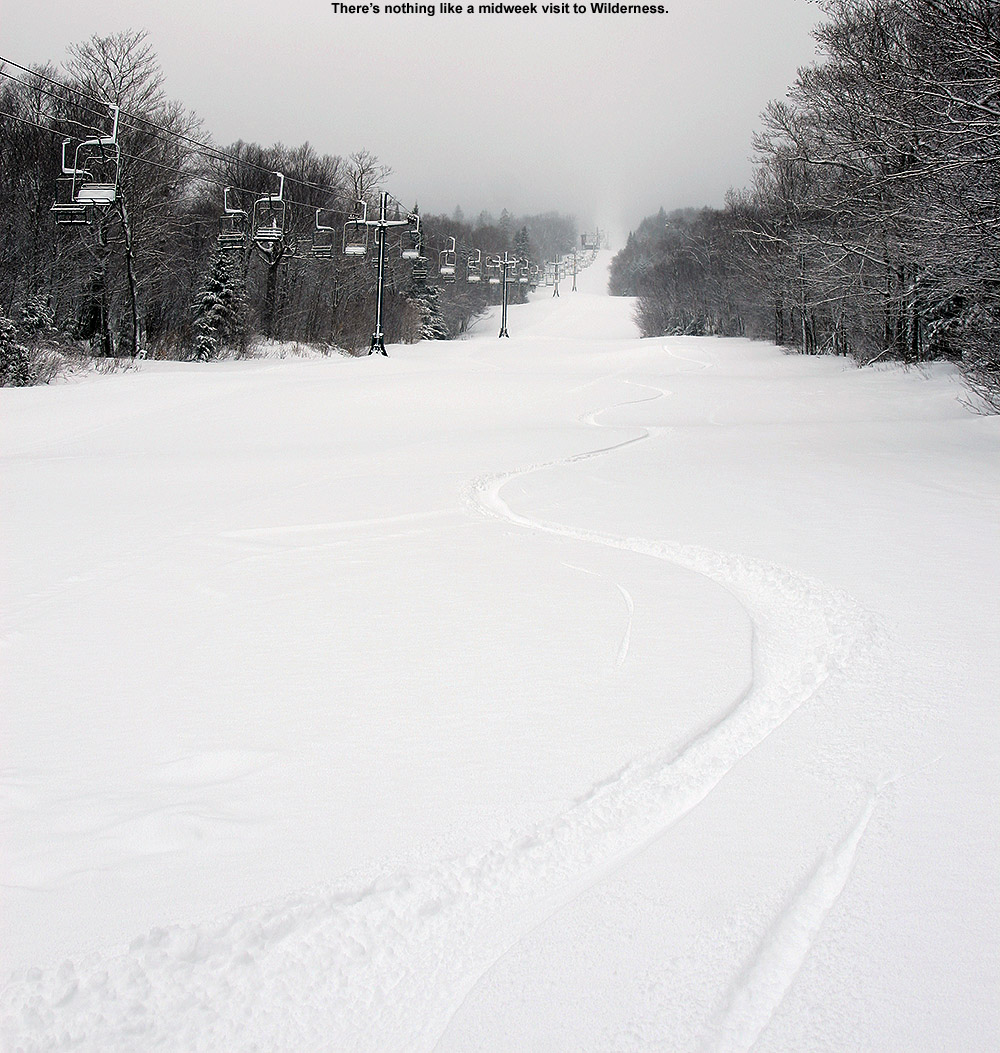
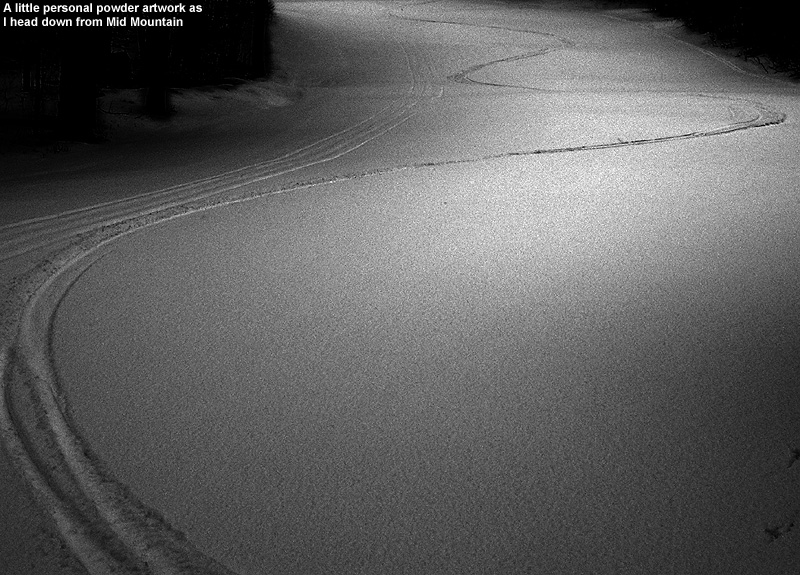
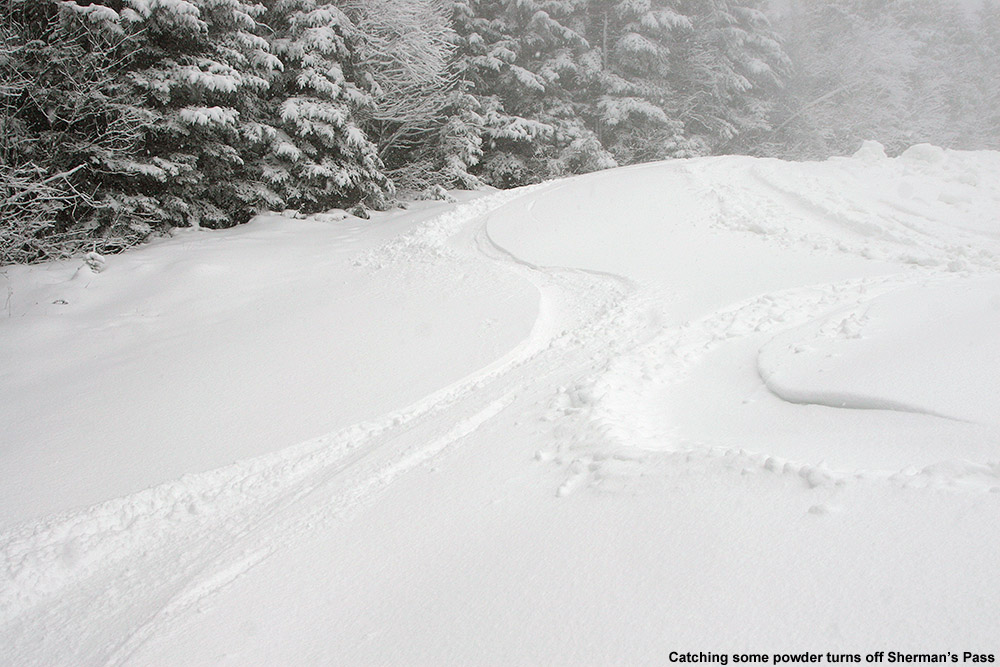
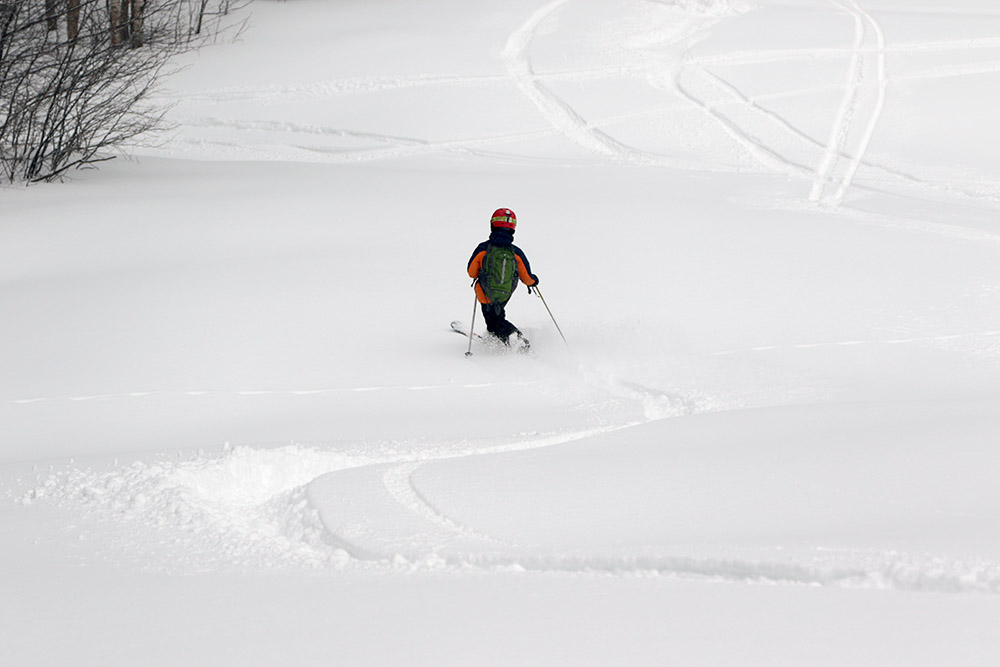
We toured on the lower 2/3 of Wilderness and found a general 3 to 4 inches of powder coating the existing base in untracked areas. That seemed about what one might expect based on picking up a couple of inches from each of these past couple of systems, and conditions were actually a bit better than I’d expected because I was worried that the wind might have blown the snow around and left us with little powder to ski. Indeed the snow was fairly light and dry (my liquid analyses from the two storms averaged out to snow in roughly the 5% H2O range for liquid equivalent), so it was nowhere near enough for a full resurfacing, but it definitely offered up some nice turns on lower angle terrain. Most turns weren’t bottomless, but you’d get some here and there where the powder had settled in a bit deeper. This was certainly a case where denser snow would have made a huge difference in resurfacing, but there was only so much liquid equivalent with these past couple of systems in this area, so they could only do so much to cover the subsurface.
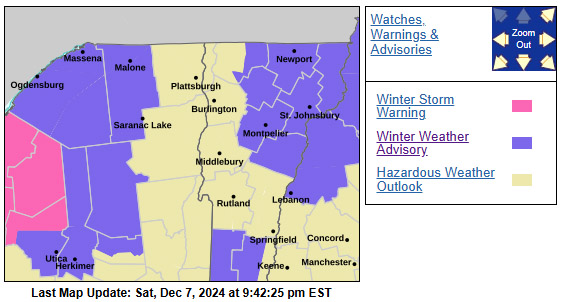
The next storm in the queue has been named Winter Storm Chan, and it looks like it could add a more substantial shot of snow to the slopes – Winter Storm Warnings and Winter Weather Advisories are going up throughout the area. So, on top of the snow that’s already fallen in the past few days, it definitely holds the potential to kick the conditions up another notch.
Snow guns blast away on the Bear Run route as Bolton Valley prepares some of its beginner terrain for upcoming days
As of this morning, the resorts of the Northern Greens from Jay Peak down through Stowe were reporting roughly a foot of new snow with the assistance of moisture coming off the Great Lakes, but south of that area, snow totals fell off rather quickly. Checking Bolton’s snow report, they weren’t reporting any new snow, so I wasn’t planning on making any turns, but Dylan and Colin were looking to get out for some runs with me and E, so we ended up heading out for a morning ski session.
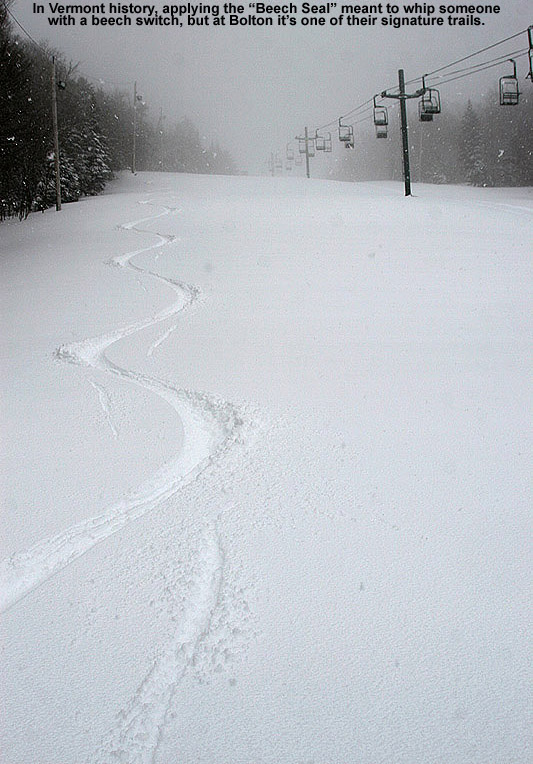
It turns out that the resort did pick up at least a couple of inches of snow based on what we saw, but the accumulations varied a lot with the wind and perhaps their standard measurement spots didn’t hold onto any of the snow to a degree that they felt confident enough to report it. The resort is working on beefing up the manmade base on their main Bear Run beginner route on the lower mountain, so there was no beginner terrain in play today, and I think that helped to keep the number of visitors lower than it might have been. Conditions on their main Sherman’s Pass/Beech Seal route were decent, with some manmade snow of course, but some natural mixed in and a nice amount of loose snow that gave you something to carve on. The relatively low skier traffic kept the morning groomed surfaces lasting longer than they typically might, but by late morning the skier traffic was starting to pick up, and you could tell that the surfaces were getting a little firmer.
Bolton Valley has been putting up some impromptu mini terrain parks near the base these past couple of weekends with just a feature or two, and it seems like folks are having a lot of fun with that. They’re short enough that you can literally hike back up in 20 seconds and hit the features again. Dylan had fun with the one they have set up near the Mighty Mite and made a couple runs down the rails on our way out.
In sheltered areas at Bolton Valley today, there was close to a foot of snow accumulation near the 3,000′ level as Vermont got hit with its first substantial winter storm of the 2025-2026 ski season.
The Vermont ski season is definitely underway! As forecast, the snow levels with this most recent storm began to drop yesterday evening, and the higher elevations picked up some decent snow accumulations by morning. The views from Bolton’s Base Lodge Webcam seemed to suggest just an inch or two of accumulation at 2,000’, and unfortunately their Vista Summit Webcam was covered in snow, but the Allyn’s Lodge Snow Stake Webcam at Sugarbush suggested that there were some decent accumulations around 3,000’. So, I decided to head up to Bolton Valley to at least get in a hike in the snow and check out the actual accumulations in person. The snow levels with this storm definitely didn’t make it down to the lower valleys, and even the local 2,000’ peaks surrounding the Winooski Valley in our area didn’t seem to have any visible accumulations.
I found anywhere from 1 to 4 inches of snow at the Bolton Valley Village elevations today depending on each location’s exposure to the wind.
Those observations left me wondering just how high the snow levels had been, but it was clear as I ascended the Bolton Valley Access Road that the spine of the Greens had done better than some of the other surrounding areas. On my ascent toward Bolton Valley, I saw the first traces of snow around 1,200’, and up at the main base at 2,000’, accumulations were definitely more substantial than what the base area webcam had suggested. There was plenty of wind with this storm, and while exposed areas may have only accumulated an inch or two of snow, areas out of the wind held 3 to 4 inches of dense coverage.
A view from Bolton’s Wilderness Summit today
I started hiking the Wilderness Uphill Route with my skis on my pack, but within a couple of minutes I pulled out my skins and started skinning. It was clear that there was more than enough coverage to be skinning instead of walking if you wanted to, and there was a skin track in place as well. Snow accumulations increased all the way up to near the 3,000’ elevation range, but much like what the Sugarbush webcams had shown, where the 3,125’ stake had 5 inches of snow and the 3,900’ stake showed less than an inch of snow, accumulations sort of fell off as you hit the ridgelines above 3,000’. It must have been those winds – they really pounded and scoured the upper elevations relative to those middle elevations.
Here’s the snow accumulations profile I observed today in the Bolton Valley area during my tour in the midday period:
The forecast today suggested that at above 2,000’ the temperature was never going to go above freezing, and I’d say that’s what I observed. The temperature at 2,000’ was right around freezing and the snow there was a bit denser and softer, then in the middle elevations it was denser and colder with some upside-down consistency, and them up around 3,000’ the temperatures were well below freezing and the snow was notably drier. The snow was still a bit on the denser side, but it didn’t have that upside-down feeling of the middle elevations and turns were easier.
When I finished my ski tour and got back to my car, I saw that I’d missed a call from Dylan, so I called him back and he said that he and his crew from UVM were just at the base of the access road on their way up. So, I hung out for a bit, met them when they arrived at the base, and gave them the beta on everything I’d found on my tour. They subsequently had quite a fun tour of their own based on the video footage I saw later when they swung by the house, so it was great to see that everyone had a safe outing, and they kicked off their ski season with style!
Dylan and his friends from UVM also headed up to Bolton Valley today to get out into the first substantial storm of the 2025-2026 ski season in Vermont.
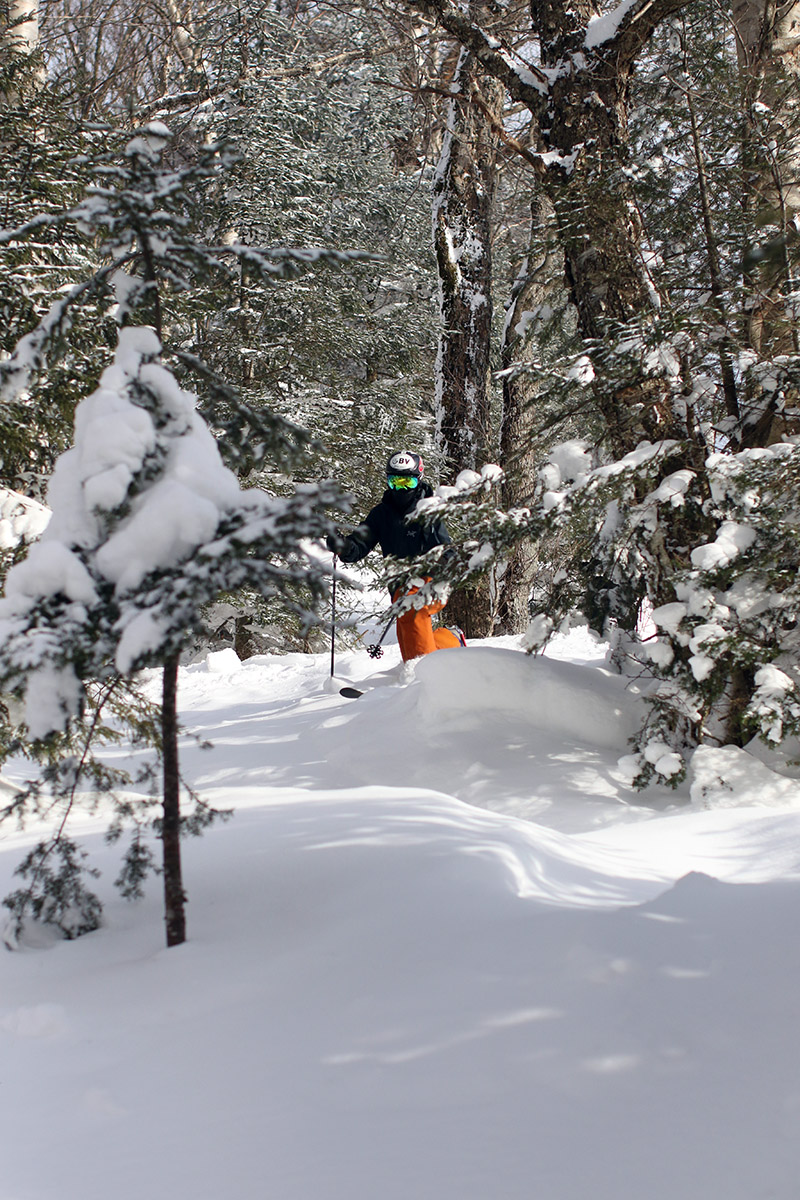
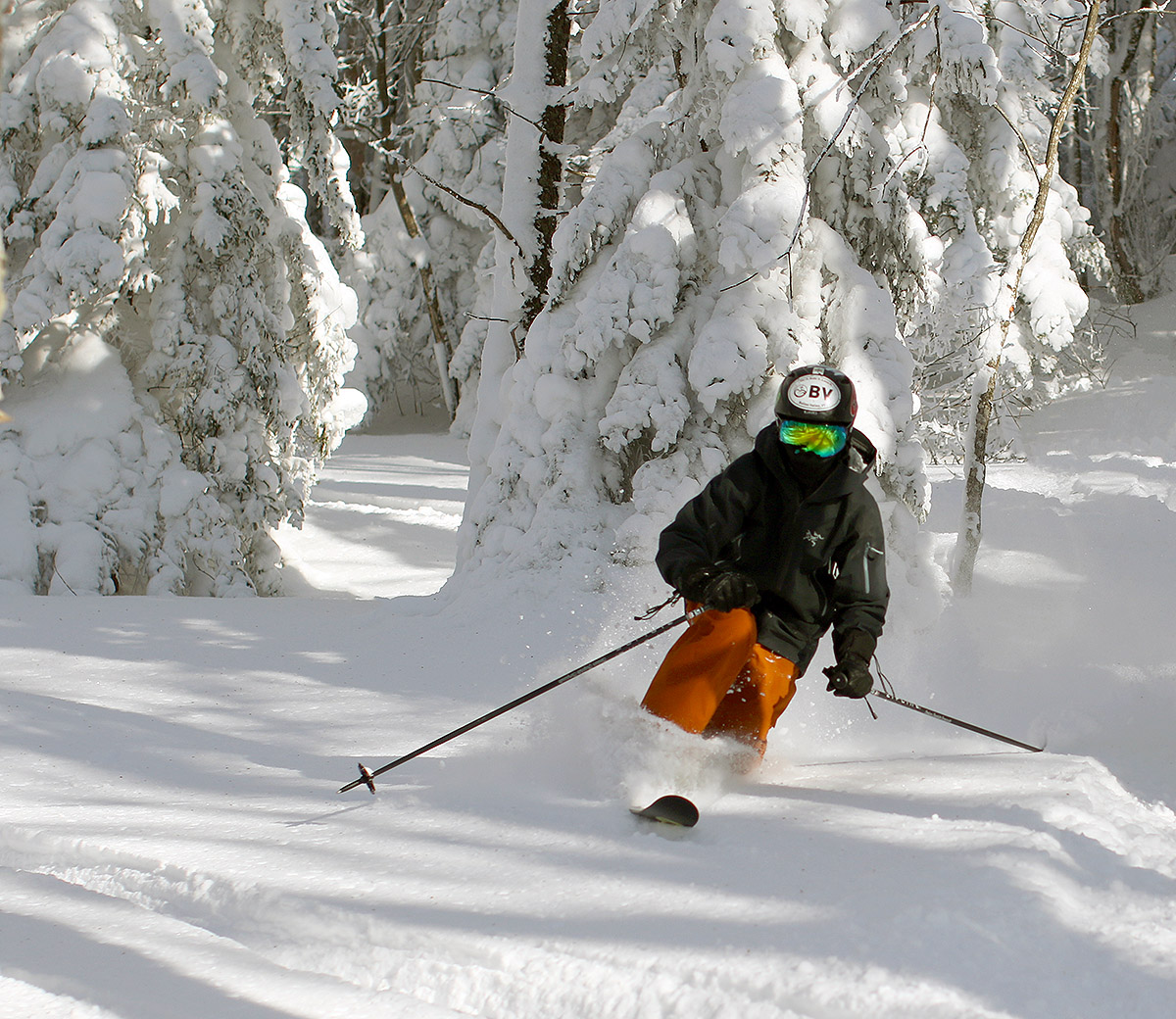
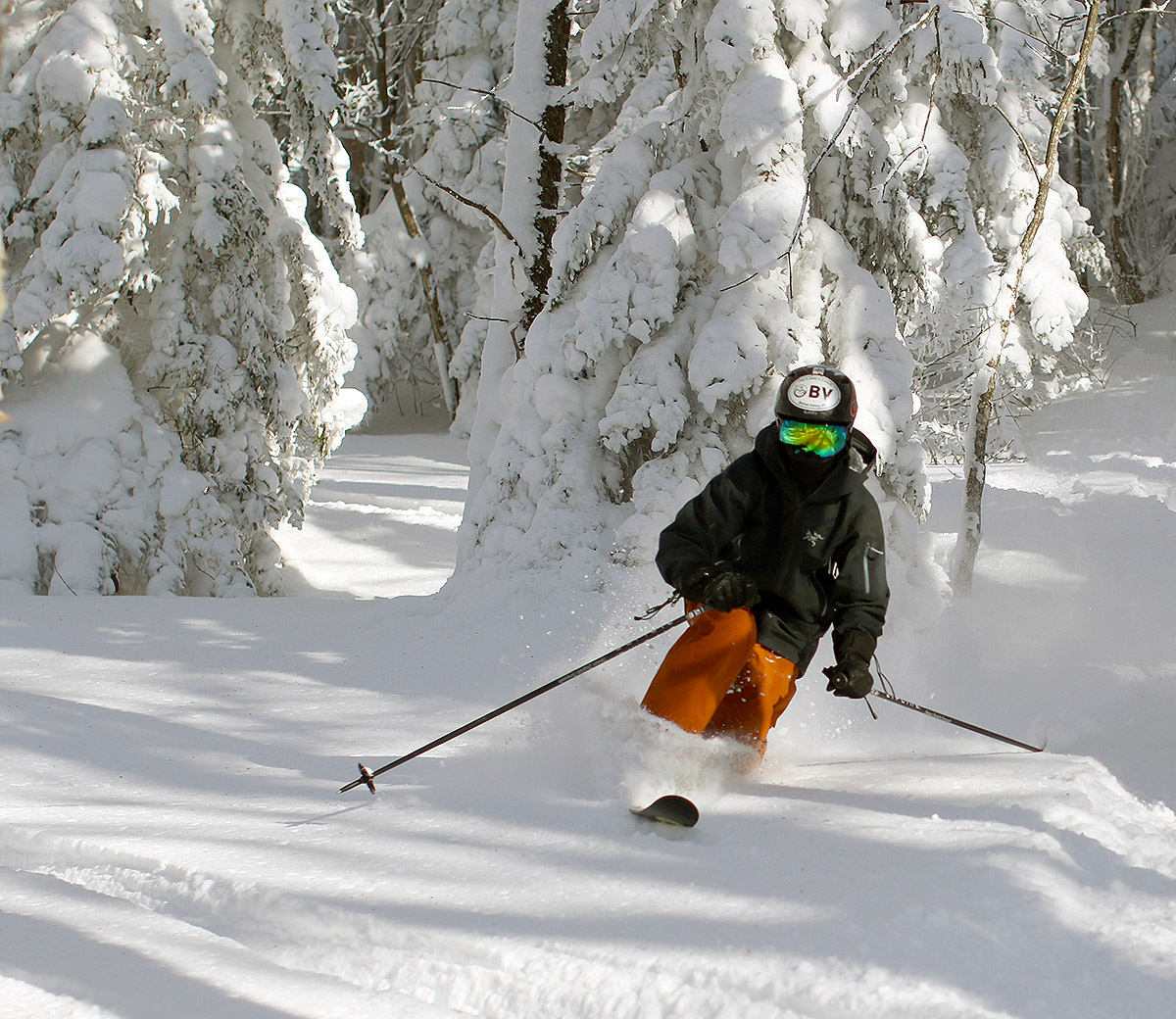
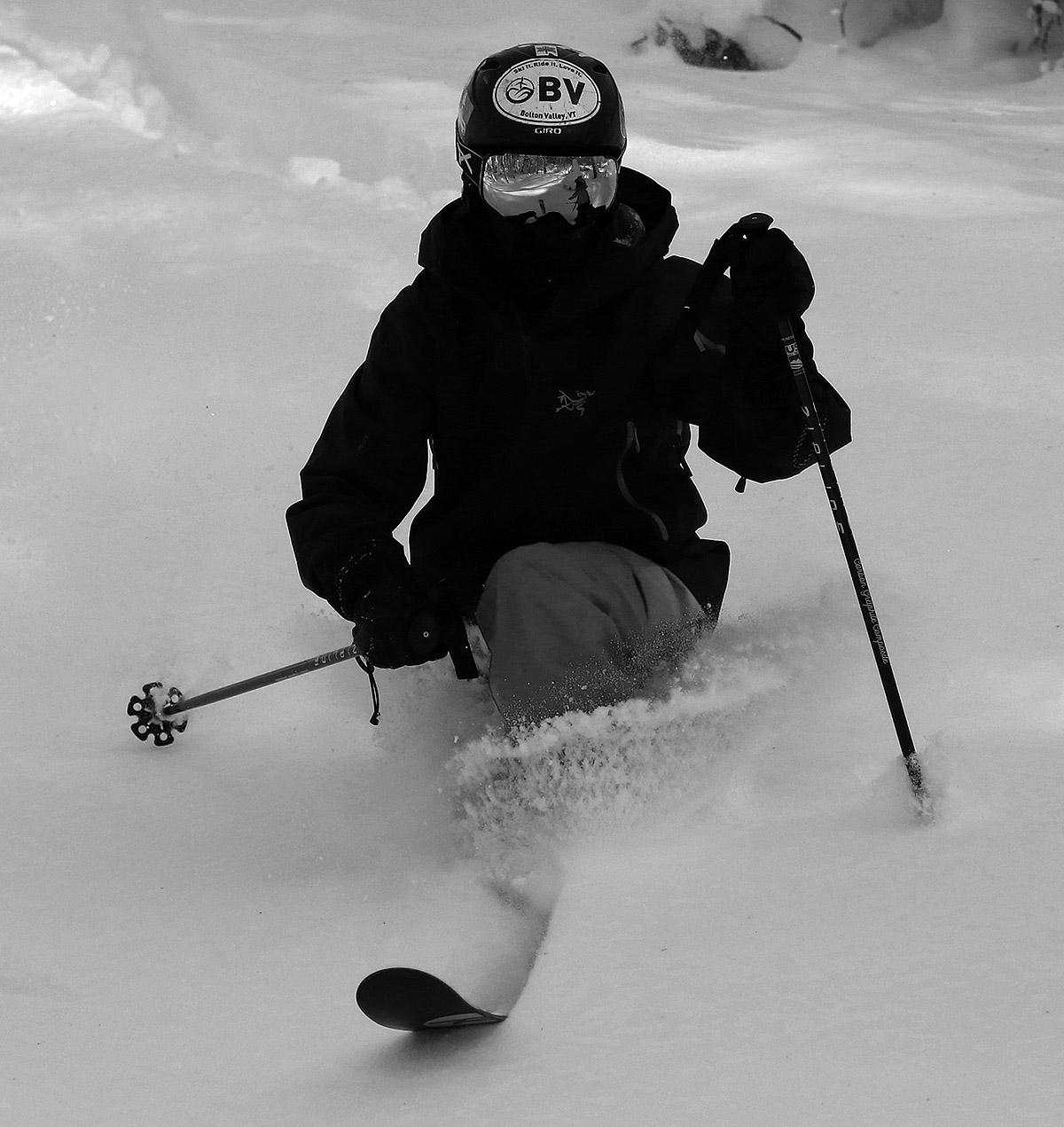
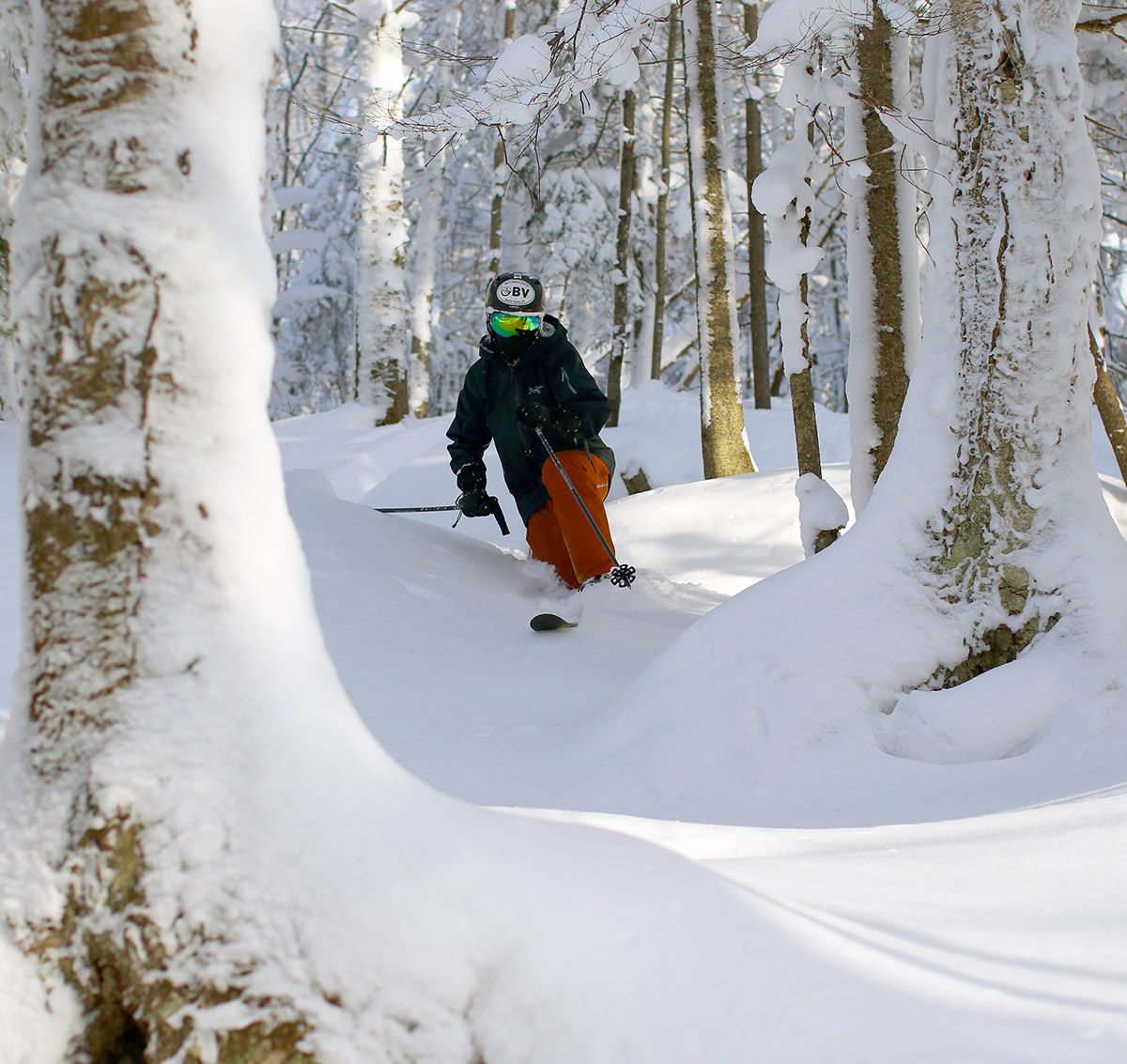
Sunshine sets us up with some good natural lighting as Ty starts into a powdery line in the Wilderness Woods during today’s outing at Bolton Valley.
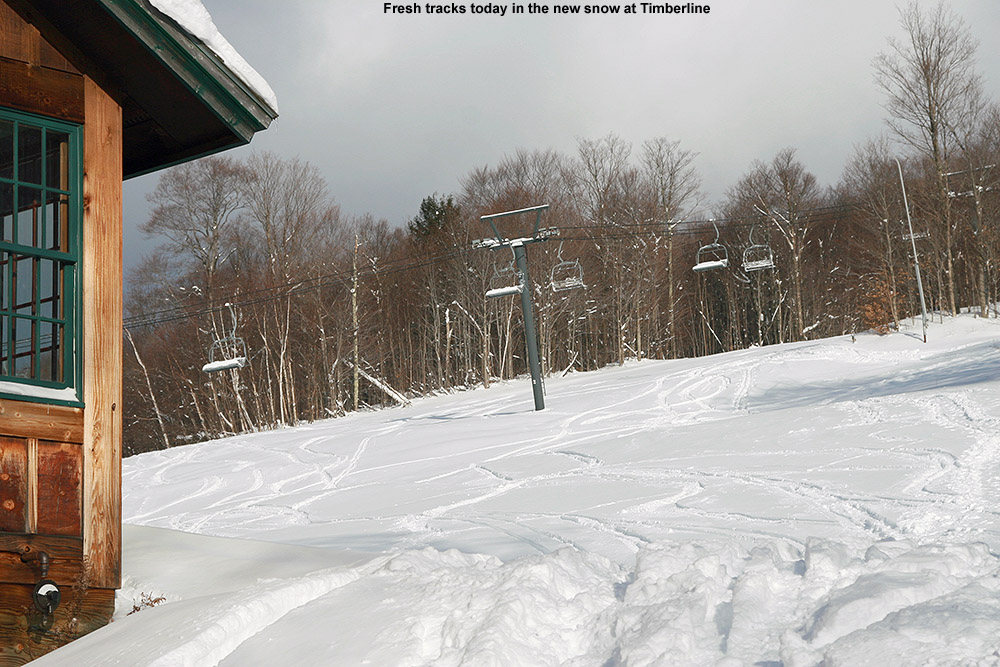
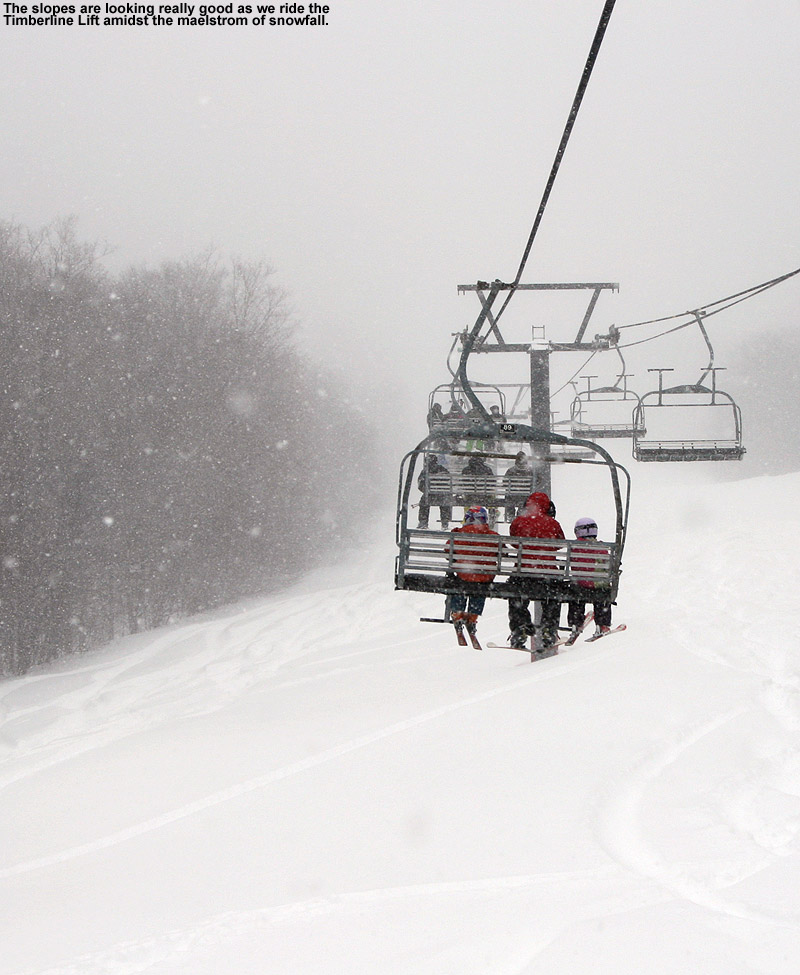
Today I headed up to Bolton Valley for a bit of afternoon lift-served skiing with E and Ty ahead of the cold temperatures that are expected to be around into the midweek period. The resort has finally shifted their attention to making snow in the Timberline area over the past week, and since it was open to lift-served skiing for the holiday weekend, we figured we’d check it out. It’s always a nice shift into the feel of Bolton’s full mid-season mode when you can start parking down at Timberline to base yourself there to ski the rest of the resort.
Midafternoon yesterday when I was heading home from backcountry skiing in the Jay Peak area, it started snowing as our Saturday system pushed into the area, but the precipitation changed to sprinkles of rain in the valleys as I headed south. We’d picked up a few hundredths of an inch of rain down in the valley at our house in Waterbury that gave a slight crust to the snowpack, so I was curious how high the snow levels had risen. I immediately checked the consistency of the snow when we arrived at the Timberline Base at 1,500’ and was happy to find that the snow was powdery without any rain crust, so even the lowest elevations of the resort had remained above the snow line.
As we ascended on the Timberline Quad, we could see that the lower Timberline trails without snowmaking still need more snow. Our long-duration storms from early January scoured a lot of the west-facing terrain, and the existing snowpack down at the Timberline elevations just wasn’t deep enough to hold up to that very well. Most of the natural snow terrain at Timberline was open, but it’s still just a bit thin to support lift-served skiing without some areas of brush and grass poking through. The areas where they’ve made snow have plentiful coverage of course, but seeing what was available, we decided to head up to the main mountain for better coverage and conditions.
The resort was reporting 4 to 6 inches of new snow in the past 24 hours, and 8 inches of new snow in the past 48 hours, so somehow the mountains just keep pulling the inches out of these minor systems that come through the area. Those snowfall numbers are definitely more reflective of the main mountain though, because accumulations down at Timberline were certainly less.
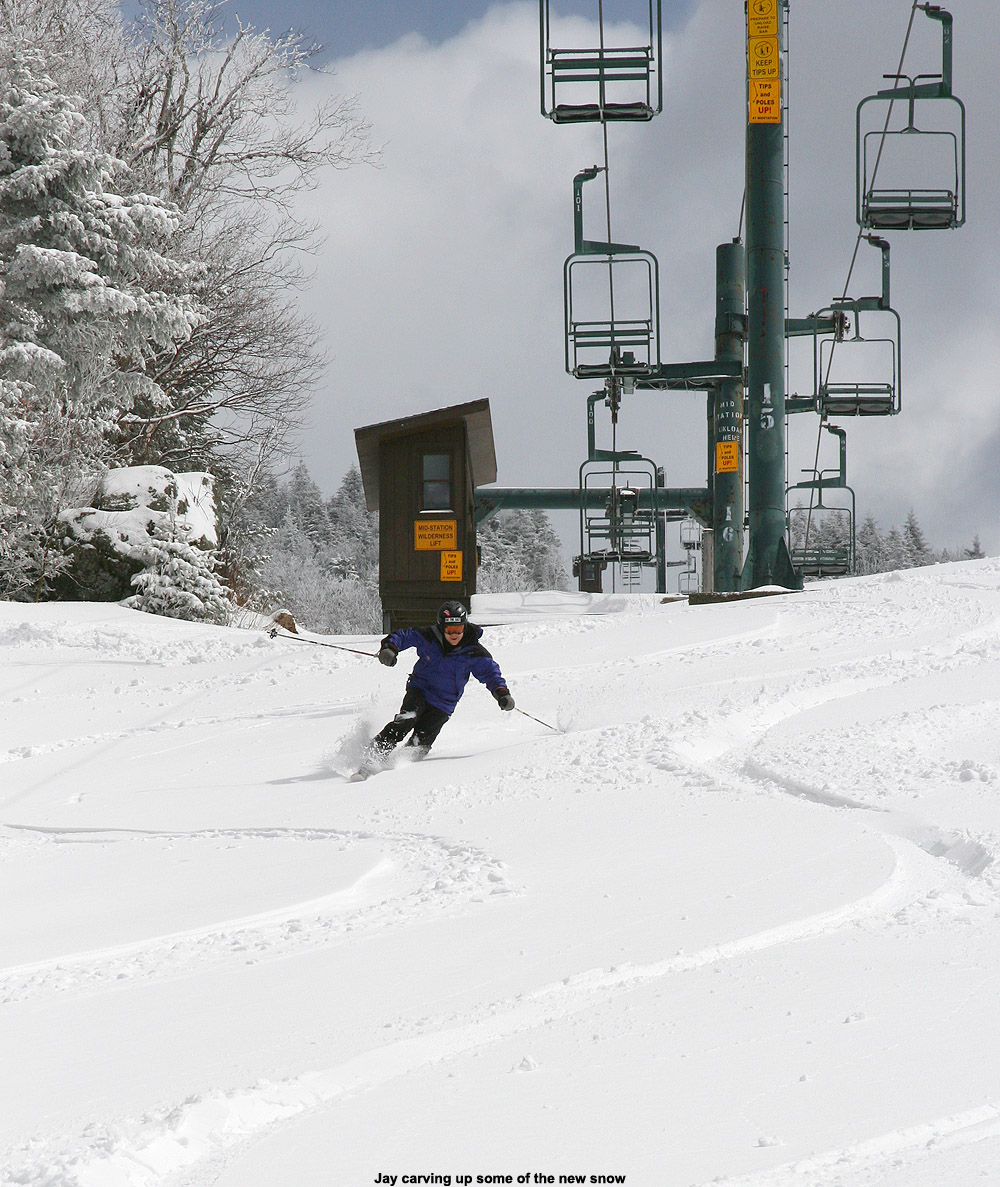
Up at the main mountain we decided to head right to Wilderness to ski the natural snow terrain, and it was indeed night and day compared to the conditions down at Timberline. There’s certainly been plenty of skier traffic at the resort since it’s a holiday weekend, but jumping off trail into the trees revealed the usual foot plus of light powder that we’ve been seeing over the past couple of weeks in untracked areas. On piste, the snow was nice packed powder wherever the winds hadn’t scoured it down, so we stuck to moderate-angle terrain below the Wilderness Mid Station and had some great runs. We even had some sun at the beginning of our session, and it was nice to have that light and a bit of extra warmth. You could tell that colder air was moving in, and temperatures were dropping through the lower 20s F, so when the clouds came back in ahead of approaching Winter Storm Demi, you could really feel the chill.
We headed back to Timberline as we finished up our afternoon session, and we did find some nice natural snow in areas like Lower Tattle Tale, but due to the shallower snowpack you had to be very selective and stick to well protected areas that hadn’t been scoured. The manmade snow on Timberline Run was definitely firm, and I’d say the disparity between the quality/firmness of the natural and manmade snow is far more than the usual at Timberline right now. The snow they made should be very resilient though.
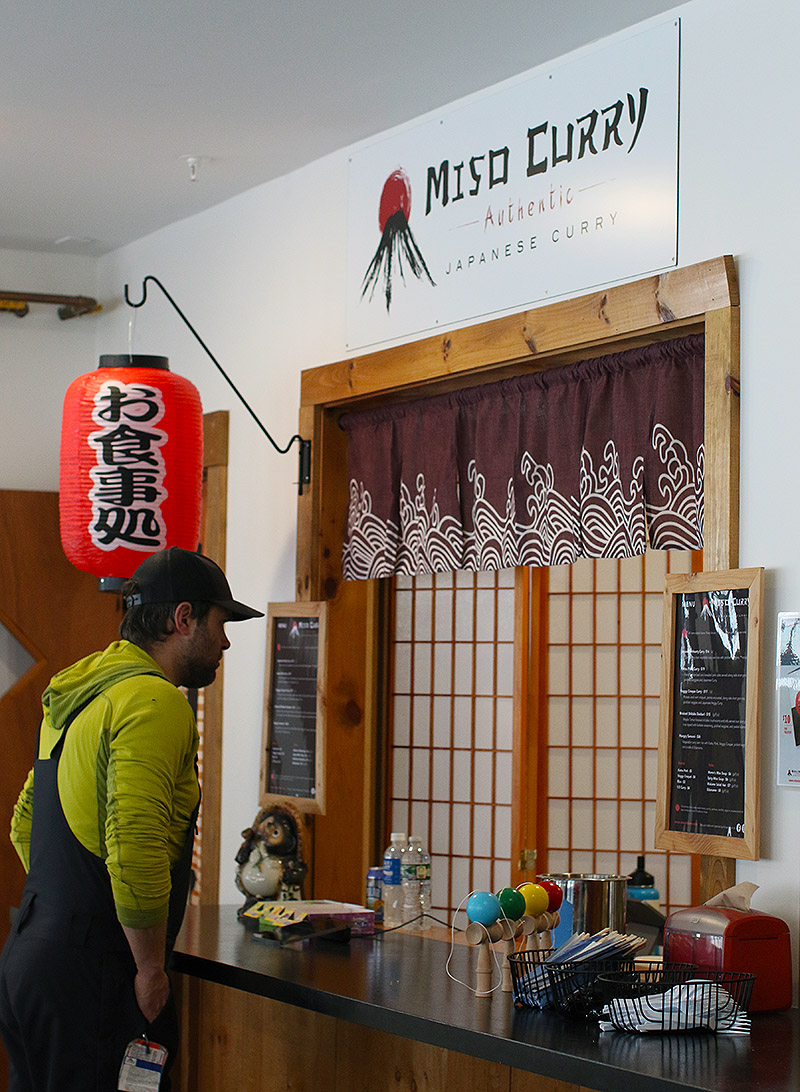
A view of the new Miso Curry station in the Timberline Base Lodge as a customer puts in an order
The opening of the Timberline area means that food service is firing up there, and this year in the Timberline Base Lodge they have Miso Curry offering food. It turns out that like the Miso Toh Kome hut up at Bolton’s main base area, (and other resorts in the area) Miso Curry is another offering from the Miso Hungry chain. We didn’t know that curry was so prominent in Japanese cuisine, but we shared an order of their katsu pork curry with edamame, and it was great. We were thinking it might be a bit tough though for families if the kids want something more typical to eat, but they can always catch that at the main base lodge, and Miso Curry seems to be a great addition to the variety of food available at the resort.
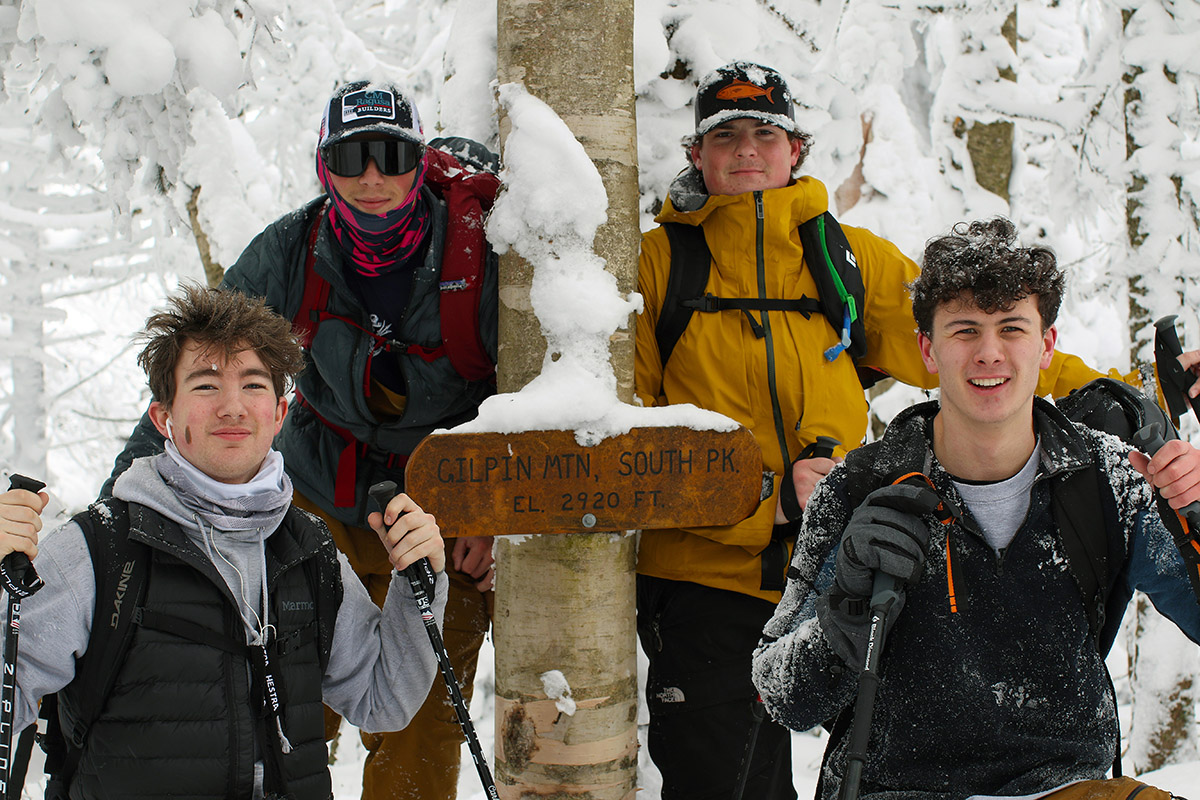
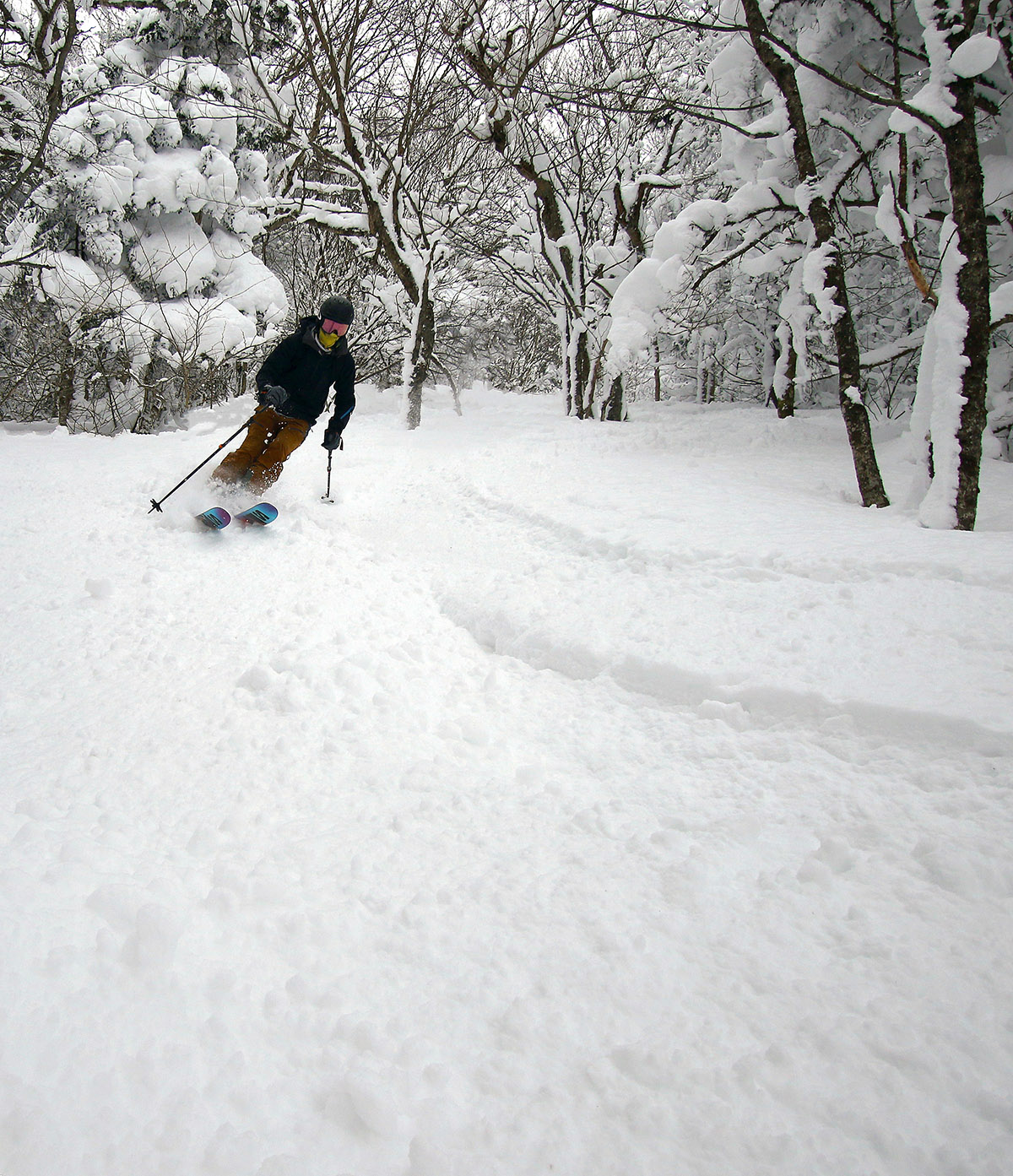
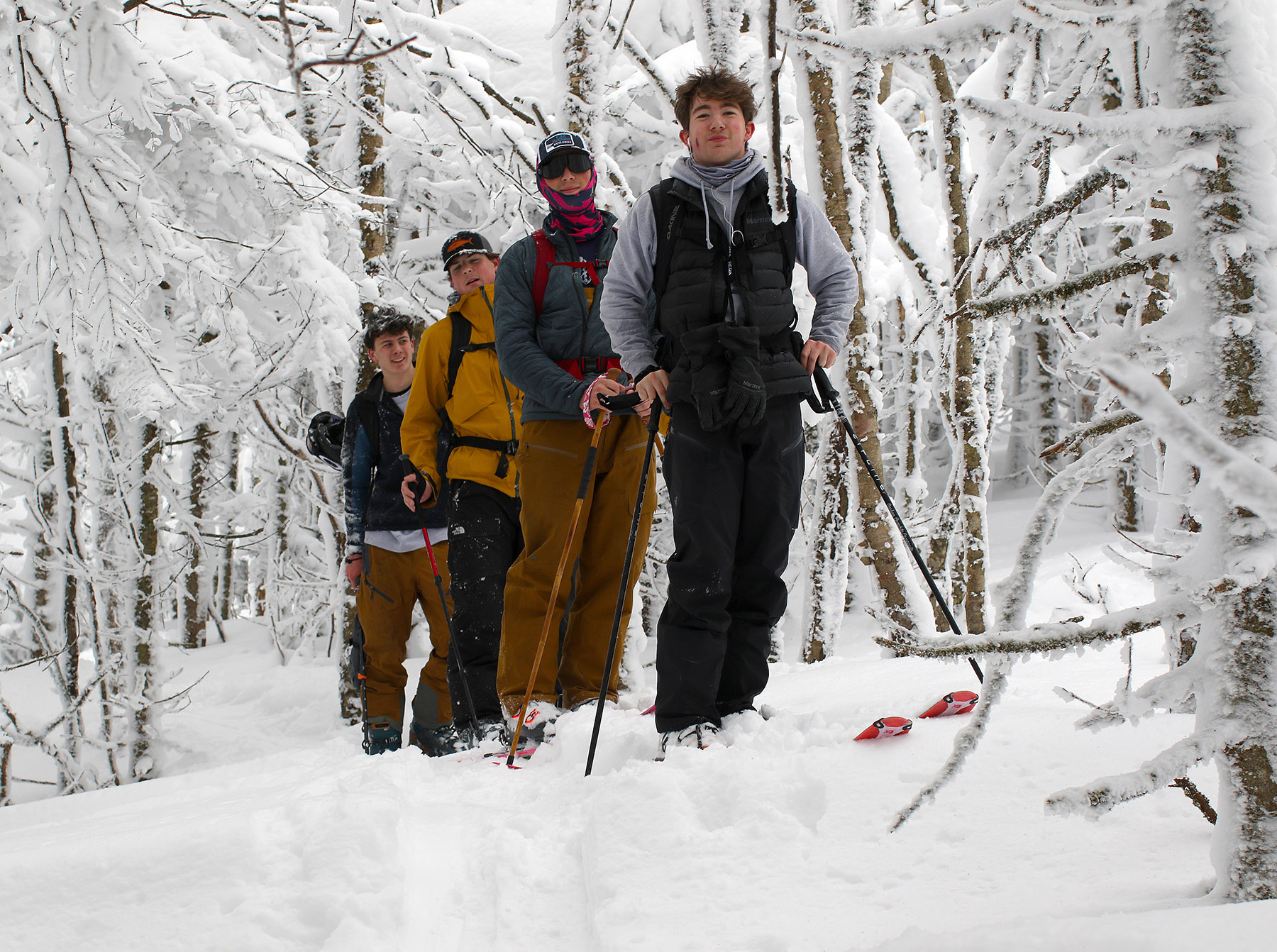
Dylan was back on his Telemark skis gliding through the powder today. We had a great ski tour today in the Gilpin Mountain/Domey’s Dome area of the Jay Peak backcountry with great snow and many acres of nicely spaced tree skiing.
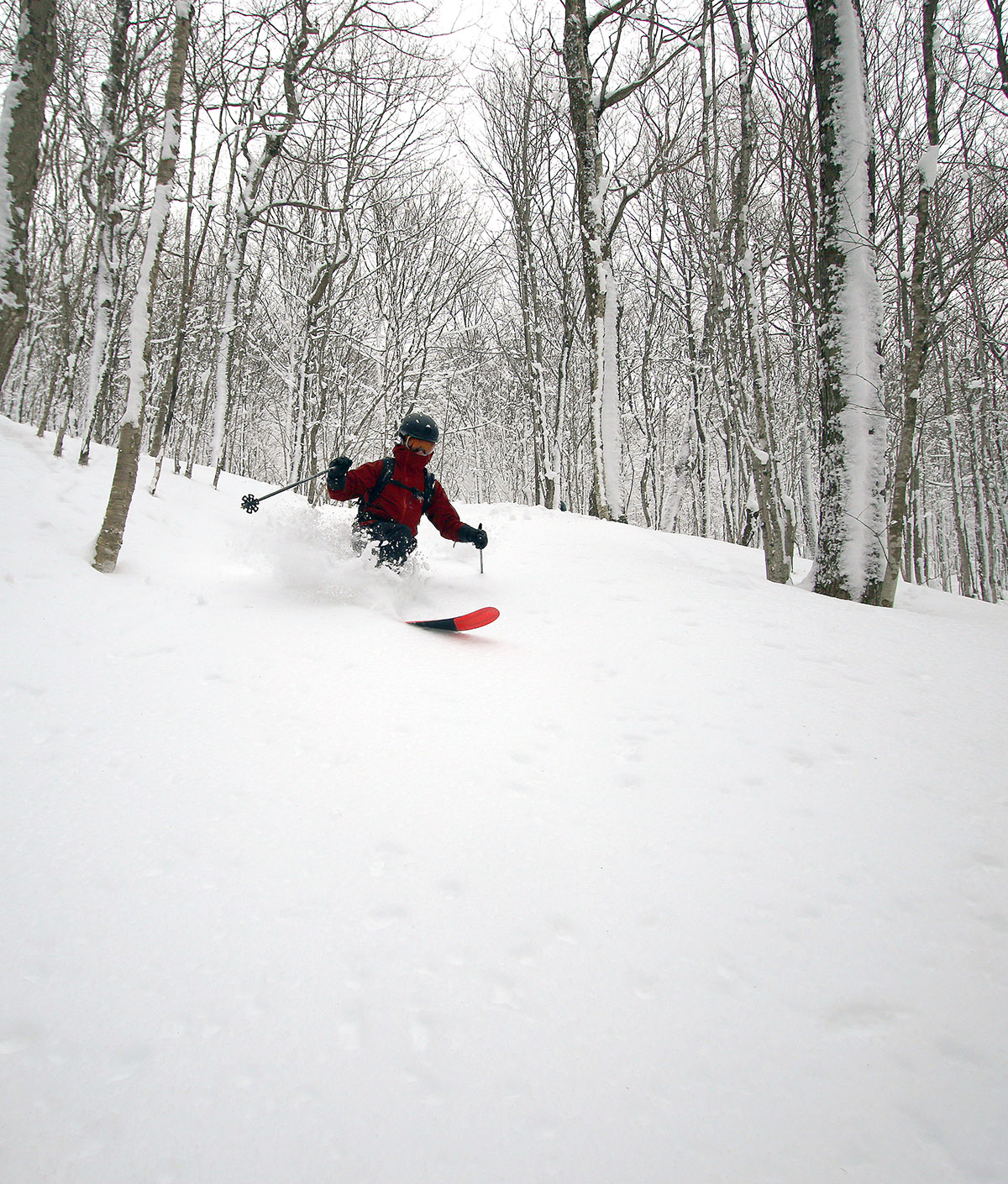
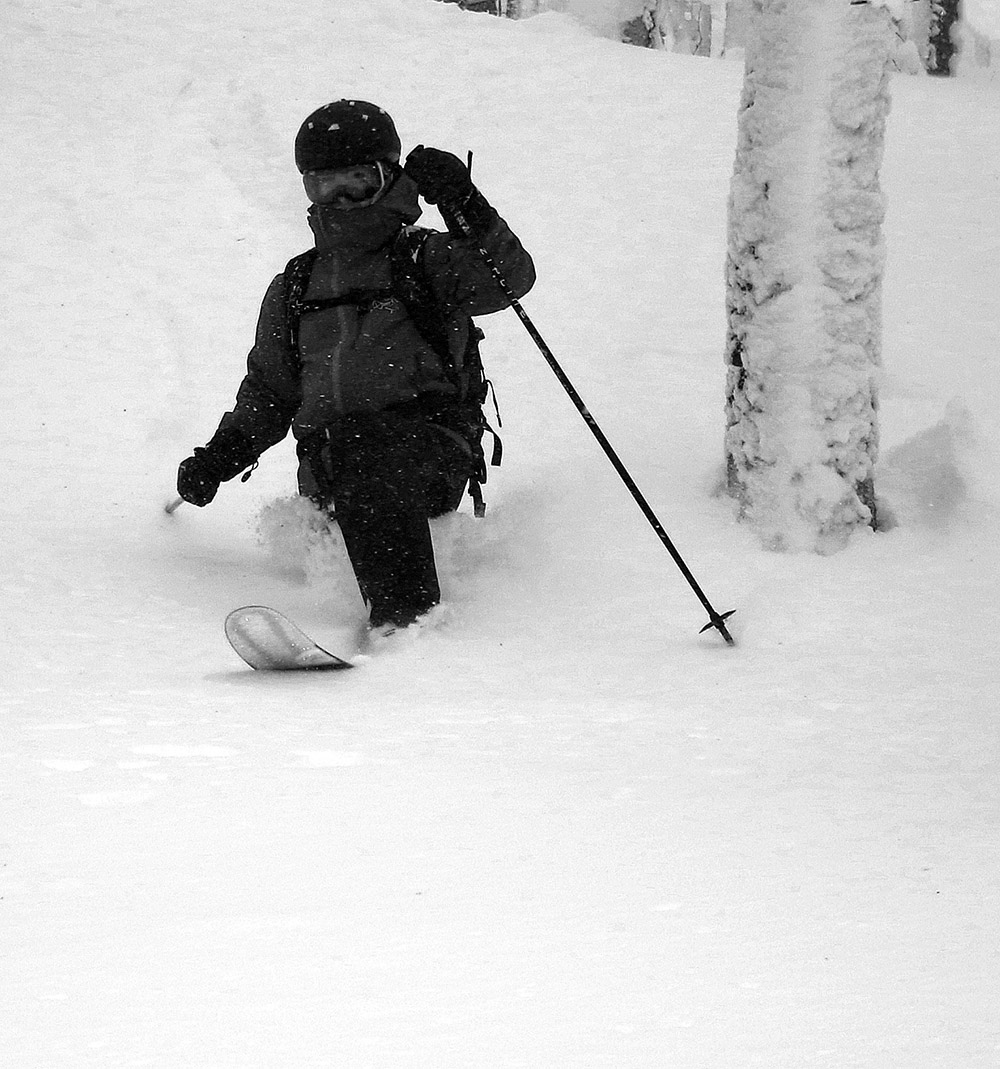
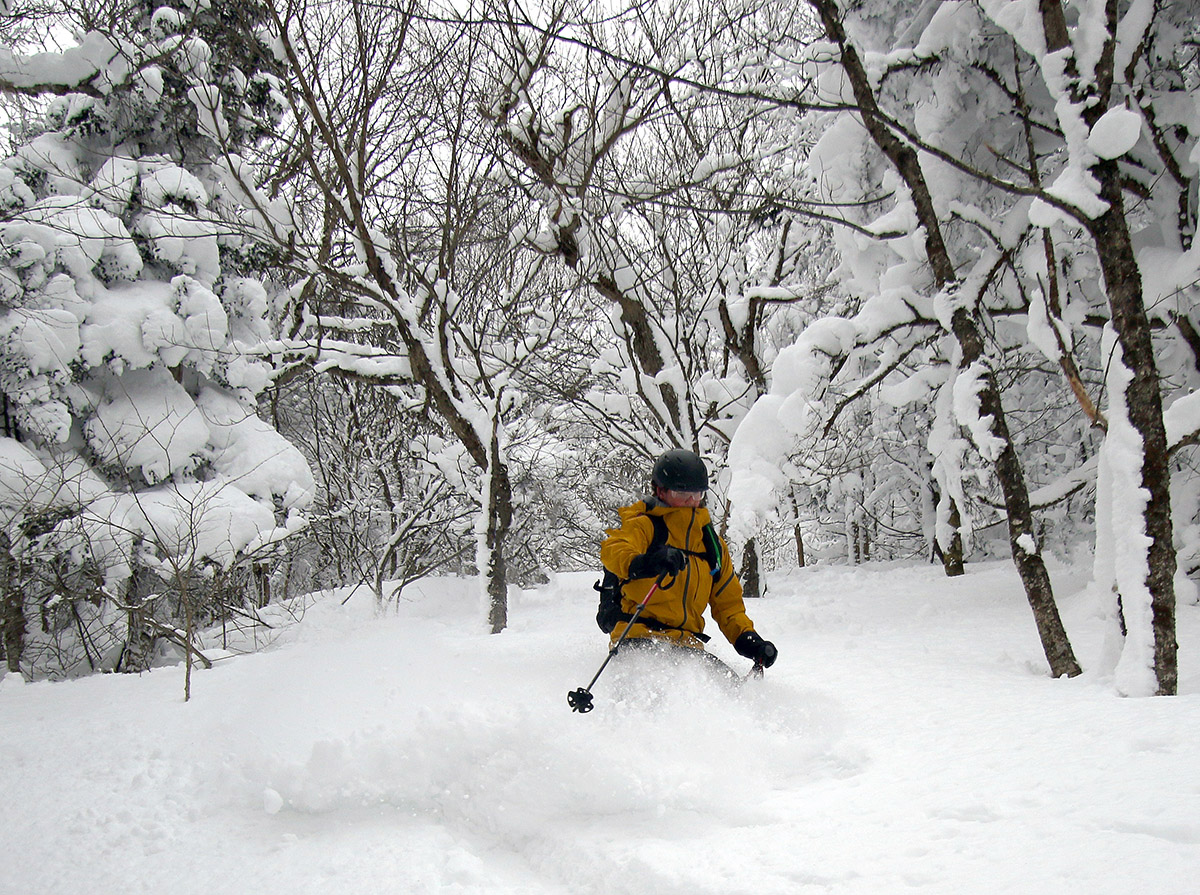
The powder was deep and bottomless throughout the descent today.
The forecast for the day was looking great – temperatures in the upper 20s F are perfect because it’s warm enough to be quite comfortable out in the backcountry, but below the freezing mark to avoid any temperature effects on the powder. I was concerned about parking since it’s a holiday weekend, but there were plenty of parking spots up at Jay Pass on Route 242. I arrived about 20 minutes before Dylan and his friends, so I poked around at the pass, and checked out the snow conditions and trail access points until they arrived.
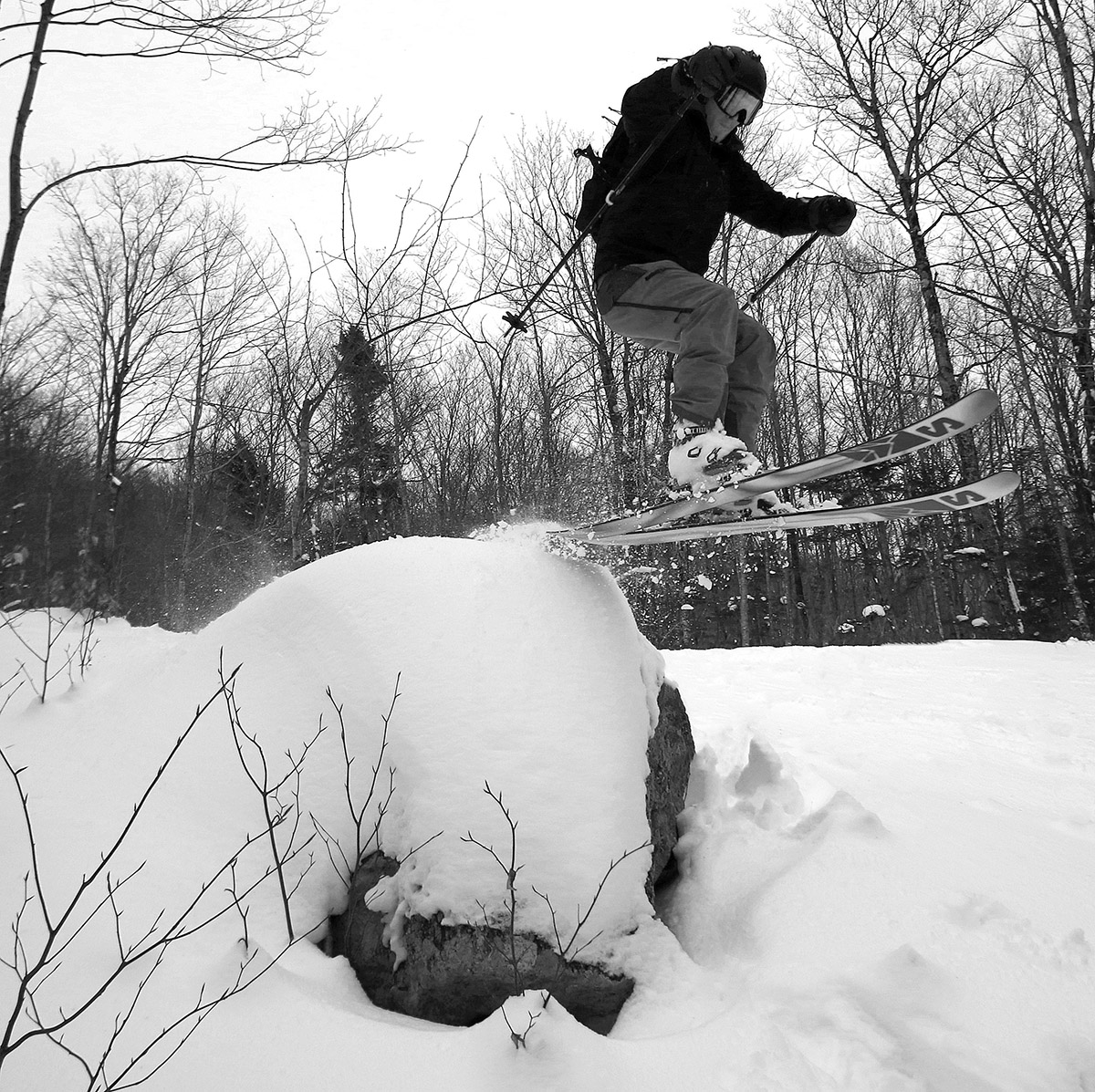
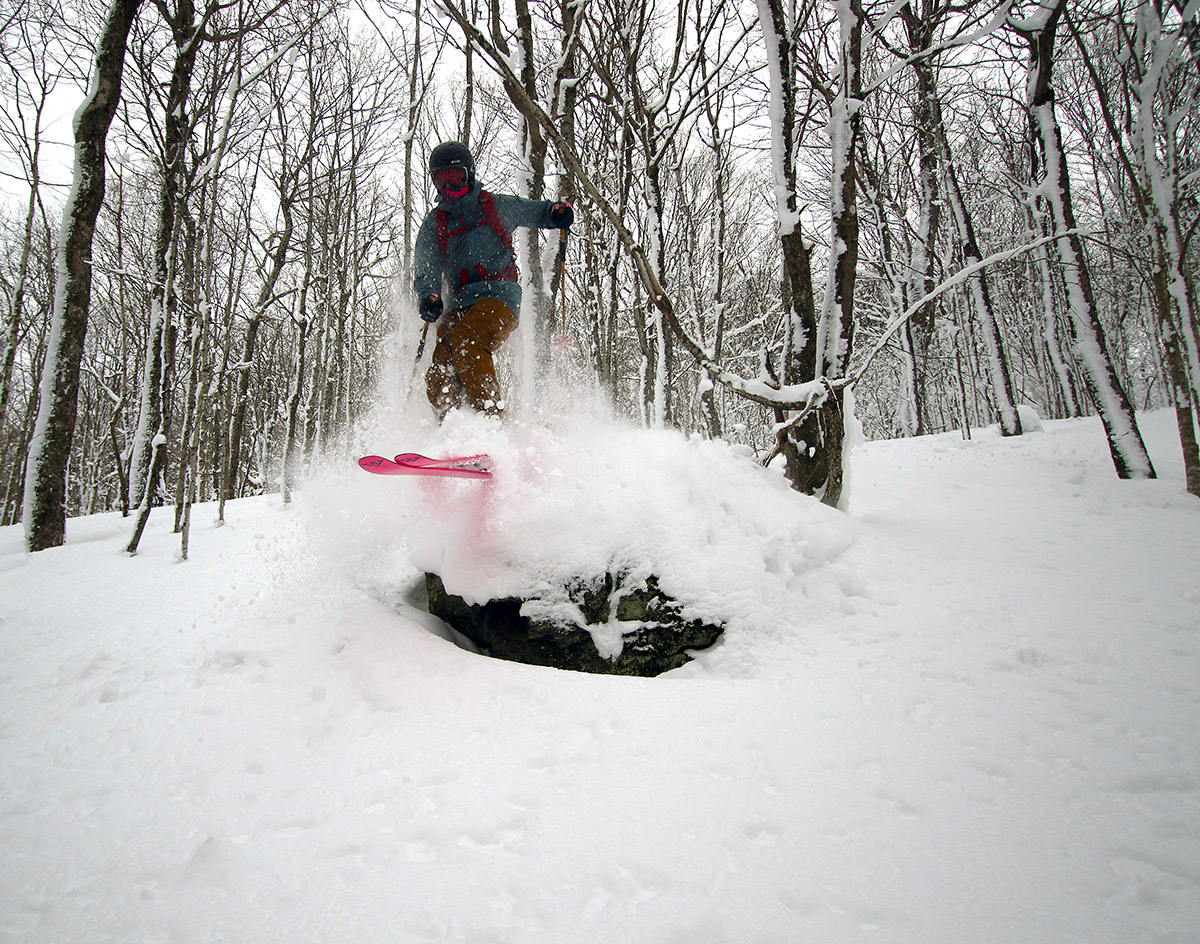
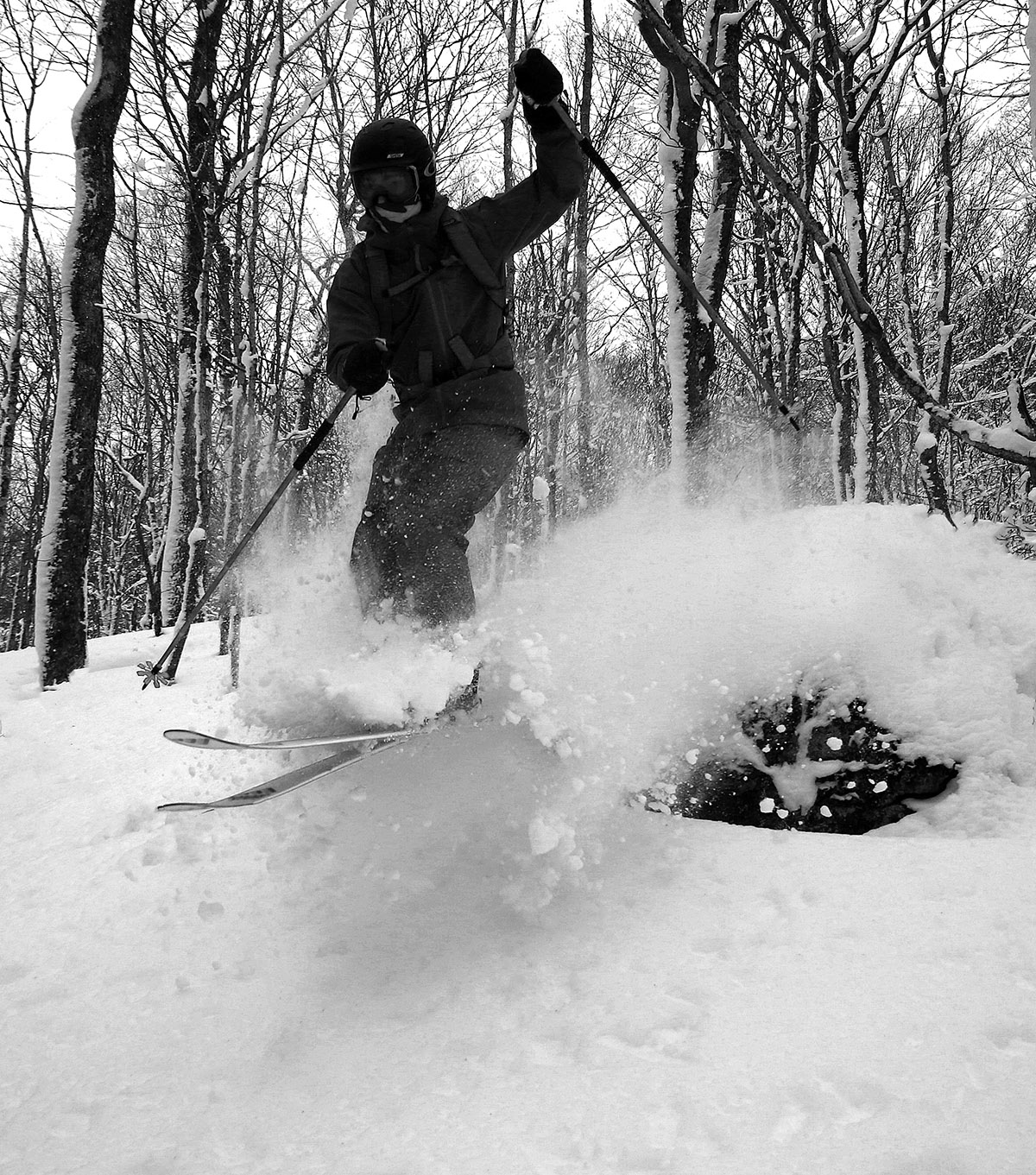
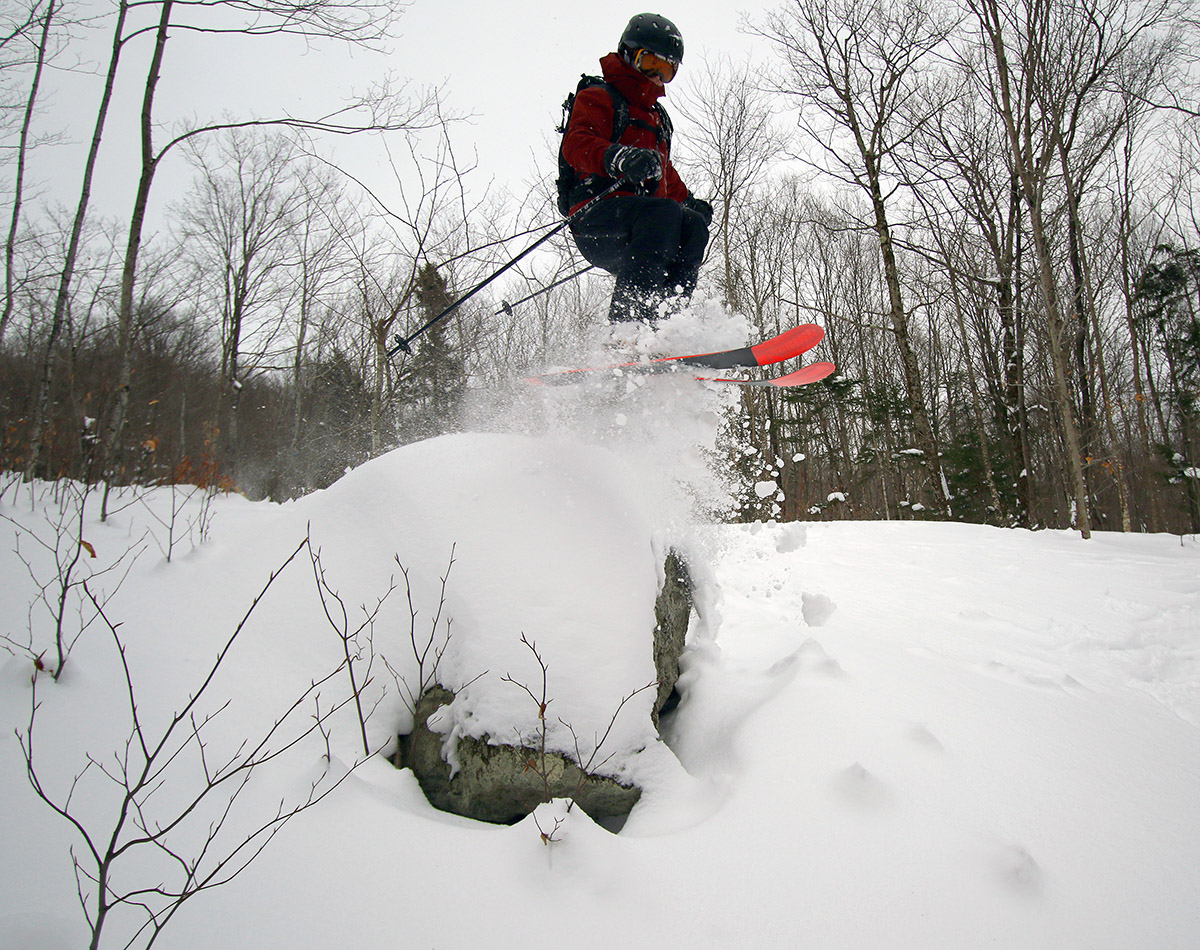
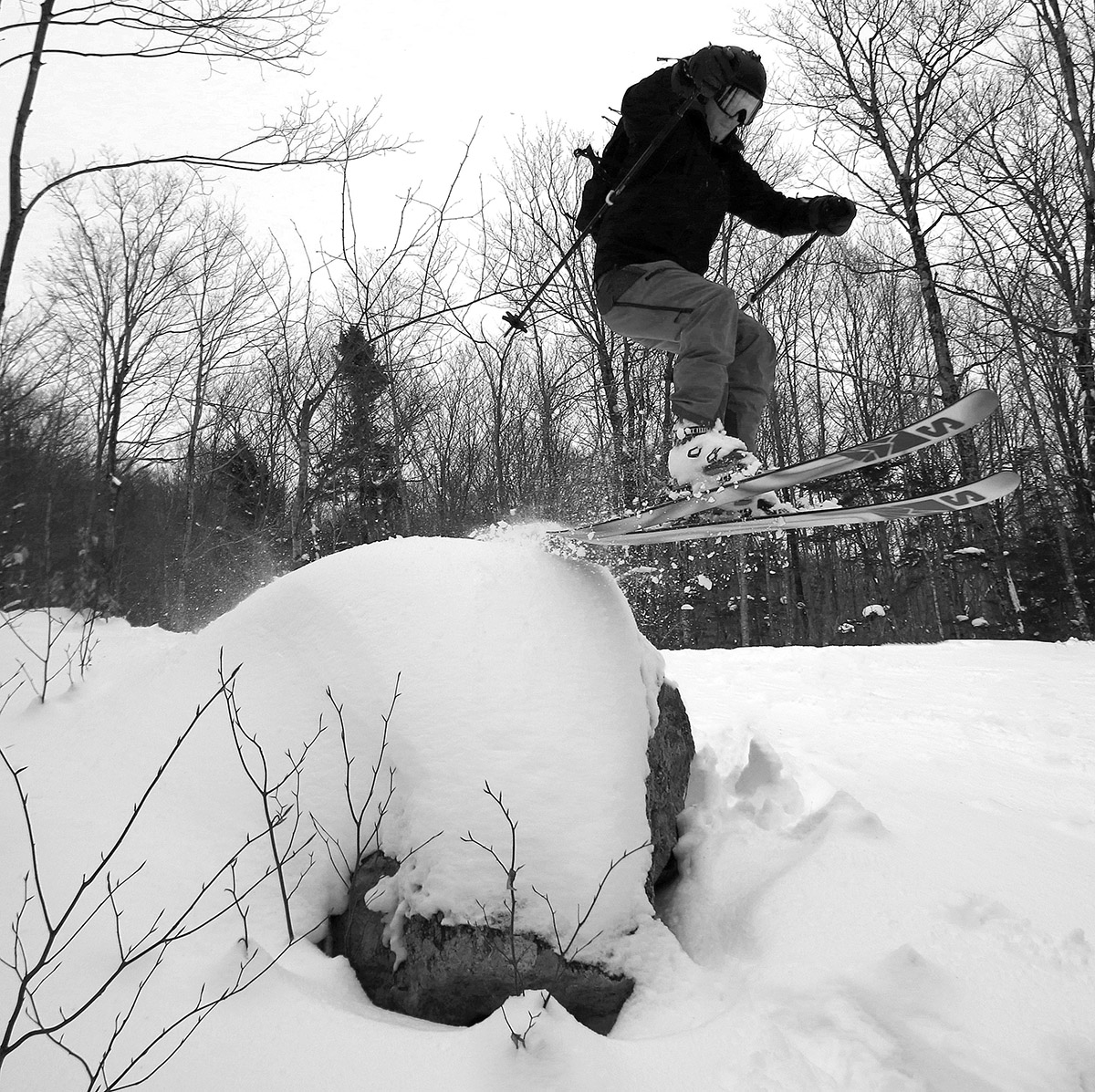
Along with the powder, Mother Nature also supplied plenty of terrain features for a bit of extra fun during the descent.
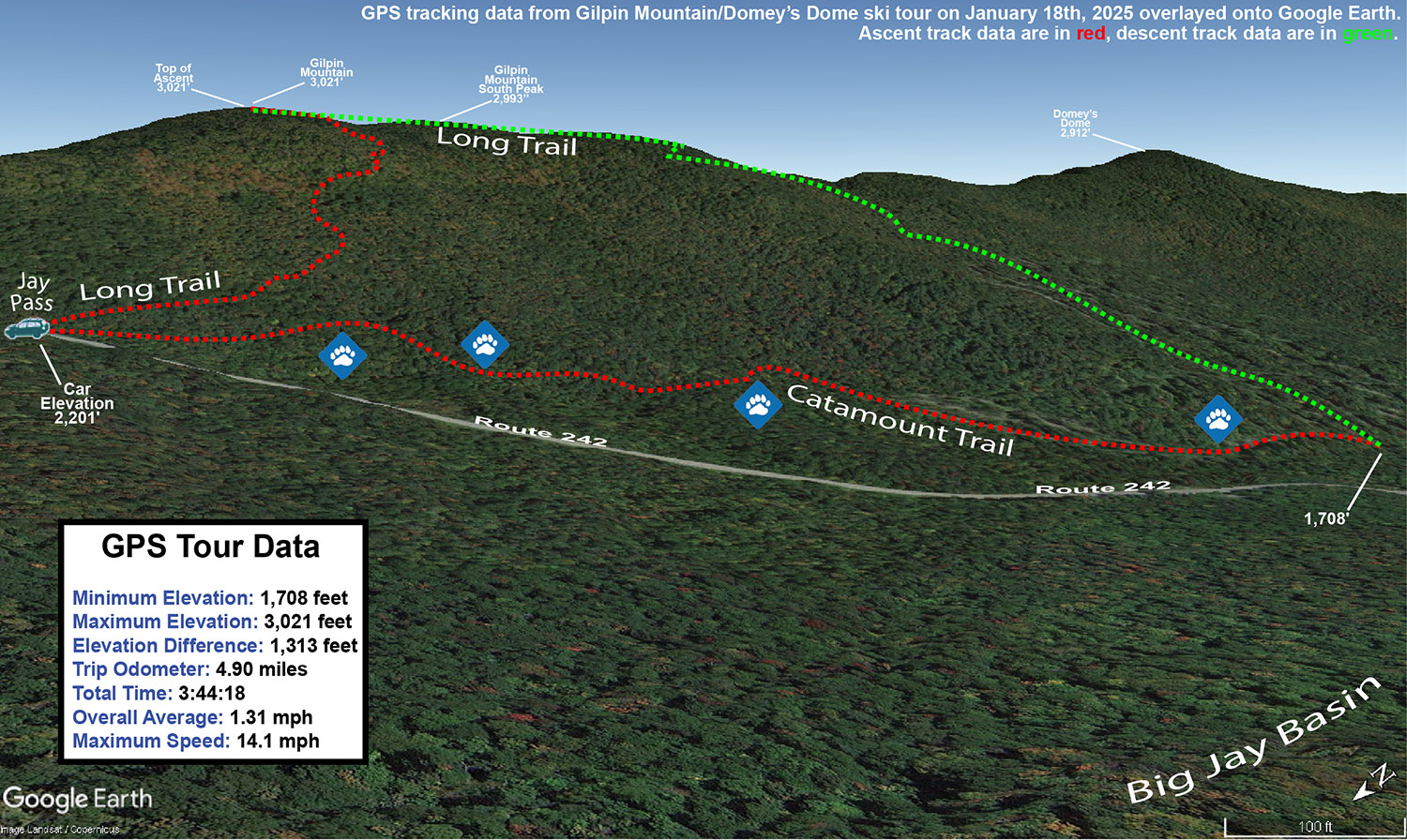
I’ve skied the terrain north of the pass on Gilpin Mountain before, but this time I wanted to check out the terrain to the south. My plan for our tour was to use the Long Trail to head up Gilpin Mountain and out along the ridgeline toward Domey’s Dome, then descend the west face of the range and catch the Catamount Trail for the return trip. With regard to ski touring, that side of the range is, in theory, set up beautifully – the Long Trail follows the ridgeline, and the Catamount Trail roughly parallels it down in the valley near Route 242. So, you can head out on the Long Trail to whatever point you want, then drop in for a descent and use the Catamount Trail as a collector for returning to Jay Pass. I say it’s a great setup “in theory”, with the caveat that the Long Trail can be tough to follow at this time of year. The Long Trail uses white blazes on the trees to mark its route for hikers, and the trees up along the ridgeline there can be absolutely loaded with snow. So, following the trail can be quite challenging if someone hasn’t already put a track in place. Also, as the snowpack continues to rise, the blazes can be more and more difficult to find. As of now, the blazes are at about waist level, so they’re still visible if you can find them behind the inches of snow caked to the trees, but even at the current height they are getting hard to see. One could certainly head out to an ascent of Domey’s Dome using the Catamount Trail from below, but after traversing the Catamount Trail in that area for the return on our tour (there are plenty of undulations and meanderings), that approach feels like more work than it needs to be unless you park farther down on Route 242.
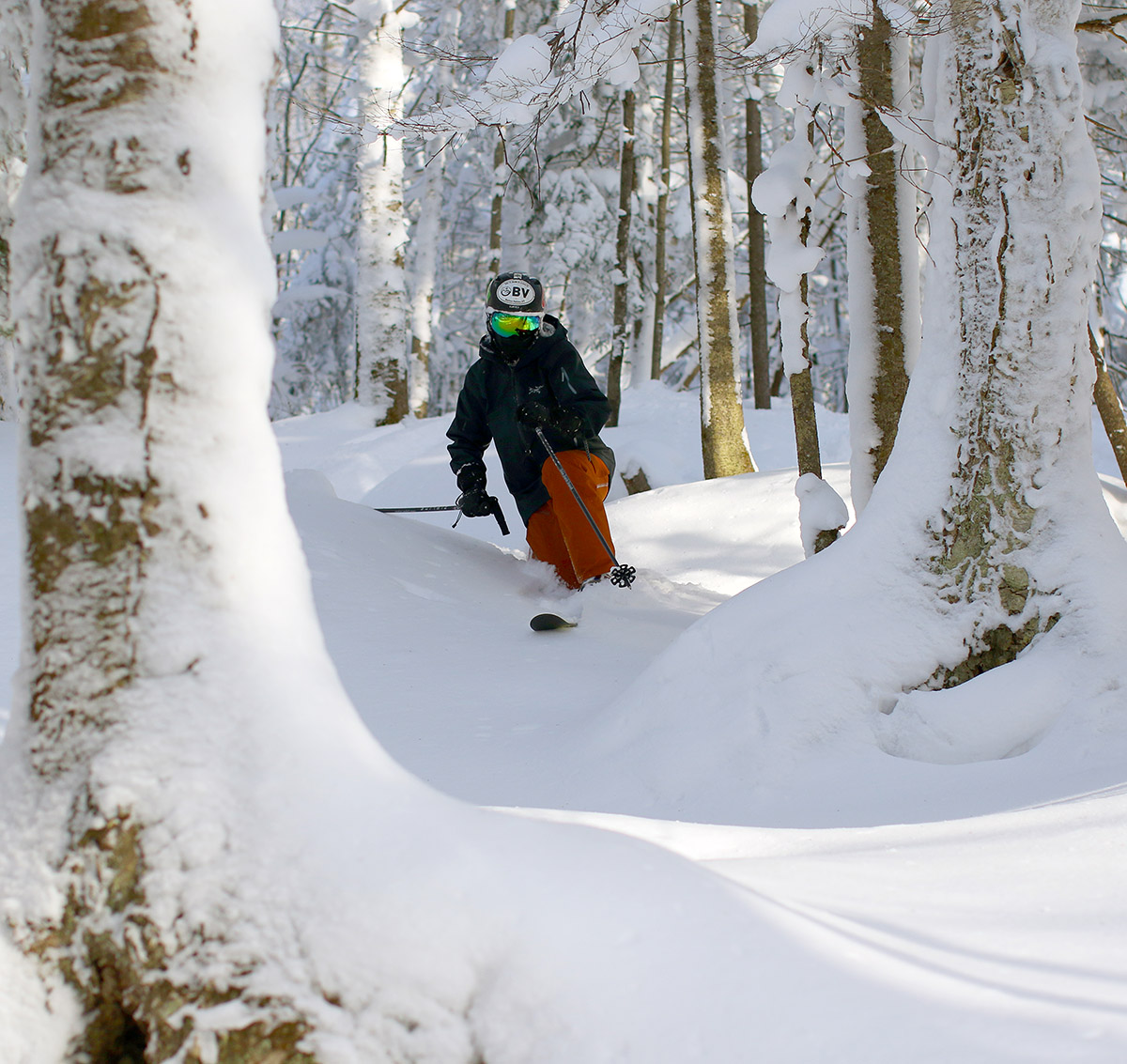
In many areas of the tour, the terrain and trees were just choked with fluffy snow.
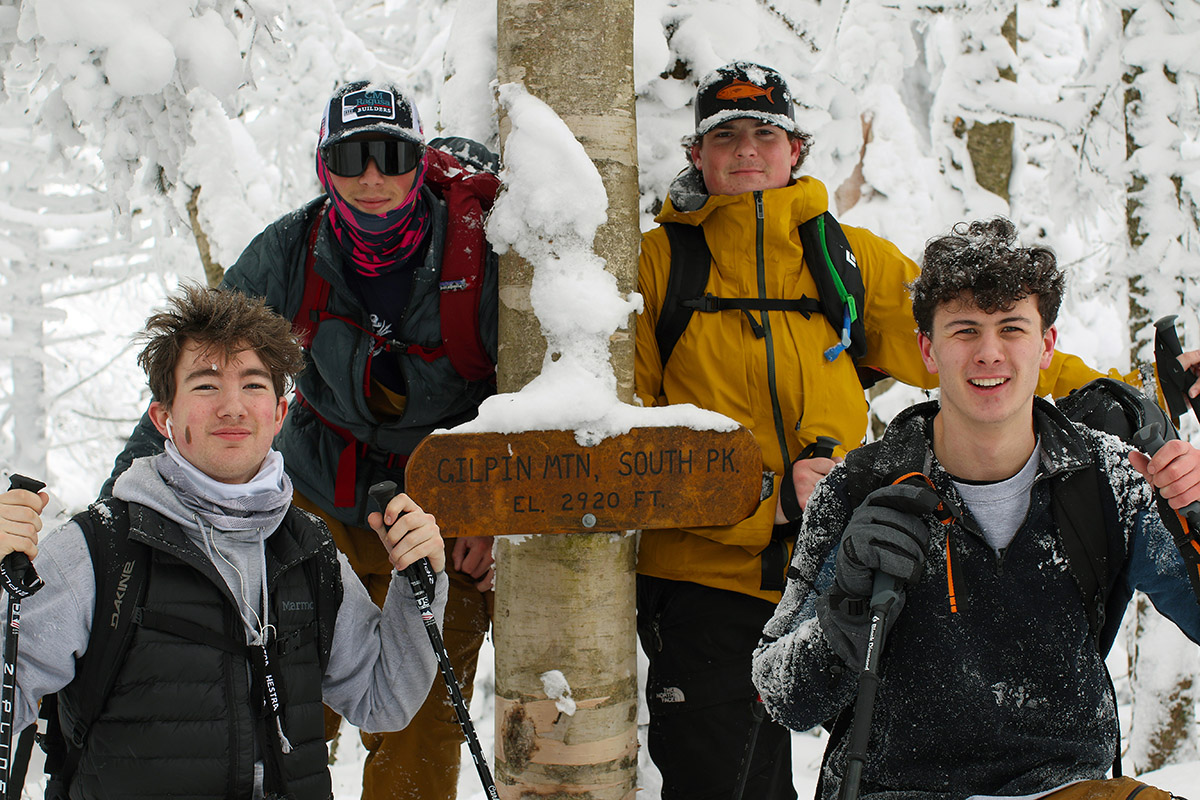
While it was breezy in the open area of Jay Pass, with the anemometers at the weather station area buzzing right along, the wind disappeared as soon as we entered the forest on our ascent. Following the Long Trail upward from the pass to Gilpin Mountain was fairly easy – it was well set as a skin track from plenty of skier traffic, so even without being able to see the blazes, it’s simple to follow. Once we were up at the Gilpin Mountain ridgeline, we took a quick jaunt to the north to check out the official summit of Gilpin Mountain at 3,021’ then moved southward and reached the South Peak of Gilpin Mountain, which is slightly lower at 2,993’. From there, we headed south on the Long Trail toward Domey’s Dome. We ran into a couple of guys from Quebec (based on their accents) who were setting up to descend a steep, sweet looking gully on the back side of the range. They joked with us about not stealing it from them, but we would never have done that, and we had other plans anyway. After that, we didn’t run into anyone, because skier traffic seems very light once you get past the general Gilpin Mountain area. We were able to follow the Long Trail southward for a little while, with the help of one track from a previous skier, but as we descended into the col between Gilpin and Domey’s, it became more and more difficult to hold the ridgeline and not get pulled into descending on one side of the ridge of the other. Nobody had broken trail on the Long Trail across the ridgeline, so the route finding took time. We had access to multiple GPS units, and when the Long Trail is obscured with deep snow like it is now, you certainly want to have your GPS and compass. Not wanting to waste too much of the session trying to navigate the traverse, we eventually decided to hug the western side of the ridge as we headed southward, with the intention of beginning a descent if we saw some appealing ski terrain. It wasn’t too long before we found a relatively steep line that dropped through some open trees, and we decided it was as good a time as any to begin skiing.
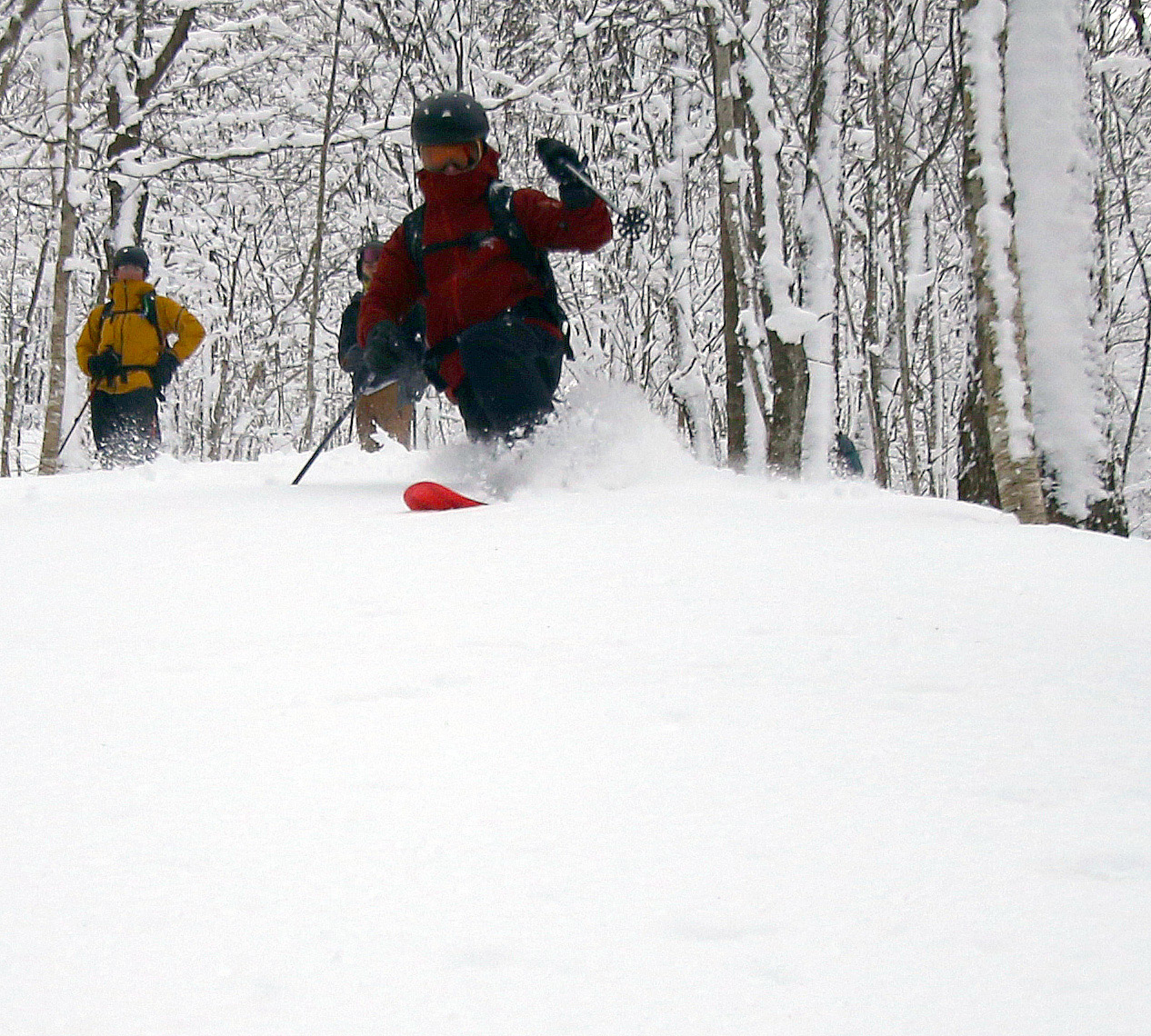
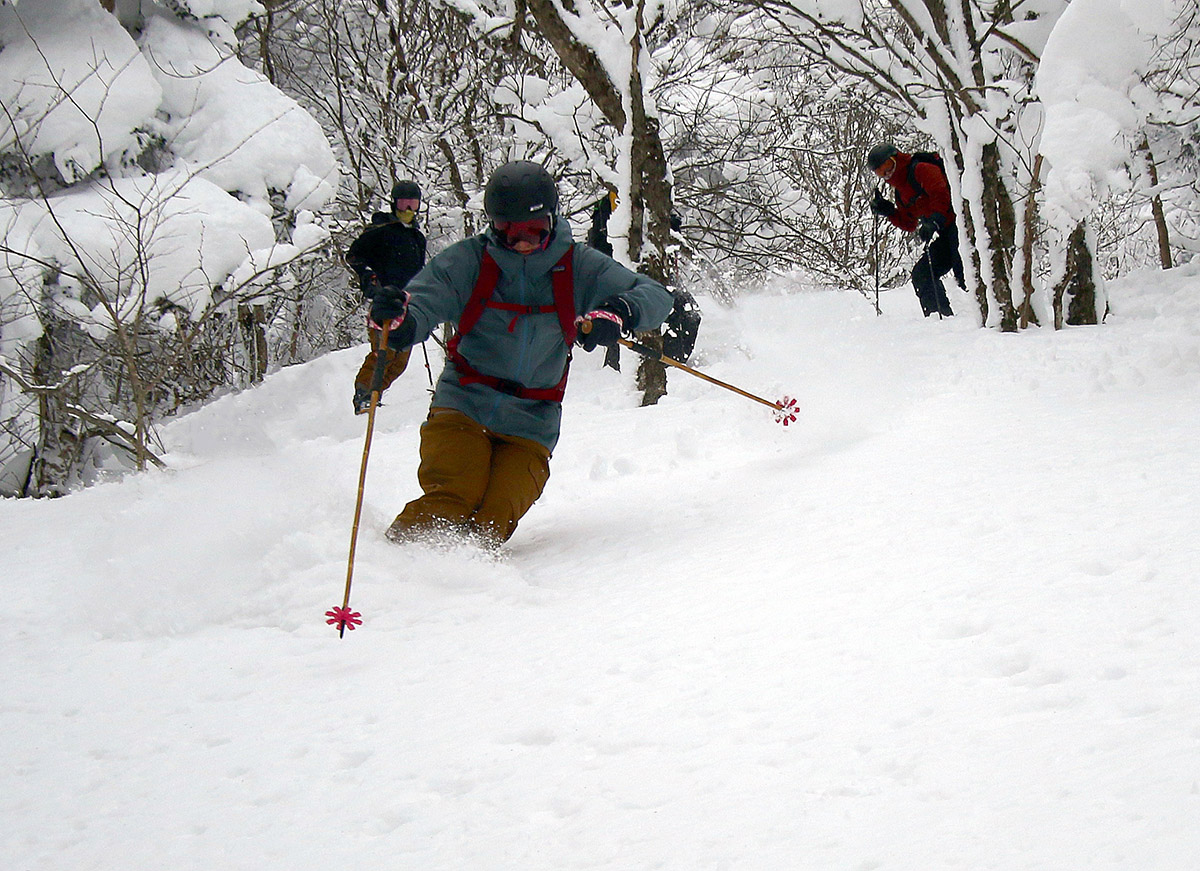
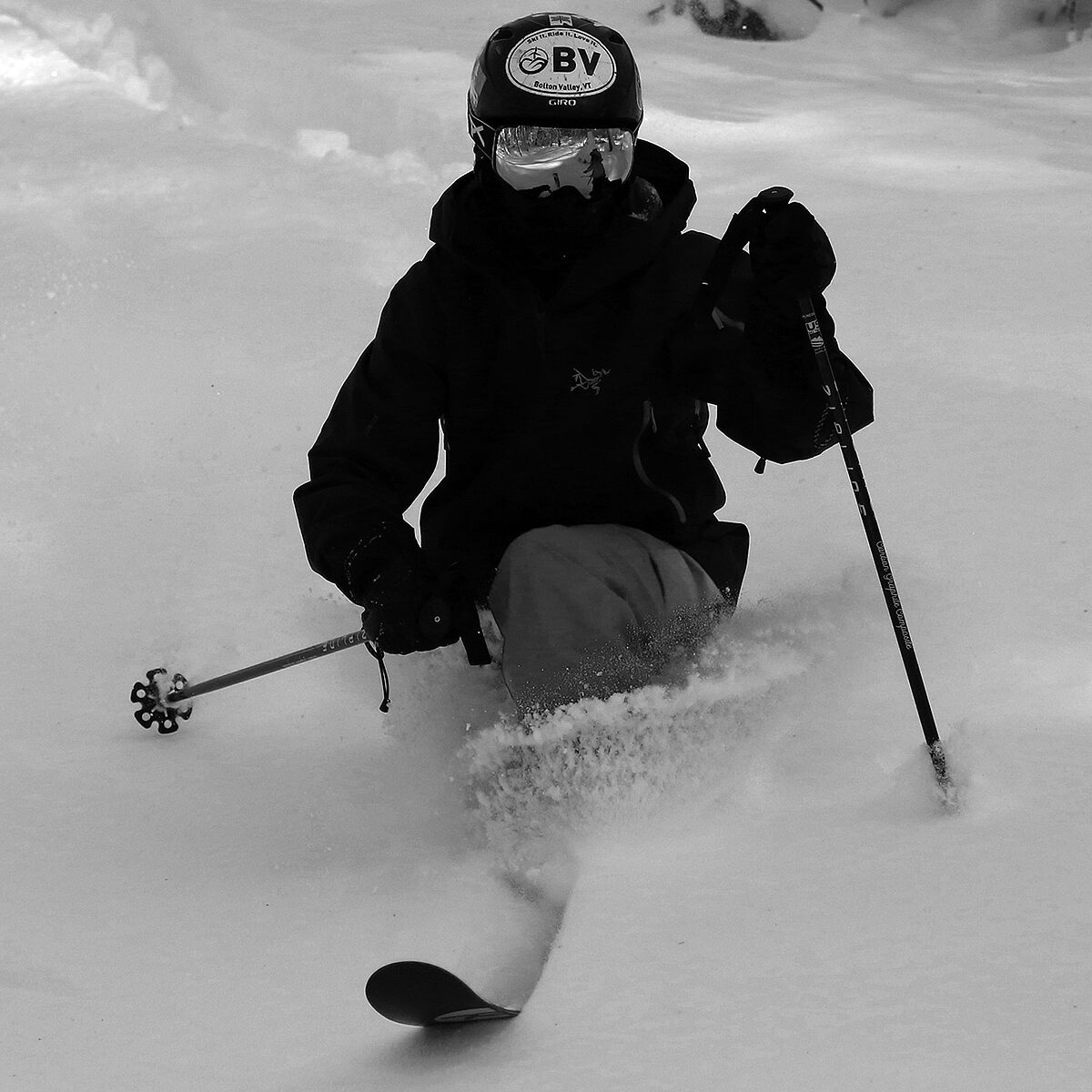
The boys would line up, drop into their lines, and let ’em rip.
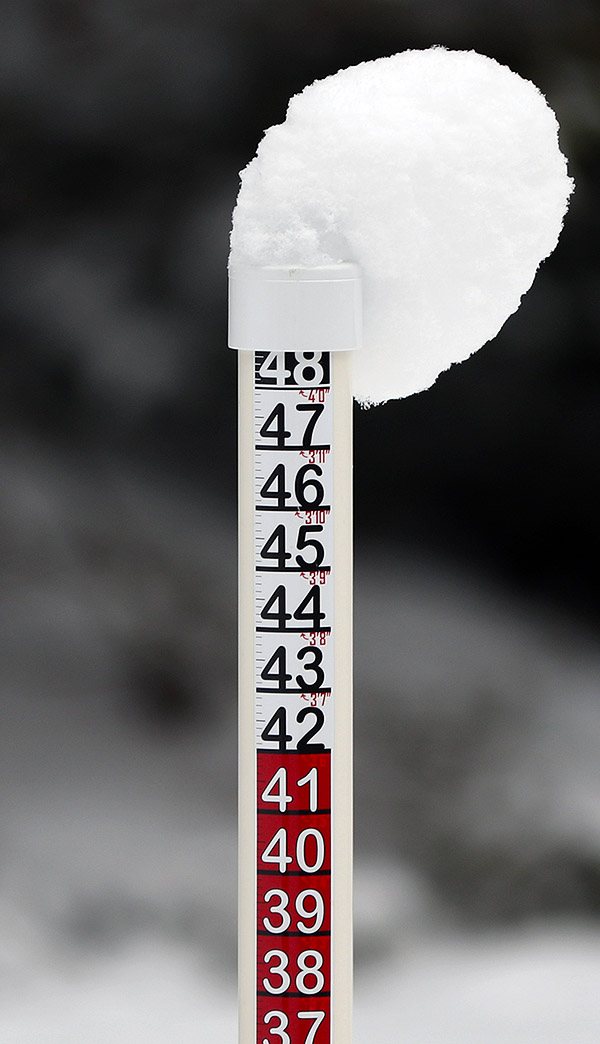
Our descent from the col between Gilpin and Domey’s featured some nice areas with reasonably open trees, spots with excellent natural glades, and some terrain that had been logged and maintained for logging access. The powder was fantastic – there was typically 1 to 2 feet of bottomless powder over a deep base. I would frequently check the depth of the snowpack, and my ski pole would go below the surface of the snow, which means the snowpack depth was in excess of 45 inches. The powder was in a very nice right-side-up density gradient starting with snow in roughly the 6 to 8% H2O range on top. The only thing that could have really made the powder better would have been to throw on several more inches of fresh 3-6% H2O champagne, but that’s really getting picky, because it skied incredibly well. Everyone was on fat skis with widths over 100 mm, and the skis were definitely in their element out there today. Dylan was on his Telemark skis for the first time in 2 or 3 seasons because he’s been looking for a good pair of boots to replace the current ones that are too tight, but it didn’t look like his Telemark skiing had missed a beat. I was happy to see that, and so were his friends.
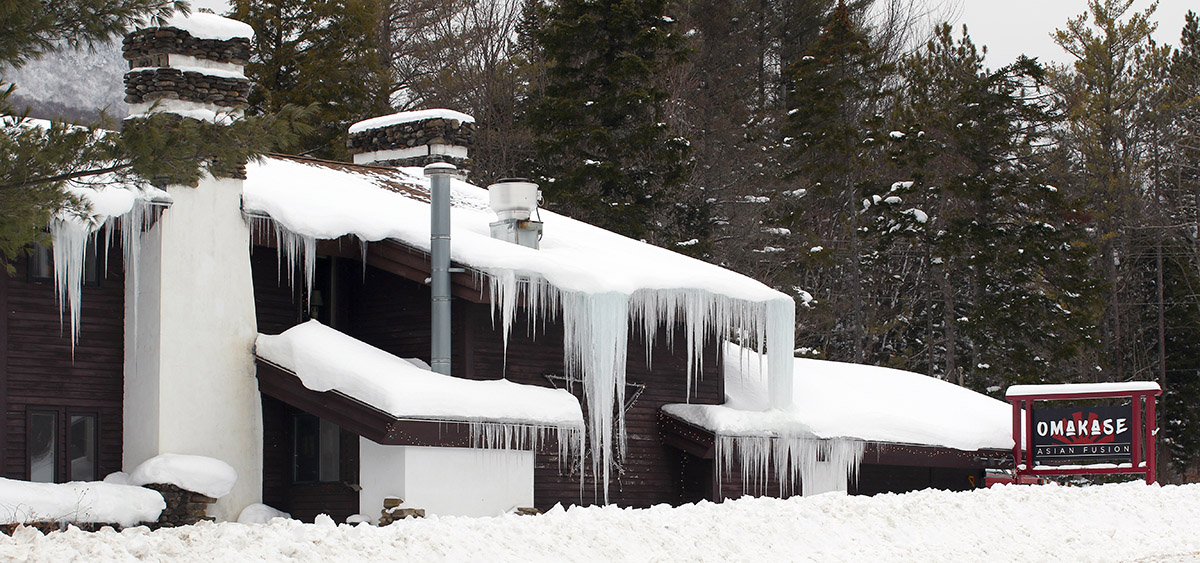
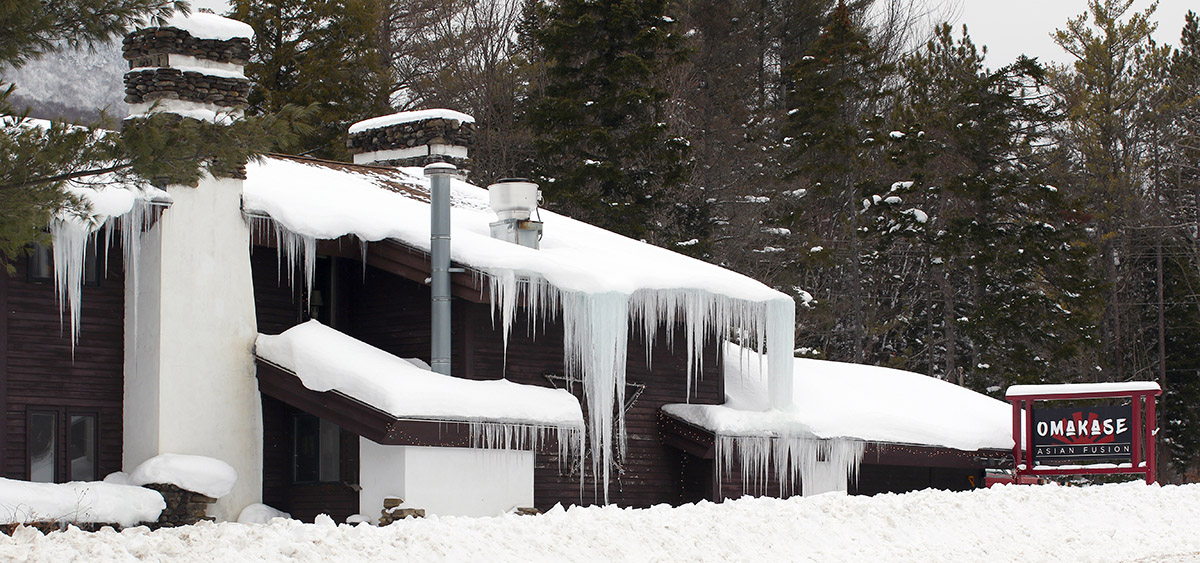
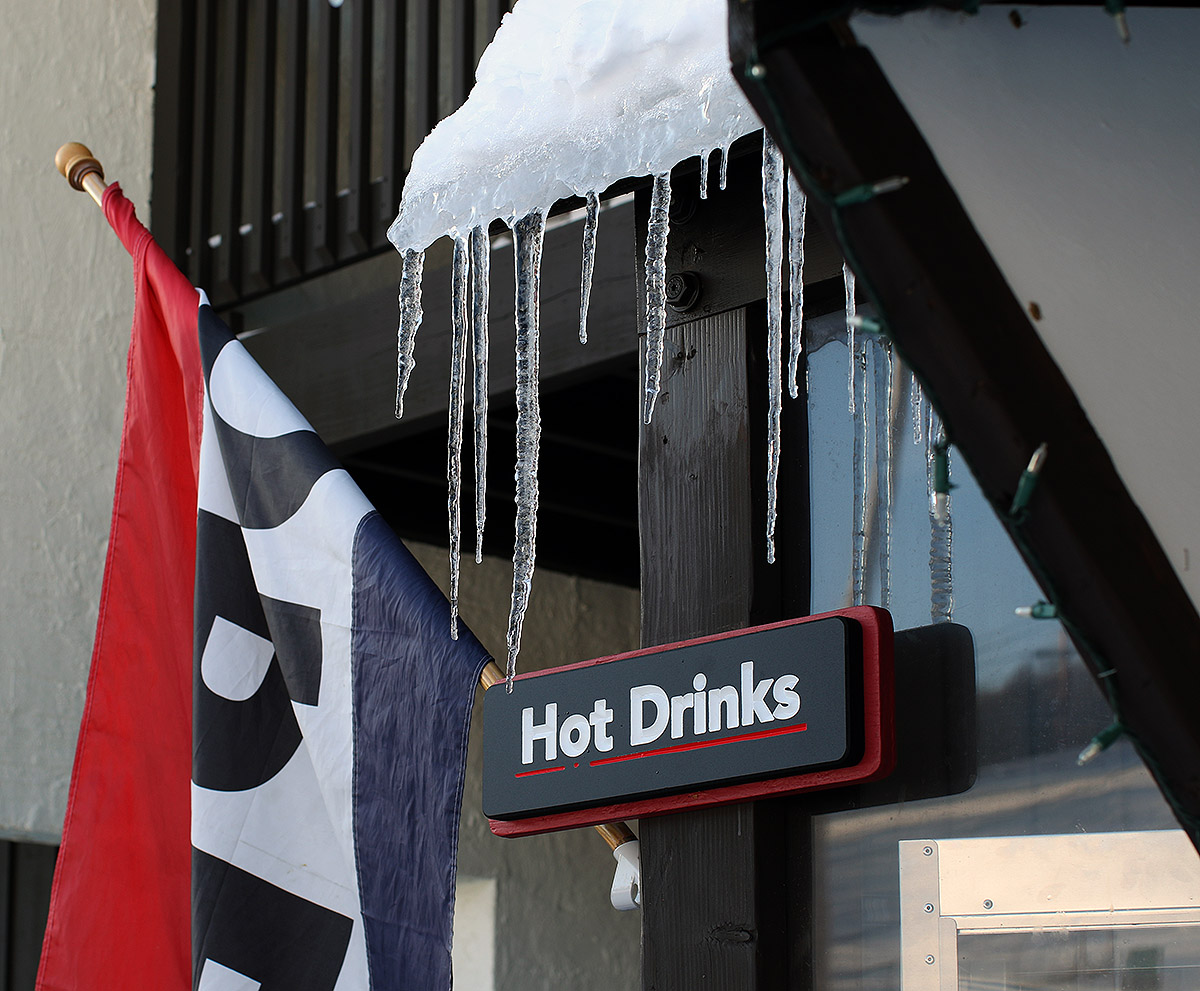
A Google Earth map with GPS tracking data for today’s ski tour in the Gilpin Mountain and Domey’s Dome area of the Jay Peak backcountry.The Omakase Asian fusion restaurant on Route 242 really fit the look of the Jay Peak area with its snow on the roof and huge icicles hanging down to the ground.
As of this morning, Jay Peak is reporting 203 inches of snowfall on the season, and you can really feel it when you’re out there in the nearby backcountry. The snowpack depth at the Mt. Mansfield Stake at 3,700’ is around 55 inches, but based on what I found out there on our tour in the Gilpin/Domey’s area, that snowpack depth is probably obtained at a lower elevation in the Jay Peak area. We weren’t even out in the Big Jay Basin area, which seems to collect some of the most snow in the area due to its leeward position, so I bet the snowpack is quite deep out there. Dylan and his friends are planning to head out to Alyeska in March for some skiing during spring break, and he mentioned that as of now they apparently have the most snowfall for the season of any ski area in the U.S. at 346 inches. That got me wondering about how things are going for some of the well-known, snowier resorts in western North America with respect to snowfall, and I saw that Steamboat is at 143 inches, Whistler Blackcomb is at 197 inches, Grand Targhee is at 211 inches, and Alta is at 233 inches. So, Jay Peak’s 203 inches is certainly in that ballpark, and the area’s snowpack is definitely doing well. I’d say what’s really helped with making Jay Peak’s snowfall perform in terms of building the snowpack is that they haven’t had to deal with many thaws, especially in the past few weeks when they’ve has so much continuous snowfall.
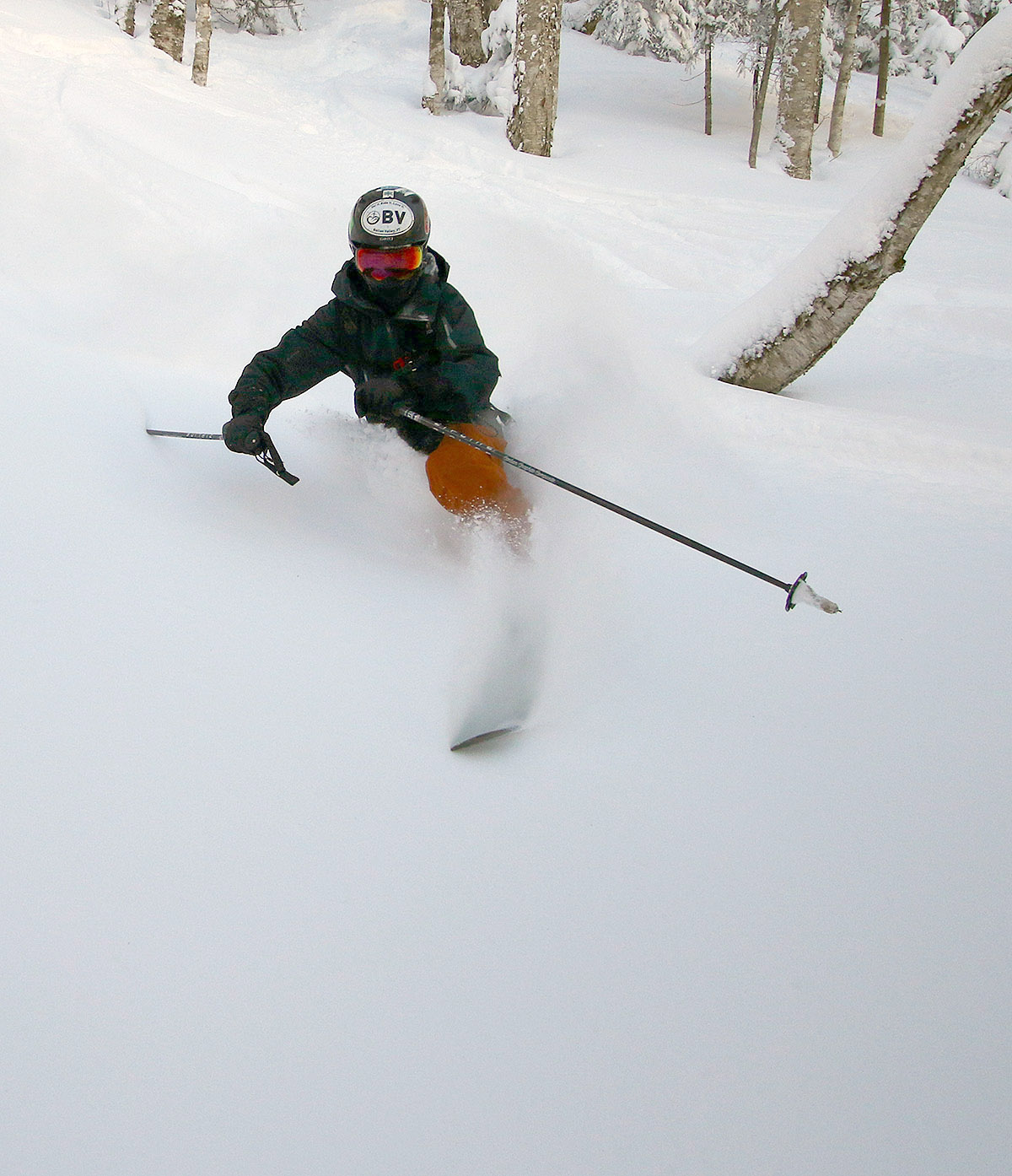
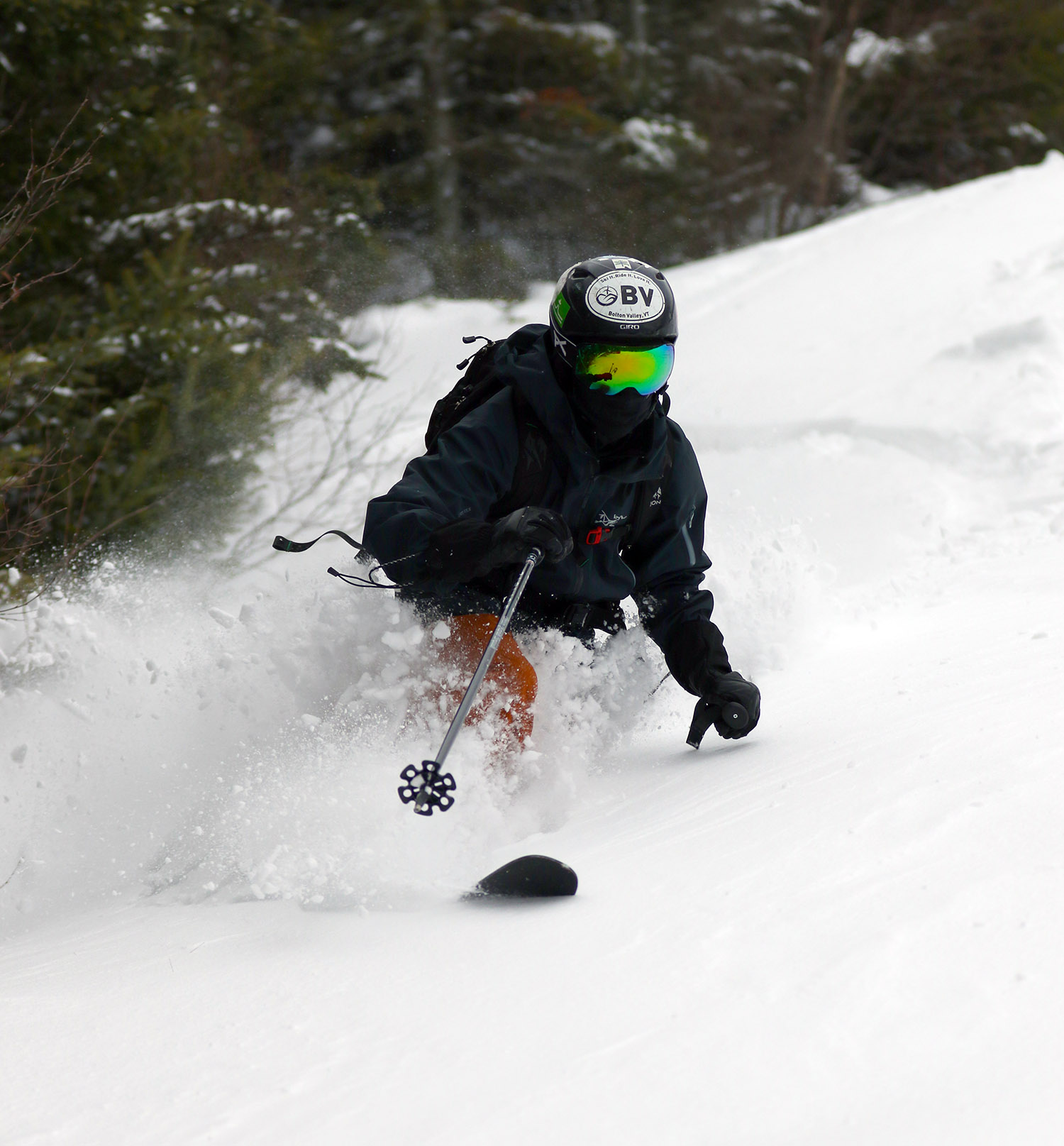
Ty cruising down the contours of a fun line in the Snow Hole/Branches area during today’s powder skiing session at Bolton Valley
The weather and ski conditions yesterday were excellent, but today kicked that up yet another notch. Today’s temperatures were well up into the 20s F with brilliant winter sunshine and no wind. And after our spell of cold, snowy weather, you could really feel the difference today. Whether you were riding on the slopes, sitting the lifts, or just hanging out at the base area, it was all very comfortable. Also, with brilliant sun, we had great light for action photography; Near base ISO I was able to shoot 1/4000 sec at f/2.8 even in the trees.
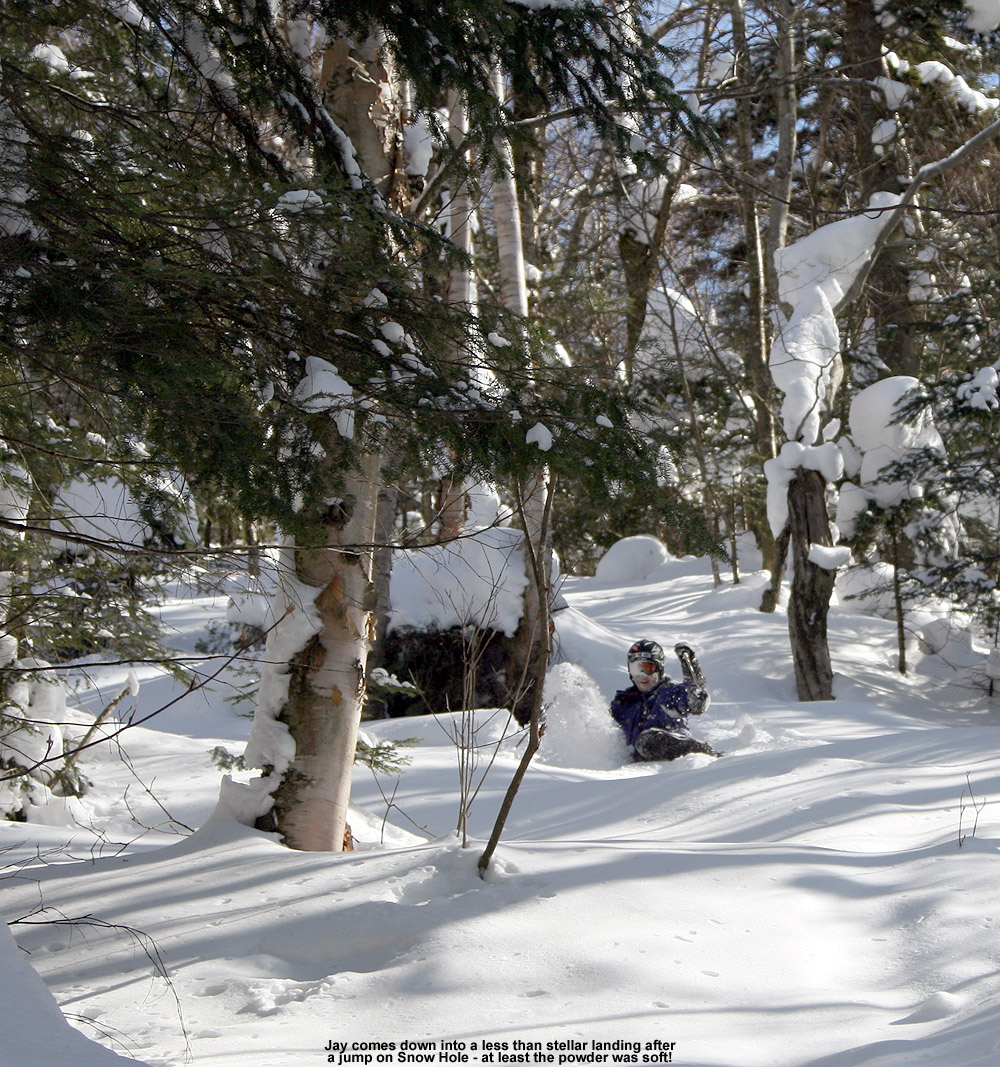
I was up at Bolton Valley this afternoon skiing with Ty, and one notable, and surprising improvement was in the powder. As I mentioned in yesterday’s report, the powder skiing was decent, but not outstanding because the snow density was so homogeneous throughout its depth. I guess Mother Nature just needed a bit of time with that new snow because as of today it had settled beautifully into a more right-side-up powder stack that skied much better. Ty and I dug into the snowpack and checked to see what had changed: the first roughly half foot of powder had dried out, and the snow below it had settled into a smooth density gradient, presumably due to compression from the snow above. At ~2,400’ elevation on Wilderness we found roughly 18 inches of powder before you hit what I’d say was a layer resembling a subsurface.
Ty dropping through a powdery line in the Snow Hole area of Wilderness during this afternoon’s outing at Bolton
With the weather and snow conditions, it was once again fairly busy at the resort with parking needed down at Timberline. Since we went up in the early afternoon though, we were able to get a parking spot up in the Village because of people who were leaving, but it still wasn’t easy – others were arriving to get in afternoon turns as well. Based on the current forecast, the next storm is expected to move into the area tomorrow, with a couple more systems over the course of the week, so hopefully we’ll have a few rounds of snow to keep the great conditions in place.
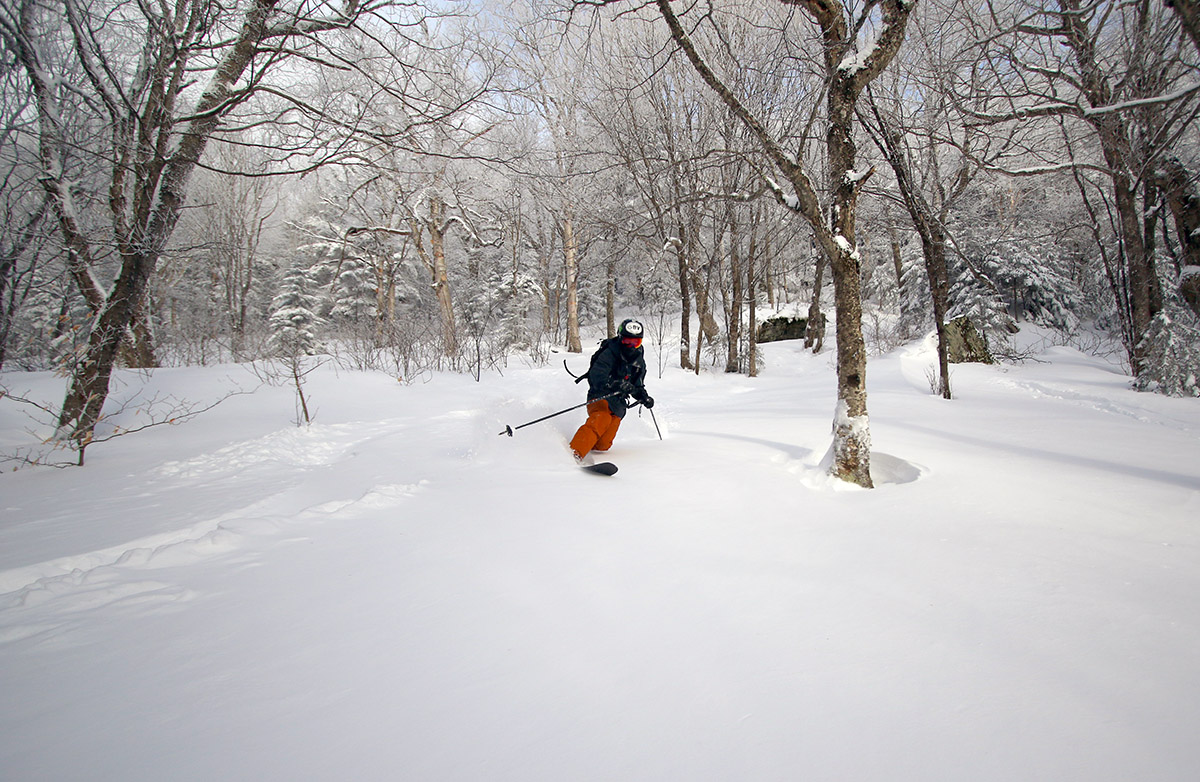
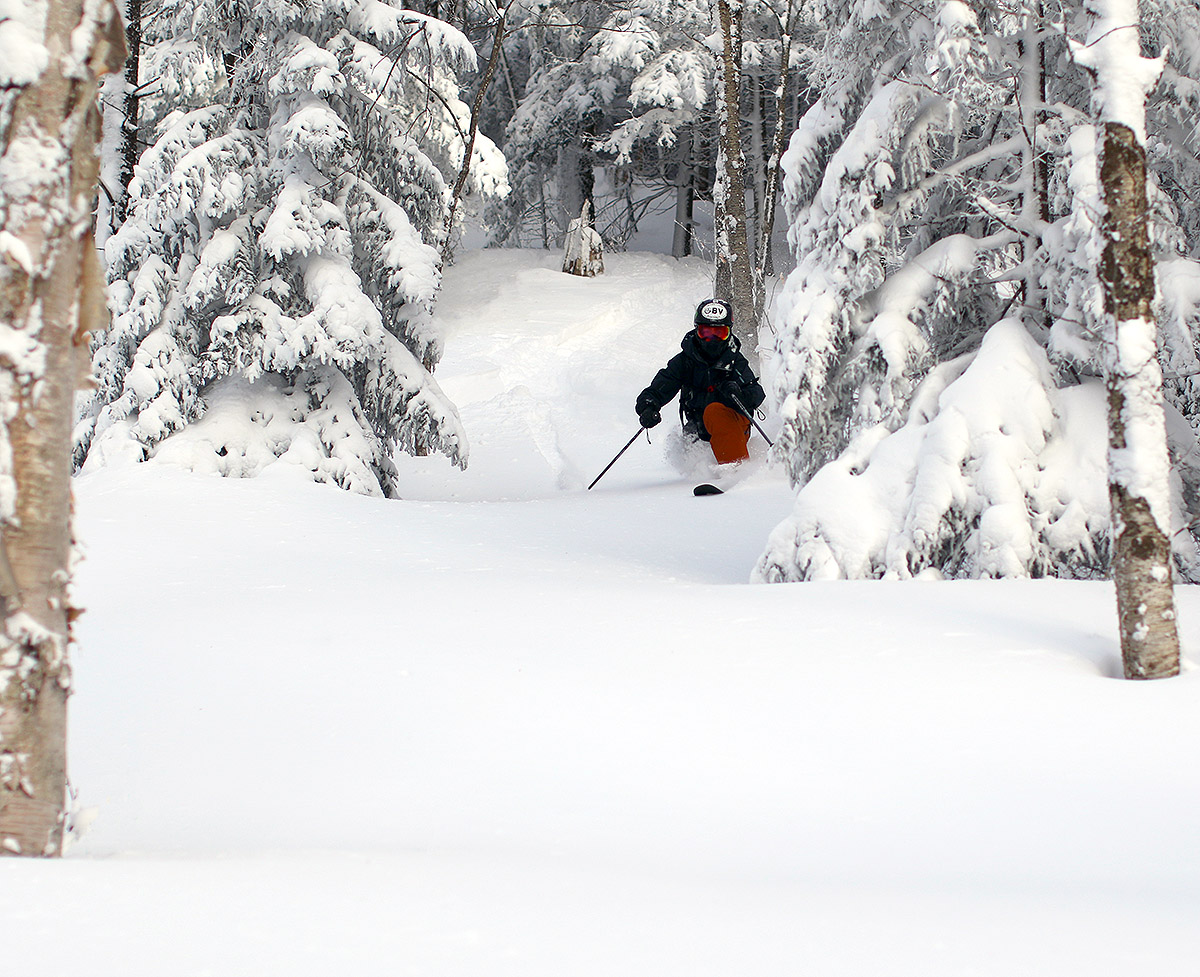
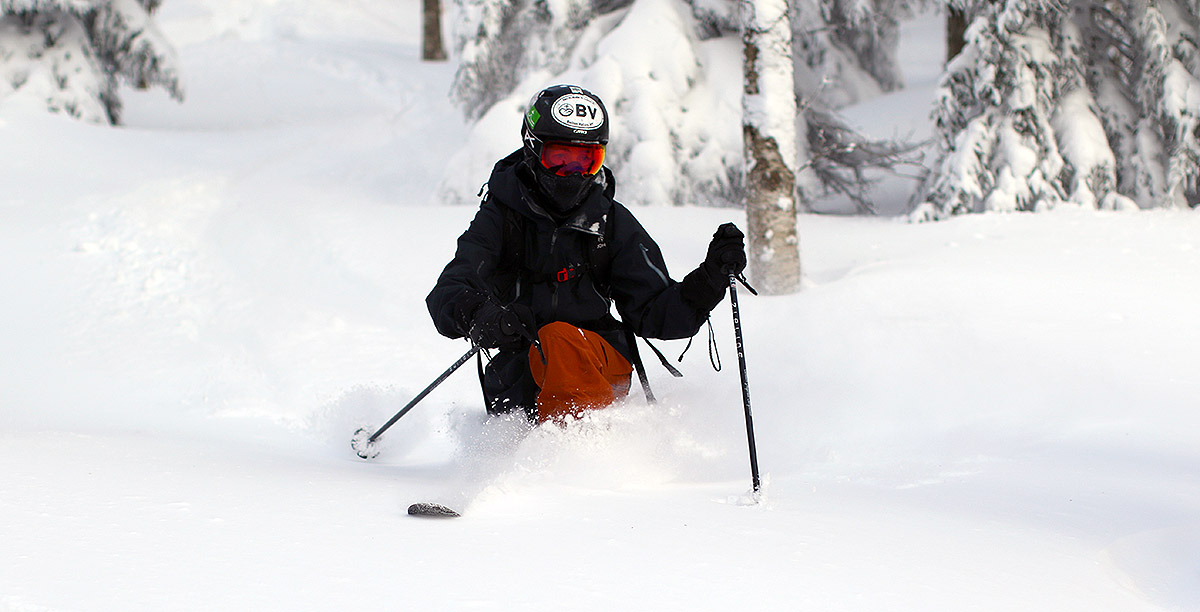
Ty diving through the powder on today’s tour as we descend in Bolton’s Snow Hole area
Based on the quality of yesterday’s skiing, I was leaning heavily toward heading out for another tour today. The backcountry conditions around Bolton are already quite good, and they were reporting another 2 to 4 inches of new snow this morning, so that was a nice bonus. Temperatures were expected to be about the same as yesterday, which meant single digits F.
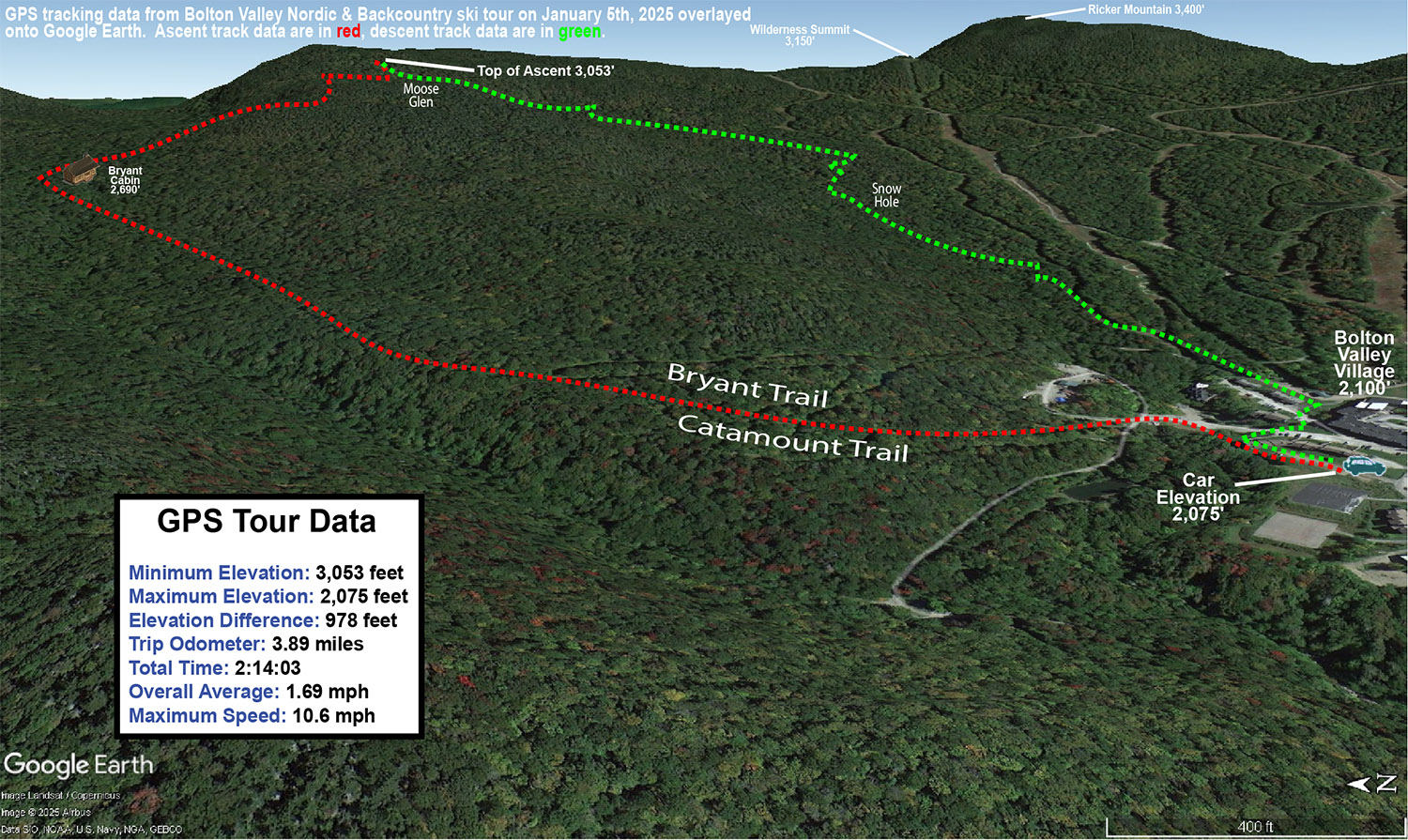
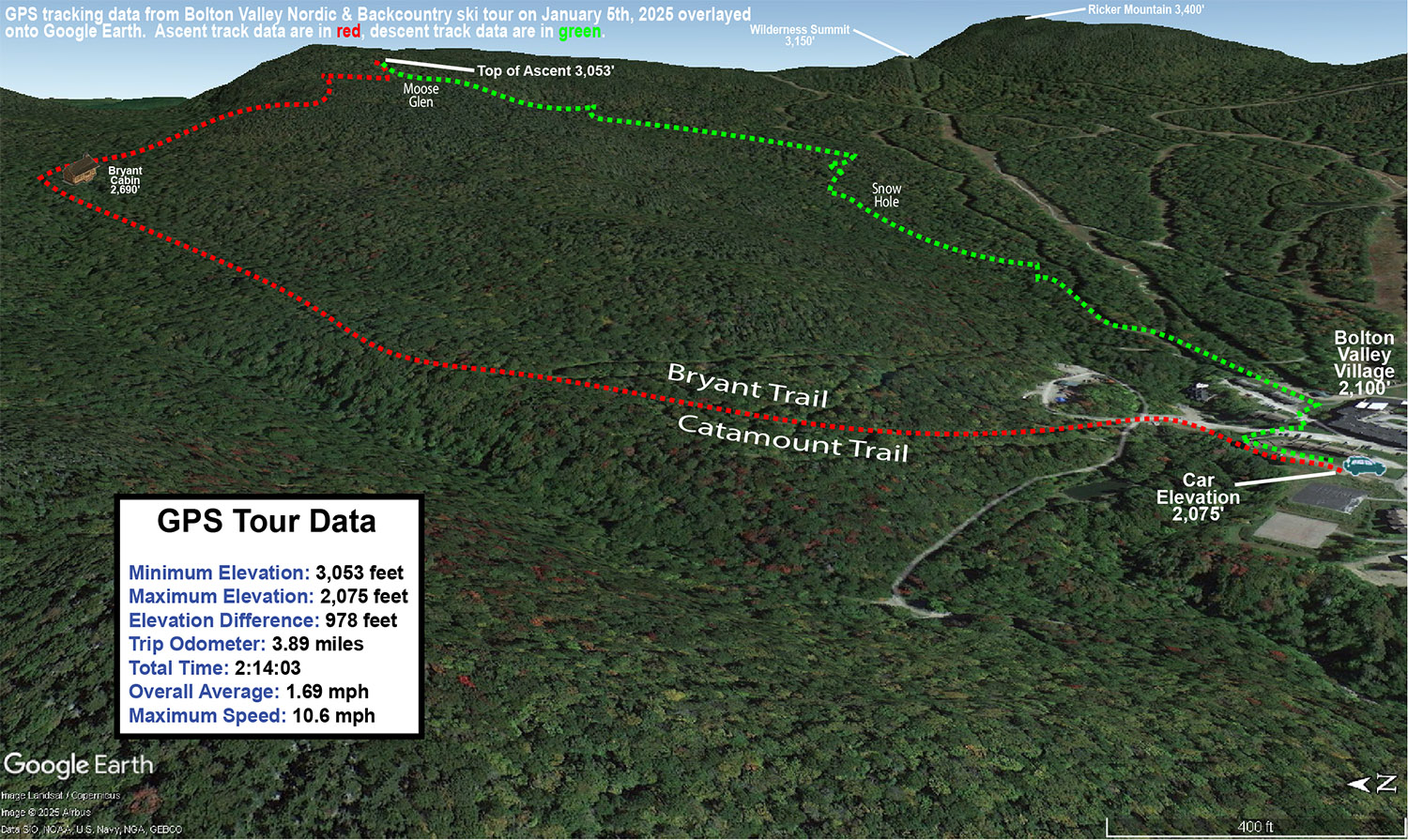
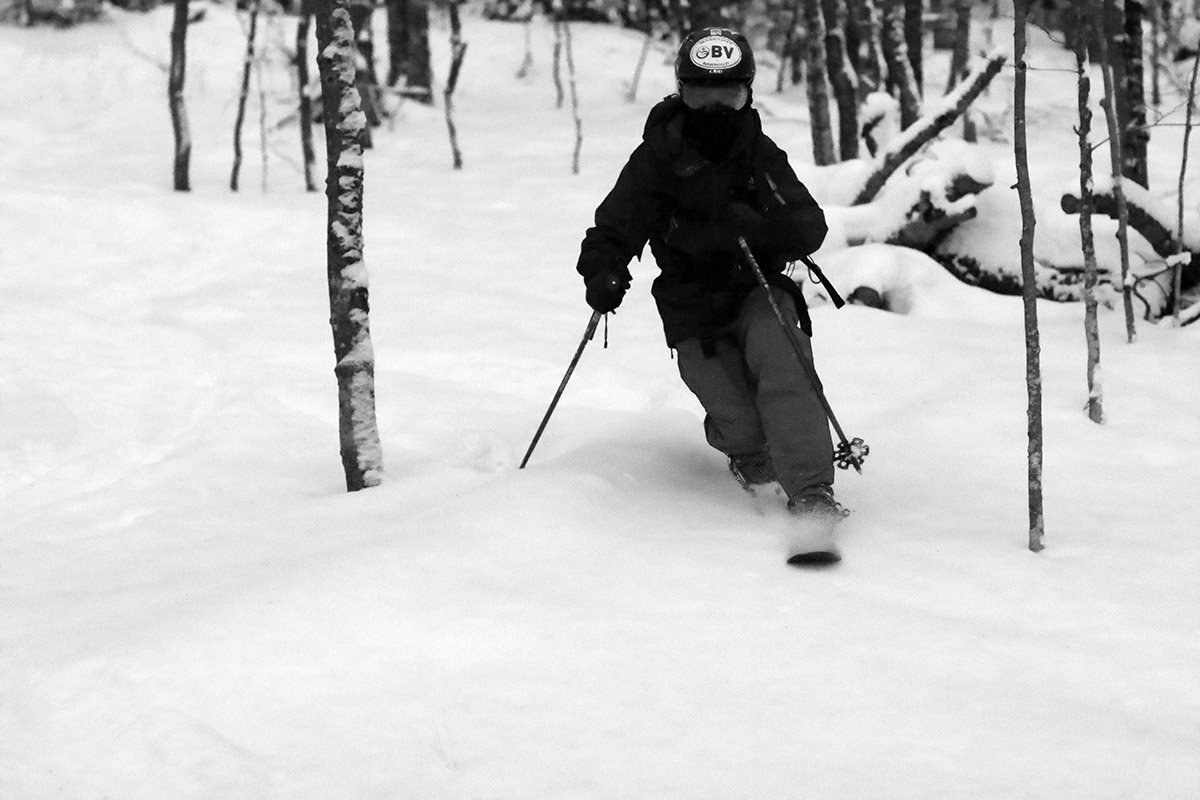
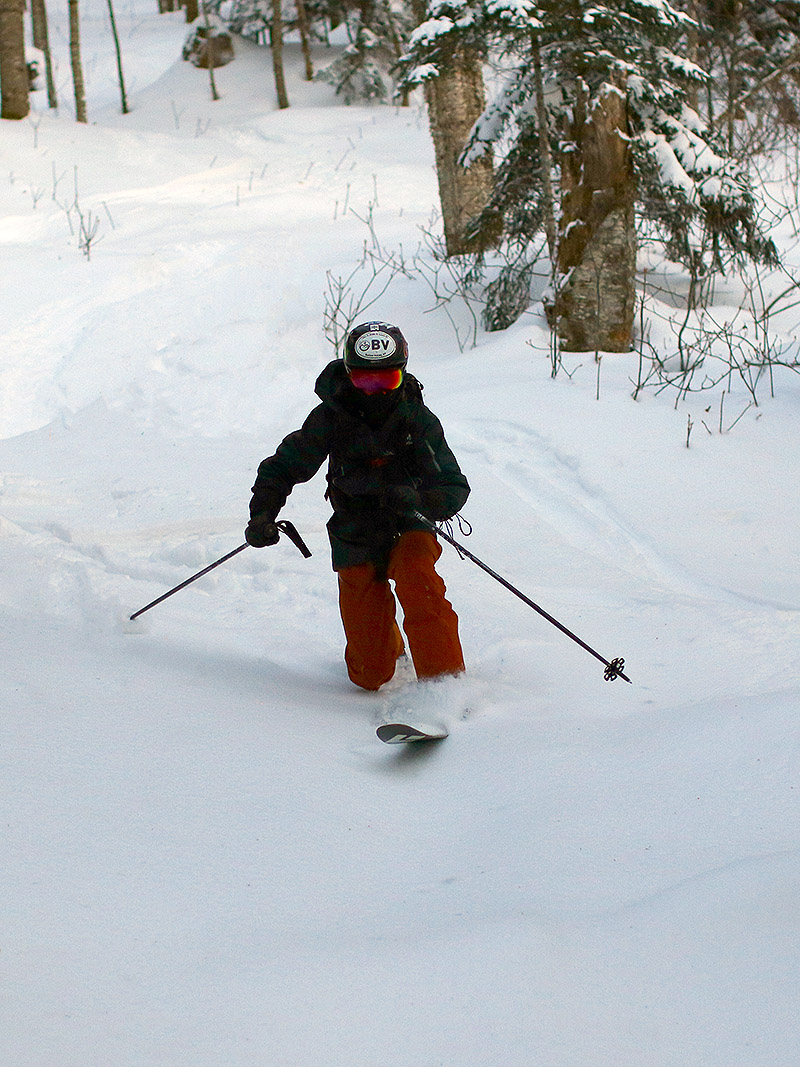
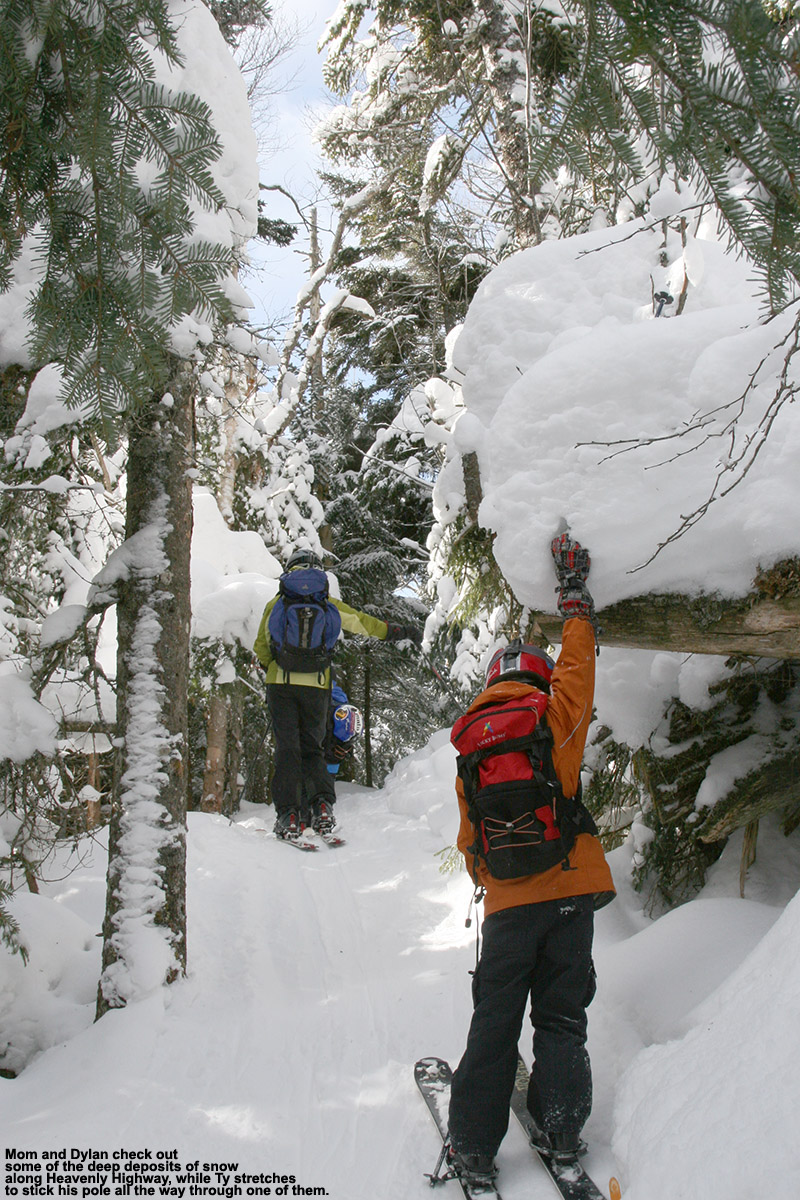
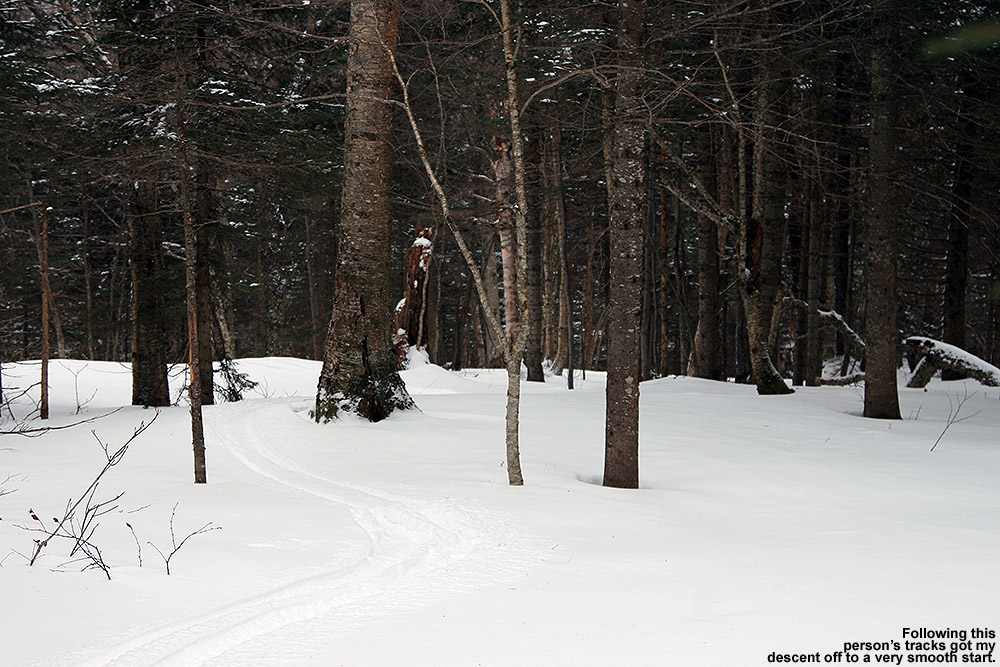
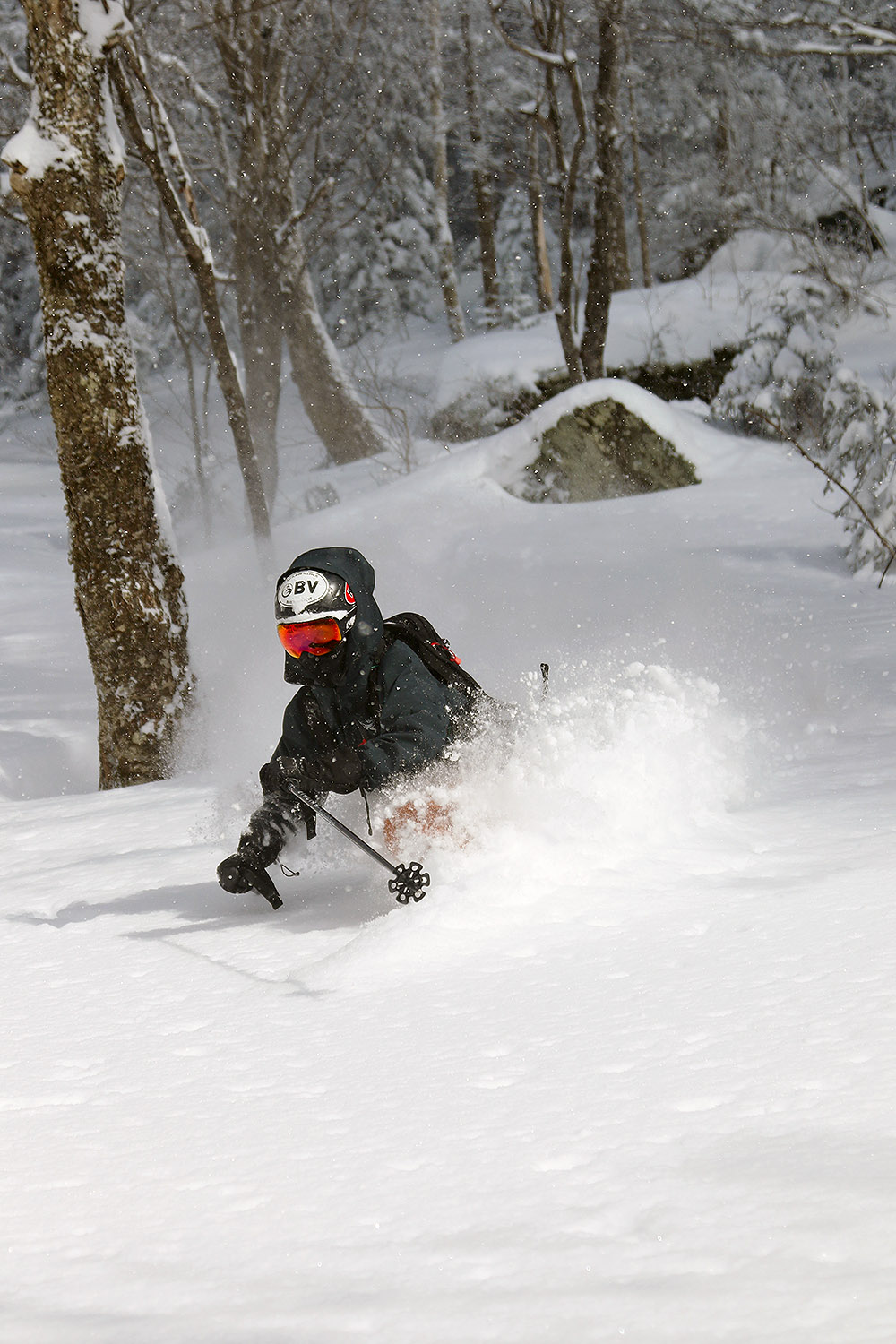
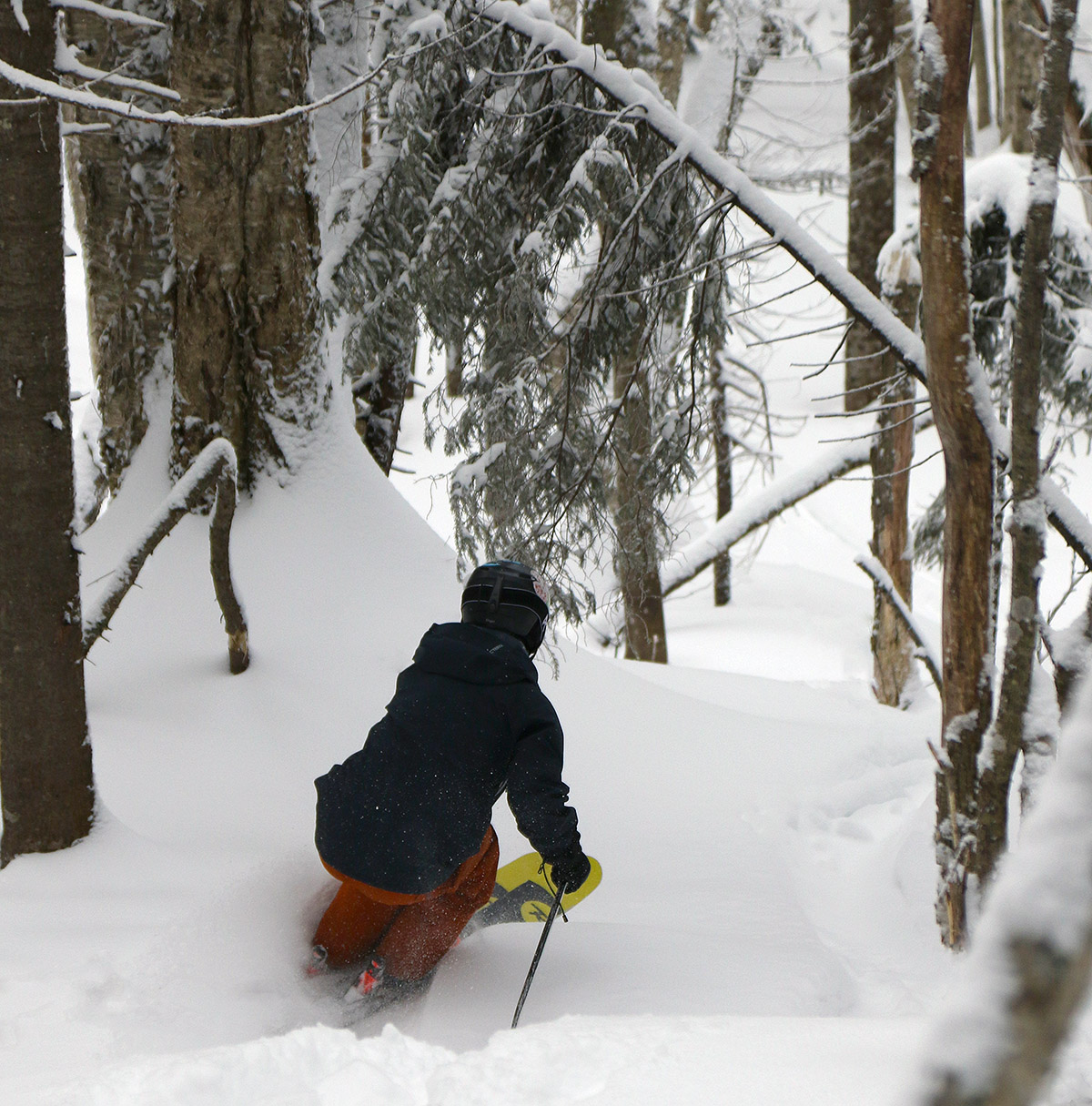
Ty was able to join me today, so it was great to have company, and we were able to get some actions shots in the powder. We did a tour somewhat similar to what I did yesterday, but we lengthened it out a bit more. Instead of heading up to Heavenly Highway and working our way down to North Slope, we went all the way up to Moose Glen and then wrapped around on a descent toward the glades around Snow Hole, which was roughly a four-mile tour. I chose that route to get us some relatively high altitude turns after observing the notable improvements in the overall snowpack above 2,500’ yesterday.
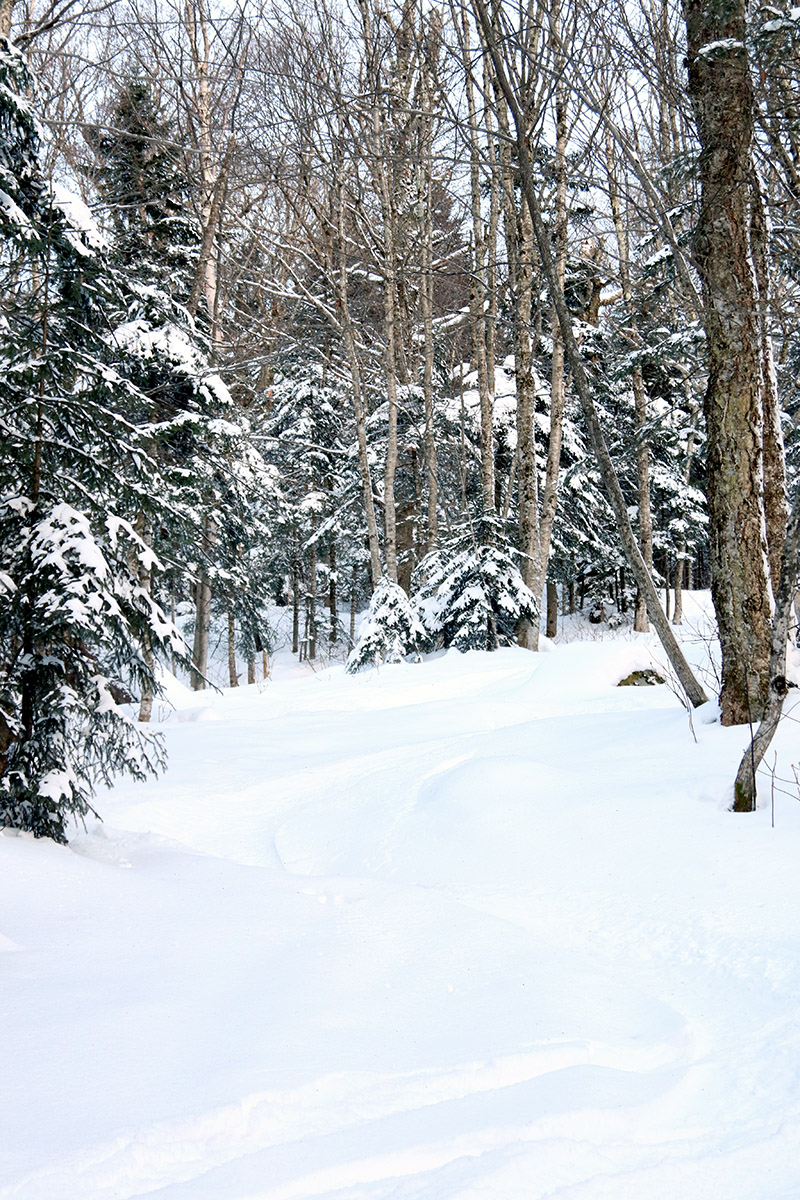
The number of visitors at the resort seemed a bit less today – there was no sign posted about the Village lots being full, and we easily grabbed a parking spot in the upper lot by the entry to the Backcountry Network. With cold temperatures preserving the snow, conditions were similar to yesterday with 1 to 2 feet of powder available wherever wind hadn’t scoured it to lower depths. Touring some of the higher elevation trails allowed us to see the various areas that had been hit by wind, and you just had to be cognizant of where winds had affected the snowpack to pick the lines with the best undisturbed powder. The middle elevations were much less disturbed by the wind, and you could pick just about line and get some great powder turns.
The Google Earth map with GPS tracking data for today’s ski tour on the Bolton Valley Nordic & Backcountry Network
The models suggest we might have another long-duration system like this past one starting up tomorrow night and running right through the week, and I see that Winter Weather Advisories are already up for the Northern Greens in anticipation of some of that snowfall.
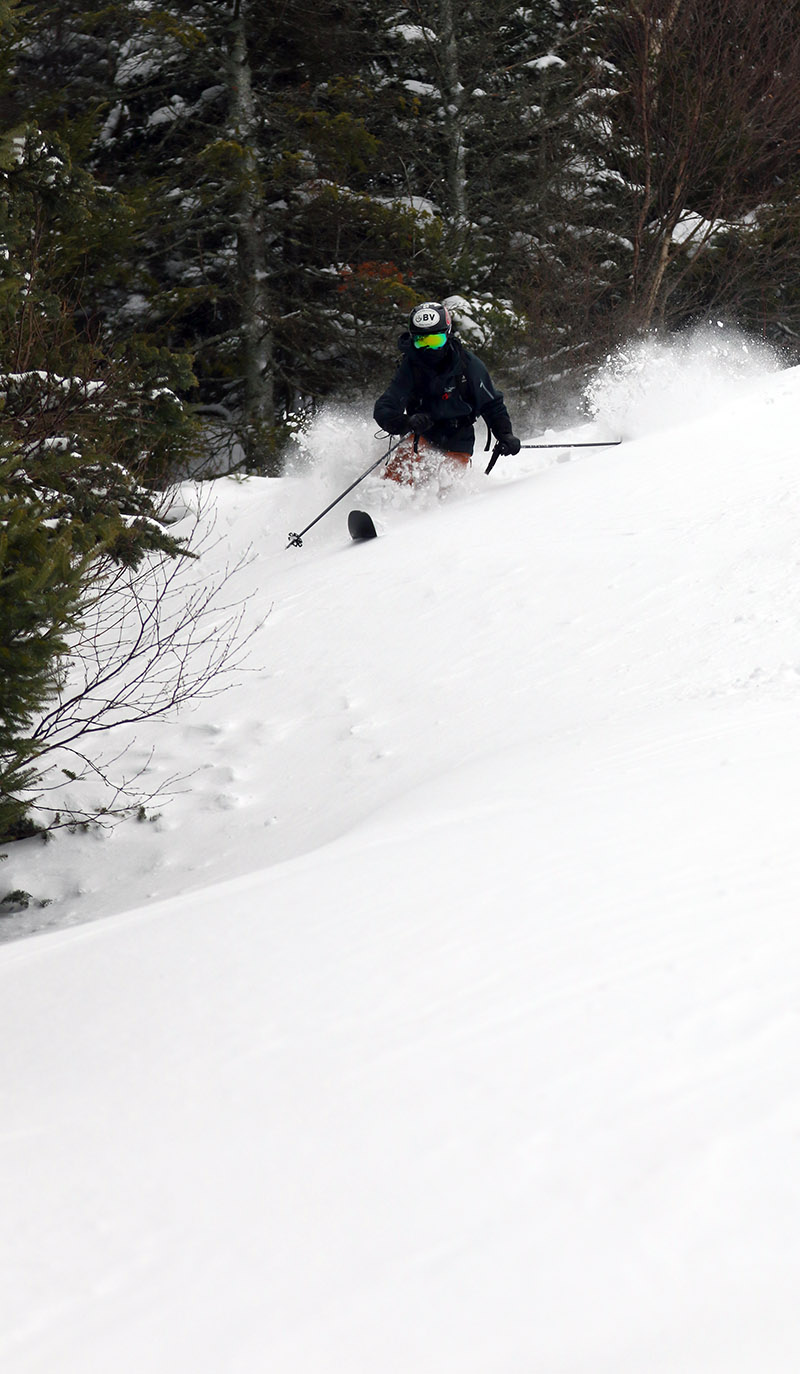
Ty slipping his way down through trees in the Cup Runneth Over glade as twilight approaches and we near the end of today’s ski tour on the Bolton Valley Nordic & Backcountry Network
After the relatively warm midweek storm moved across the area, we picked up an inch or two of snow in the valley between the back side of that system and the lake-effect snow that followed it. While the storm wasn’t quite a net gain for the snowpack here at our site, we only lost a couple tenths of an inch of snow water equivalent in the snow on the ground, so it was fairly inconsequential in that regard. It did mean a thaw-freeze cycle for the snowpack though, so once temperatures came down, the snowpack was solid with just a bit of fresh snow on top. This was the first notable consolidation event of the season at our site, so we finally transitioned to a much more robust snowpack down at the house now vs. what was there before. It had slowly been settling and consolidating on its own, but it was still somewhat dry, and you could dig down to the ground fairly easily.
That midweek storm was likely a net gain for liquid in the mountain snowpack, but I assumed off piste surfaces would be quite hard after the thaw-freeze, similar to what we experience down in the valley. I’d been hearing some good reports out of the mountains with regard to the backside accumulations from the storm, but it was hard to image it would be enough to really get the off piste and backcountry conditions back to where there were earlier in the week.
With that in mind, E and I headed up to Bolton Valley for some snowshoeing yesterday. We always find that snowshoeing is a nice change of pace if the snowpack is likely to be punchy, crusty, or icy, since even Nordic skiing with those conditions can be unpleasant if the snow is too firm. We figured we’d mostly be using the crampons on our snowshoes during the tour as we expected something in the range of a dust-on-crust snowpack, but that wasn’t the case at all. I was amazed to find that at around the 2,000’-2,200’ elevations where we toured, there were 6 to 10 inches of powder above the base layers. And, the base wasn’t even rock hard, it was a crumbly interface with the powder above it that made for excellent touring. We couldn’t believe that we were actually having to use the floatation of our snowshoes because of the depth of the powder, and the crampons were needed only occasionally in packed areas. The resort was reporting 8 inches of new snow in the previous 48 hours, and it really wasn’t just eye candy; all that new snow set up some very pleasant snow surfaces.
The only major issues we noted yesterday were that some of the water bars had been blow out by the rain. Those areas required some extra navigation, and we could see that people had established routes around them on popular ascents like the Bryant Trail. I’d say our observations were right in line with the big washout on Gondolier at Stowe that Powderfreak talked about – the snowpack itself wasn’t damaged all the much by the rain, the more notable effects were on drainage/water bars.
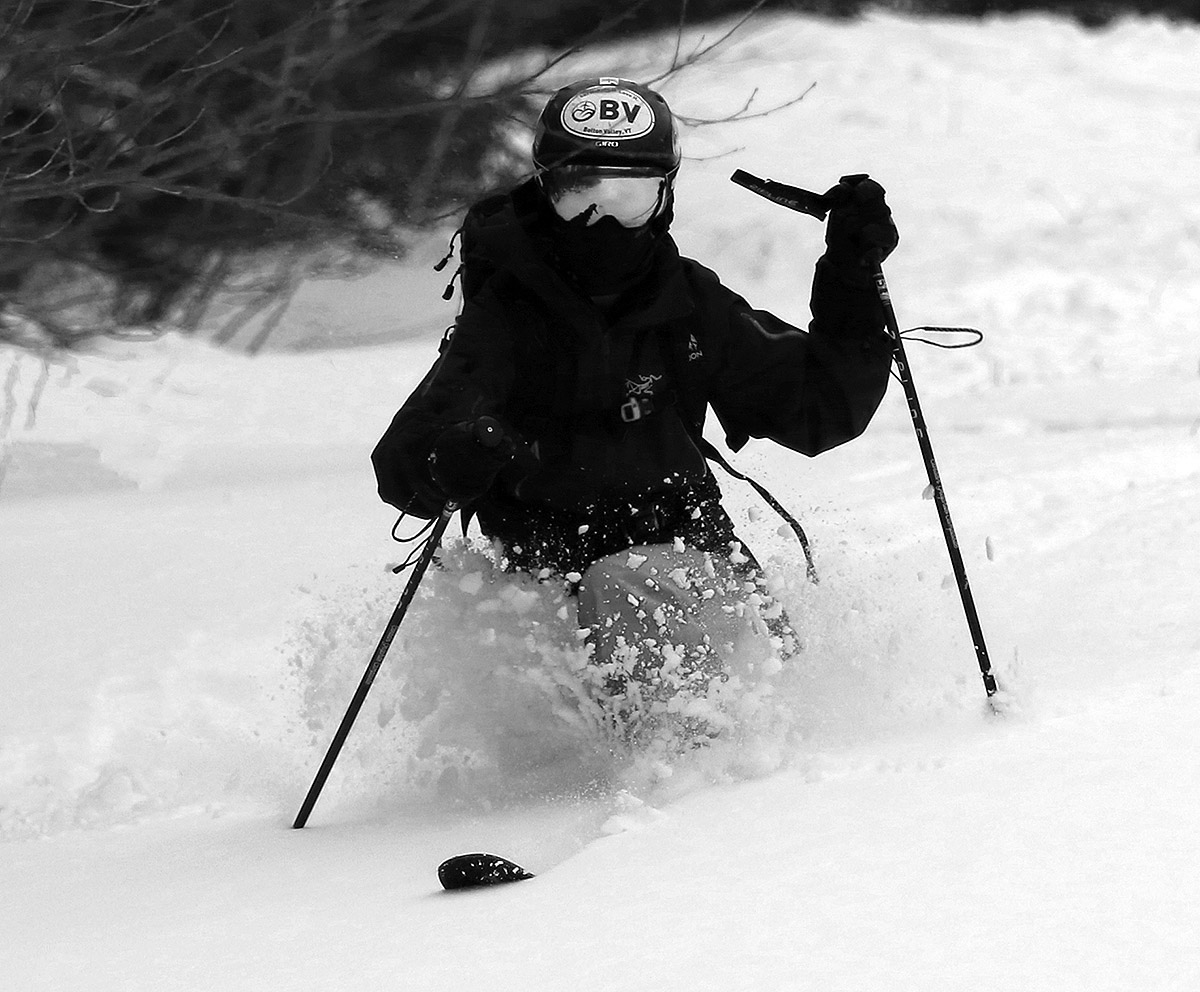
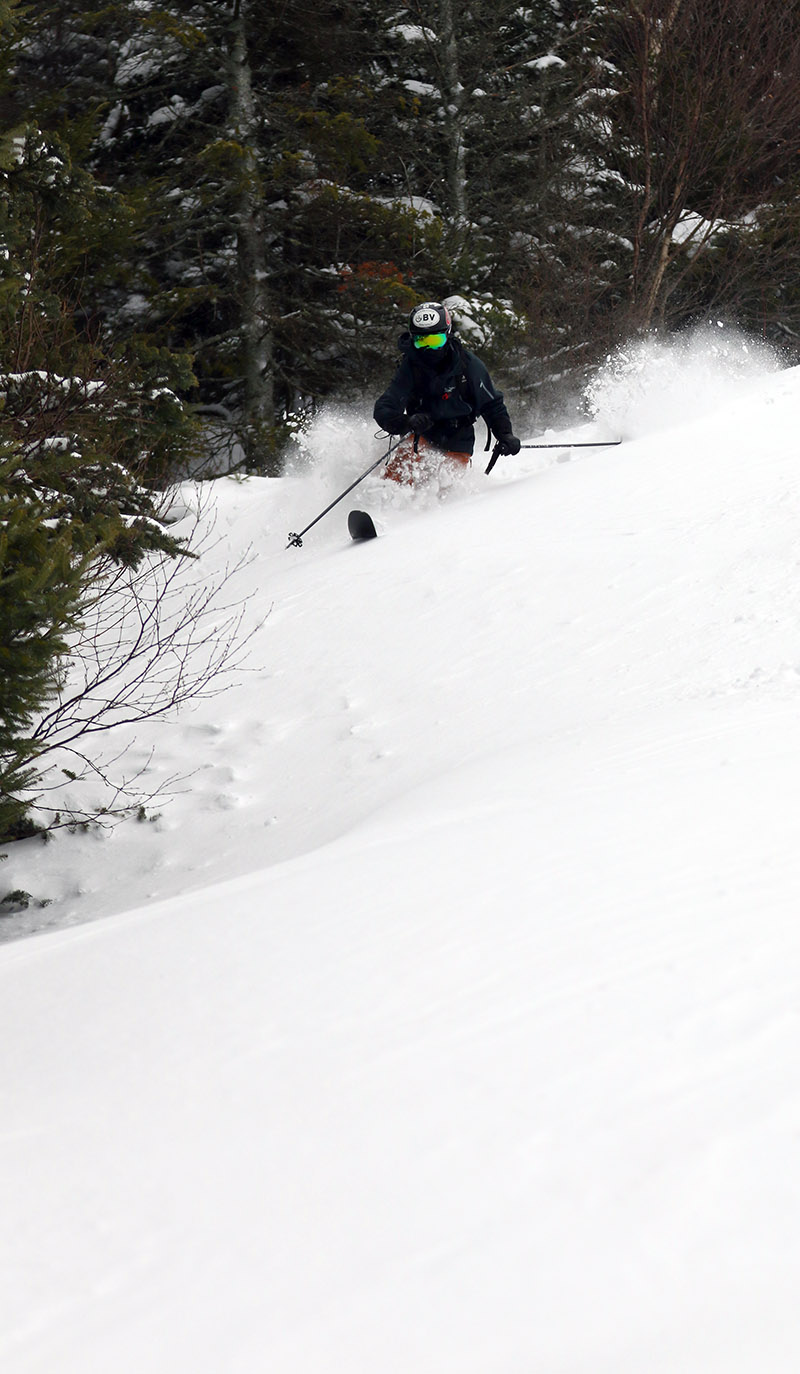
Ty dropping through some powder in the Big Blue area on today’s backcountry ski tour at Bolton Valley
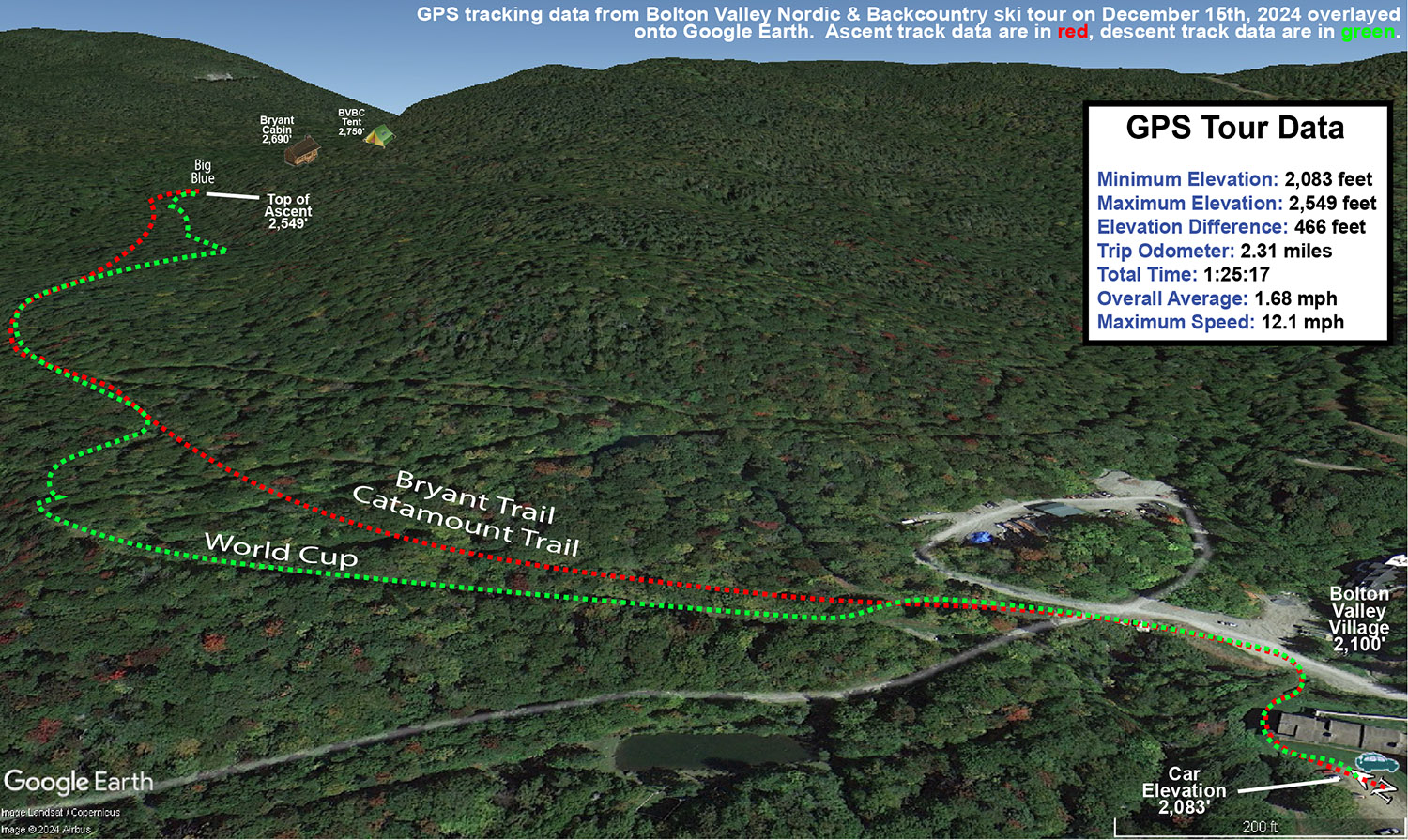
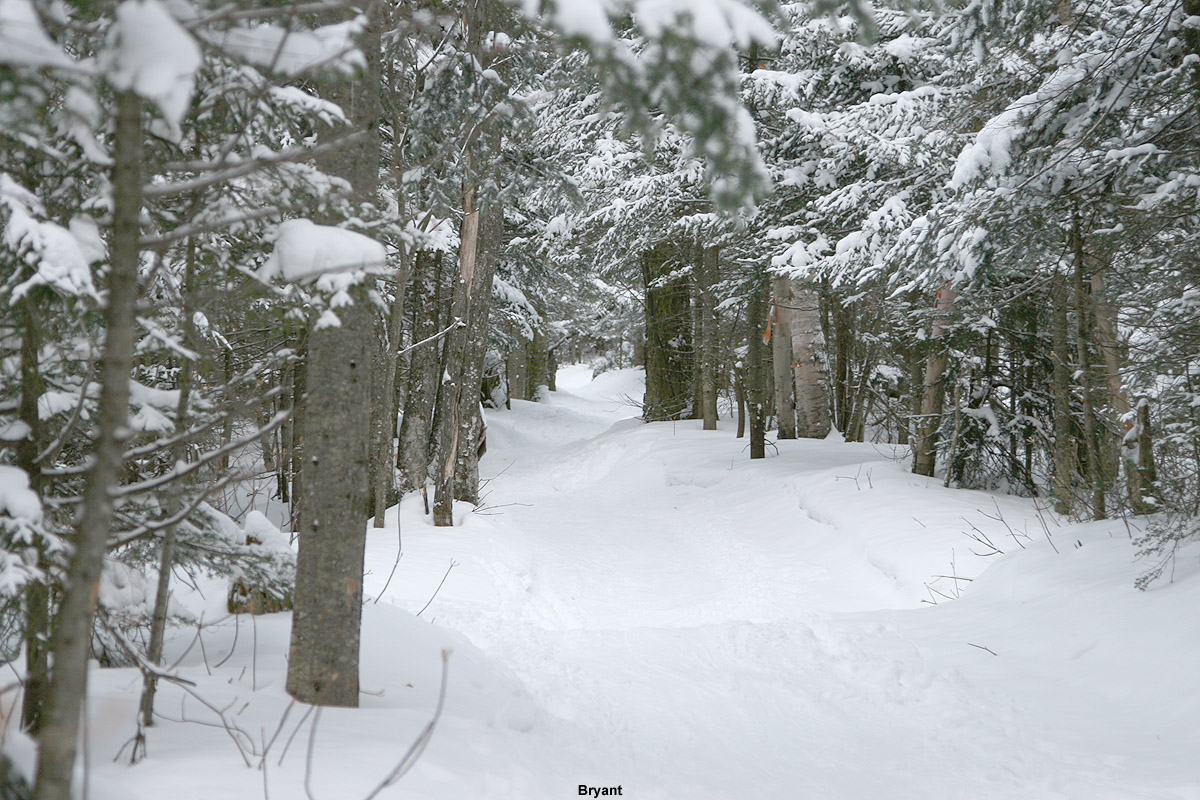
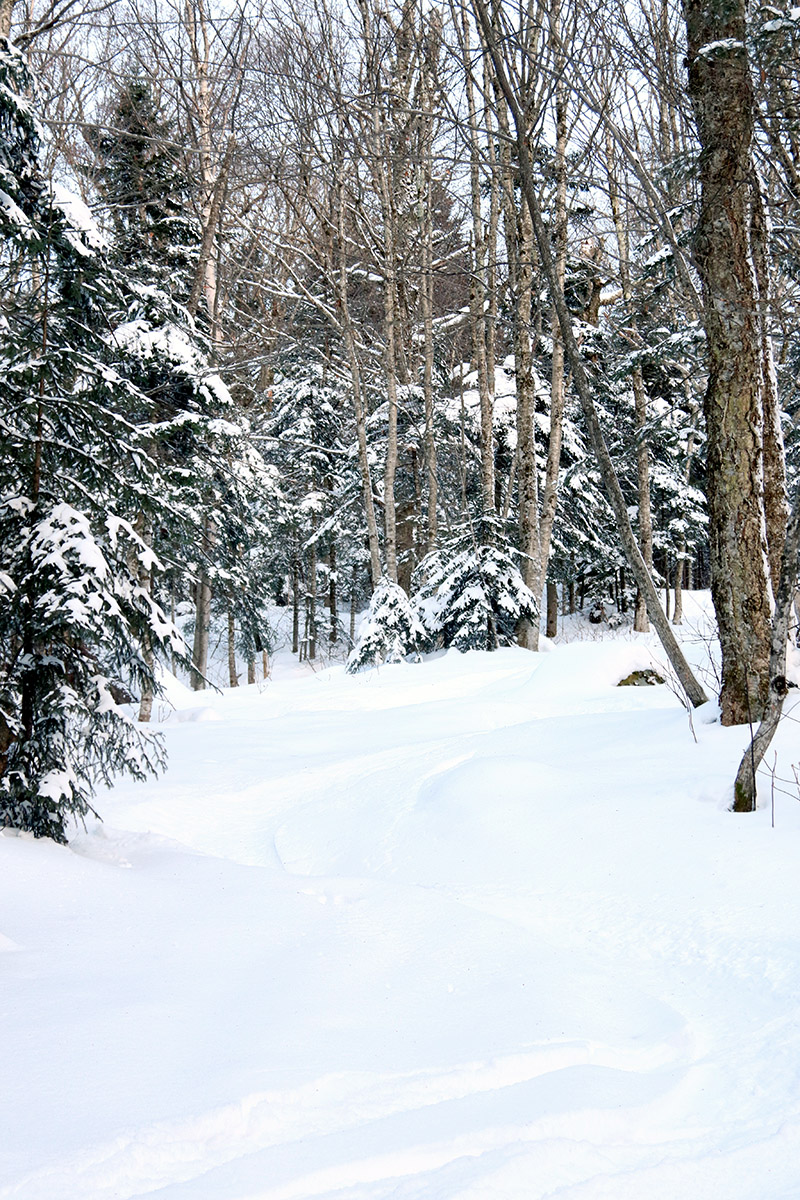
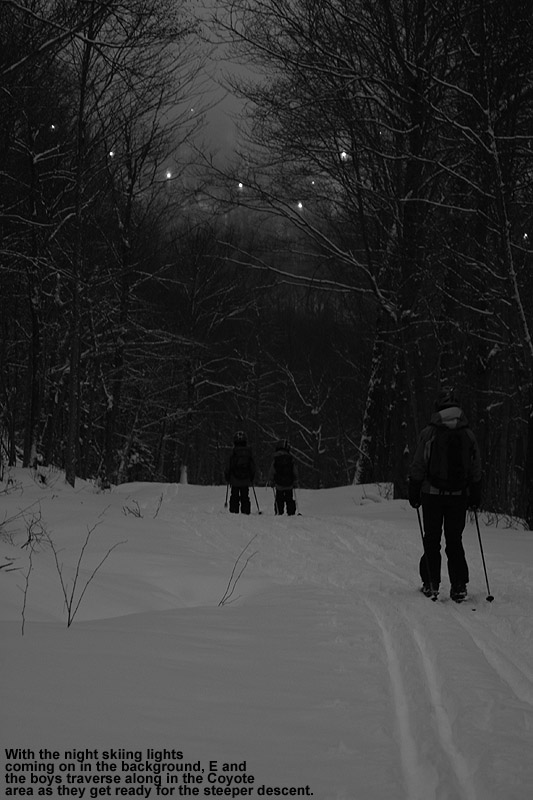
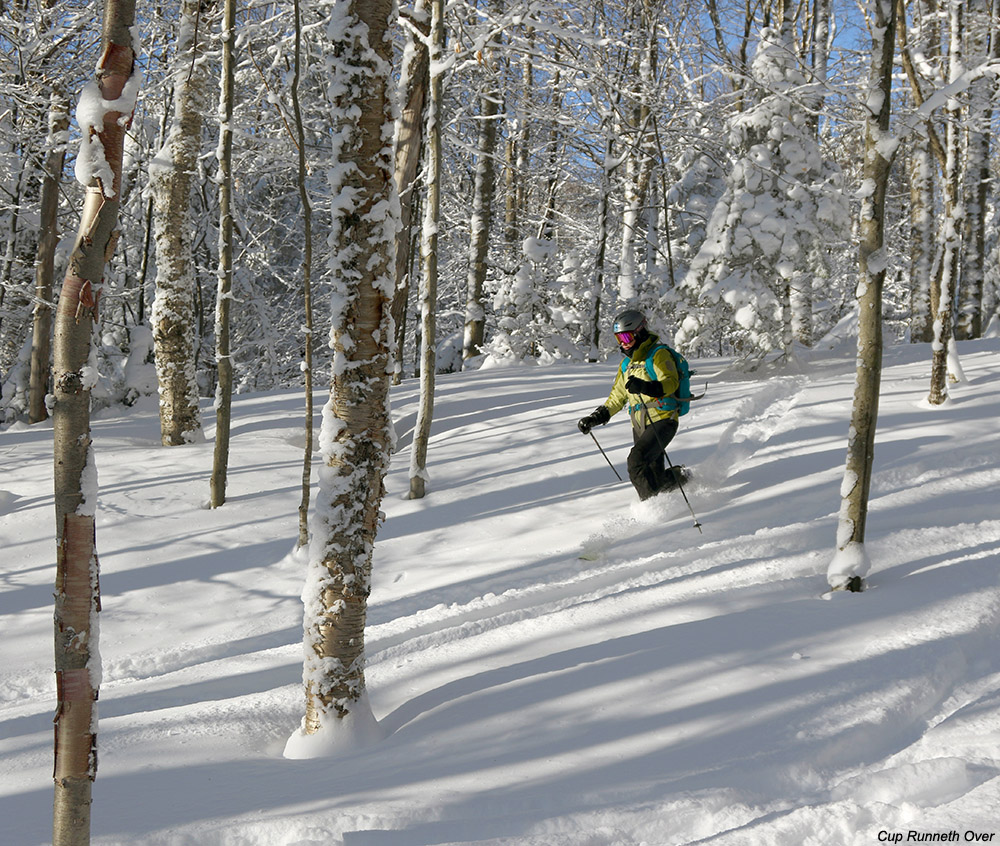
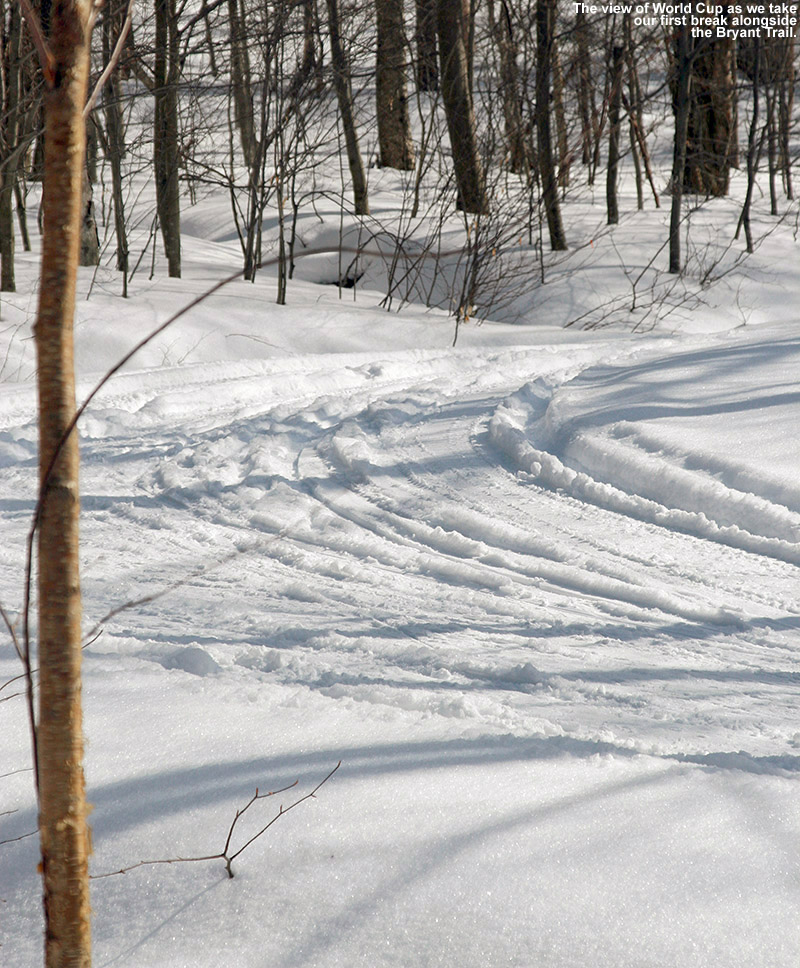
Experiencing the quality of the snow yesterday, it was obvious that the powder skiing would be great on low to moderate angle terrain, so Ty and I headed out for a ski tour on Bolton’s Nordic & Backcountry Network today. We toured up the Bryant Trail to about the base of the Big Blue area. We wanted to stick to more moderate and low-angle terrain that was a best fit for the depth and density of the powder, so we began our descent in the lower reaches of Big Blue, then worked our way through the relatively low-angle terrain between the Bryant and Coyote trails. Later on the descent we crossed to the west side of Bryant, skied the upper sections of the Cup Runneth Over glade, and finished out with turns on the untracked areas of World Cup. The resort hadn’t set formal Nordic grooming tracks up in those areas of World Cup, but there was a track line that had been made by skiers, and the rest of the trail was untracked powder. Those areas of World Cup were very open and provided some of the most consistent powder turns of the day. The pitch was also perfect for the depth and consistency of the powder, and Ty said those sections were actually his favorite turns of the tour.
The Google Earth map with GPS tracking data for today’s ski tour on Bolton Valley’s Nordic & Backcountry Terrain
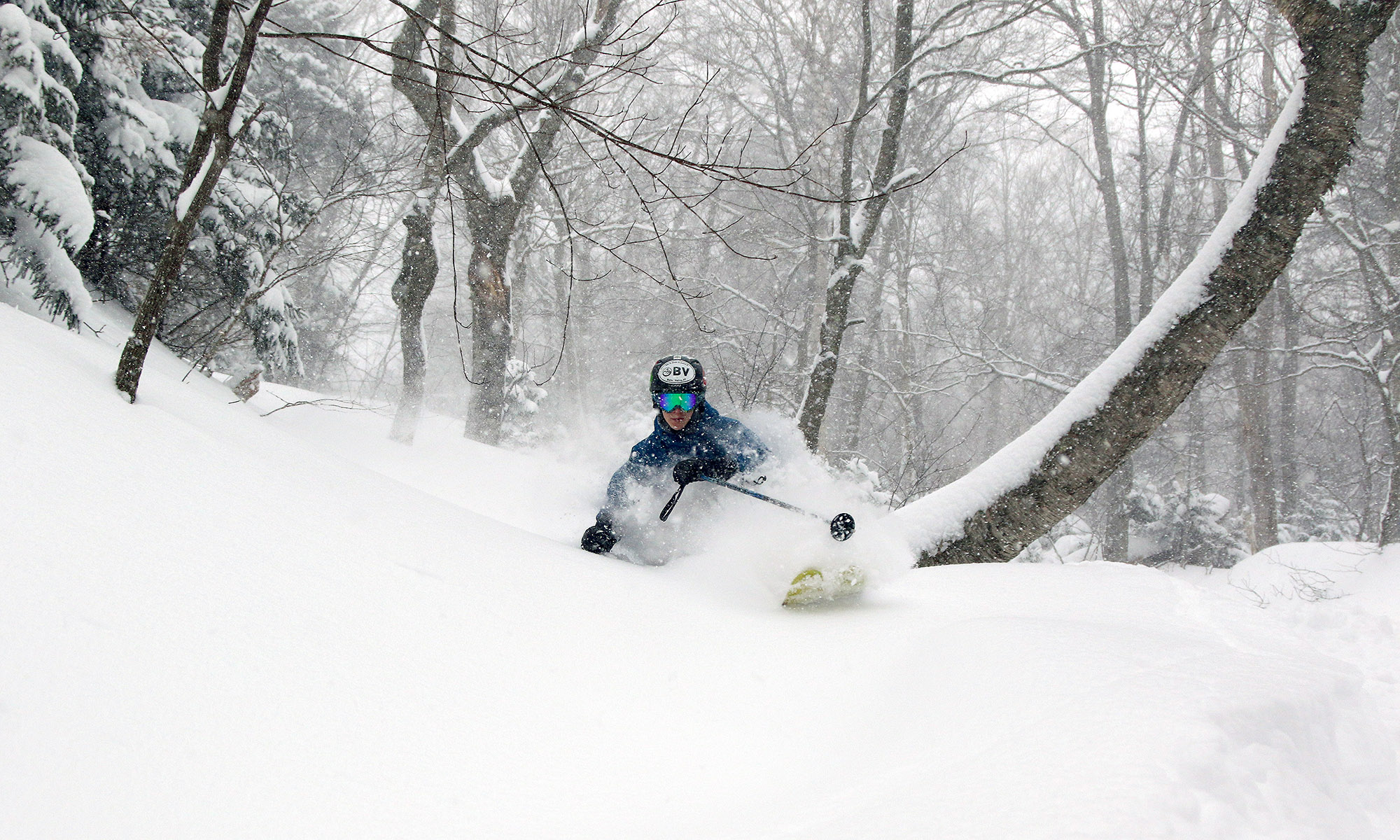
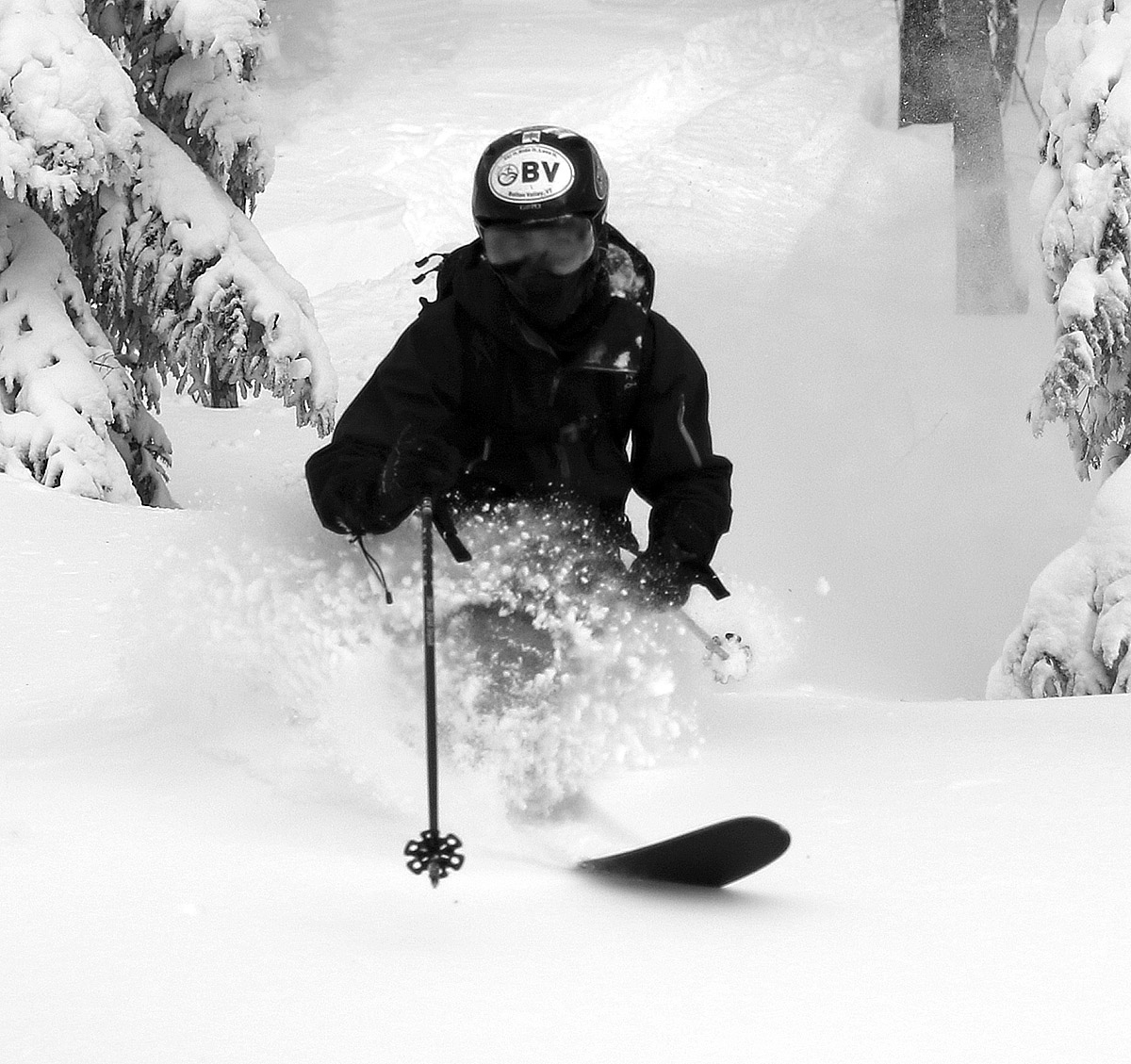
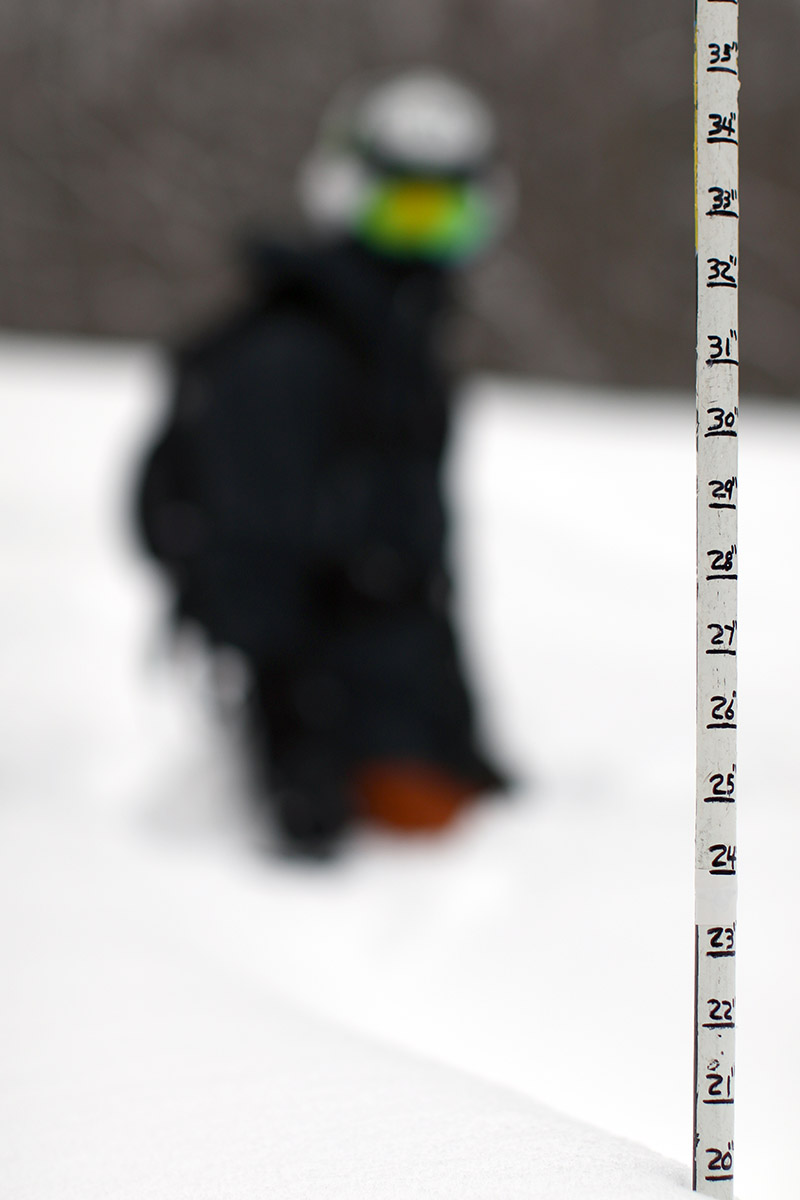
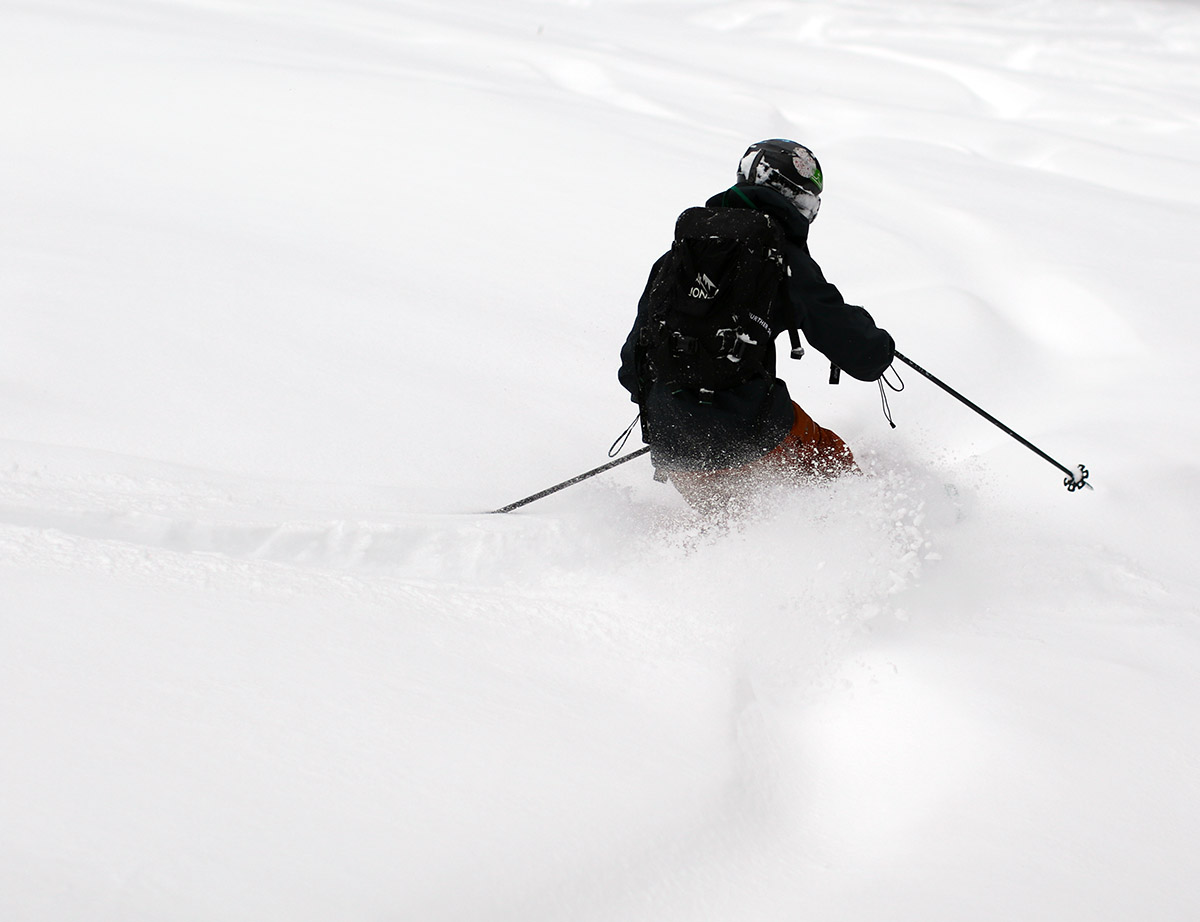
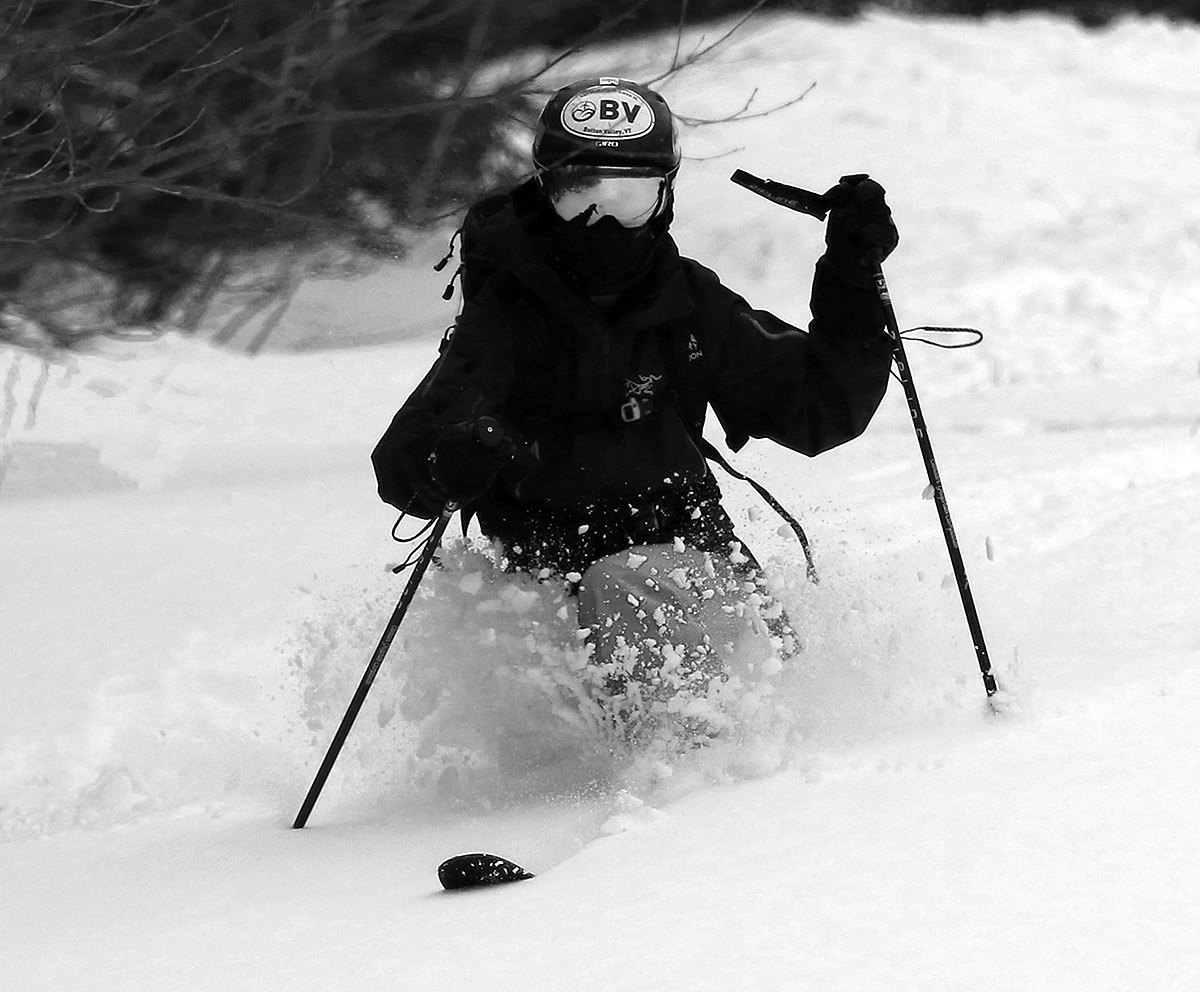
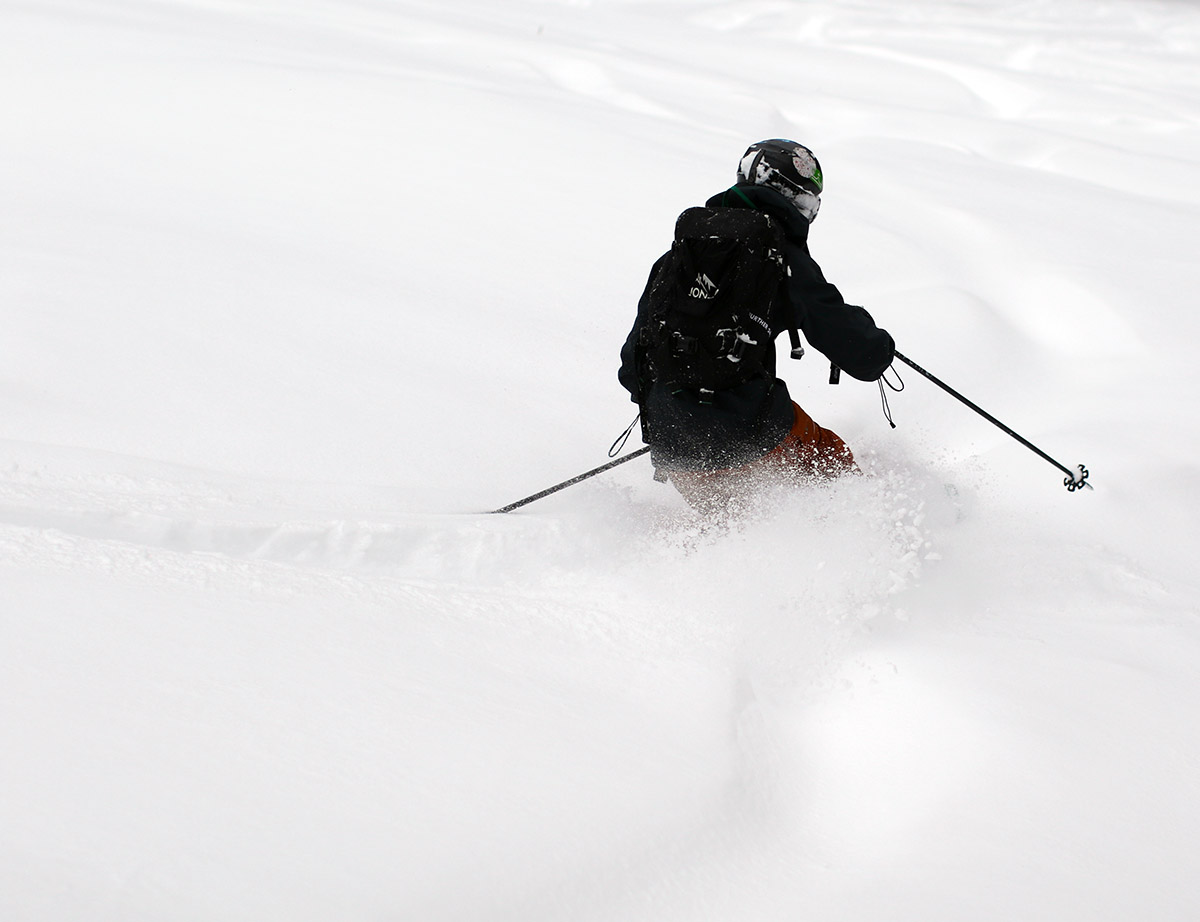
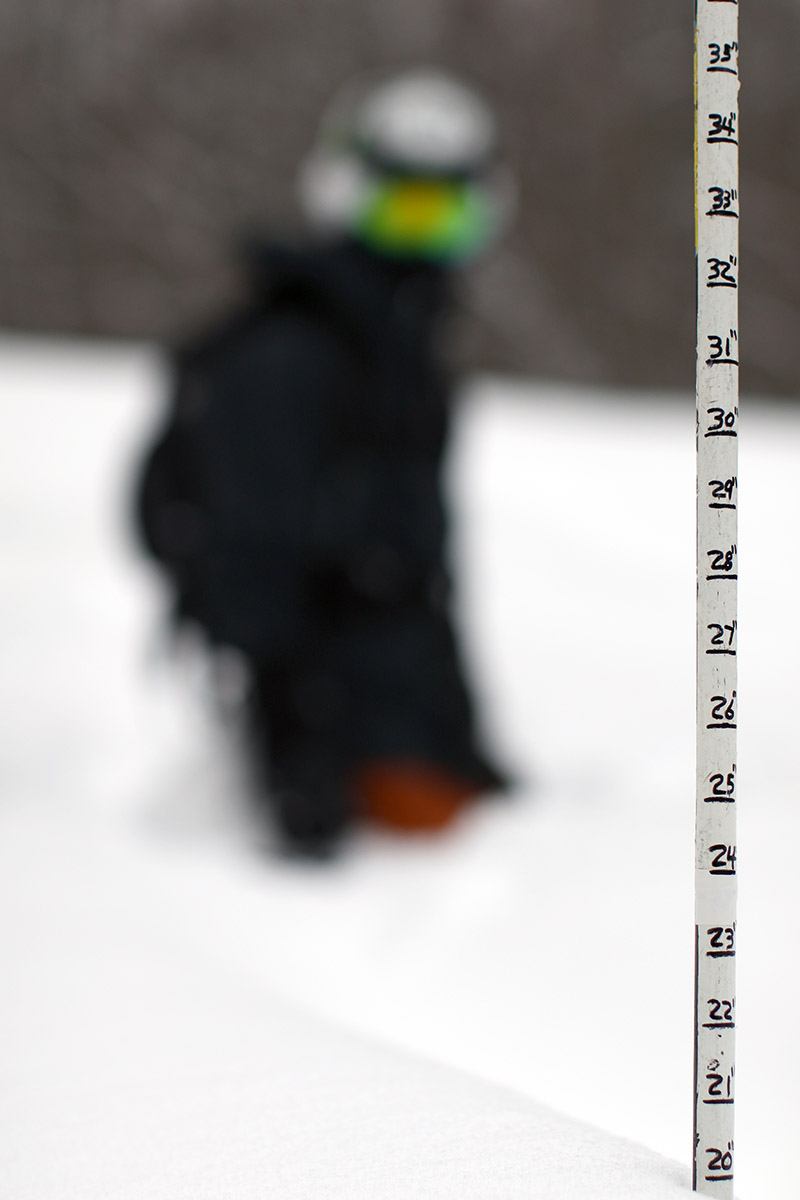
Ty blasts his way down the Spell Binder Headwall through 20 inches of powder during today’s ski outing at Bolton Valley.
Today, Ty and I headed up to Bolton Valley together for some turns, and since the resort has been offering lift-served skiing off Wilderness now, we decided to do some touring down at Timberline. With Timberline’s lower elevations, the snowpack wasn’t really reading for touring earlier in the season, but with day after day of snow since Thanksgiving, the snowpack depths just continue to climb at all elevations. The mountain snowpack is taking off, and the depth at the Mt. Mansfield stake is pushing 40 inches,. At our house at 500’ in the Winooski Valley, the snowpack has already hit 14 inches, so we knew Timberline at 1,500’+ was more than ready to support some quality ski touring.
Today we found snow depth of 20 inches at the Timberline elevations, which was more than enough for skiing the on piste terrain
Indeed, Timberline was ready for prime time – at least in terms of overall snowpack depth if not yet its subsurface base depths or the density gradient of the snowpack. Down around 1,500’ at the Timberline Base, the snowpack depth was 20 inches, so that was plenty of snow for skiing. But unlike much of the snowpack up at the main mountain, there wasn’t really any settled base below that snow. So, there was a bit less flexibility in terrain choice, assuming you wanted to ski reasonably safely or didn’t want to risk damaging equipment. However, there’s more than enough coverage for the mowed/maintained trails. The only other issue with the snowpack was that the powder was of roughly equal density throughout its depth. It certainly wasn’t upside down, but without a density increase in the deeper layers, skis are prone to sinking quite far, and you can get bogged down or experience tip submersions. We’d both brought 115 mm fat skis, so that really helped to mitigate that issue in terms of overall floatation and the ability to have fun on any lower-angle terrain, but it’s something to consider right now when you’re choosing which equipment to use for an outing. We saw some folks out on snow surfers, and I bet these were fun with decent floatation as long as they were on slope of sufficient pitch.
There hasn’t been to much touring activity at Timberline, so fresh snow and fresh powder turns are everywhere.
We got out in the morning because we knew that there was the chance for temperatures to go above freezing later in the day, but if temperatures did go above 32 F, it seemed to be just marginally. I’ve mentioned in some of my recent reports that we’ve needed a consolidation event for the snowpack in certain areas, so in that respect the warmer storm that is expected to come into the area this week is helpful, but getting an inch of liquid as dense snow would of course be superior to getting it as rain. I can’t say if the storm will be a net gain for liquid in the snowpack down at our site in the valley yet, but it should be an increase in the snow water equivalent in the mountain snowpack.
Ty getting in some early season backcountry turns during today’s ski tour at Bolton Valley
Ty was off from work today, so the two of us decided to head up to Bolton Valley for some turns. With the generally unconsolidated snowpack, it was a bit tough to tell how much new snow fell from this most recent Clipper system, but based on the resort’s snow report, it seemed like they picked up a few inches, similar to what we received down here in the valley.
With tomorrow being their opening day, there was a lot of activity on the mountain today as they made final preparations for opening. At the base, one of the patrollers asked if we could stay off Wilderness for touring and instead head over to the Nordic and backcountry network, so we were happy to oblige. Although there’s no snowmaking on Wilderness, there snowpack is substantial enough that they could open the area for lift-served skiing if they wanted to. I wouldn’t be surprised if they were doing some grooming and prep work/obstacle marking over there today, so I suspect they wanted to minimize skier traffic as much as they could.
I wouldn’t normally have defaulted to touring on the Nordic and backcountry Network at this stage of the early snowpack, since the Wilderness trails are just a safer bet for quality turns; they have been mowed and have a more substantiated base due to some skier traffic packing it down. But since I’ve been out on Wilderness for a few ski tours now this season, getting out onto the nearby backcountry terrain gave me a nice opportunity to compare the quality of the turns in both places. Although we made our ascent on the Nordic and backcountry Network terrain, we were actually touring in the area over near Snow Hole and made most of our descent on the edge of the on piste Wilderness terrain. That allowed us to directly experience the skiing in both areas today.
Views of the recent accumulating snows in the Bolton Valley Village during today’s ski tour. We’ve had round after round of snow from a series of modest systems coming through the area, and they look to continue for days to come.
For overall skiing and powder turns, the experience was unquestionably better on piste at Wilderness. It’s not an issue of overall snow depth on the backcountry terrain; snowpack depths were closing in on 20 inches when I was out for my ski tour on Tuesday, and that was before the Clipper and the cold front brought a lot more snow to the area over the past couple of days. The depth of the snowpack has gone up substantially at this point – as of today the depth at the Mt. Mansfield stake is at 30 inches. What’s needed off piste to really improve the quality of the skiing is some consolidation. There is some base snow in the snowpack below the fluff, and it’s a decent base for on piste turns, it’s just not enough to sufficiently cover the contours of your typical off-piste terrain yet. Although a storm with above-freezing temperatures isn’t going to be great for snow quality, it would help in that consolidation. Alternatively, a nice dense snowfall storm would also help, and of course that would be much better for snow surfaces in general. It would temporarily ruin the current dry powder and might give us a bit of an upside-down snowpack, but it would really help set things up long term. The only other alternative would be to continue to get the type of dry snow we’re getting and wait a while for settling over time as the lower layers get compressed. This just takes a lot longer and requires a lot of snow, going the route of a continental/Colorado type snowpack.
From our experience touring today, it’s not that the off-piste skiing is horrible, it’s just that you need to stick to places that have seen a bit of skier traffic, or you know are well manicured with minimal hazards underfoot.