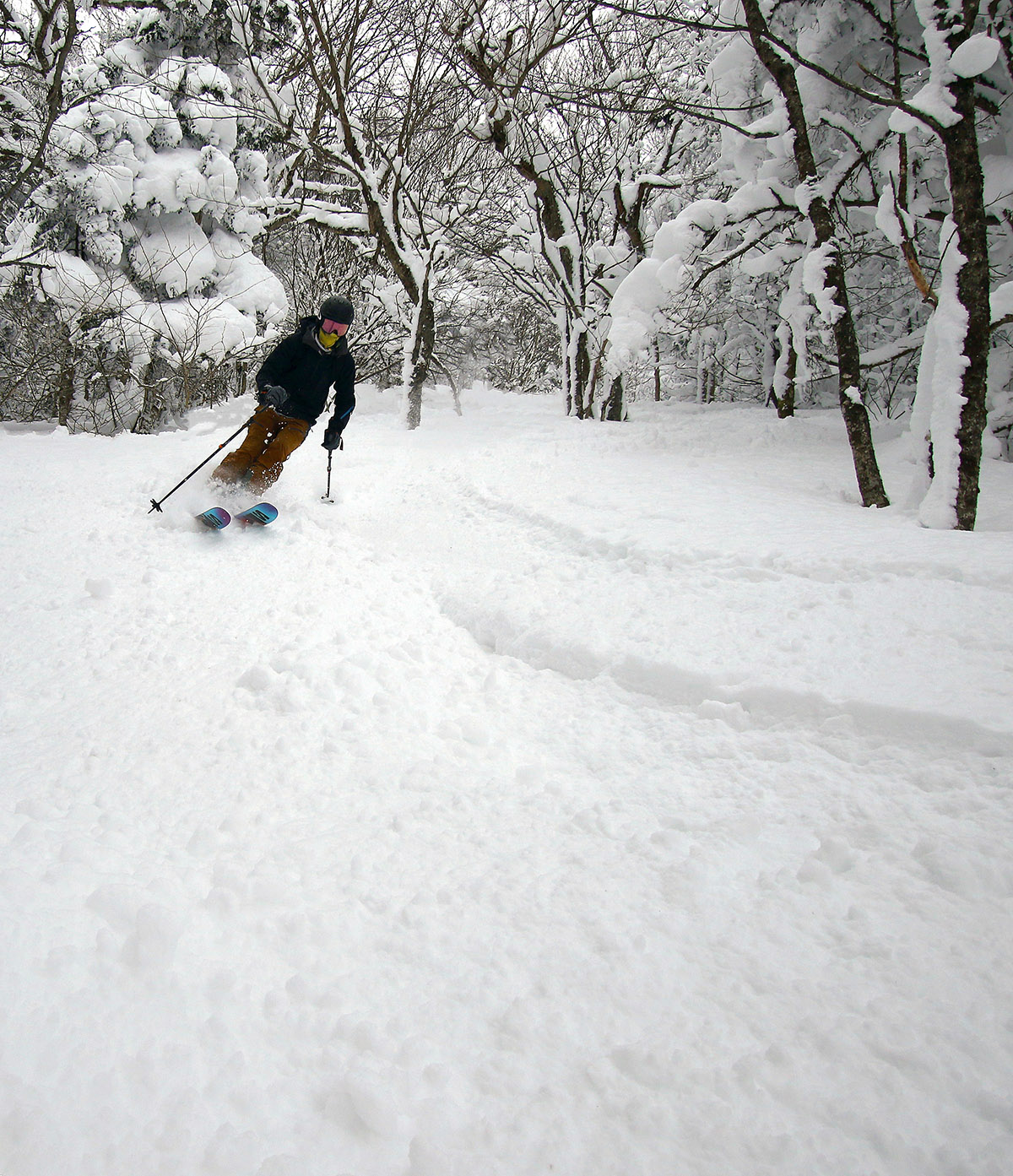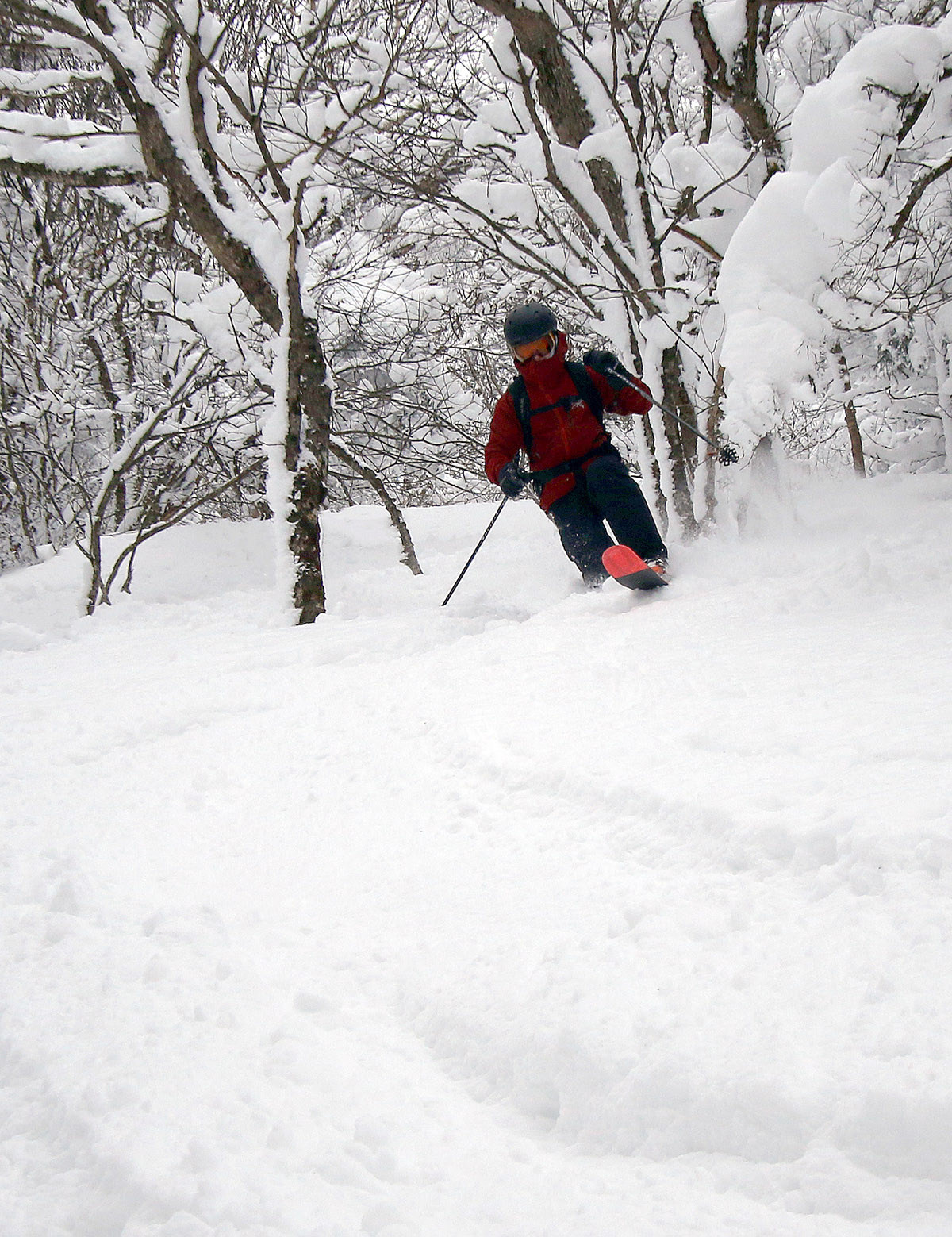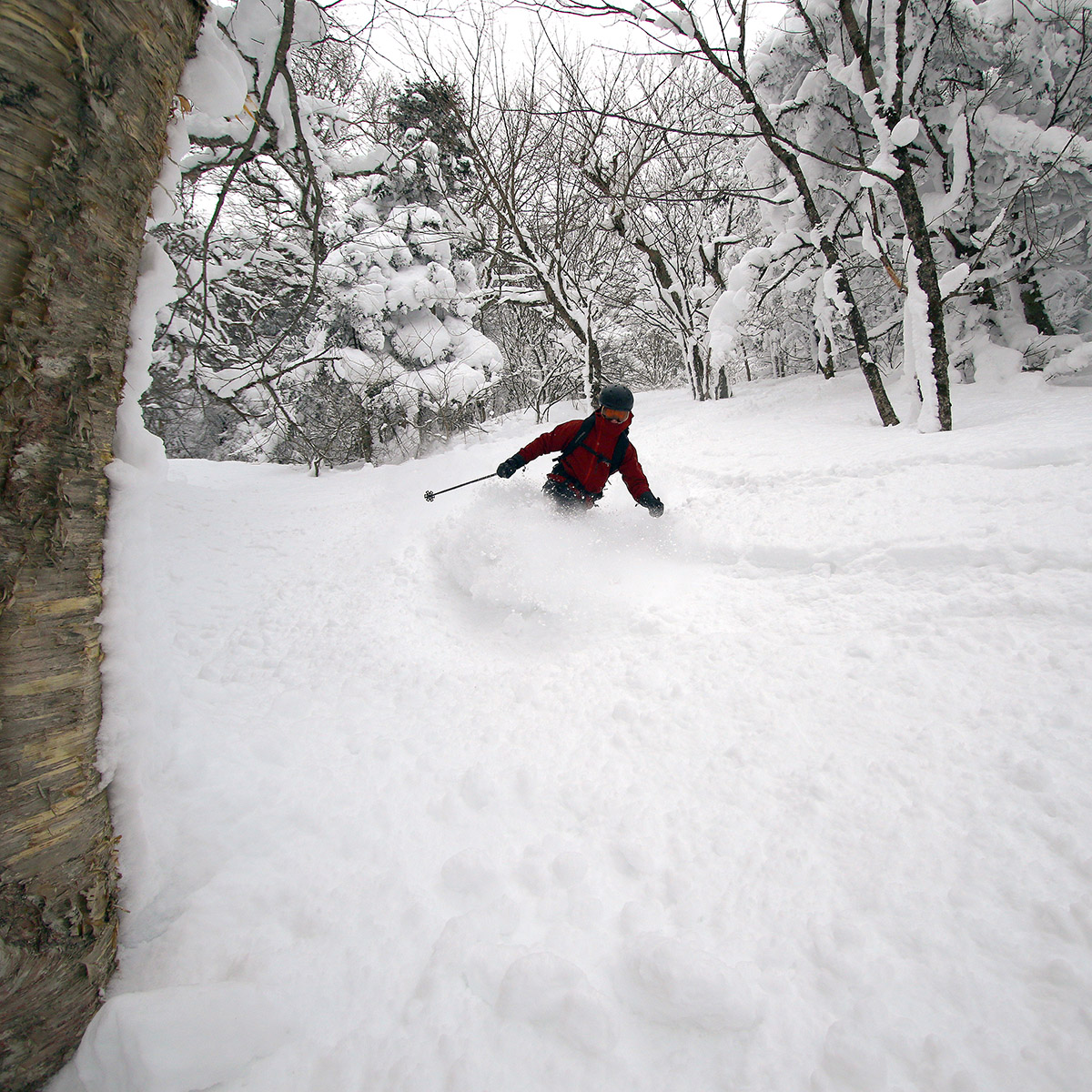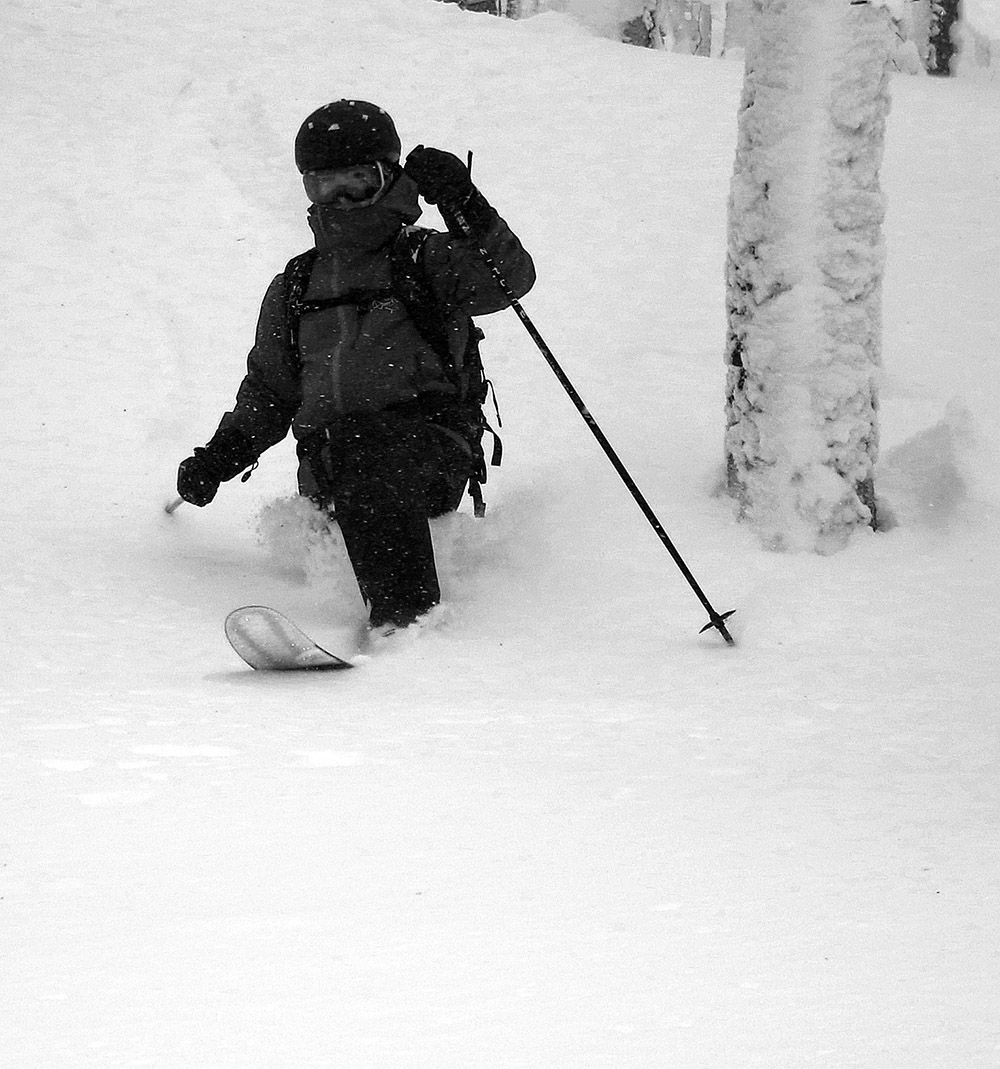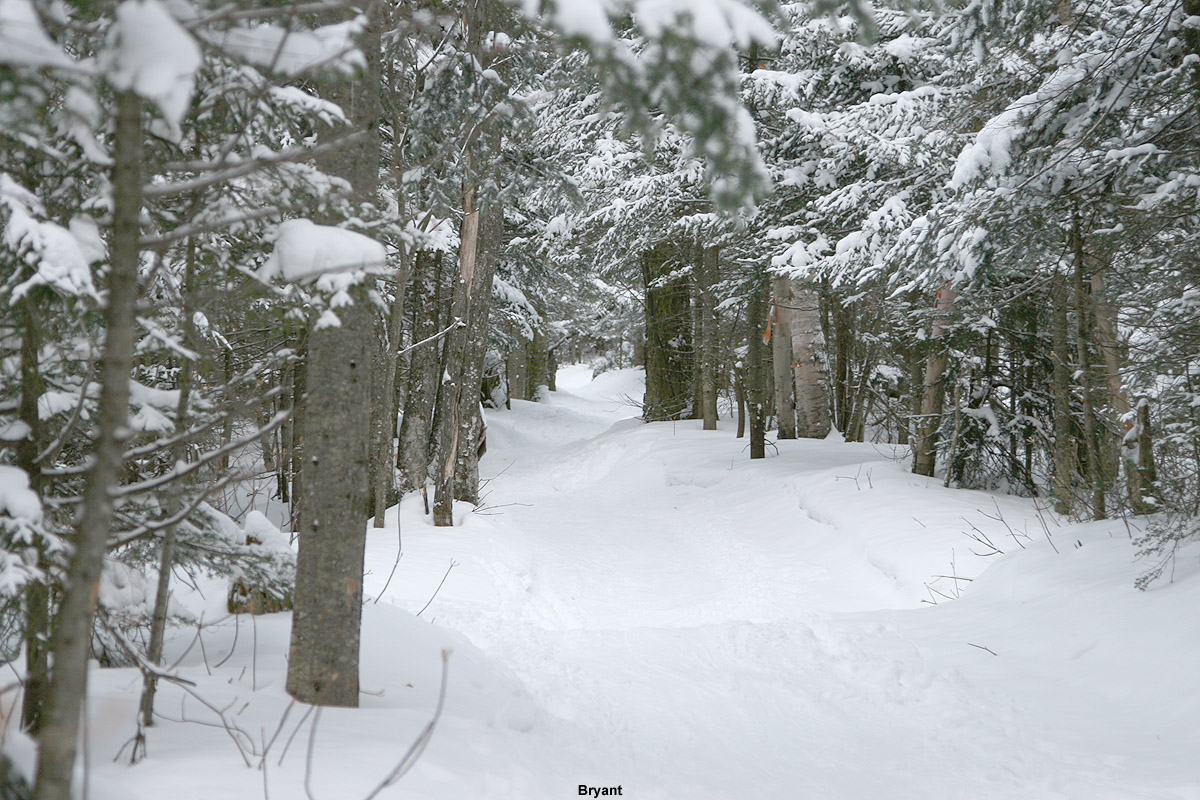
Bolton Valley Nordic & Backcountry, VT 01FEB2025

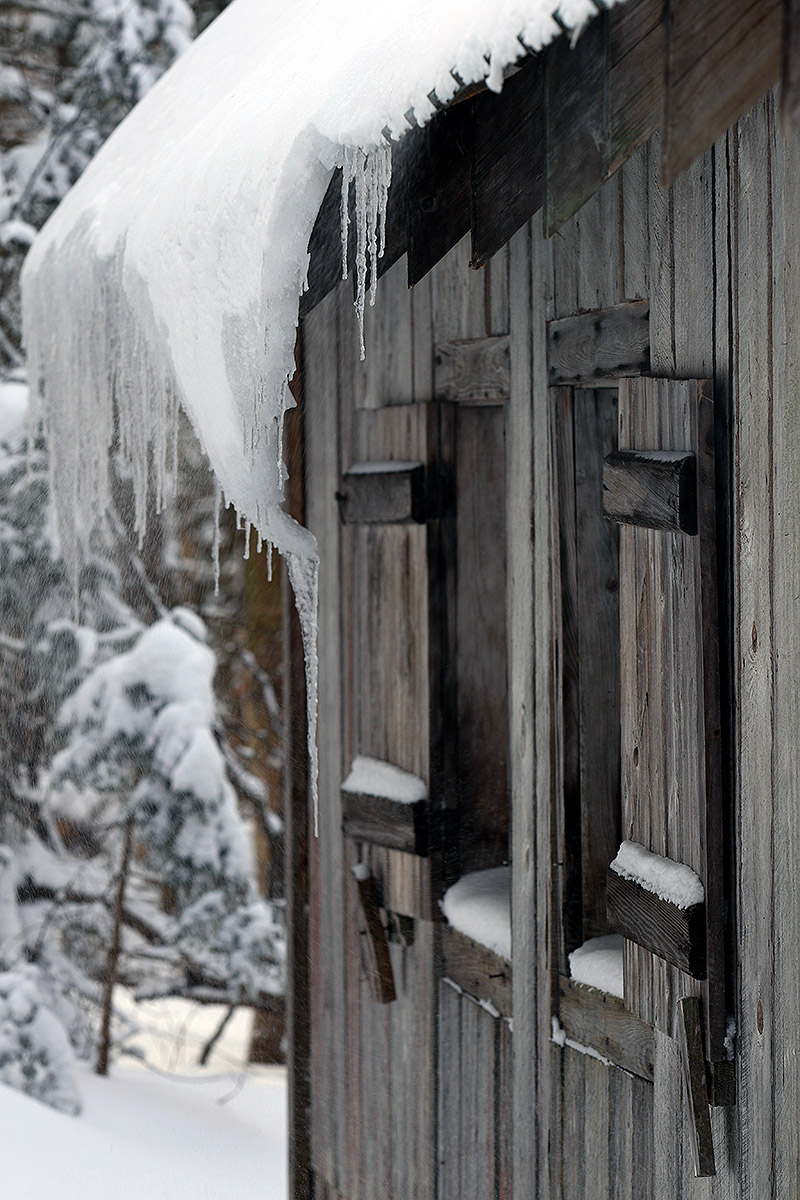
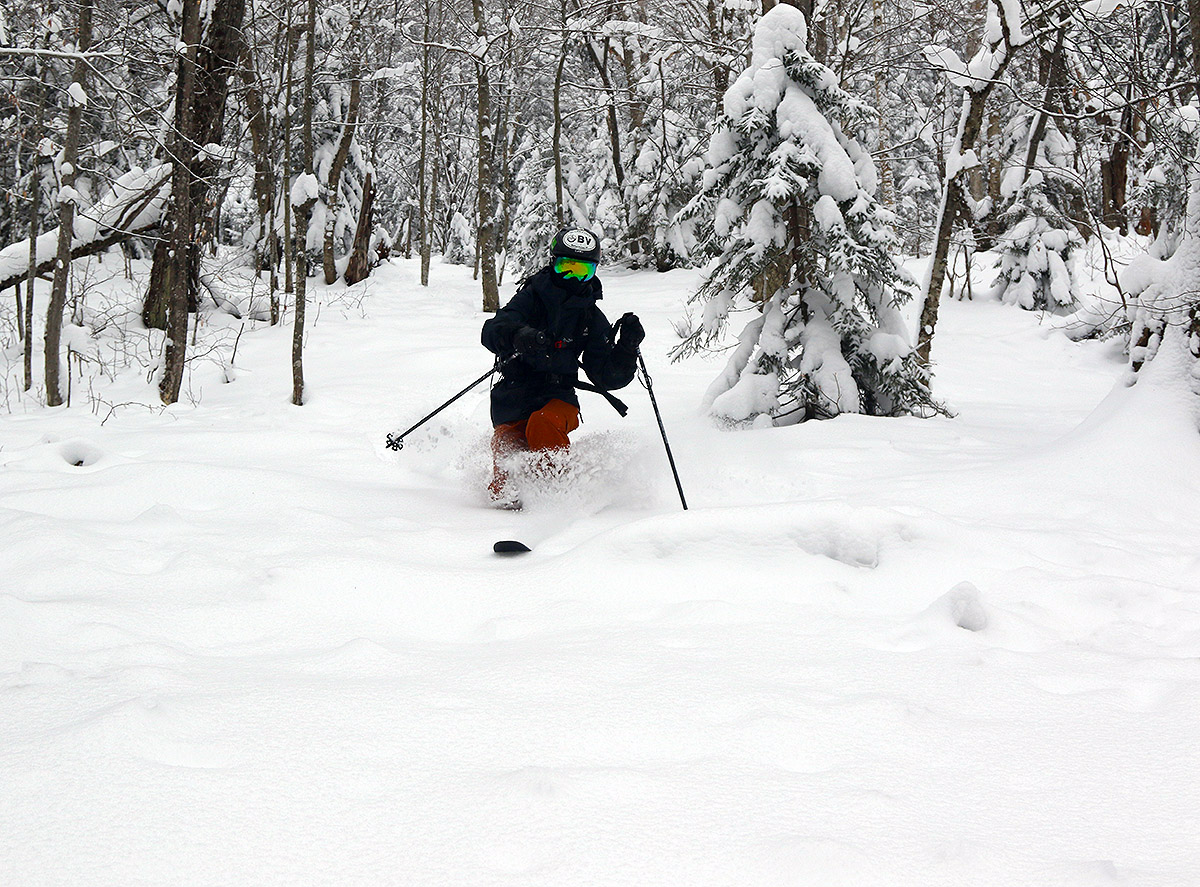
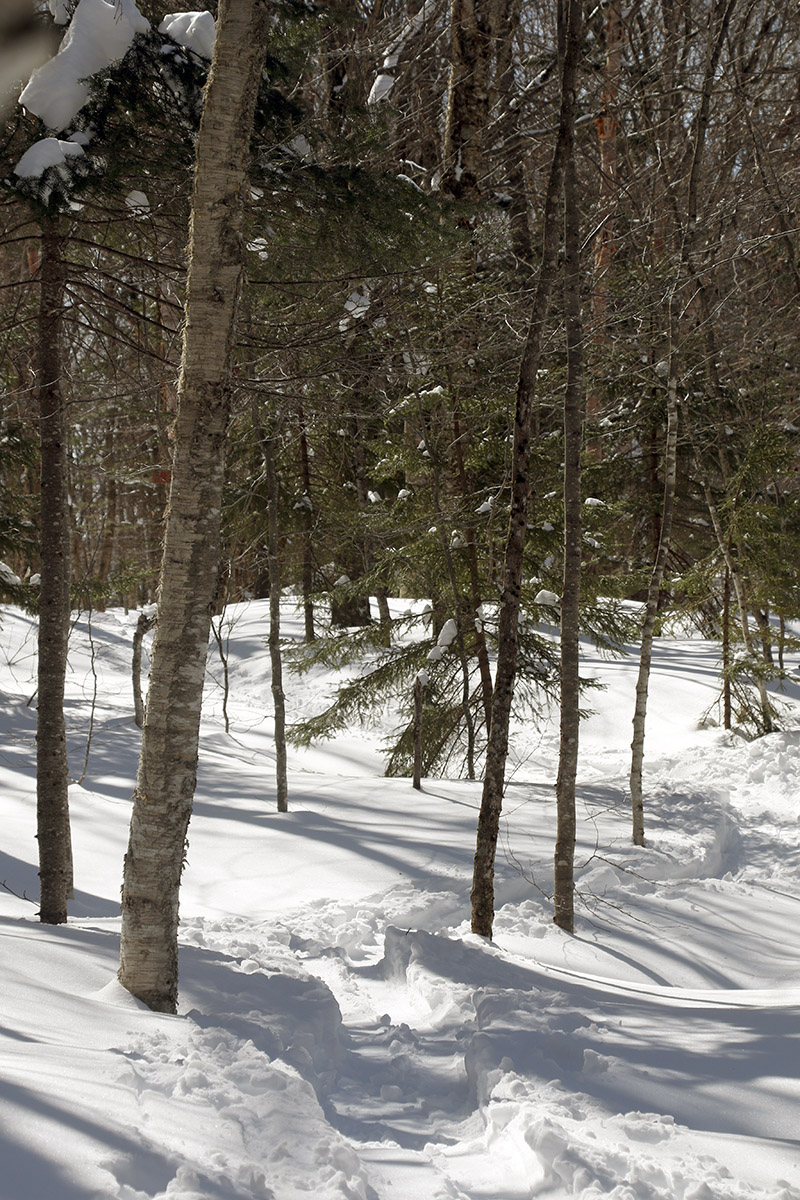
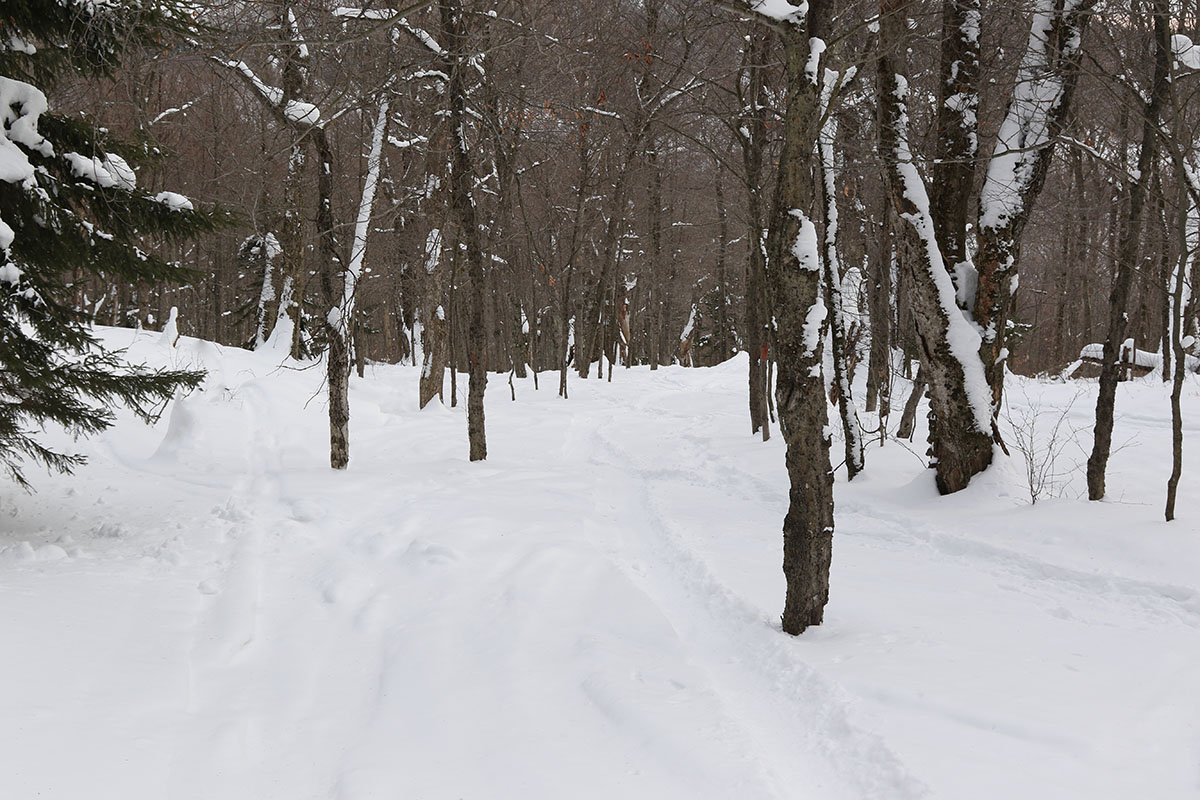
An image of the Catamount Trail rising from the Bolton Valley Access Road at the start of a backcountry ski tour near Bolton Valley Resort in Vermont
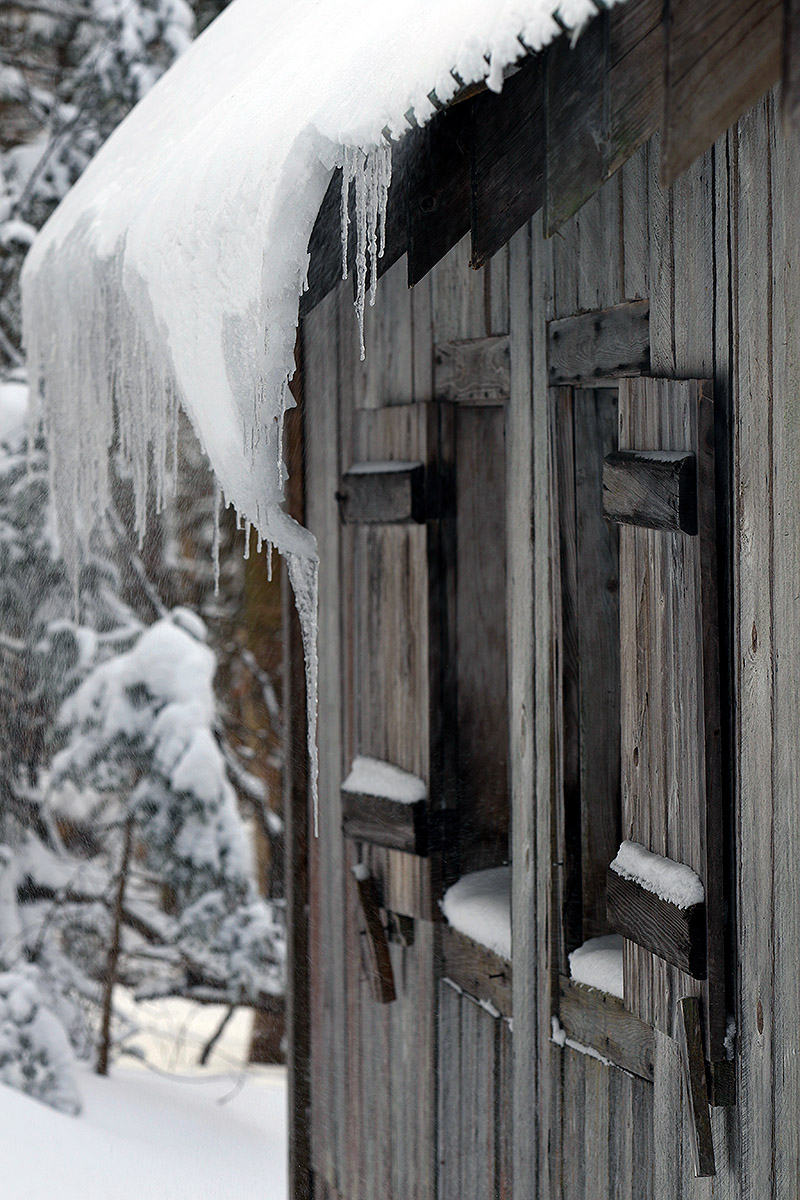
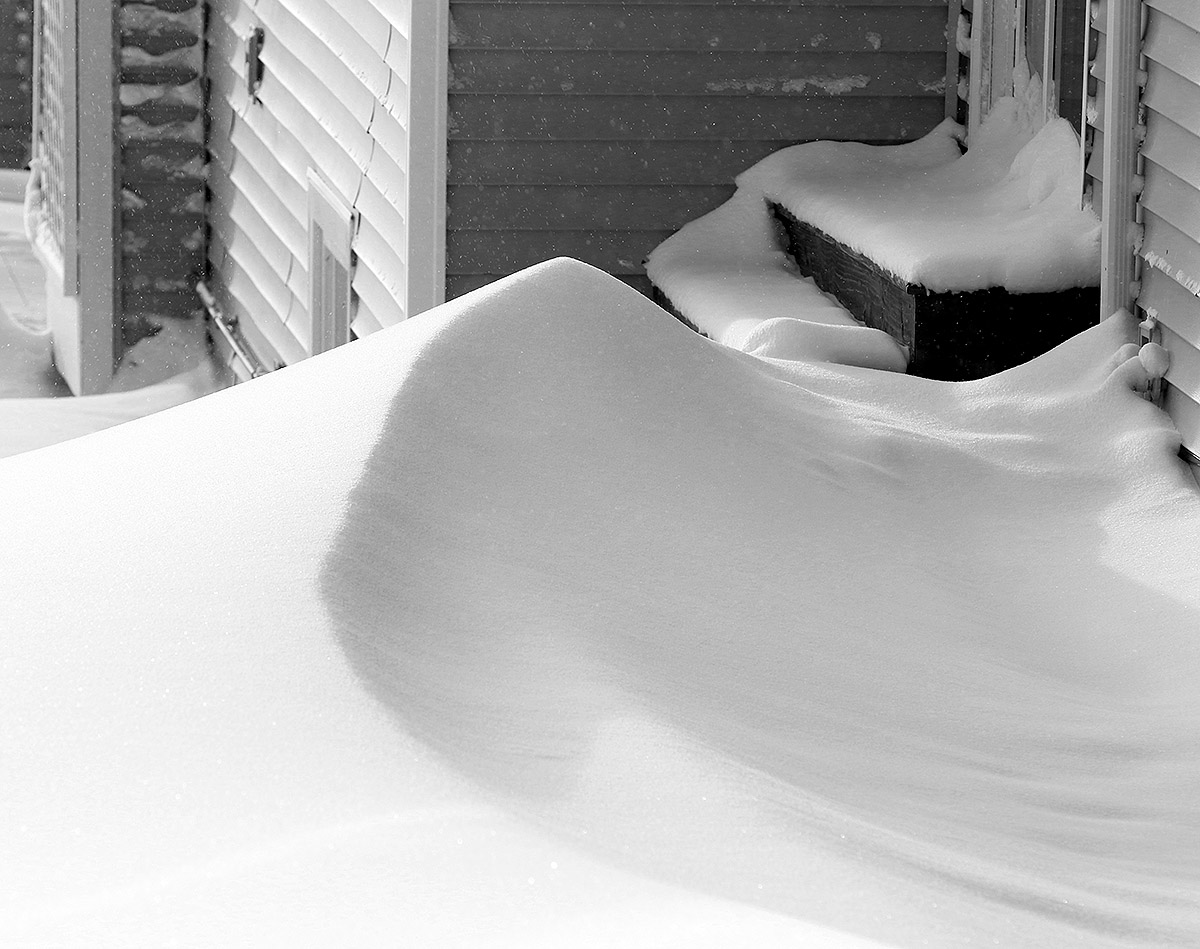
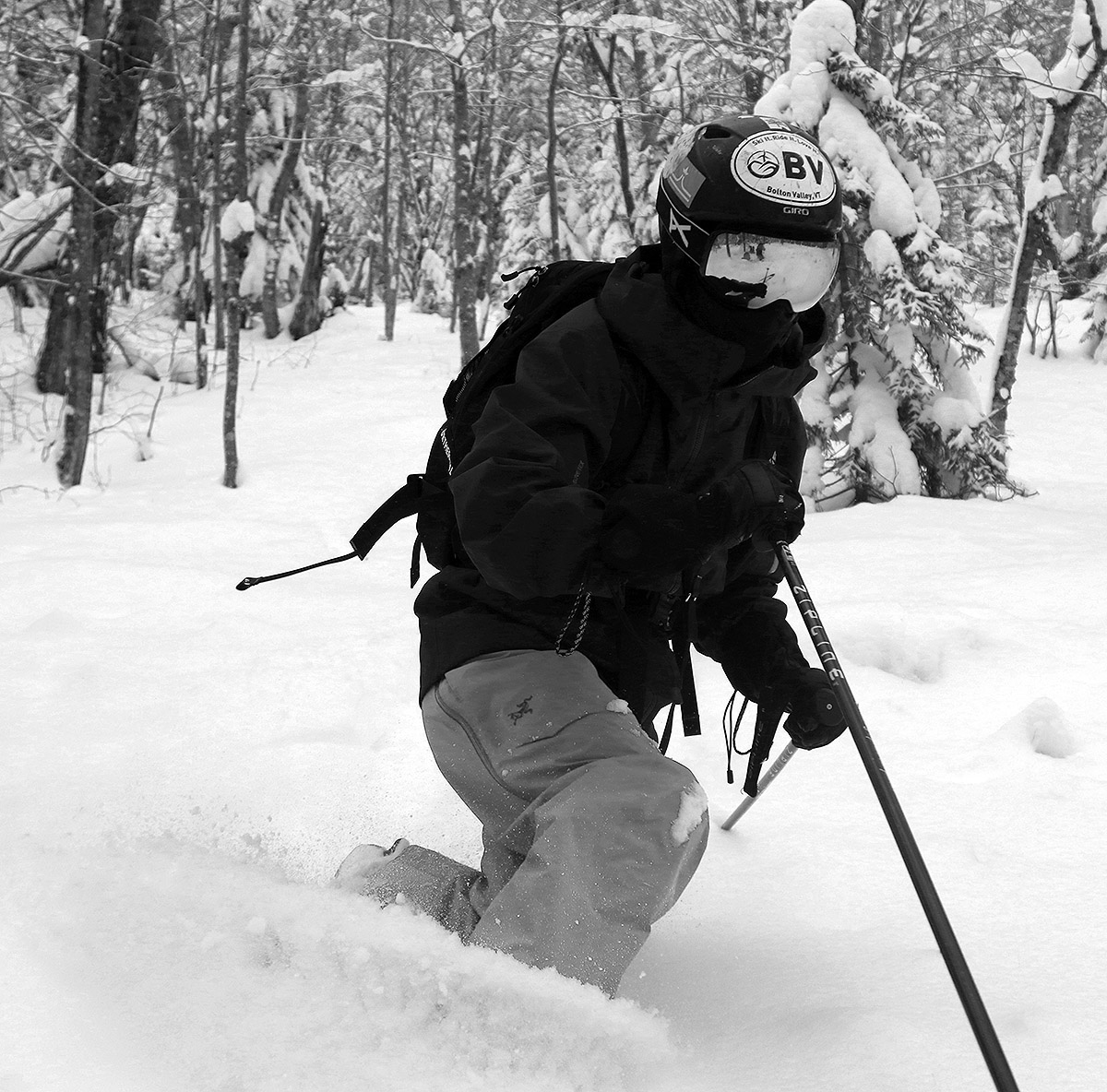
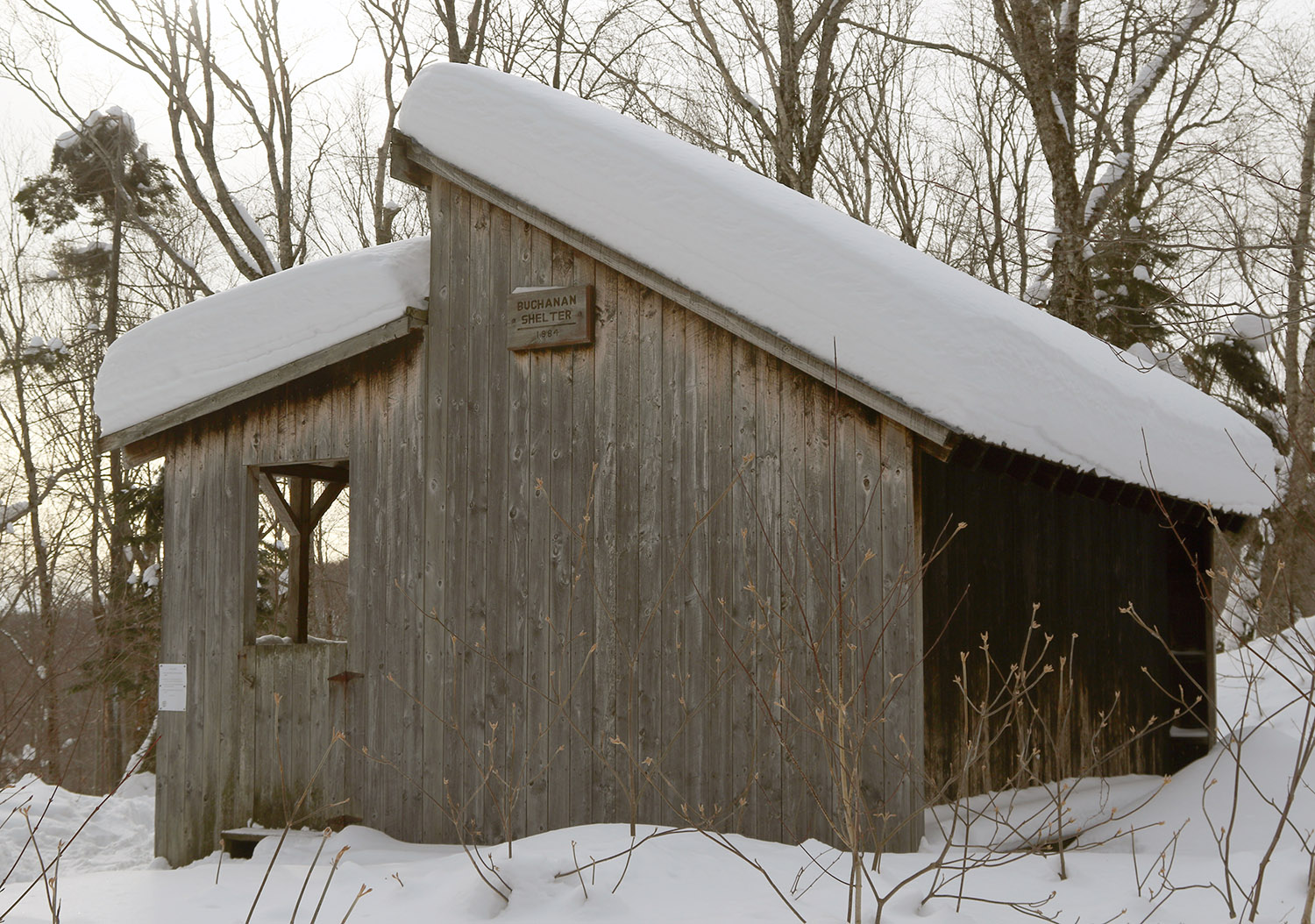
An image showing the snow stacked atop the outhouse near the Buchanan Shelter on the backcountry network during a ski tour near Bolton Valley Ski Resort in Vermont
A view of the snow stacked atop the outhouse near the Buchanan Shelter

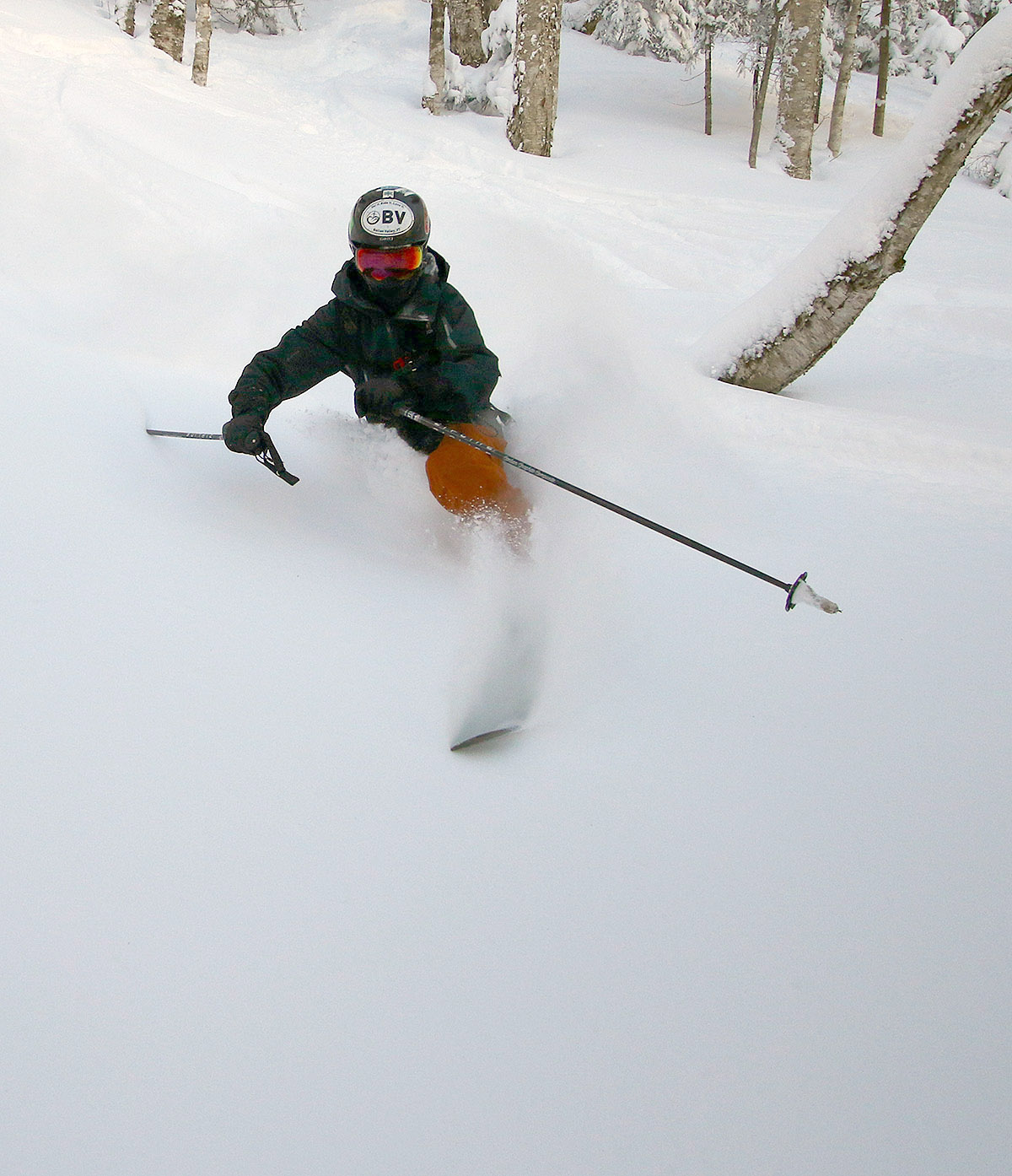
The weak area of low pressure that passed through the area last night brought 5 to 7 inches of snow accumulation to Bolton Valley as of their morning report. That was definitely enough to make it worth checking out some lift-served, on piste skiing. Unfortunately, high temperatures were expected to be in the single digits F, and with some wind around as well, that really didn’t lend itself to sitting on the lifts. Tomorrow’s forecast is looking much better, so I figured ski touring was ultimately the best call for today.

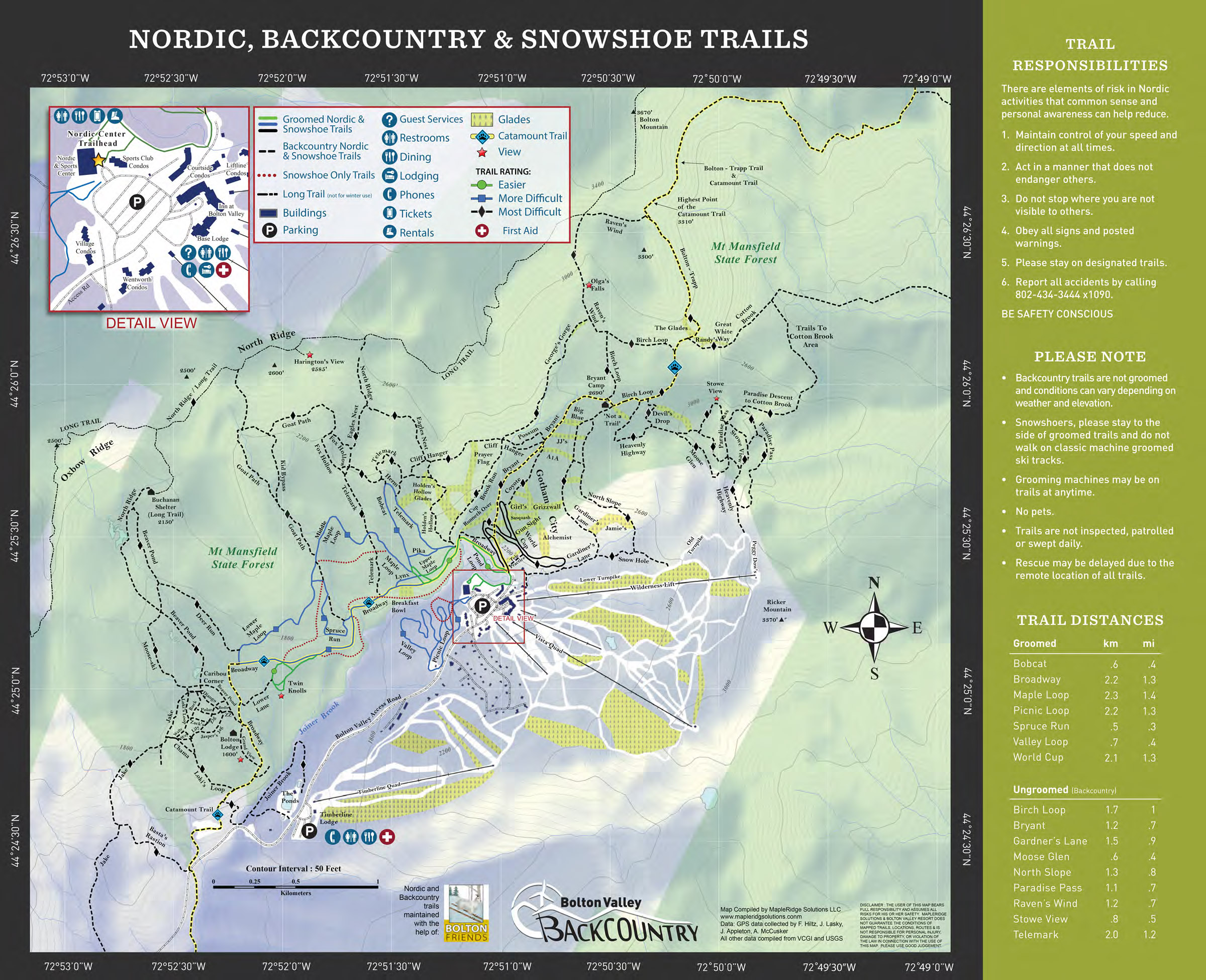
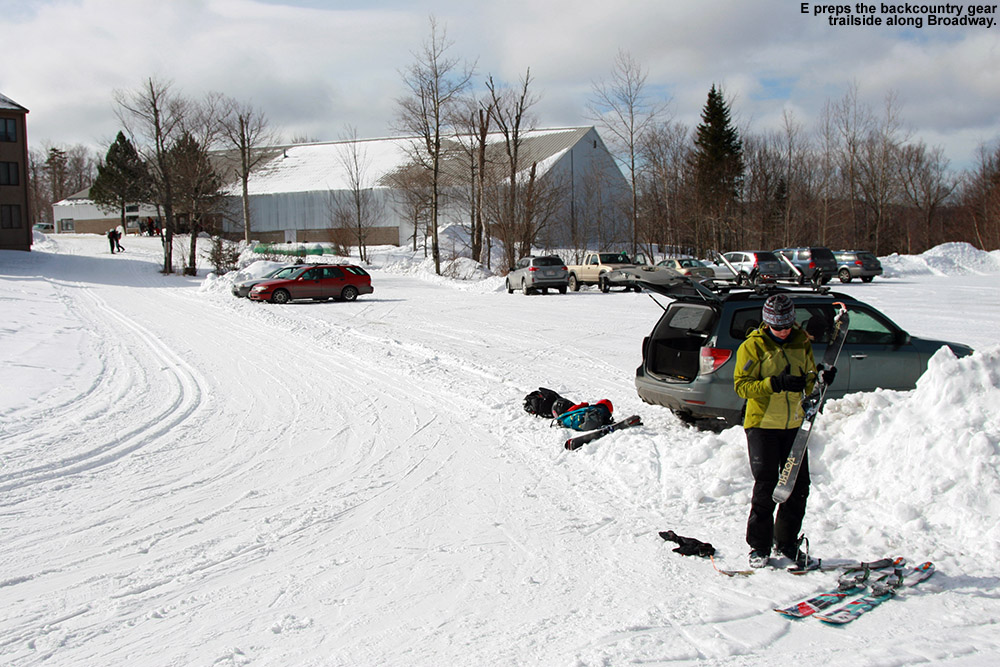
I haven’t been up to the Buchanan Shelter area of the Bolton Valley Nordic & Backcountry Network yet this season, because I’ve been waiting for the lower elevation snowpack to get to the point where it was viable for touring without worrying about coverage. I typically start tours to the Buchanan Shelter at the Catamount Trail parking area on the Bolton Valley Access Road, which is down around 1,200’, so you want a decent snowpack down to at least that level. Even with settling, we’ve finally got a snowpack of more than a foot down at our house in the Winooski Valley at the 500’ elevation, so that had me confident that the snowpack at 1,200’ was ready. The starting point there at the Catamount Trail parking area would definitely be the lowest elevation ski touring I’ve done yet this season, but with the cold temperatures getting worse at higher elevations, being at some of those lower elevations was a good thing.

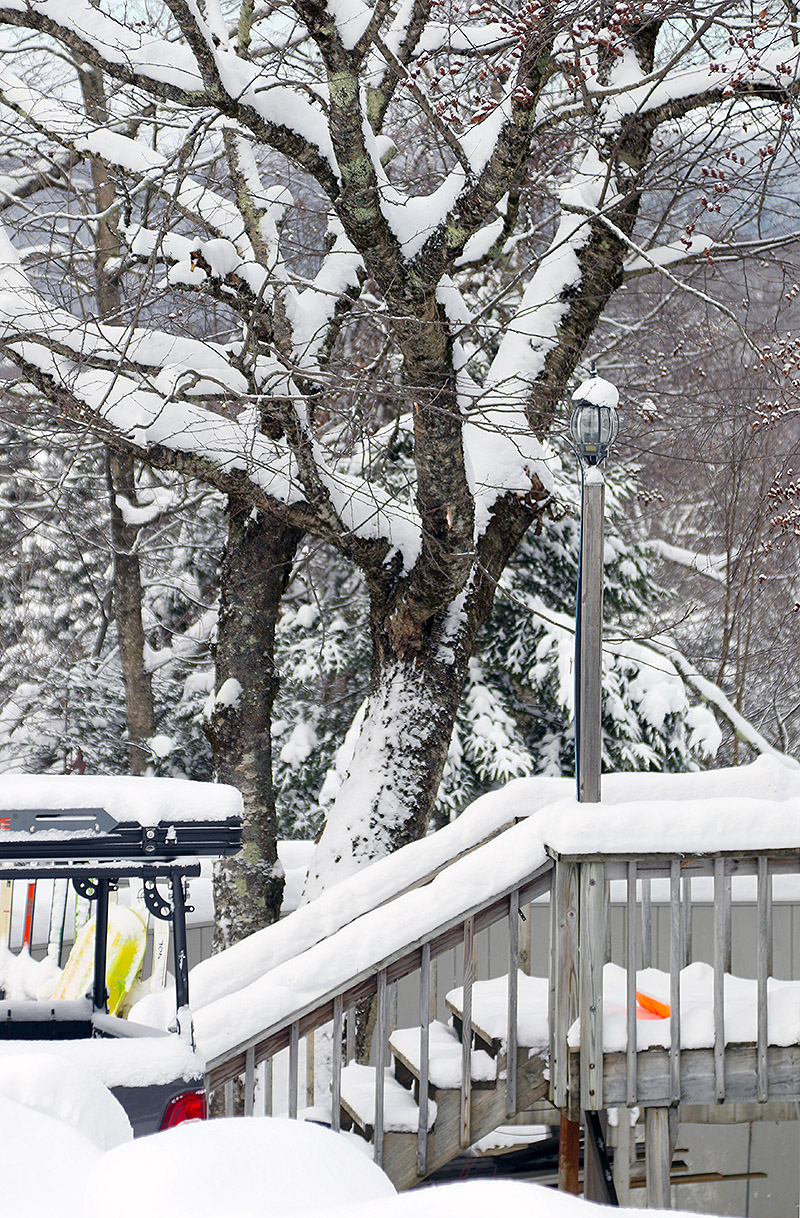
An image showing midwinter snow sparkling in the air at the Catamount Trail parking area along the Bolton Valley Access Road at the start of a ski tour near Bolton Valley Ski Resort in Vermont
Midwinter snow sparkles in the air in the Catamount Trail parking area along the Bolton Valley Access Road

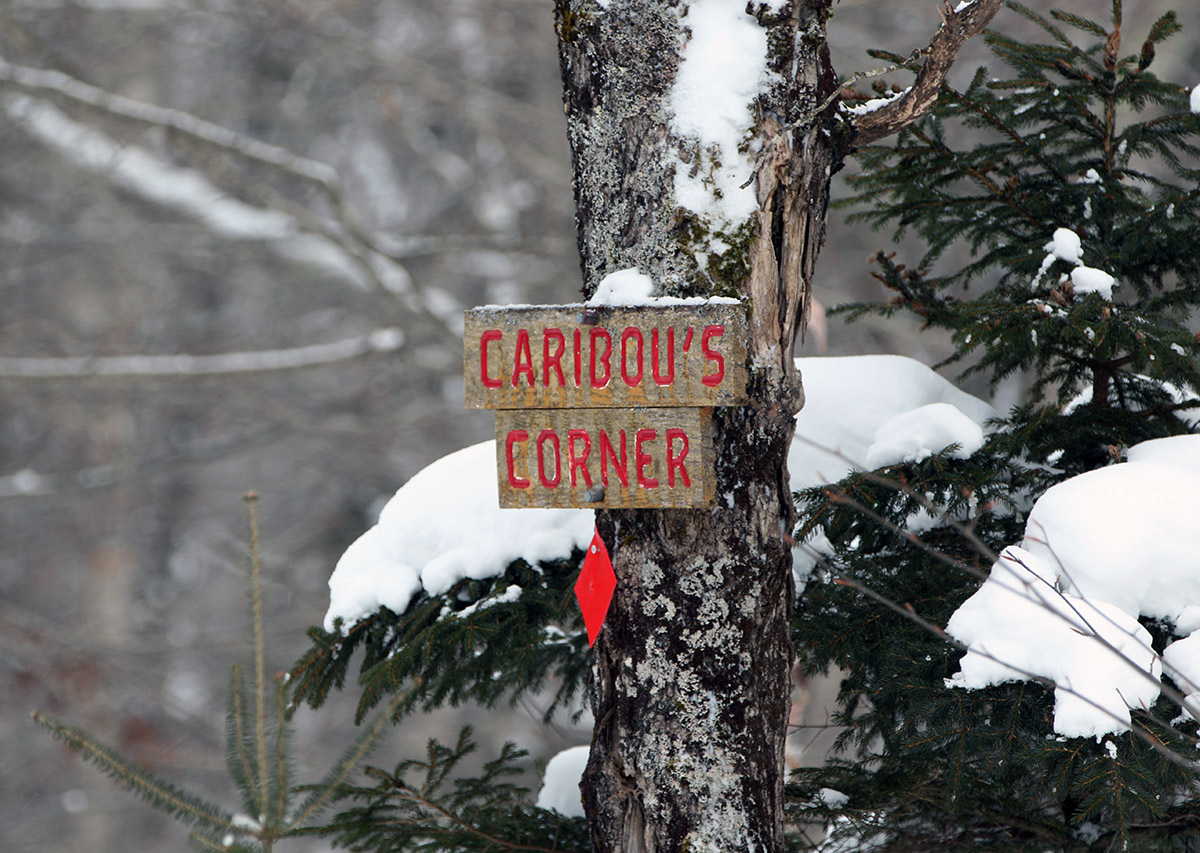
I headed up to the trailhead around midday, and was worried that parking might be tight, but there was only one other car in the parking lot, and it looked like it had been sitting there for a while – it had about 4 inches of fresh snow on it from the most recent storm. When I’d check the midmorning temperature up at Bolton Valley, they were reporting a temperature of 1 F, so I knew it was going to be cold out there. As I started my tour though, especially with the bright sun, it really felt more like “February” cold, vs, December or January cold. That sunlight definitely makes a difference in taking off some of the chill. The first big chunk of my ascent up the Catamount Trail was out of the wind, so it really was quite comfortable, but I was quickly reminded of just how cold it was when I hit Caribou’s Corner and got into those open, exposed areas by the beaver ponds.

Beyond Caribou’s Corner, I also started to get into some drifted snow, and that required occasionally breaking trail through 1 to 2 feet of powder. Skier traffic was incredibly light today in that area of the network, but thankfully I was able to make use of at least a few tracks of Nordic skiers in the lower and middle elevations of the approach. Where trails hadn’t been broken though, I was typically having to break trail myself through about 4 to 10 inches of powder where snow hadn’t drifted. Once I reached the Upper Beaver Pond Trail, all bets were off though. Nobody had broken trail there, and the best help I could get were the vestiges of where someone had set a track several storms ago. That helped at least a little, but that faint memory of a track disappeared in many places due to drifted snow, so I was left breaking trail up the steepest part of the ascent through a foot or two of powder. I did have my 115 mm fat skis on, and at least they were a saving grace with respect to floatation for breaking trail. While fatter skis do add a bit more weight on your feet, there’s no doubt that they more than made up for that in deep snow with respect to how much higher they kept me up and out of the snow while breaking trail.

For the typical descent on these tours, I head southward or southeastward right from the Buchanan Shelter area, and I know that ski terrain is great, but I had the time and figure I’d mix things up with a bit more exploring today to see what else might be available. So, instead of descending from the Buchanan Shelter, I continued on up the spur trail that leads from the shelter toward the Long Trail, then cut eastward to catch the high ridge that juts out southeastward off the main Oxbow Ridge/North Ridge area. I could see that the top of that ridge I was targeting was hitting the evergreen tree line, and it looked like the vegetation would be too tight for skiing its steep slopes, so I cut through the col separating that ridge from the Oxbow Ridge/North Ridge. From the col, I headed out along the ridge itself to check for ski terrain, but as I’d expected, it was fairly dense with evergreens, and the south face was quite steep and rife with ledges as well. Descending the east side of the ridge, I just continued to traverse left until the vegetation became more of a hardwood/evergreen mix. I ended up descending through a gully in the Goat Path area, although I never actually connected with the Goat Path trail itself. I wrapped back around the ridge and finally connected back to the trail Network at Maple Loop. From there, I was able to easily head back to the parking area via Broadway and the Catamount Trail. My descent through the gully was fine, and there were some nice steep, skiable lines, but I’d actually say the standard terrain down below the Buchanan Shelter offers better skiing, so the extra effort required to head to the east side of that ridge isn’t worth it unless you really just want to explore that rarely visited part of the network.

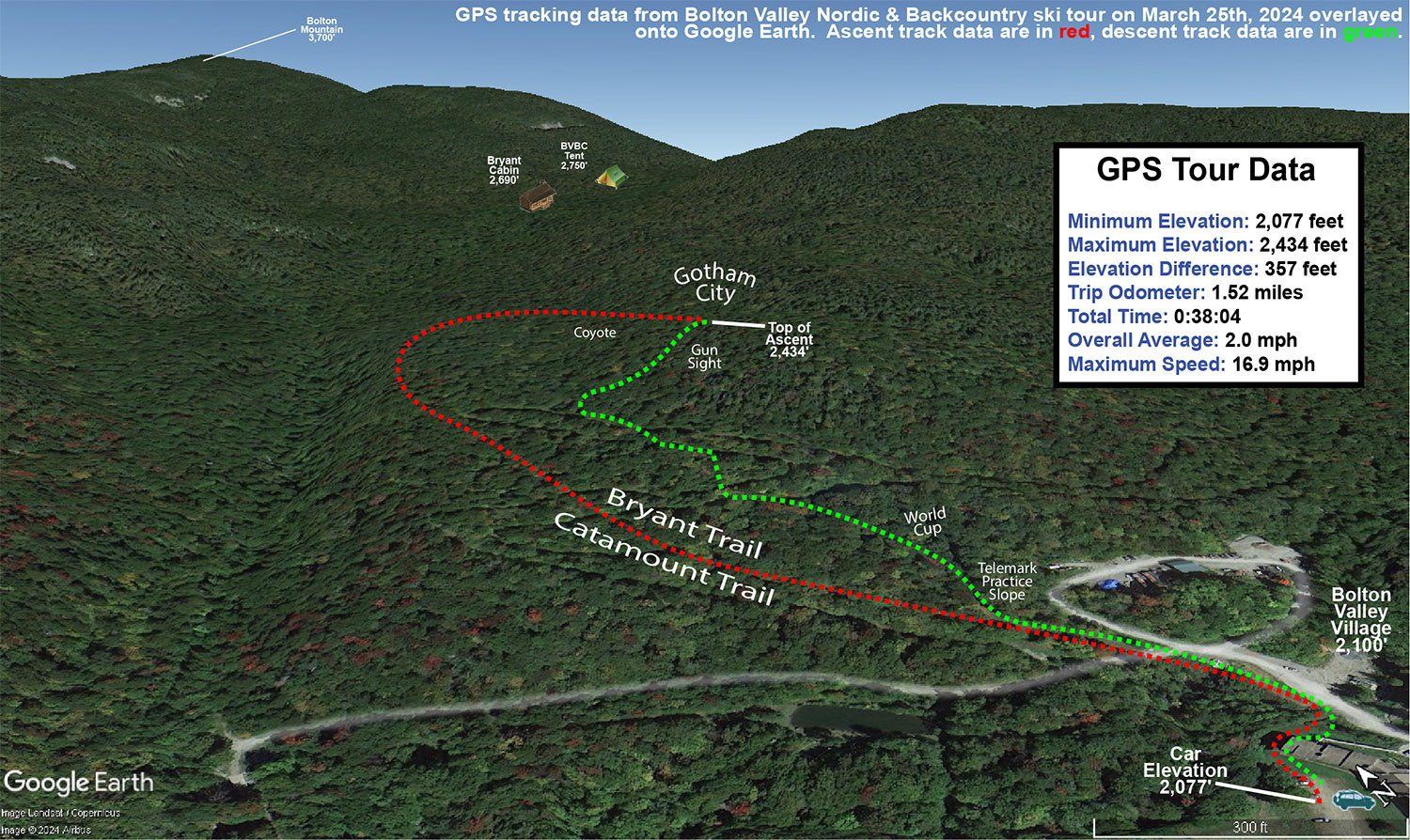
A Google Earth map with GPS tracking data for a ski tour on the Bolton Valley Nordic & Backcountry Network at Bolton Valley Ski Resort in Vermont
A map of today’s ski tour on the Bolton Valley Nordic & Backcountry Network using GPS tracking data displayed via Google Earth

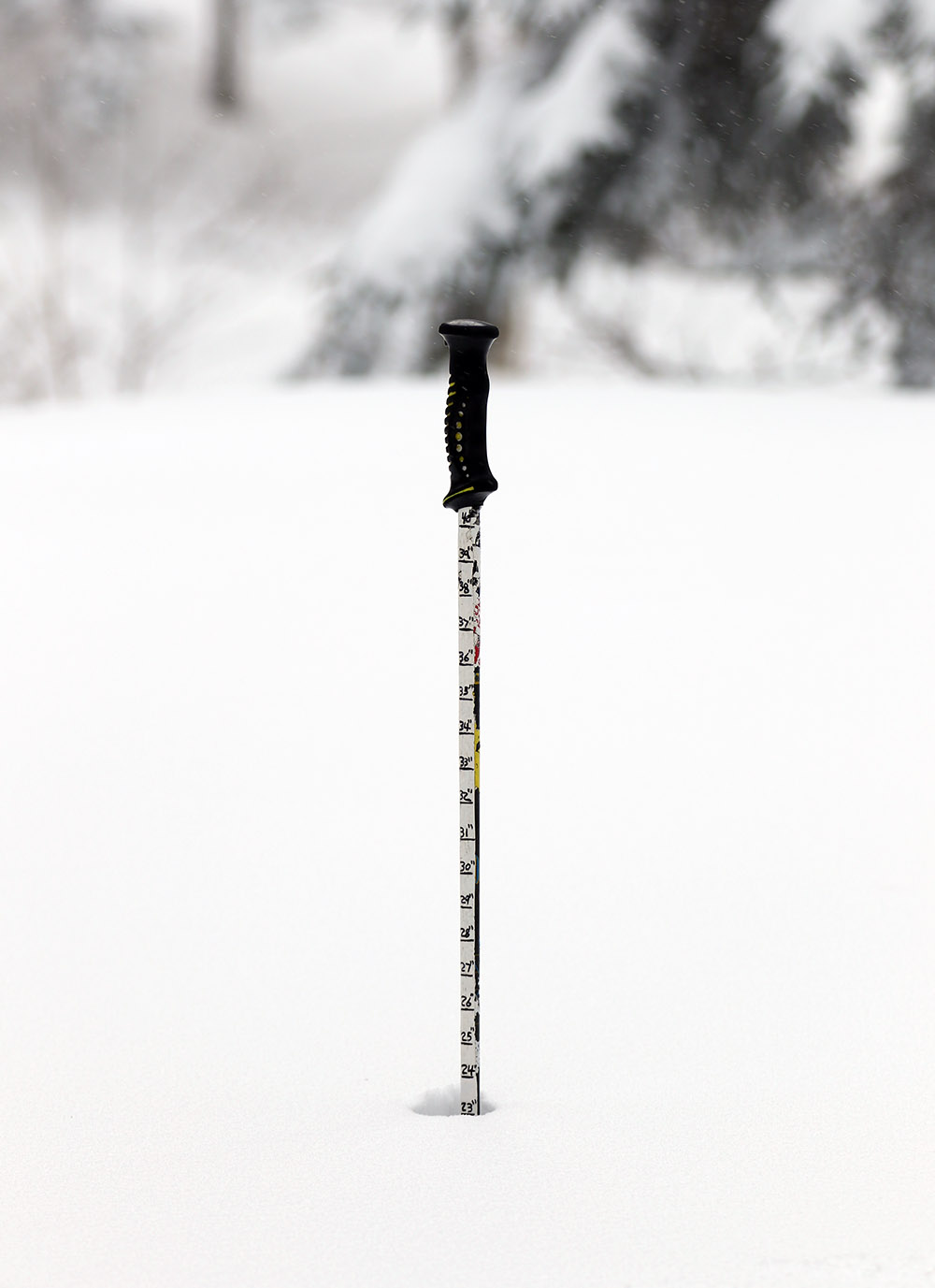
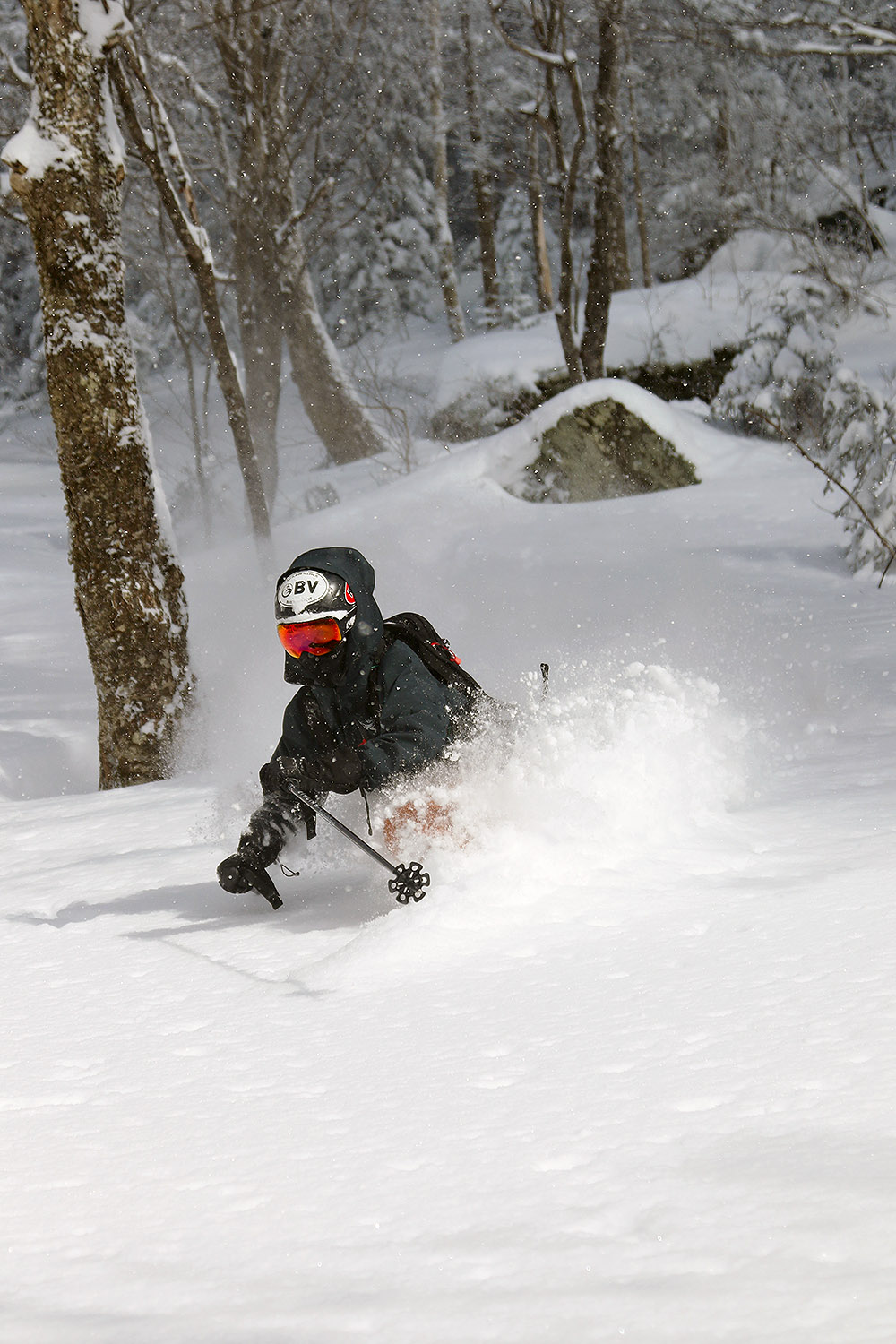
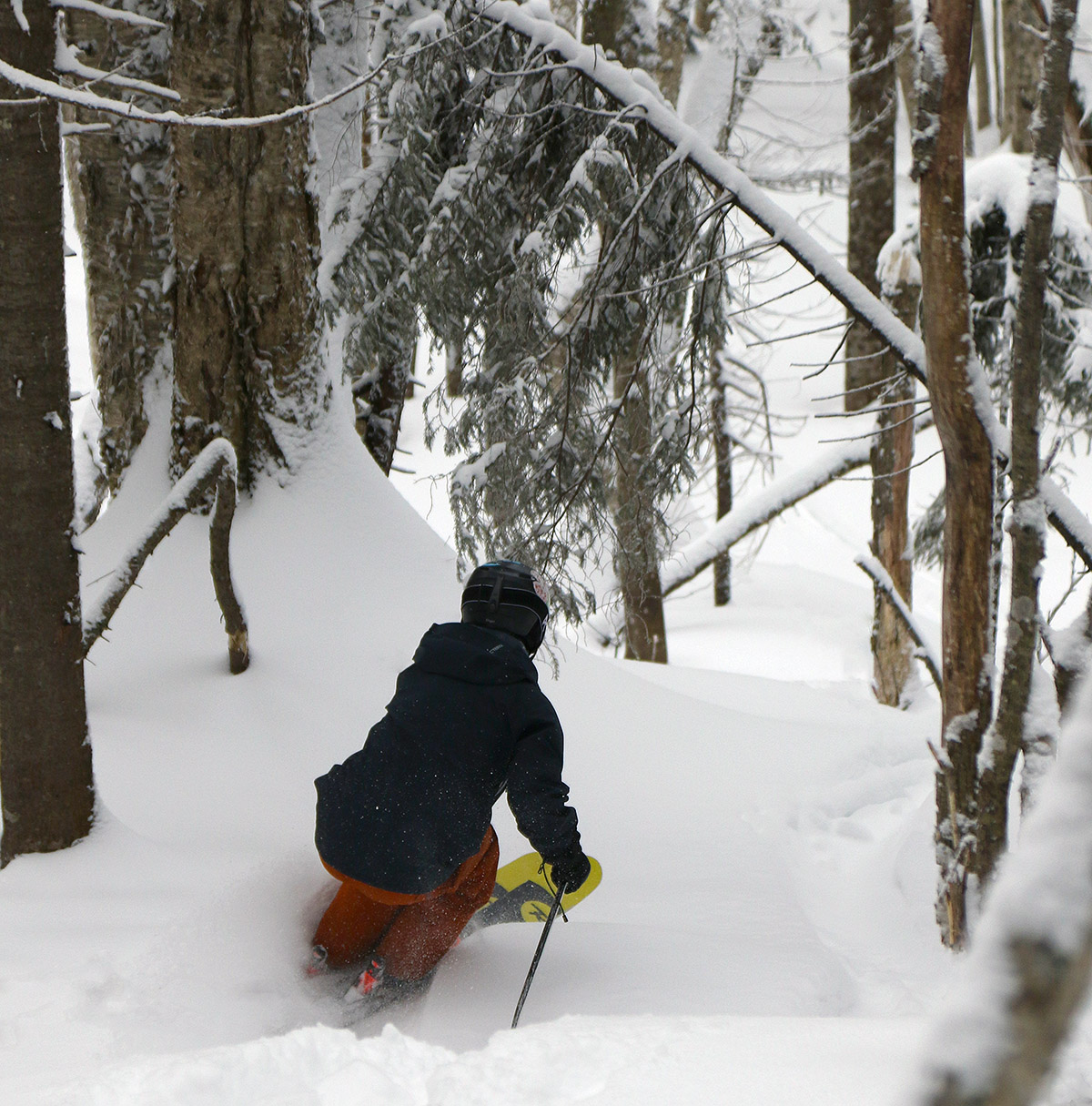
I can’t throw out huge accolades with respect to the quality of the powder skiing on today’s tour though. It was extremely good yesterday, but it really seems to have taken a step back today. I’d say the drop in the quality of the powder I found available was due to a combination of the new snow, which really wasn’t incredibly dry (up in the range of 8% H2O according to my analyses down at the house), and the cold temperatures making for poor gliding. The powder was just sort of slow and clunky, and it lost that perfect right-side-up nature that it had yesterday. Low and even moderate angle terrain just didn’t provide enough speed for turns, and even steep terrain was just so-so. I bet the powder will improve a lot even by tomorrow though – it’s supposed to be substantially warmer, which will help with some glide, and some of the snow’s natural setting and drying will probably start to reset the density gradient. For those considering lower-elevation tours in the near future, base depths were fine throughout today’s route in the Bolton Valley area. I’d say there was a minimum of 12 to 18 inches down at 1,200’, which is fine as long as you’re on the low angle terrain that is typical of the starting points for many routes. My tour topped out around 2,400’ today, and up there I was getting snowpack depths of 30 to 35 inches. There’s a substantial base to that snowpack, and it’s well-settled snow aside from the surface 1 to 2 feet of powder, so it offered plenty of coverage for even the steepest pitches that I encountered.

Bolton Valley Nordic & Backcountry, VT 26JAN2025

An image of a backcountry ski pack with a blue access band attached on the Nordic & Backcountry Network at Bolton Valley Ski Resort in Vermont
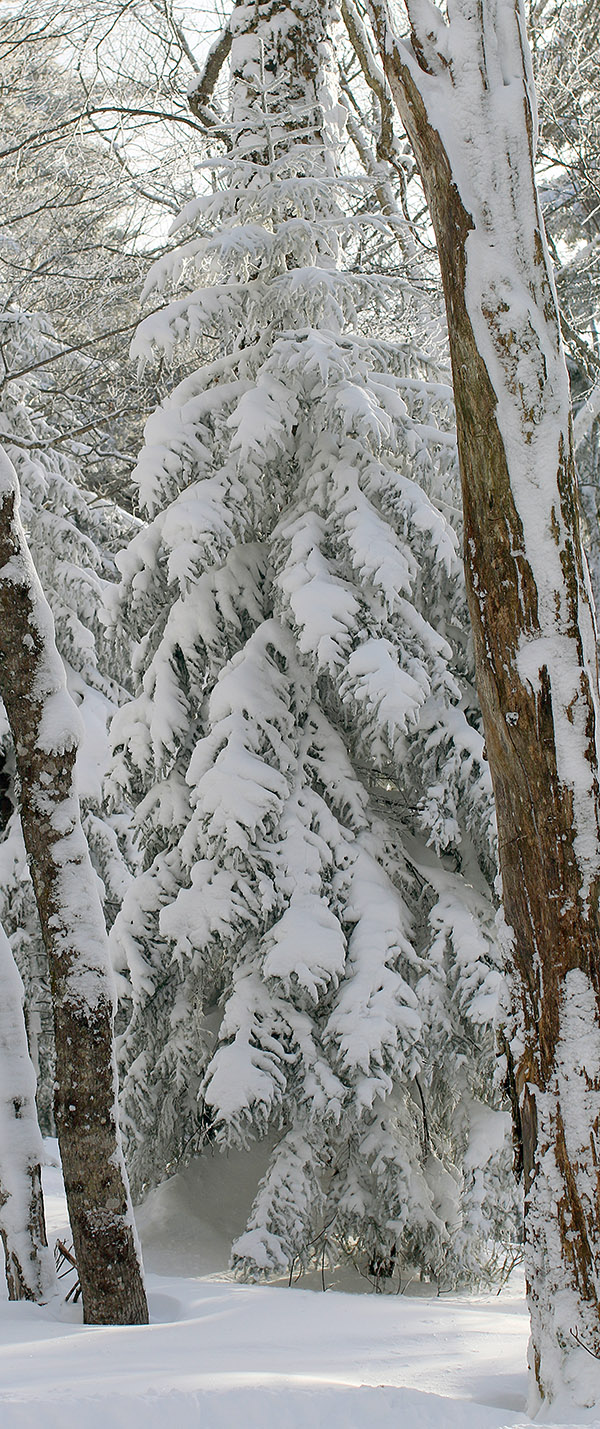
An image showing evergreen trees plastered with snow from recent winter storms at Bolton Valley Ski Resort in Vermont
The snow continues to pile up and the evergreens continue to become buried in the Bolton Valley Backcountry.

A cold front moved through the area in the late morning period today, and whiteout conditions were encountered in numerous spots. With snow returning over the past couple of days, Bolton Valley was reporting an additional 2 to 3 inches in their 24-hour total, and my liquid analyses from down at the house indicated that it was indeed very dry snow – down around 2% H2O. This isn’t the kind of snow that is going to quickly build the snowpack, but it is the kind of snow that compliments the powder that is already in place. And the mountain snowpack is doing fine for this time of year anyway – as of today’s report, the snow depth at the Mt. Mansfield Stake is almost 60 inches.

My ski tour from yesterday revealed that the powder out there is in absolutely fantastic shape, so I decided to head out for another tour today. Temperatures were up today – well up into the 20s F in the mountains, but the wind had picked up as well. Skies were cloudy as the snow pulled out but quickly shifted to partly cloudy conditions with bright sun at times.

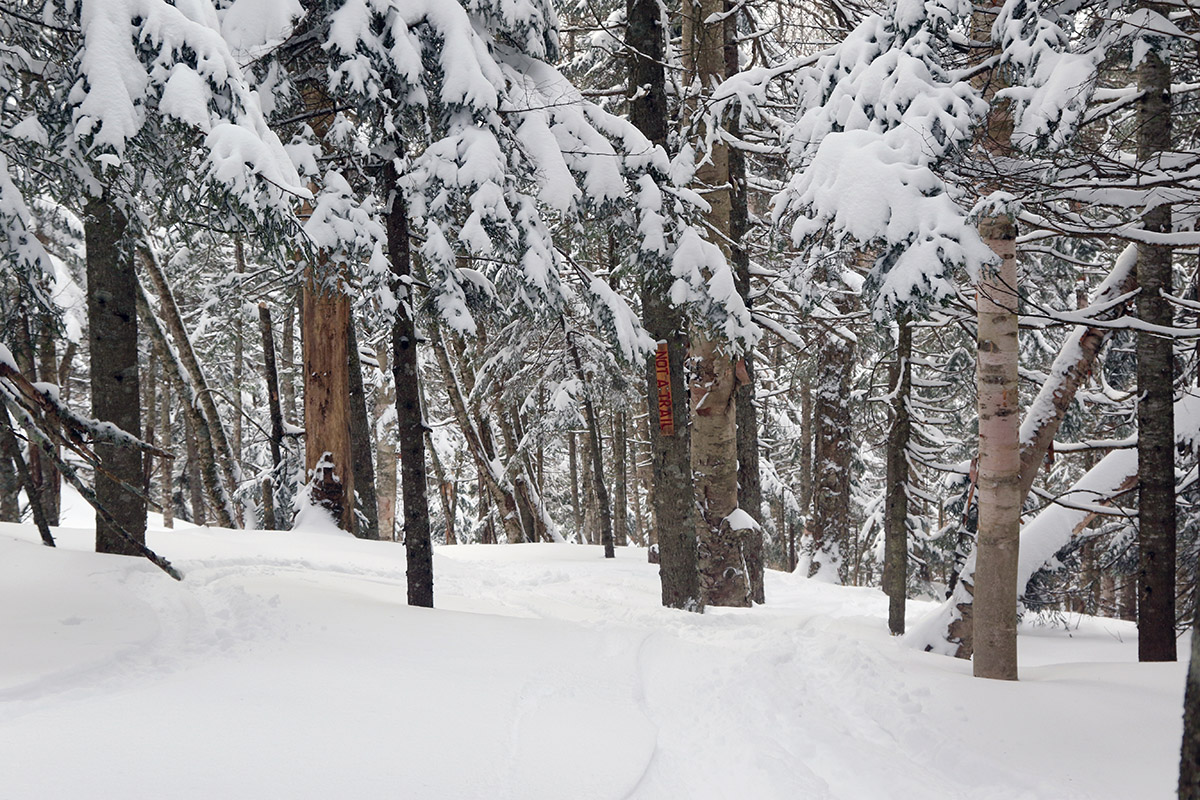
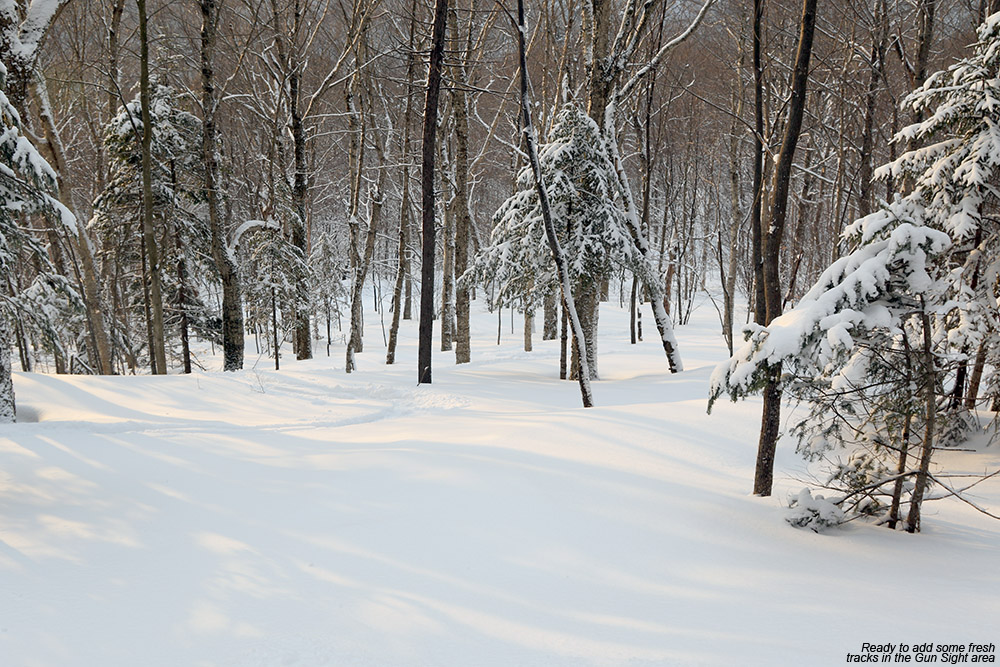
I toured on the west side of the Bolton Valley Nordic & Backcountry Network yesterday through elevations in roughly the 2,000’-2,400’ range, but today I toured on some of the more traditional Bryant Trail terrain and topped out around 2,800’. I toured up and around Bryant Cabin, then continued on up to the Not a Trail traverse and descended from there. I hit the Gun Sight area, which I’d yet to visit this season, and then continued my descent through a collection of lower-elevation glades. Similar to yesterday, the main lines of most glades have seen plenty of skier traffic, but all you have to do is head off into the surrounding trees and the snow is untracked and bottomless. Even in the dense evergreen areas the snowpack is deep – it was at least 30 to 40 inches when I checked at the 2,800’ level, but I can’t tell if I was actually probing all the way down to ground level.

A Google Earth map with GPS tracking data for a ski tour on the Bolton Valley Nordic & Backcountry Network
A map of today’s ski tour on the Bolton Valley Nordic & Backcountry Network using GPS tracking data displayed via Google Earth

Today must not have been as busy at the resort as yesterday, because when I headed up the afternoon there was no sign at Timberline about the upper parking areas being full. Bolton has definitely been checking people’s passes for Nordic & Backcountry Network access this weekend. Yesterday on my way up the Bryant Trail I had to show a patroller my pass, and today they had an employee stationed at the Nordic Hut at the base of the Bryant Trail. I showed her my pass, but she wanted me to get one of the new blue arm bands that the resort is requiring for trail network use this season. I’d read about the arm bands on the resort’s website but hadn’t seen them in practice. It looks like they’re fully implementing them now, but now that I’ve picked mine up, it’s good for the whole season. In the Nordic & Backcountry Center they said that you can just keep it on your backcountry pack, since people are finding them a bit small to go on the arm. I was planning to visit the Nordic & Backcountry Center anyway, because I wanted to check out its new location. It’s moved from down at Ralph’s Rec Center to one of the buildings on the west side of the Village Circle. This is a better location with respect to backcountry access, especially for those using the Wilderness Uphill Route since it’s so close, but it seems to be a little less convenient for Nordic skiers that might be starting out on the Broadway Trail.

Bolton Valley Nordic & Backcountry, VT 25JAN2025

An image of glades in the Prayer Flag area of the Nordic and Backcountry Network of trails at Bolton Valley Ski Resort in Vermont
An image of powder snow settling and curling over a tree stump in the area of the Nordic and Backcountry Network of trails at Bolton Valley Ski Resort in Vermont
We haven’t had much new snowfall in the past couple of days, so the powder is settling on objects throughout the Bolton Valley backcountry in a variety of fun ways.

The pace of snowfall has slowed down a bit over the past few days here in the Northern Greens, so heading into the backcountry seemed like today’s call for good access to untracked powder. It was a sunny midwinter day, so my wife and I went snowshoeing in Morrisville in the morning, but I had time to head up to the Bolton Valley area in the afternoon for some ski touring.

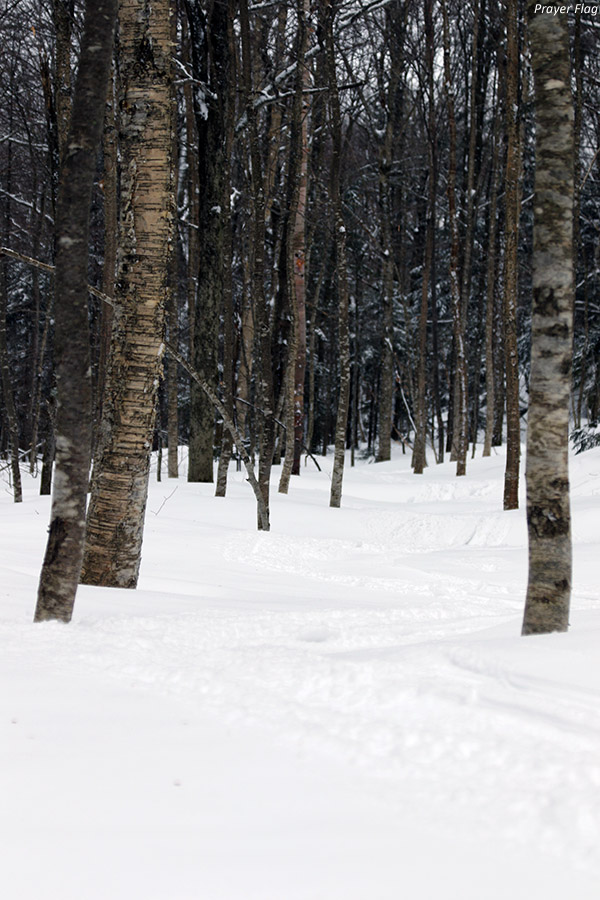
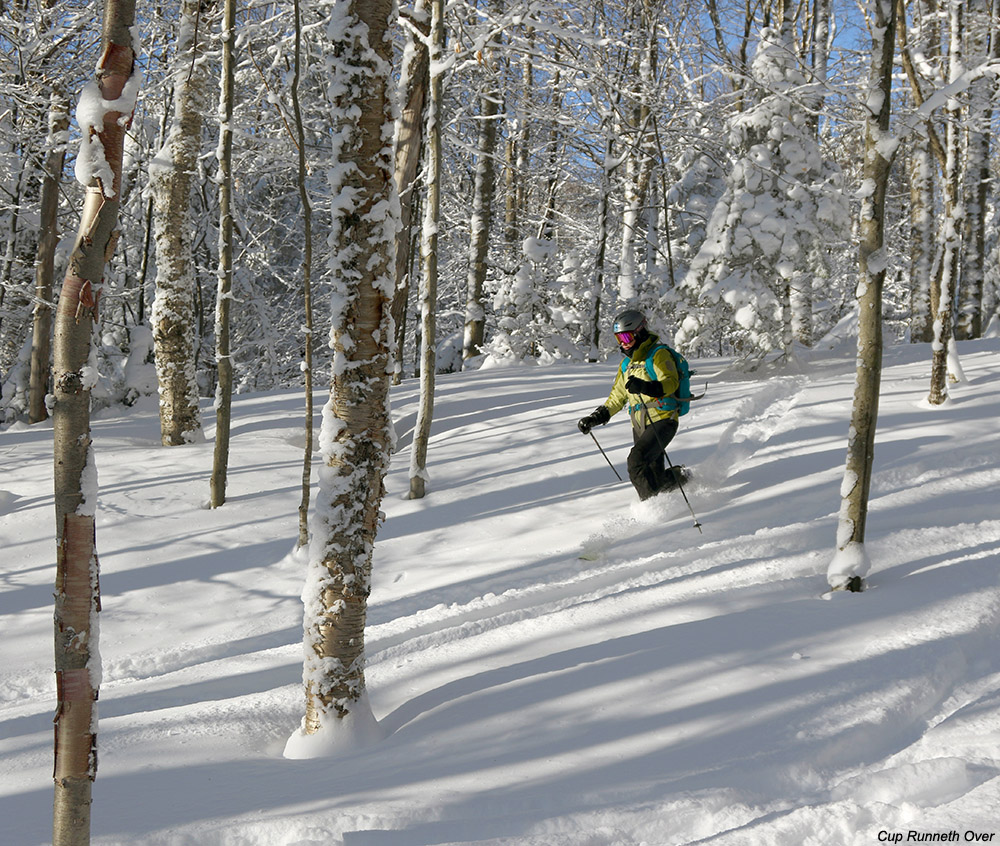
I haven’t really done any ski touring west of the Bryant Trail yet this season, so I decided to head out to the Prayer Flag area on today’s tour. Although the main lines of Prayer Flag had seen a decent amount of skier traffic, the natural glades surrounding the area were nearly untracked. As Prayer Flag began to narrow and dive down to Brook Run, I traversed to the right through the trees toward the Holden’s Hollow Glades. The main lines there were well tracked as I’d expected, so I continued on into the surrounding trees to finish my run down to the Joiner Brook bridge. I felt like extending my tour a bit, so I skinned back up and did a run down the Cup Runneth Over glade before heading back to the car.
A Google Earth map with GPS tracking data for a ski tour on the Bolton Valley Nordic & Backcountry Network
A map of today’s ski tour on the Bolton Valley Nordic & Backcountry Network using GPS tracking data displayed via Google Earth

Although we didn’t get a ton of new snow this week, what we did get over the past couple of days was incredibly dry, so it topped off the existing powder quite well. We’ve also had the type of cold, dry weather this week that has allowed the powder to settle and dry out to enhance its right-side-up density gradient and improve with age. The quality of the powder out there today was excellent, and the density gradient was such that it skied well on any pitch. In terms of depths, my measurements at the 2,000’ level revealed 17 to 18 inches above the subsurface, and at 2,400’ I found 22 to 24 inches of depth. In general, I found that the main lines of most glades had seen a decent amount of skier traffic, and that’s not surprising without much fresh snow this week, but snow is in the forecast in the coming days to hopefully help reset the powder in those areas.

Bolton Valley Nordic & Backcountry, VT 20JAN2025

An image of trees near the Alchemist glade plastered with dry fluffy powder snow from recent winter storms at Bolton Valley Ski Resort in Vermont
An image of the Nordic Ticket Booth area covered in sunshine and powder snow from recent winter storms at Bolton Valley Ski Resort in Vermont
The views of snow and sun at the Bolton Valley Nordic ticket booth suggested that Mother Nature was setting up another great day for ski touring.

We were back to highs in the single digits F today, and I’d certainly call those touring temperatures. With the cold weather, I wasn’t sure if I was going to head out for turns today or not, but with snow quality this good and snowpack this deep, it’s easy to tip the scales toward skiing vs. doing something else for exercise. Bolton Valley was also reporting another 2 to 3 inches of fresh snow from Winter Storm Demi, so the January snowfall just keeps piling up, inch by inch.

There are a number of main sectors of the Bolton Valley Nordic & Backcountry Network that I haven’t visited yet this season, and with the current snowpack, essentially everything is in play, so it was difficult to choose where to go. I ultimately decided on a loop up to Bryant Cabin and a descent in the Gotham City area, since I hadn’t been out there yet this season. Indeed, the afternoon temperatures were in the single digits F in the mountains today like we had back at the beginning of the month, but it was sunny, and there was little wind, so that made it feel noticeably different from the snowy, windy single-digit temperatures we had before. It was really quite comfortable out on the ascent, and I was cruising up the Bryant Trail, it was feeling so nice that I decided to extend my tour a bit higher.

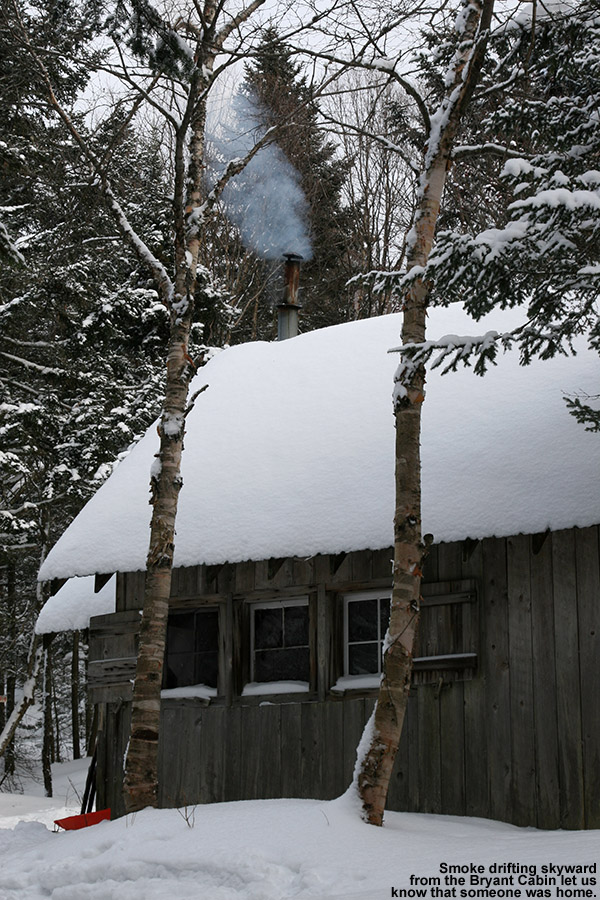
An image of the snowy roof of the Bryant Cabin out on the Nordic and Backcountry Network at Bolton Valley Ski Resort in Vermont
A view of snowy Brant Cabin today as I stopped by briefly during my ski tour for a drink and some photos.

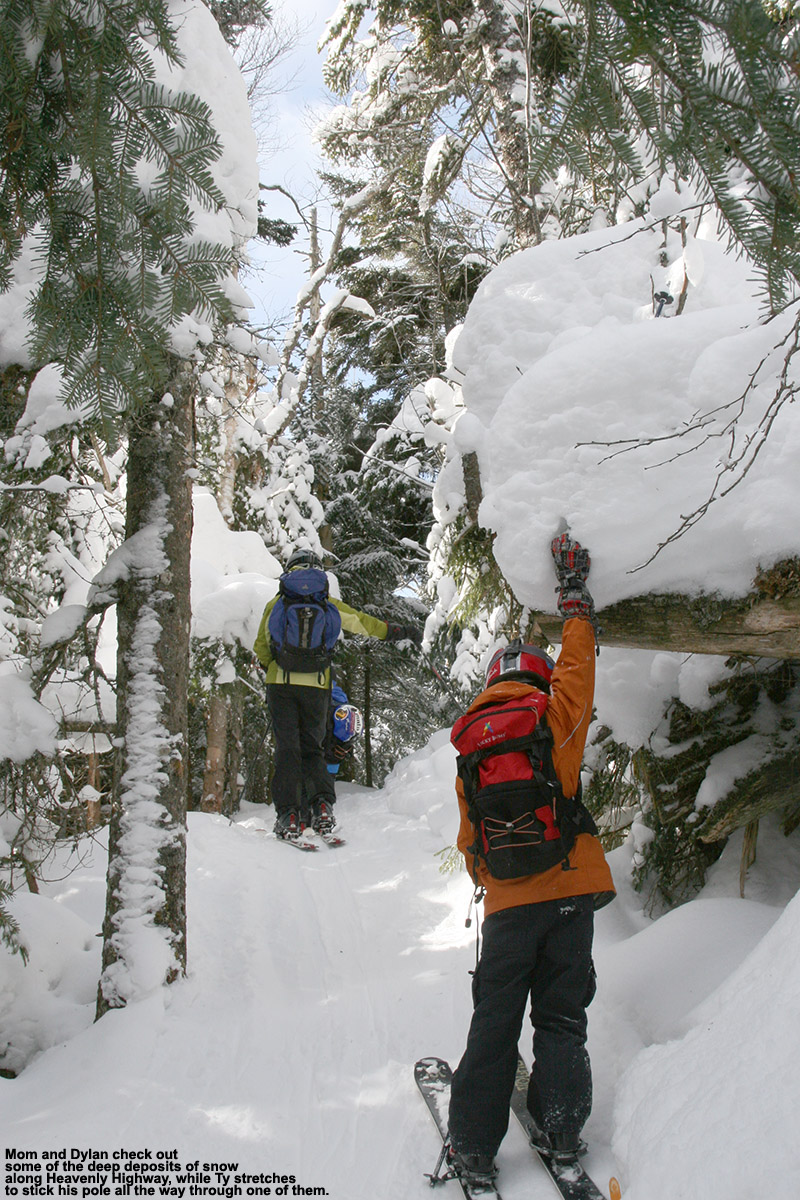
I stopped briefly at Bryant Cabin for a drink and some photos, then continued on up Heavenly Highway to the Not a Trail area at around the 2,800’ elevation. I did some checks on the snowpack depth and was typically getting numbers in the range of 35 to 45 inches. I think I was getting to the bottom of the snowpack when probing with my ski pole, but it’s hard to know for sure without digging a pit. When I was out in the Jay Peak backcountry touring the west face of the Gilpin Mountain/Domey’s Dome range on Saturday, snowpack probing at similar elevations was typically giving me depths of 45 to 50 inches. So, as one might expect with the snowfall the Jay Peak area has seen thus far this season (a bit over 200 inches), the snowpack seems to be a bit deeper there at equivalent elevations.

An image of a snowy evergreen tree near the Alchemist glade at Bolton Valley Ski Resort in Vermont
It’s only mid-January, but the forest is getting check with snow and evergreens are beginning their process of disappearing into the snowpack

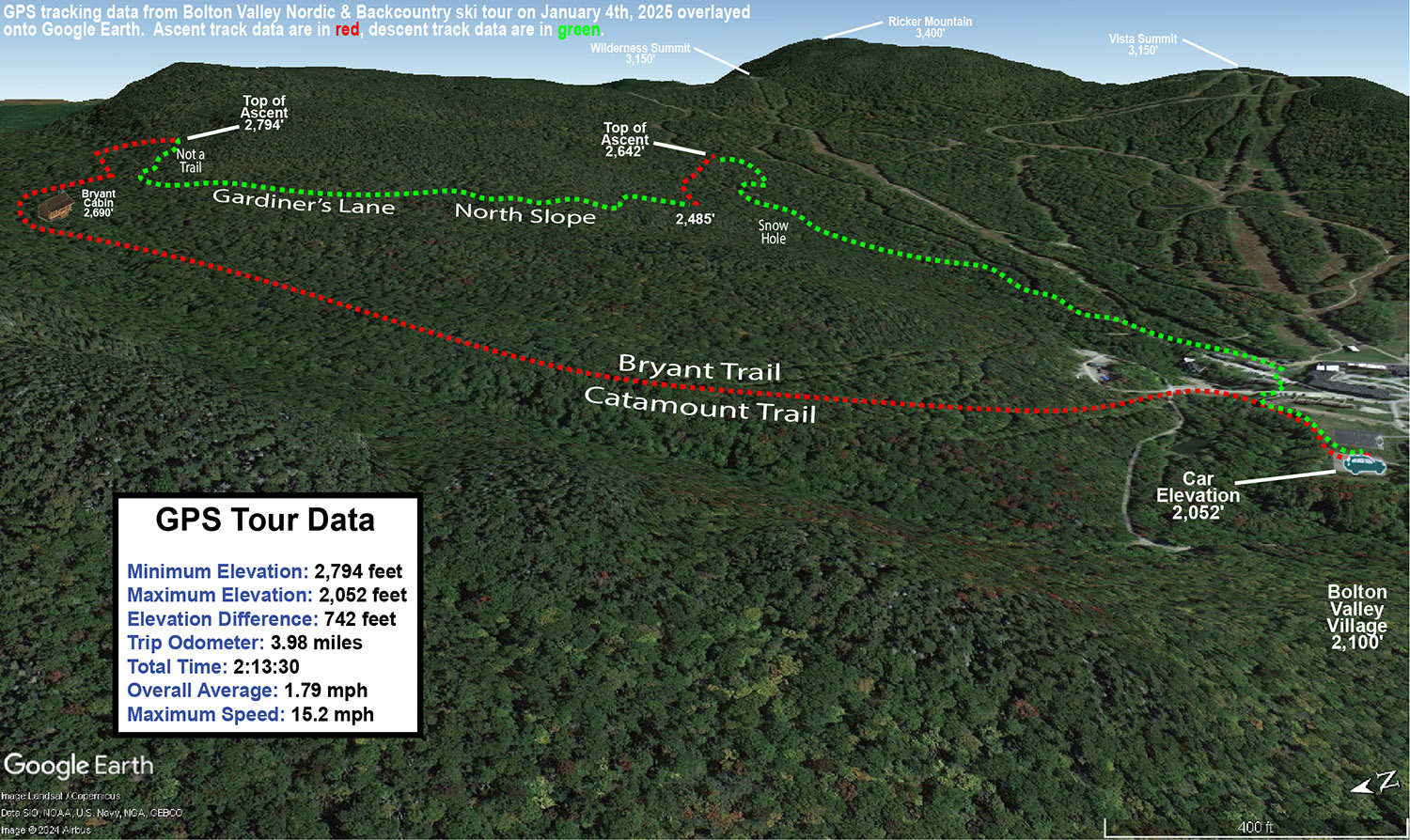
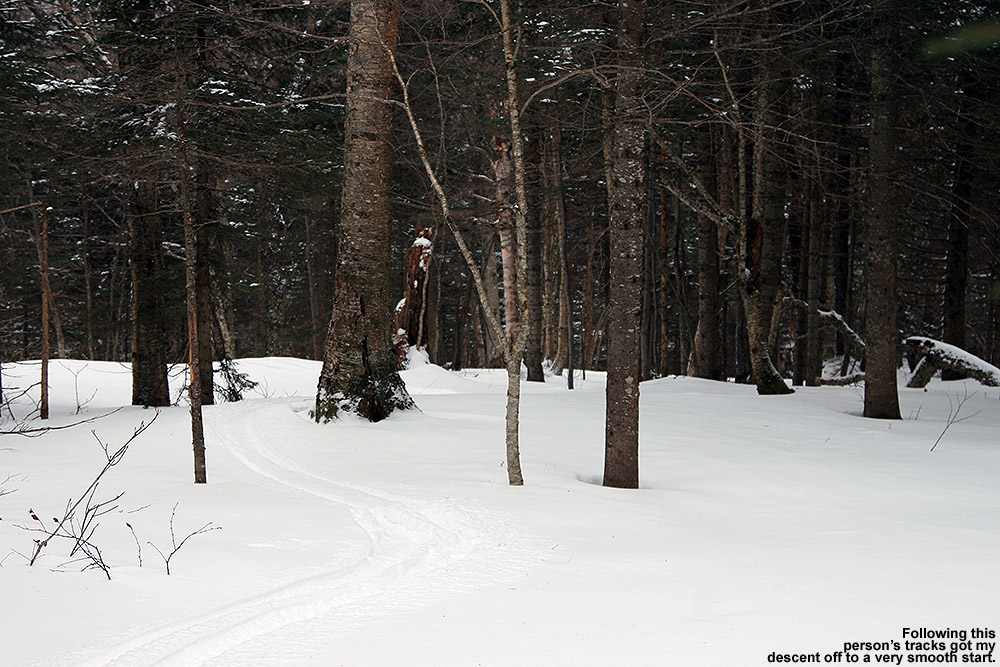
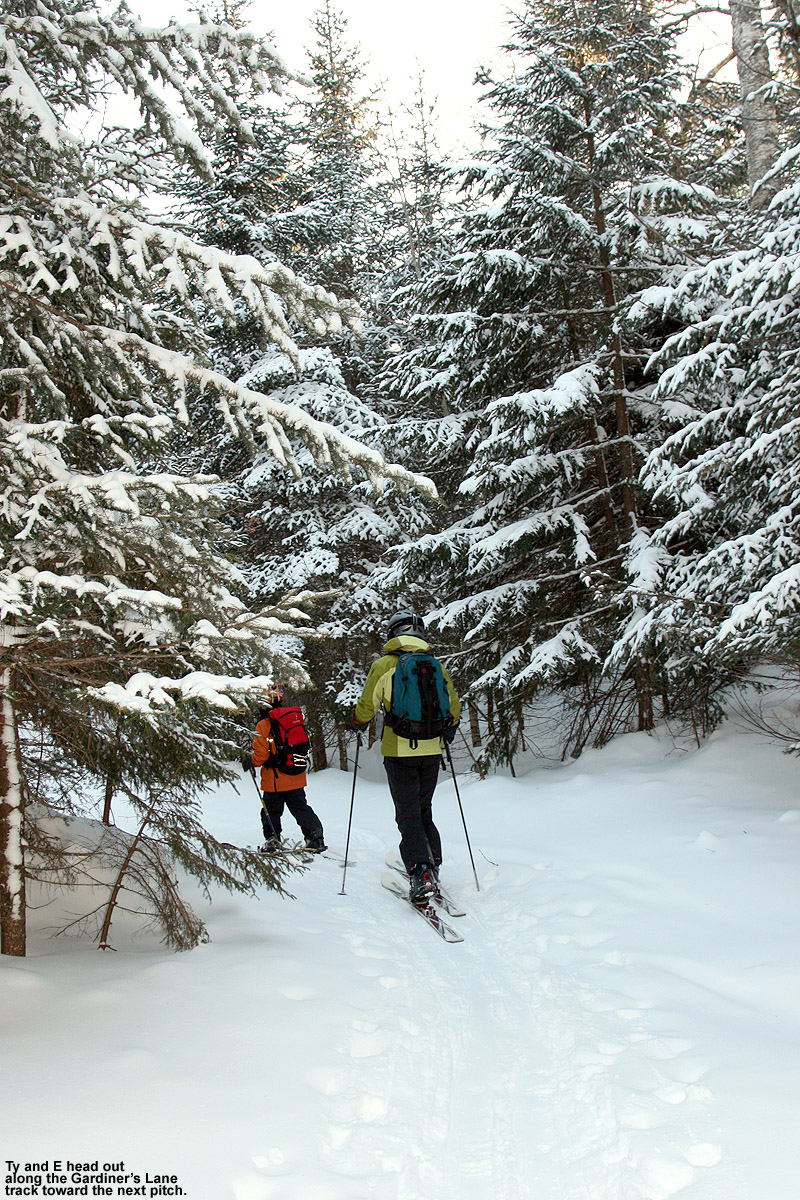
For my descent, I skied a bit of Not a Trail, took the Not a Trail high traverse, then dropped into a nice line that brought me across North Slope and down to Gardiner’s Lane. From there I headed to Gotham City, and since the weather has been so cold and snow preservation so solid, I decided to check out the south-facing Alchemist glade. That area typically suffers from coverage in sunny and warm conditions, but we haven’t had much of that lately, and coverage was excellent. Since our most recent snow, there were only a couple of new tracks in the main Alchemist lines, but there were a number of older tracks that had packed the snow down a bit more, so I ended up heading off to some ancillary lines on the skier’s left. I found acres of terrain over there that was virtually untracked, and it was so good that I put my skins back on and made a quick second ascent via one of the descent tracks on Alchemist to get in another run.

An image of ski tracks in the fresh powder of the Alchemist glade at Bolton Valley Ski Resort in Vermont
Looking back at some lines after floating down through the powder in Bolton Valley’s Alchemist Glade

If one wants to split hairs, I’d say that the new snow that fell from Winter Storm Demi may have knocked the quality of the powder skiing down just a touch. Up here in the Northern Greens we weren’t in any of the heavier snowfall banding from the storm, so snowfall rates were modest, and flake sizes were as well. My liquid analyses from down in the valley indicated that the powder came in at 8.6% H2O, so that’s getting up there toward the density of standard 10% H2O synoptic snow. That was probably a bit denser than the powder that was sitting on the surface before it fell, so it altered the developing right-side-up density gradient in the surface snow just a touch. Also, the snow skis a bit slower in single-digit temperatures, so the combination of the powder density and temperatures meant that turns were a bit sluggish on lower-angle terrain. Moderate-angle and steep terrain skied great though, and remember, we’re talking about the finer details of powder quality here, so it comes down to the difference between maybe a point on a 10-piont scale. As mentioned, as soon as I reached the bottom of my run, I turned around and skinned up for another go, so that tells you how good the skiing was. With the low temperatures and dry air that we’re expected to have over the next couple of days, and indeed all the way into next weekend, I wouldn’t be surprised to find the top layers of the powder drying out and the density gradient gradually resetting itself for even better powder quality as time goes on. That process has actually happened a decent amount over the past few weeks, which is one of the benefits of consistently cold temperatures and very low humidity.

A Google Earth map with GPS tracking data for a ski tour on the Bolton Valley Nordic & Backcountry Network
The GPS tracking data for today’s ski tour on the Bolton Valley Nordic & Backcountry Network overlayed onto a Google Earth map

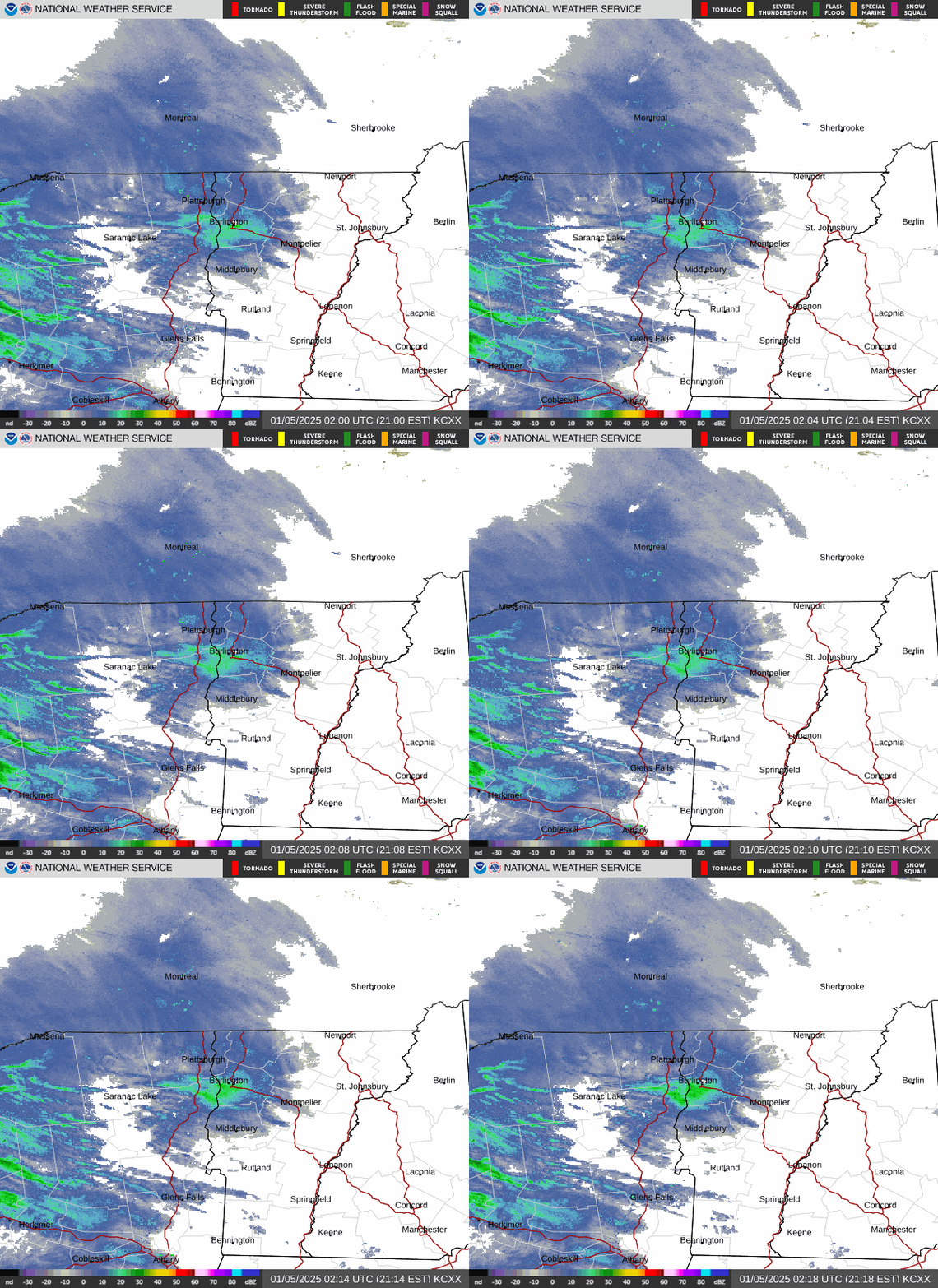
There aren’t any major systems expected to hit the area in the next couple of days, so the only potential snow during the midweek period would be if any of the moisture from Lake Ontario makes it over here to the Northern Greens. There’s not much expected, but there were a few radar echoes approaching the area in the evening, so the mountains may have pulled a few flakes out of that. Anything we get from lake moisture would be very dry snow, so it would top off the powder nicely in terms of the density gradient. Once we get out toward Friday and the weekend, there may be a couple chances for Clipper systems to affect the area.

Gilpin Mountain/Domey’s Dome, VT 18JAN2025

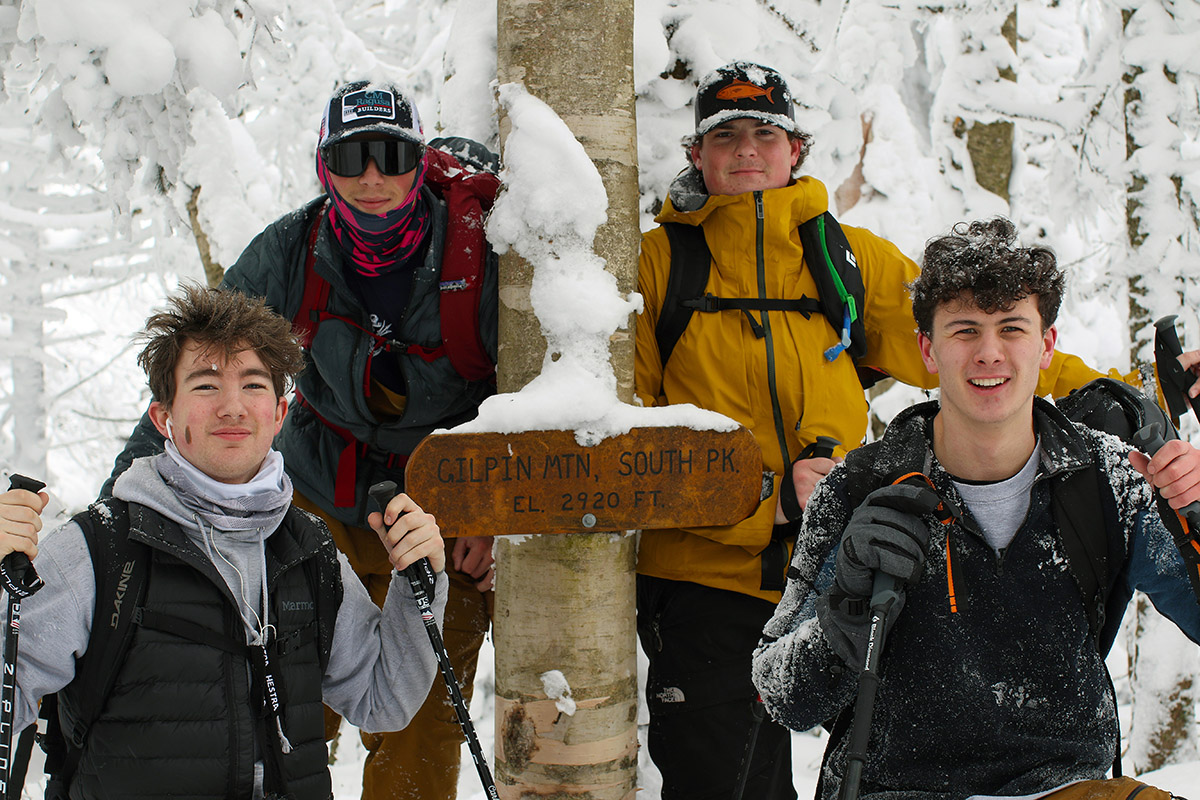
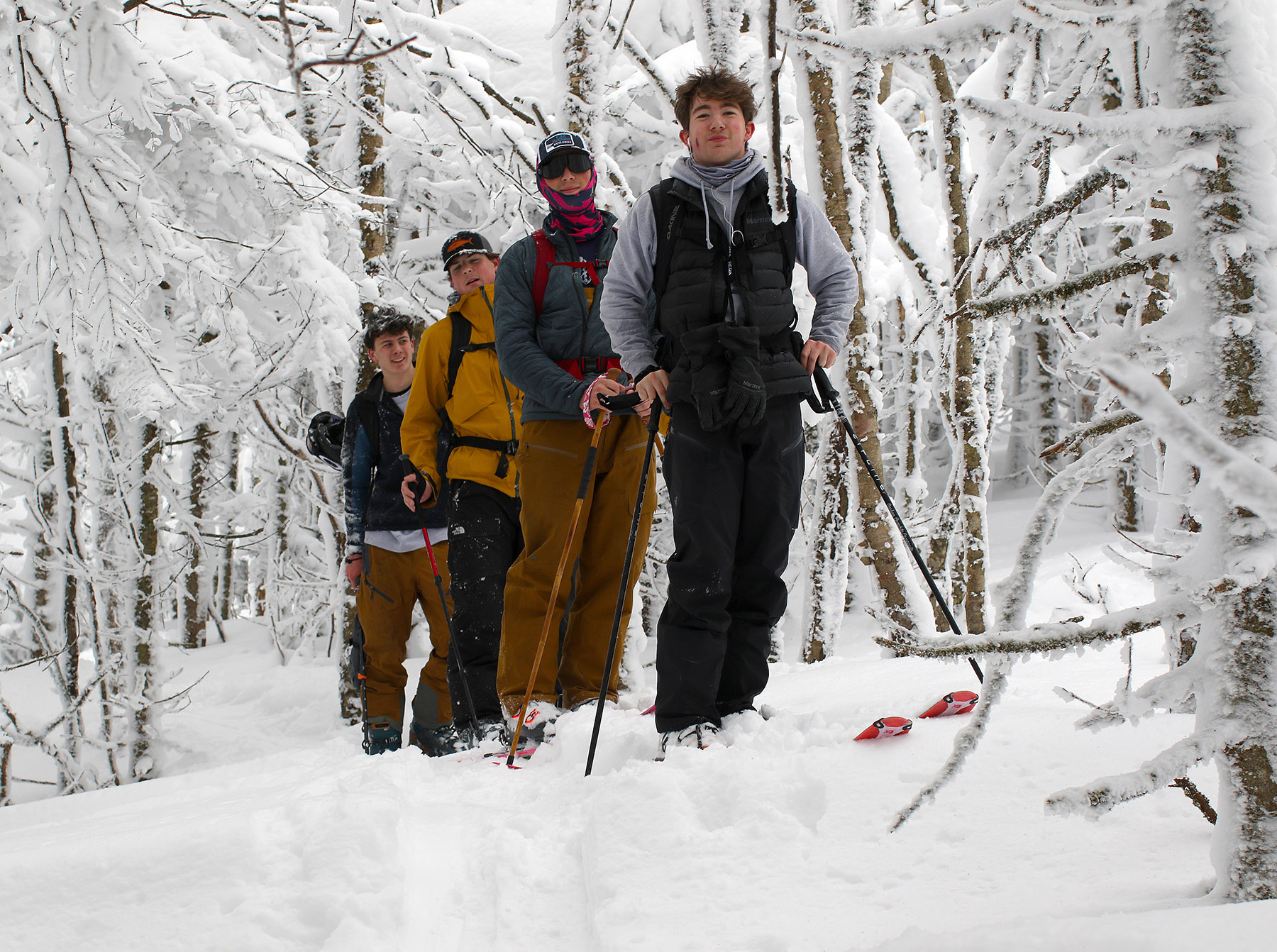
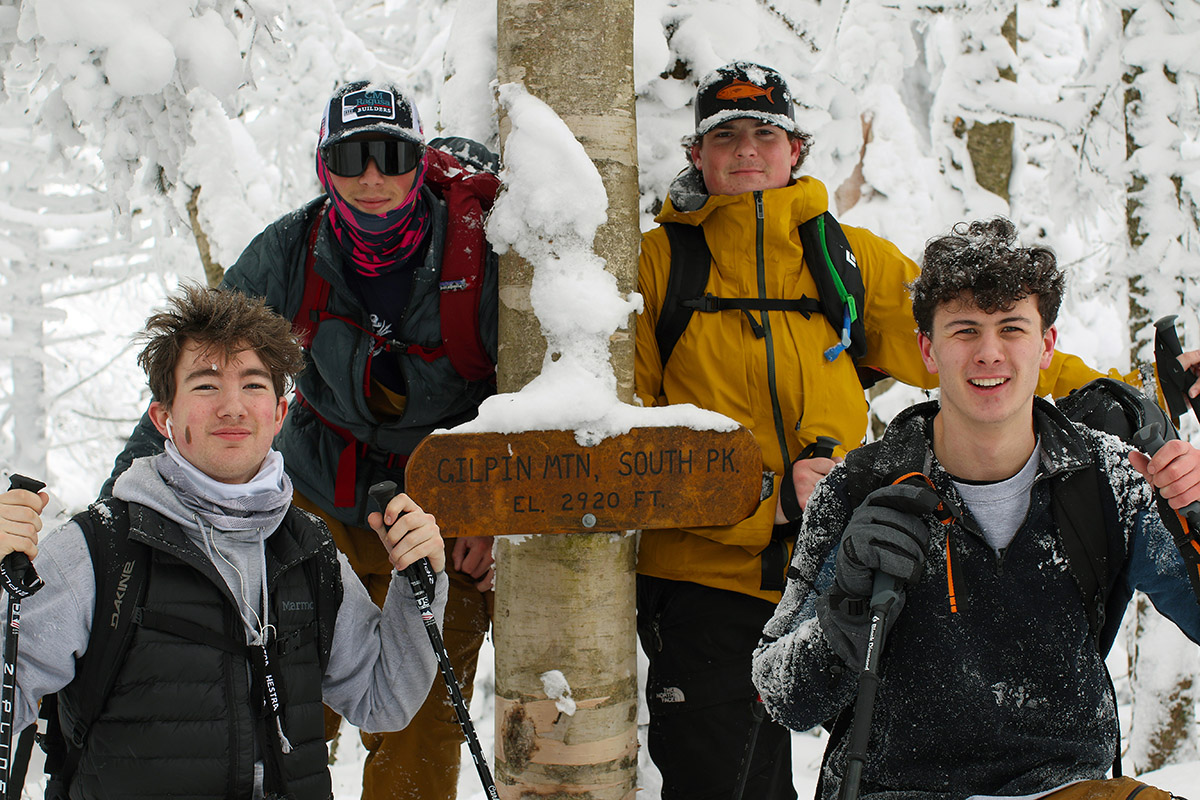
An image of Dylan, Jack, Dylan, and Ronan pausing for a picture at the South Peak of Gilpin Mountain on the Long Trail during a ski tour in the Jay Peak backcountry.
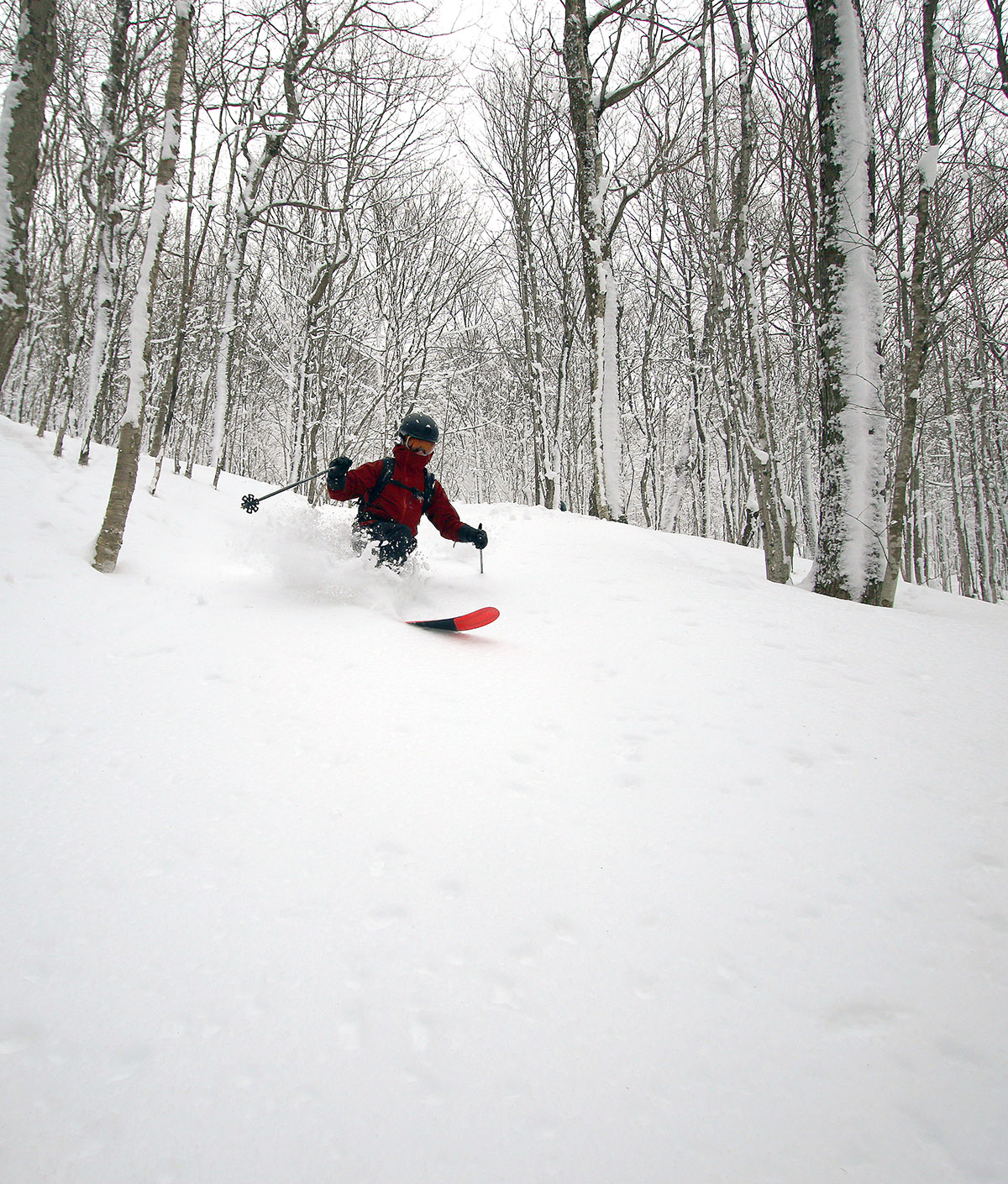
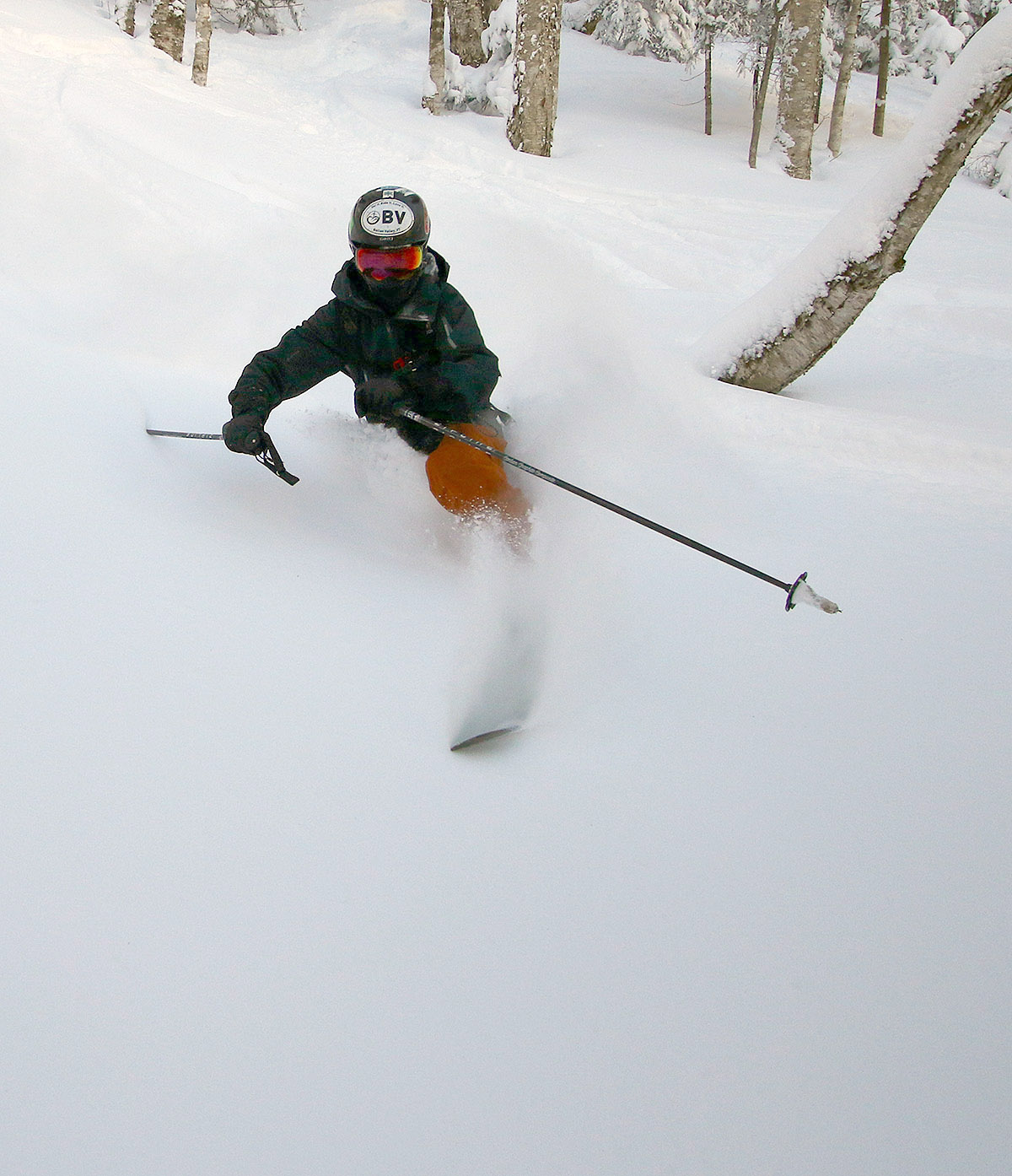
An image of Dylan Telemark skiing in powder snow in the trees during a January ski tour in the Gilpin Mountain/Domey's Dome area of the Jay Peak backcountry in Vermont
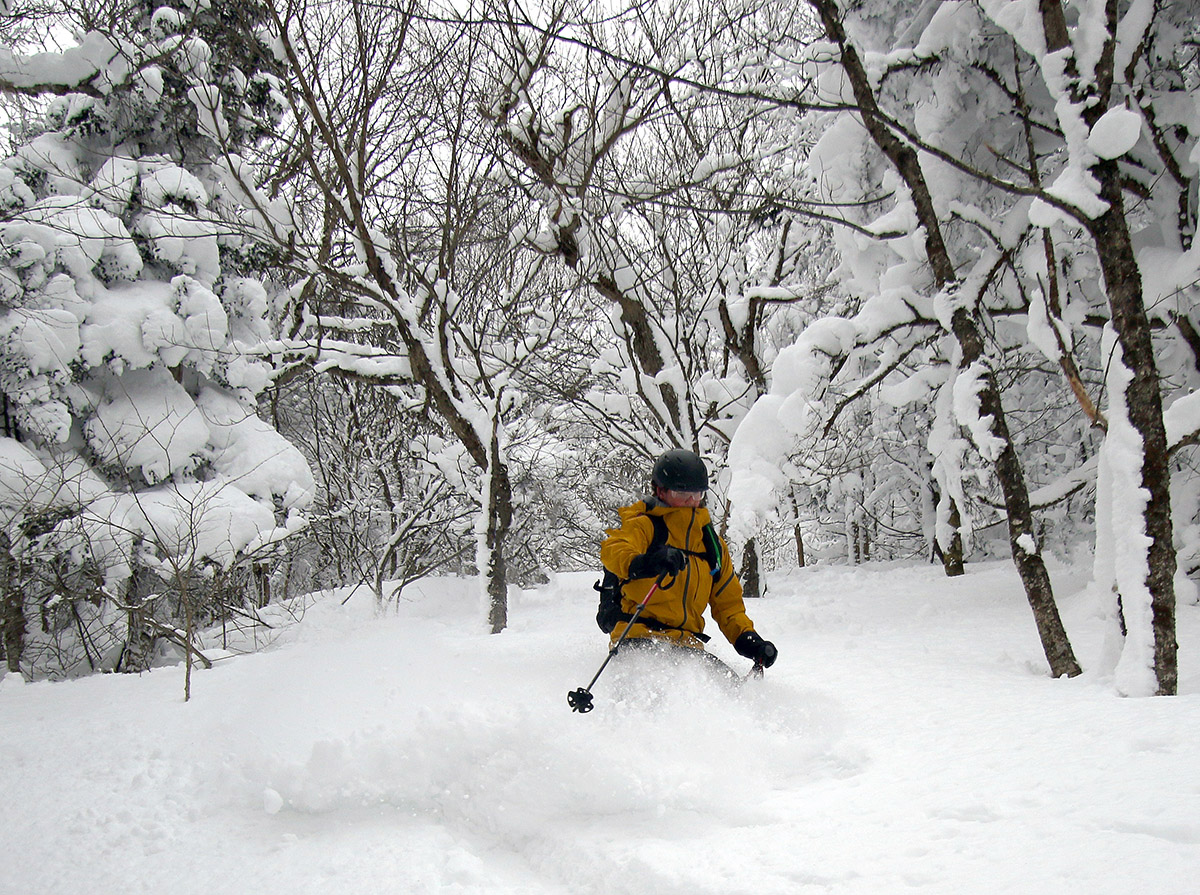
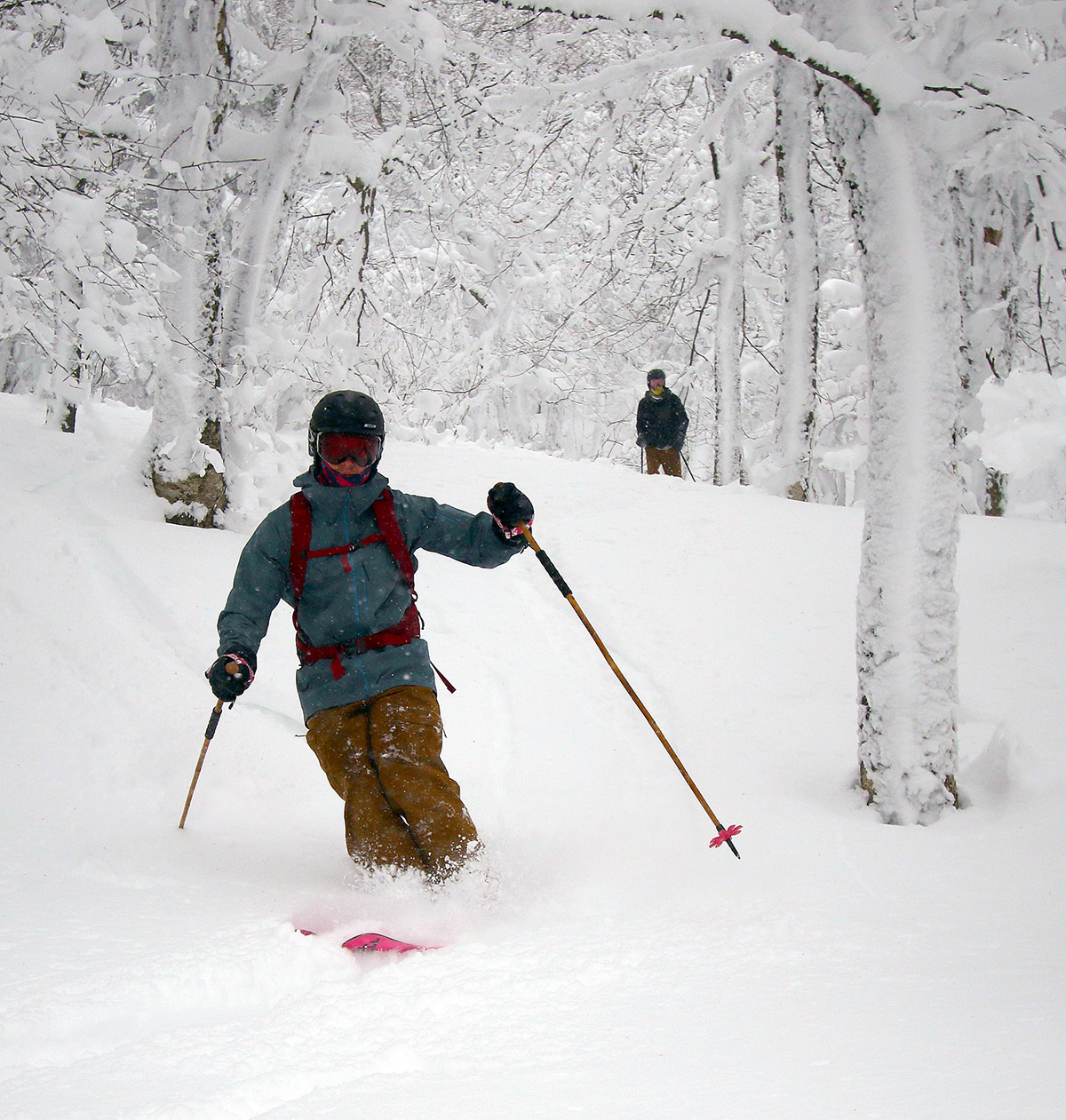
Dylan was back on his Telemark skis gliding through the powder today. We had a great ski tour today in the Gilpin Mountain/Domey’s Dome area of the Jay Peak backcountry with great snow and many acres of nicely spaced tree skiing.

A couple weeks back there was some great discussion in the Northern New England thread at the American Weather Forums about the Jay Peak backcountry conditions in areas like Gilpin Mountain and Domey’s Dome, so I was certainly looking to head up to that part of the Northern Greens for some touring when the opportunity arose. Prodigious amounts of snow have simply continued to fall through much of this past week, with Jay Peak now at 200 inches of snowfall on the season. So, the powder has been staying fresh and the snowpack just keeps getting deeper. I was thinking of heading up for a tour in the Gilpin/Domey’s area this weekend, and out of the blue, Dylan called to see if I’d bring him and some of his college friends on a backcountry ski tour since some of their passes were in blackout mode due to the holiday weekend. I told him where I was already thinking on touring, and that’s all it took – the plan was in place to head out Saturday morning.
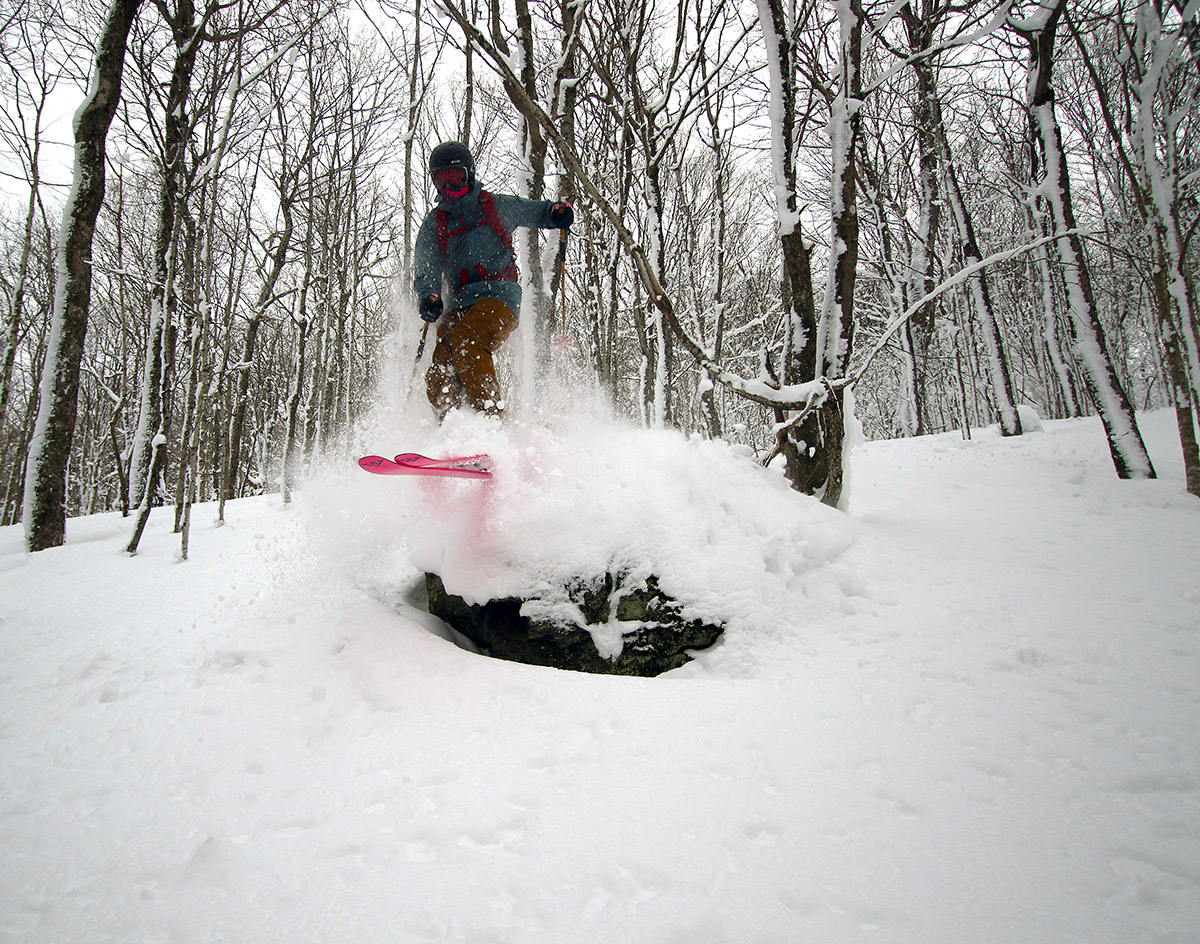
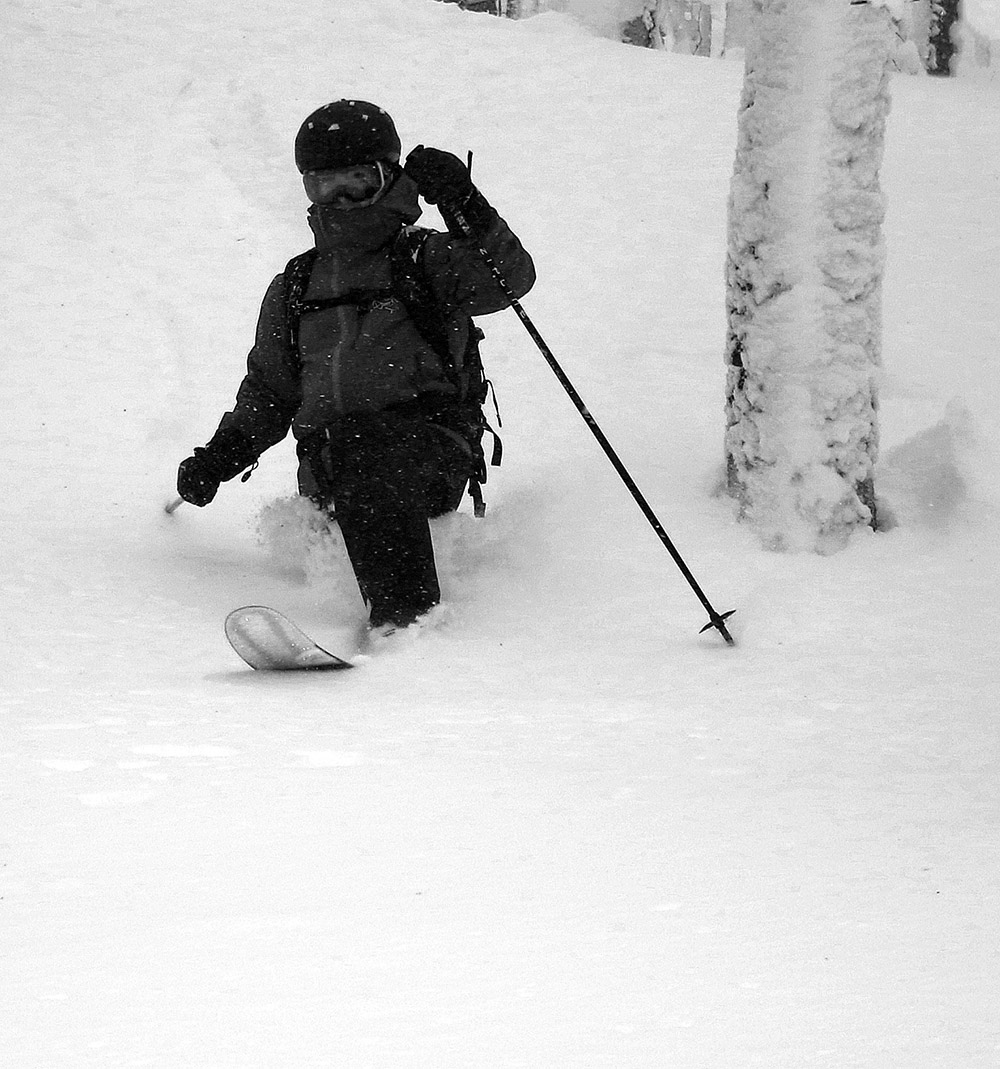
An image of Dylan Telemark skiing in deep powder snow in the trees during a January ski tour in the Gilpin Mountain/Domey's Dome area of the Jay Peak backcountry in Vermont
The powder was deep and bottomless throughout the descent today.

The forecast for the day was looking great – temperatures in the upper 20s F are perfect because it’s warm enough to be quite comfortable out in the backcountry, but below the freezing mark to avoid any temperature effects on the powder. I was concerned about parking since it’s a holiday weekend, but there were plenty of parking spots up at Jay Pass on Route 242. I arrived about 20 minutes before Dylan and his friends, so I poked around at the pass, and checked out the snow conditions and trail access points until they arrived.
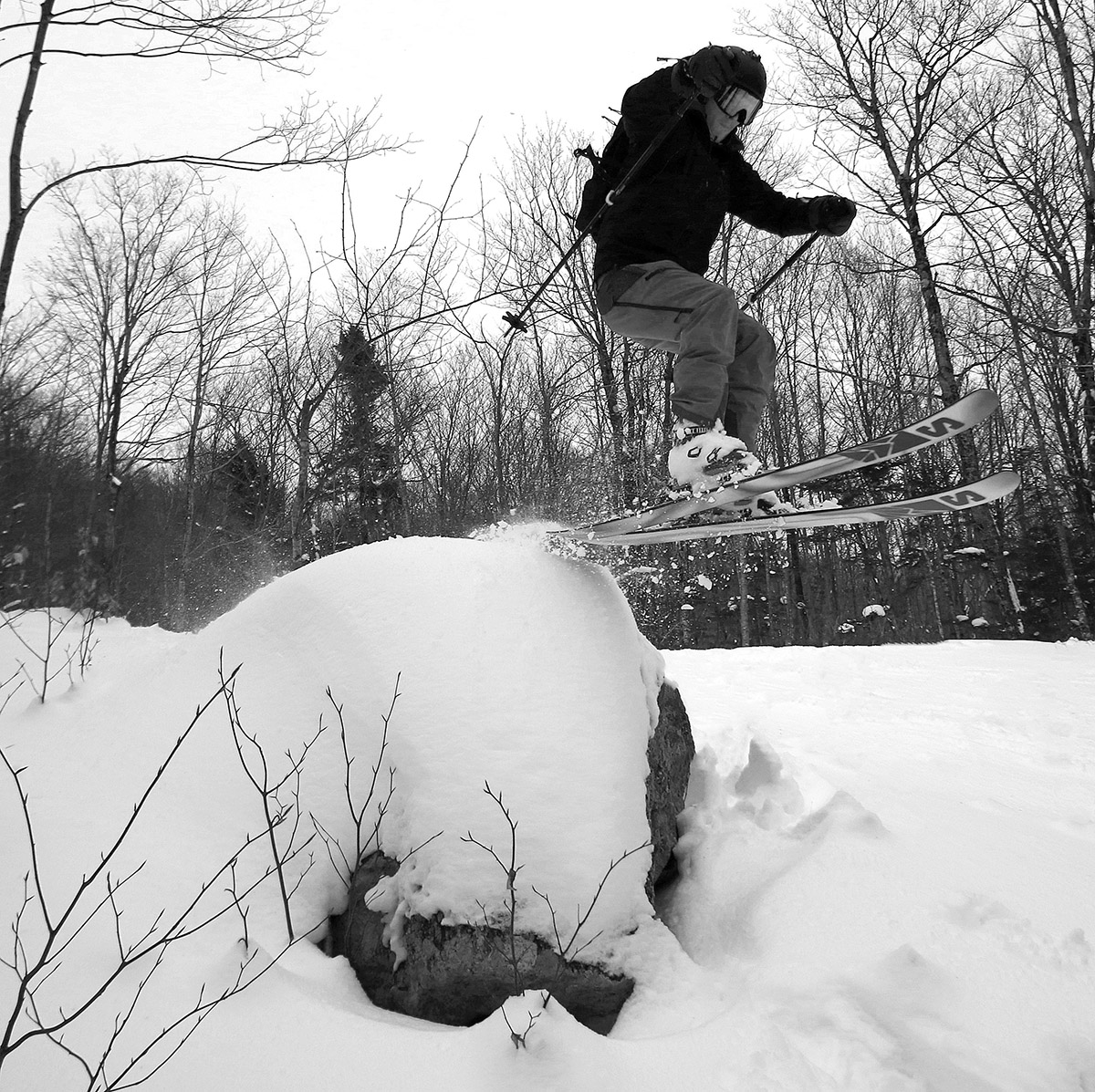
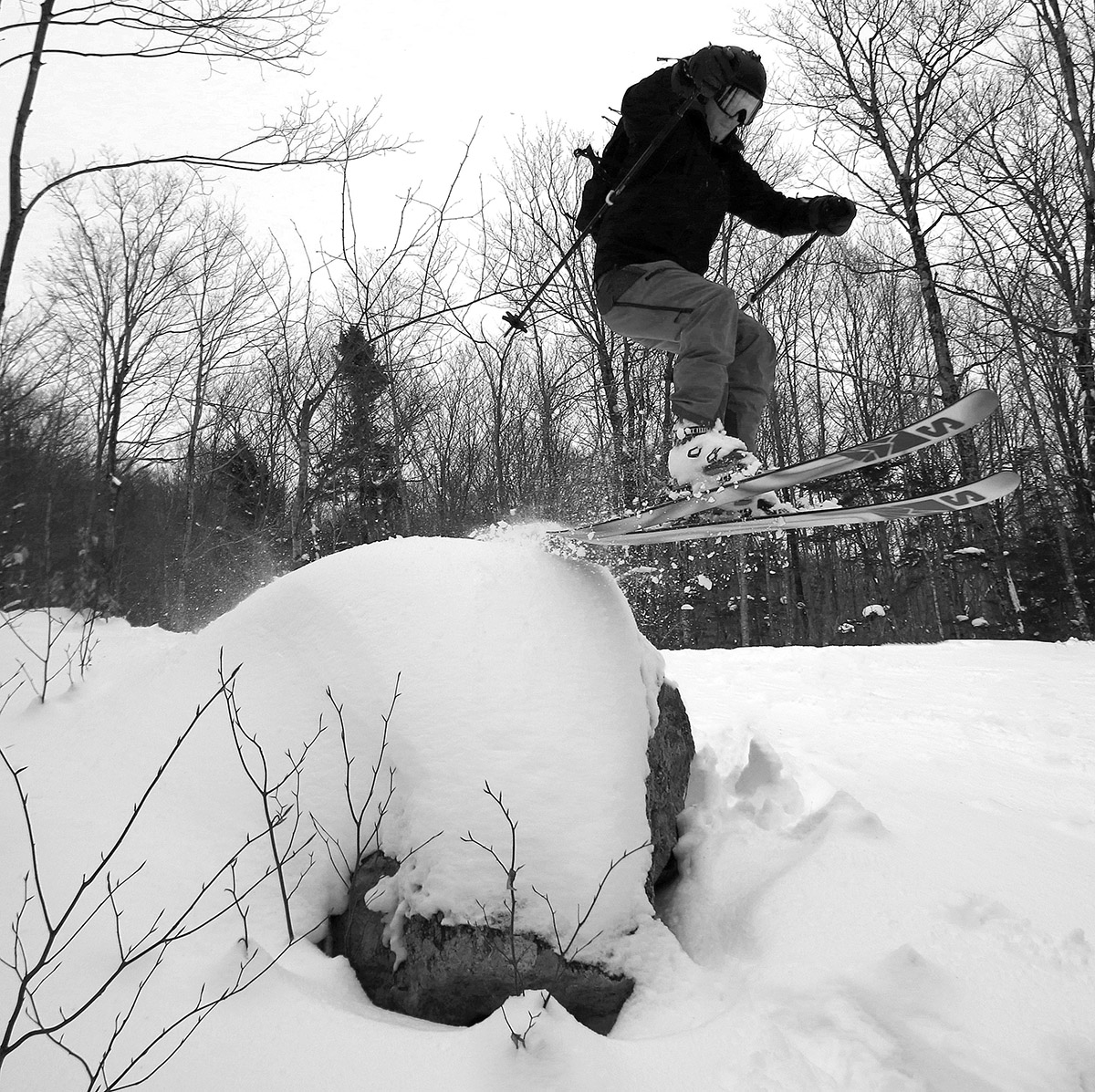
An image of a skier jumping off a rock during a January ski tour in the Gilpin Mountain/Domey's Dome area of the Jay Peak backcountry in Vermont
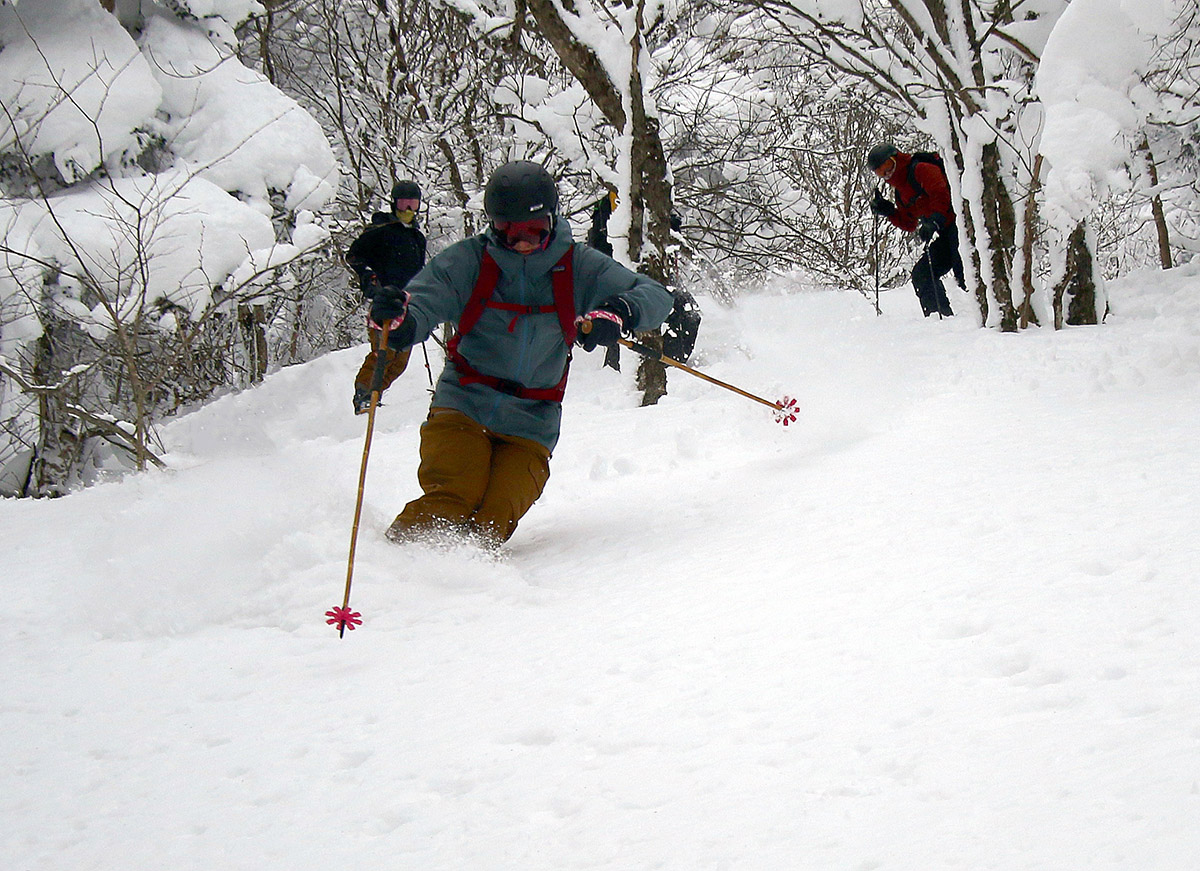
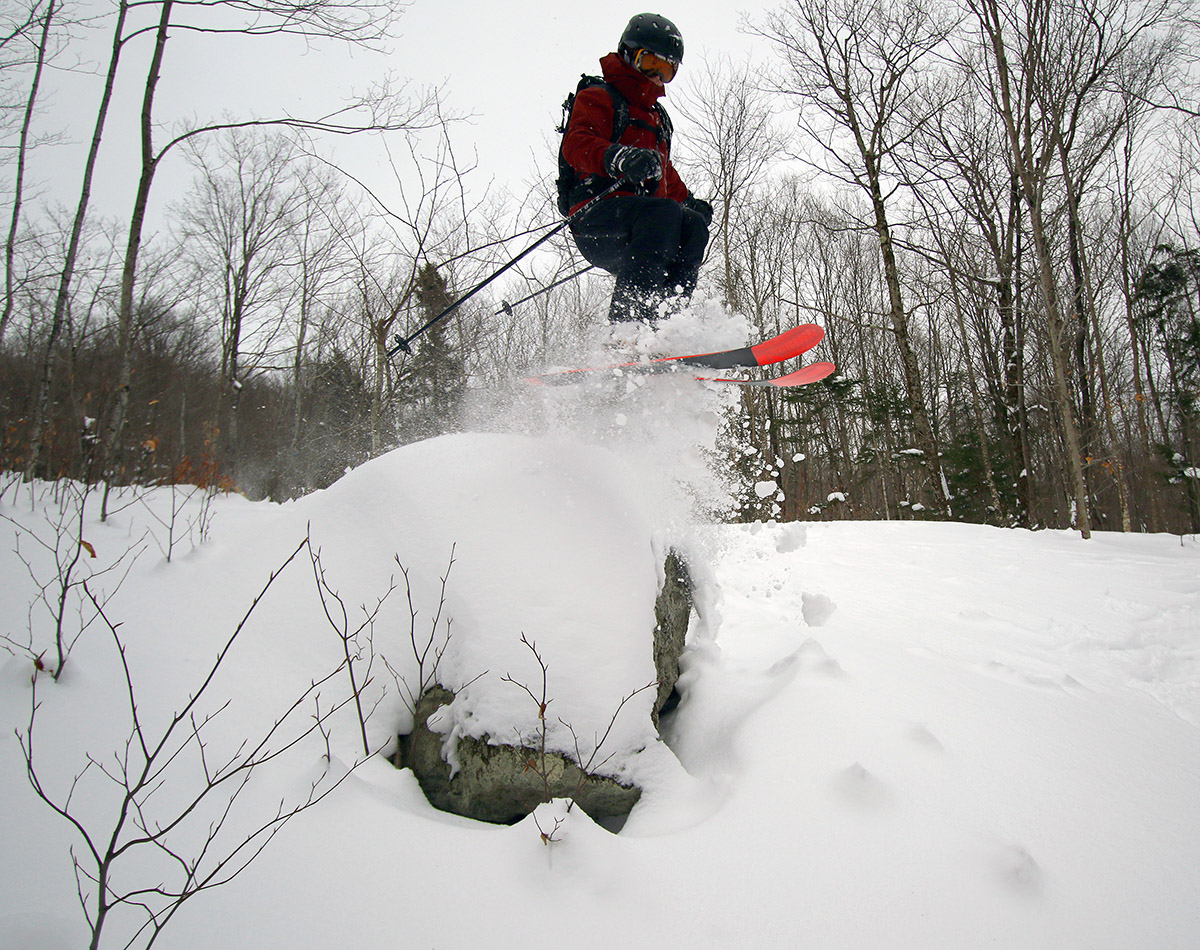
Along with the powder, Mother Nature also supplied plenty of terrain features for a bit of extra fun during the descent.

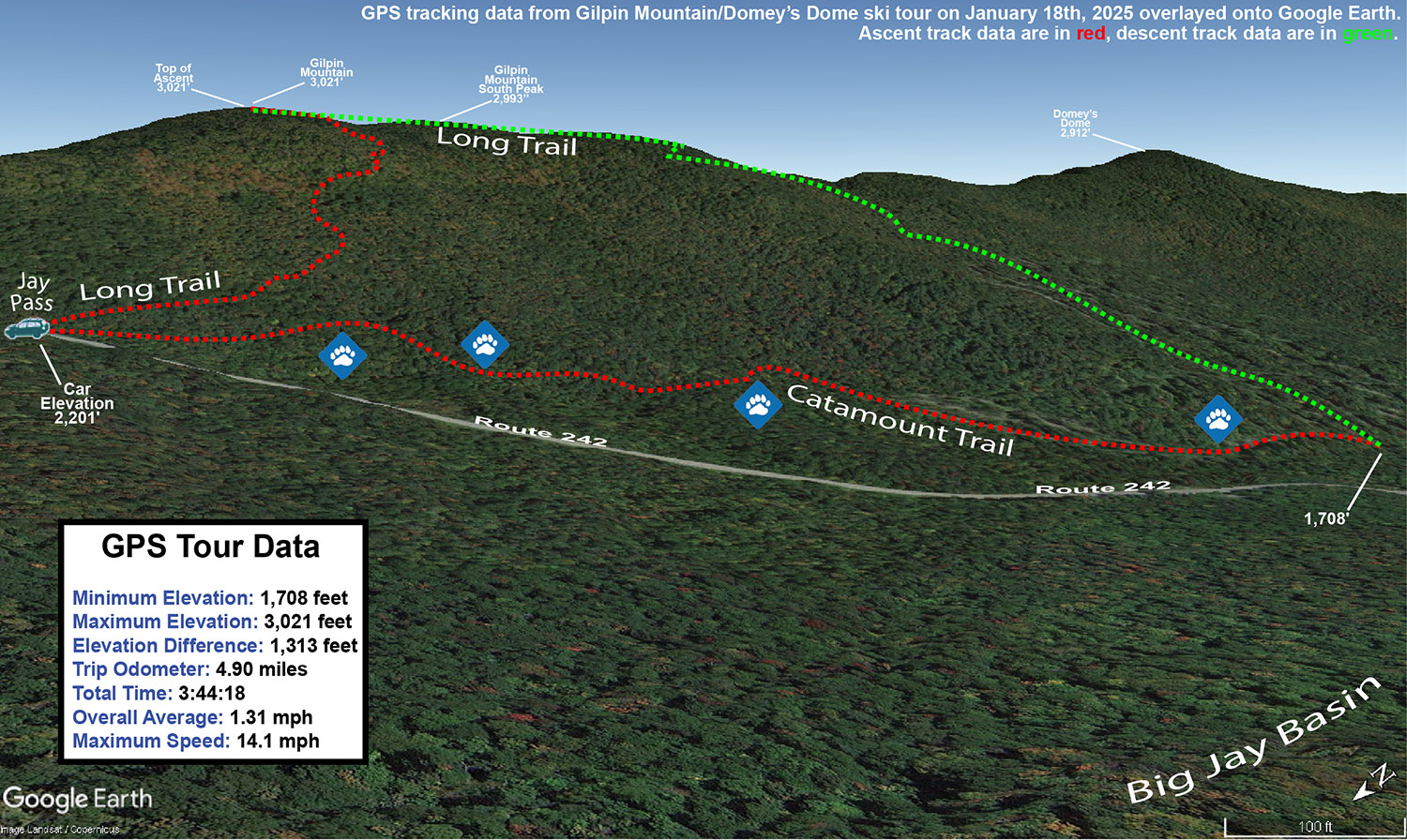
I’ve skied the terrain north of the pass on Gilpin Mountain before, but this time I wanted to check out the terrain to the south. My plan for our tour was to use the Long Trail to head up Gilpin Mountain and out along the ridgeline toward Domey’s Dome, then descend the west face of the range and catch the Catamount Trail for the return trip. With regard to ski touring, that side of the range is, in theory, set up beautifully – the Long Trail follows the ridgeline, and the Catamount Trail roughly parallels it down in the valley near Route 242. So, you can head out on the Long Trail to whatever point you want, then drop in for a descent and use the Catamount Trail as a collector for returning to Jay Pass. I say it’s a great setup “in theory”, with the caveat that the Long Trail can be tough to follow at this time of year. The Long Trail uses white blazes on the trees to mark its route for hikers, and the trees up along the ridgeline there can be absolutely loaded with snow. So, following the trail can be quite challenging if someone hasn’t already put a track in place. Also, as the snowpack continues to rise, the blazes can be more and more difficult to find. As of now, the blazes are at about waist level, so they’re still visible if you can find them behind the inches of snow caked to the trees, but even at the current height they are getting hard to see. One could certainly head out to an ascent of Domey’s Dome using the Catamount Trail from below, but after traversing the Catamount Trail in that area for the return on our tour (there are plenty of undulations and meanderings), that approach feels like more work than it needs to be unless you park farther down on Route 242.
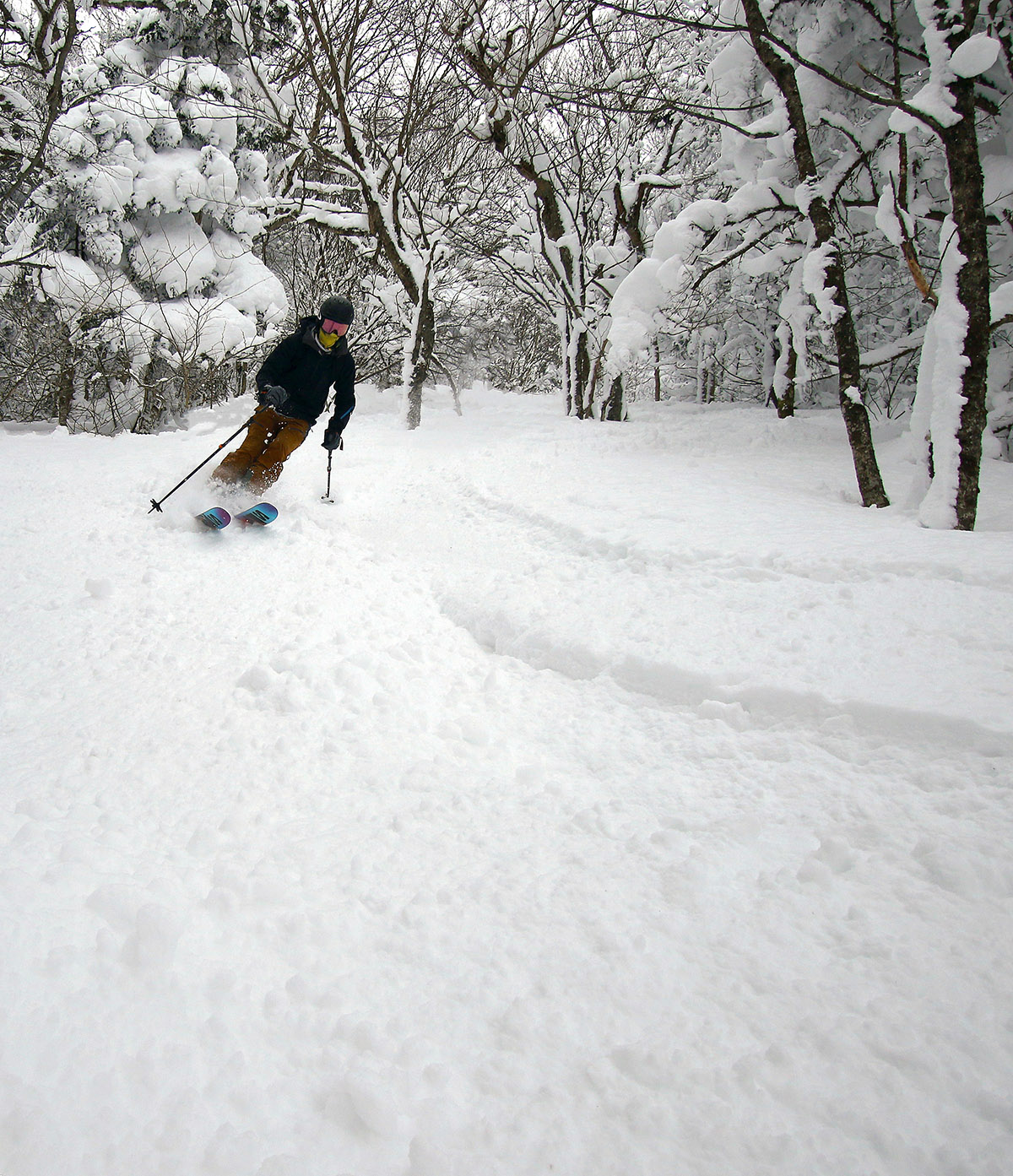
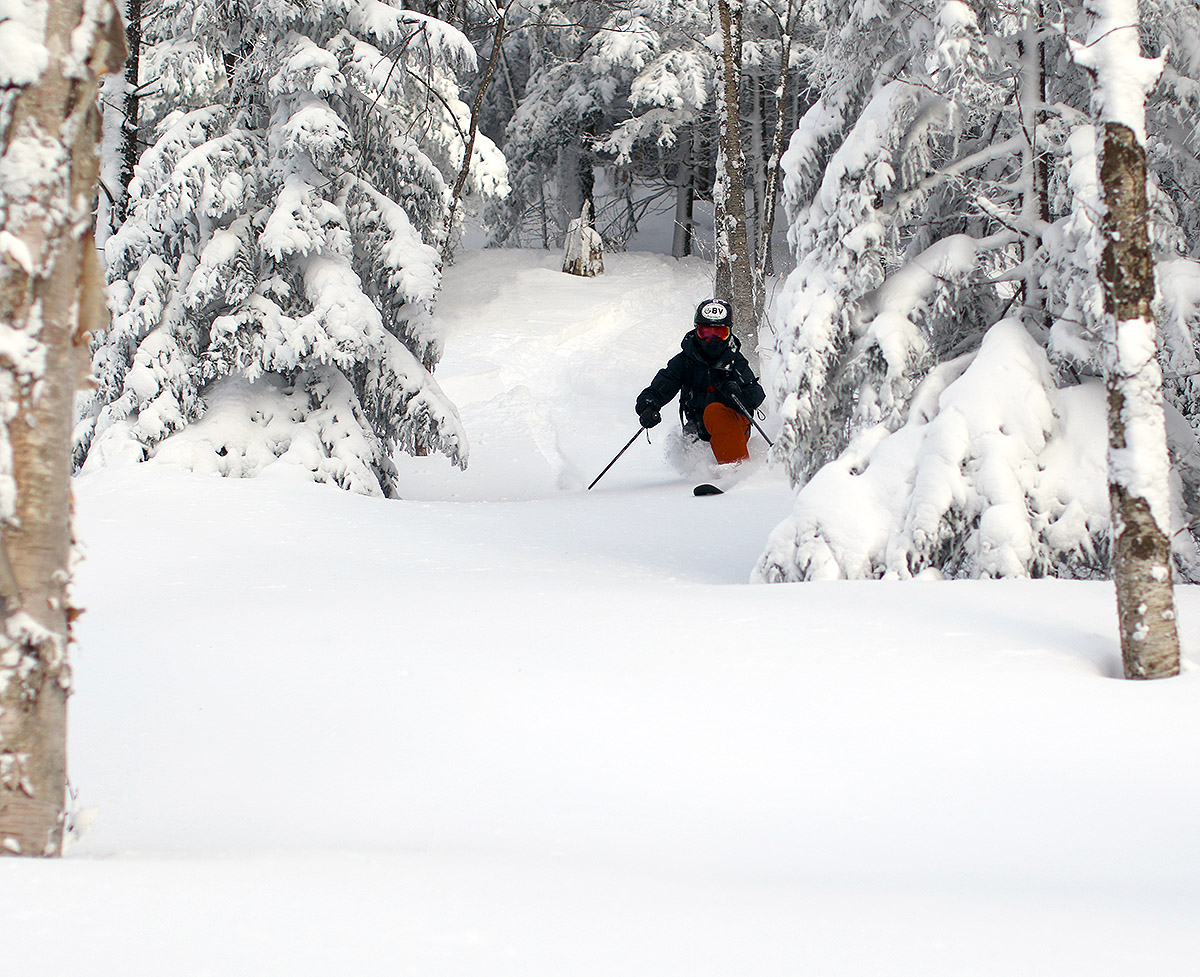
An image of a skier turning in the powder and surrounded by snowy trees during a January ski tour in the Gilpin Mountain/Domey's Dome area of the Jay Peak backcountry in Vermont
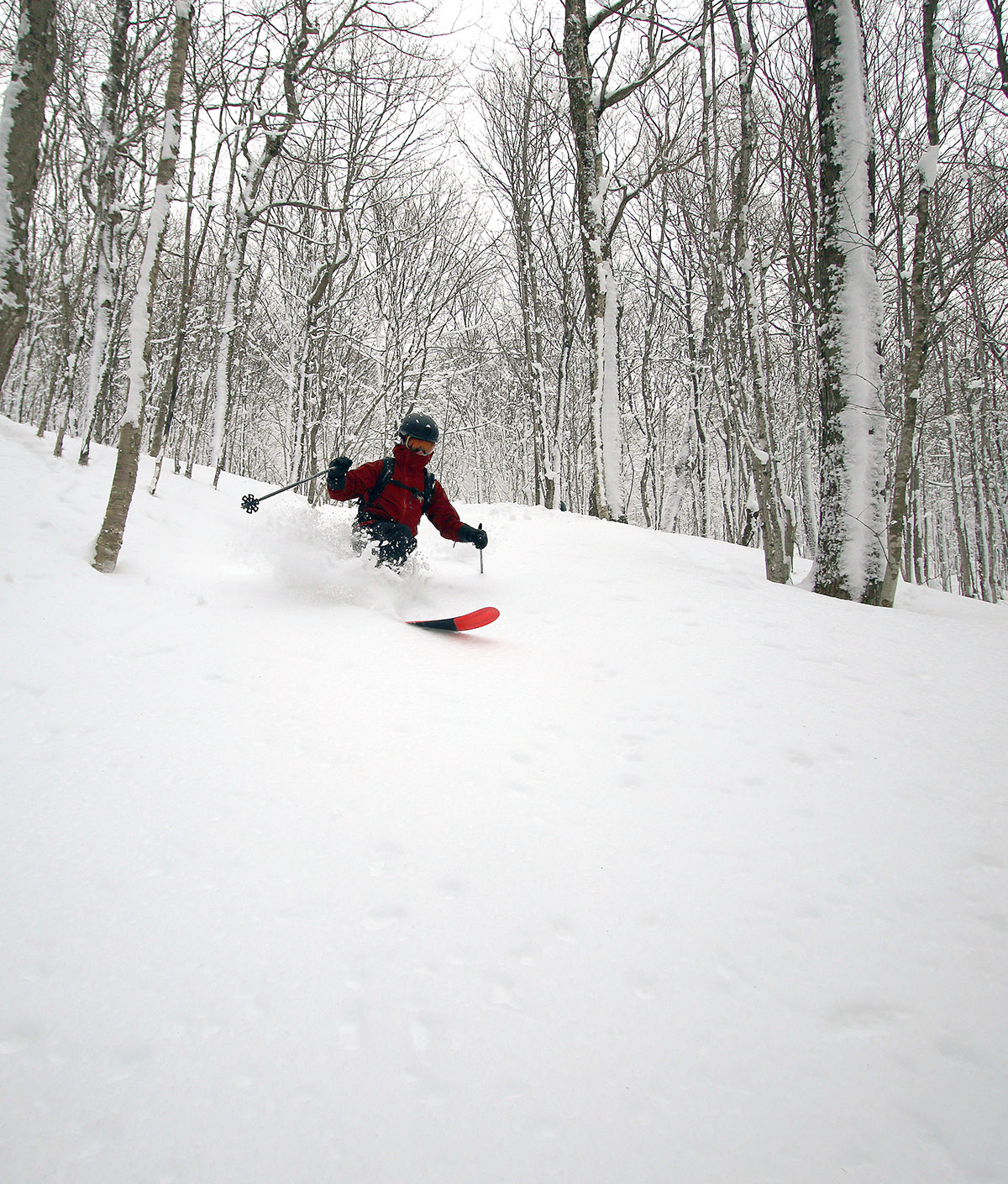
In many areas of the tour, the terrain and trees were just choked with fluffy snow.

While it was breezy in the open area of Jay Pass, with the anemometers at the weather station area buzzing right along, the wind disappeared as soon as we entered the forest on our ascent. Following the Long Trail upward from the pass to Gilpin Mountain was fairly easy – it was well set as a skin track from plenty of skier traffic, so even without being able to see the blazes, it’s simple to follow. Once we were up at the Gilpin Mountain ridgeline, we took a quick jaunt to the north to check out the official summit of Gilpin Mountain at 3,021’ then moved southward and reached the South Peak of Gilpin Mountain, which is slightly lower at 2,993’. From there, we headed south on the Long Trail toward Domey’s Dome. We ran into a couple of guys from Quebec (based on their accents) who were setting up to descend a steep, sweet looking gully on the back side of the range. They joked with us about not stealing it from them, but we would never have done that, and we had other plans anyway. After that, we didn’t run into anyone, because skier traffic seems very light once you get past the general Gilpin Mountain area. We were able to follow the Long Trail southward for a little while, with the help of one track from a previous skier, but as we descended into the col between Gilpin and Domey’s, it became more and more difficult to hold the ridgeline and not get pulled into descending on one side of the ridge of the other. Nobody had broken trail on the Long Trail across the ridgeline, so the route finding took time. We had access to multiple GPS units, and when the Long Trail is obscured with deep snow like it is now, you certainly want to have your GPS and compass. Not wanting to waste too much of the session trying to navigate the traverse, we eventually decided to hug the western side of the ridge as we headed southward, with the intention of beginning a descent if we saw some appealing ski terrain. It wasn’t too long before we found a relatively steep line that dropped through some open trees, and we decided it was as good a time as any to begin skiing.

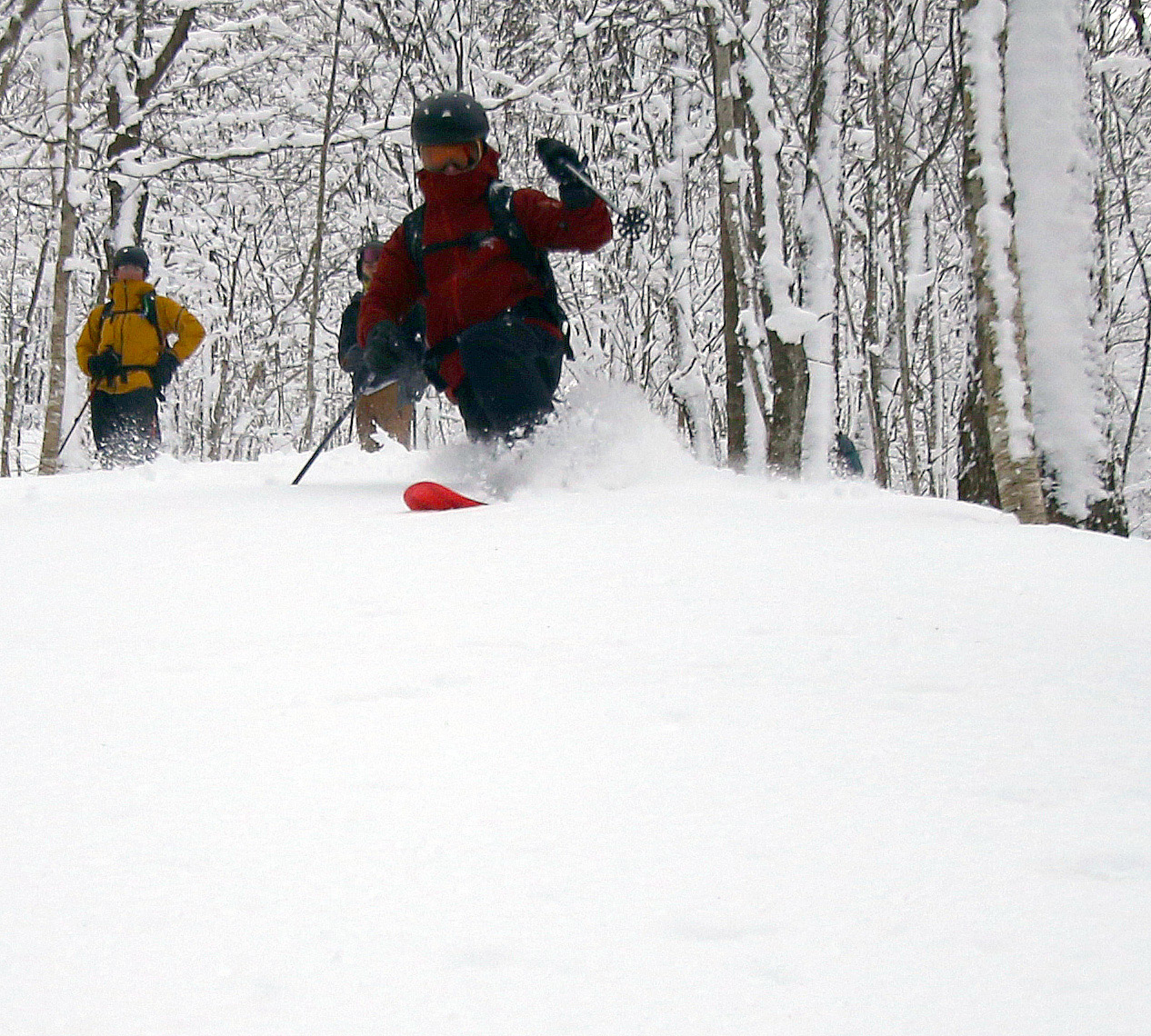
An image of Dylan Telemark skiing in the powder in the trees with friends looking on during a January ski tour in the Gilpin Mountain/Domey's Dome area of the Jay Peak backcountry in Vermont
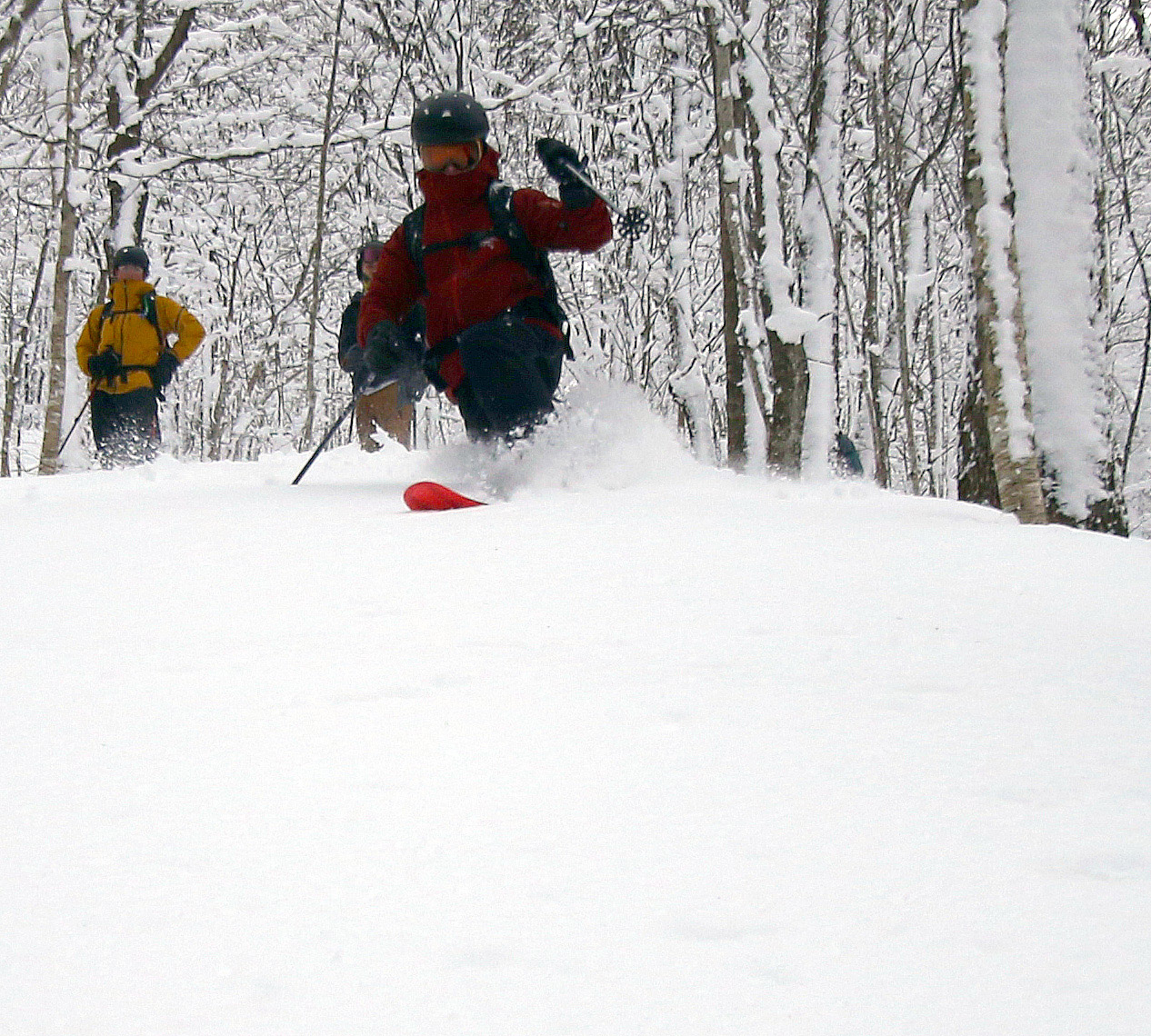
The boys would line up, drop into their lines, and let ’em rip.

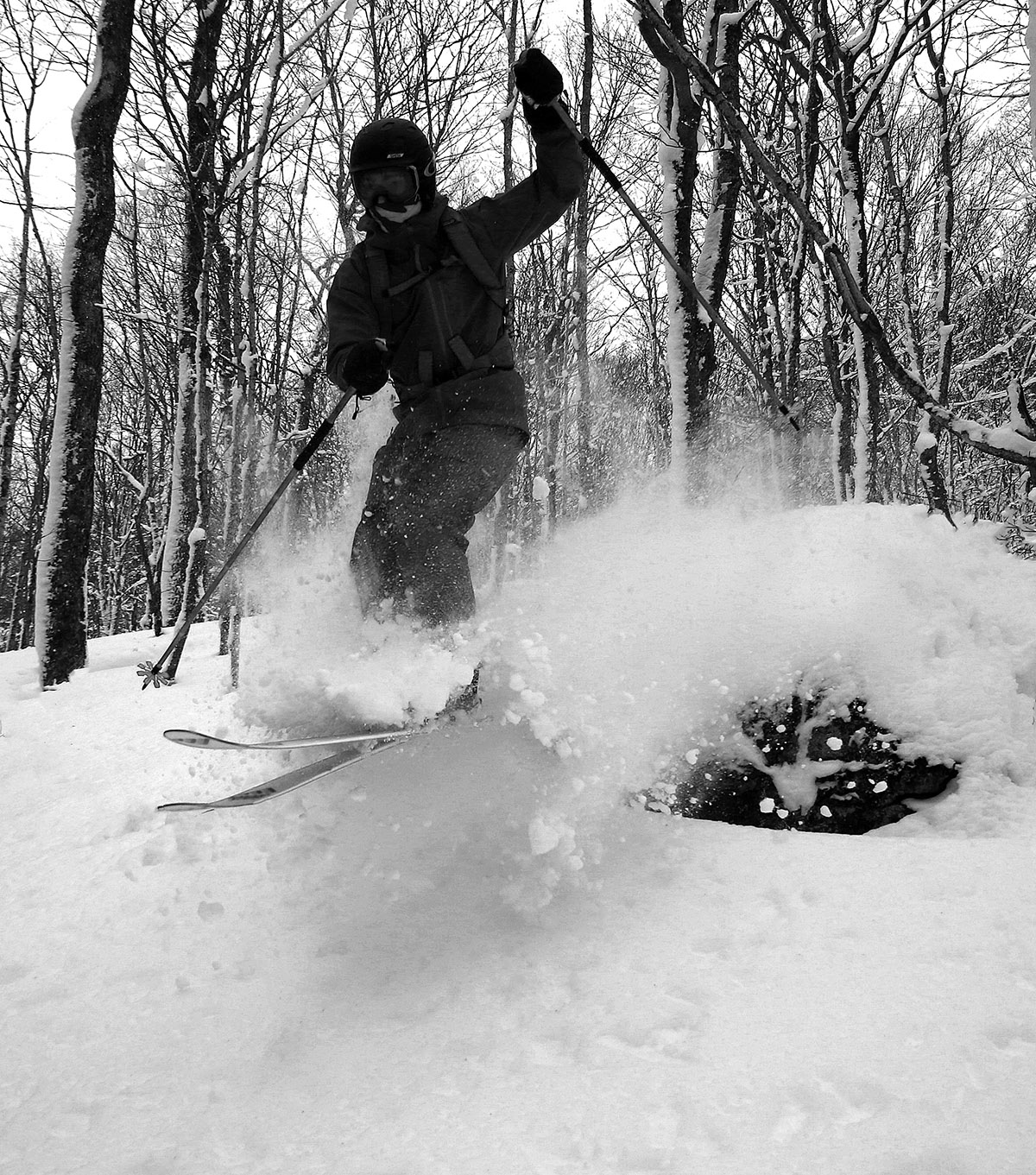
Our descent from the col between Gilpin and Domey’s featured some nice areas with reasonably open trees, spots with excellent natural glades, and some terrain that had been logged and maintained for logging access. The powder was fantastic – there was typically 1 to 2 feet of bottomless powder over a deep base. I would frequently check the depth of the snowpack, and my ski pole would go below the surface of the snow, which means the snowpack depth was in excess of 45 inches. The powder was in a very nice right-side-up density gradient starting with snow in roughly the 6 to 8% H2O range on top. The only thing that could have really made the powder better would have been to throw on several more inches of fresh 3-6% H2O champagne, but that’s really getting picky, because it skied incredibly well. Everyone was on fat skis with widths over 100 mm, and the skis were definitely in their element out there today. Dylan was on his Telemark skis for the first time in 2 or 3 seasons because he’s been looking for a good pair of boots to replace the current ones that are too tight, but it didn’t look like his Telemark skiing had missed a beat. I was happy to see that, and so were his friends.

A Google Earth map with GPS tracking data for a ski tour in the Gilpin Mountain and Domey's Dome area of the Jay Peak backcountry in Vermont
A Google Earth map with GPS tracking data for today’s ski tour in the Gilpin Mountain and Domey’s Dome area of the Jay Peak backcountry.
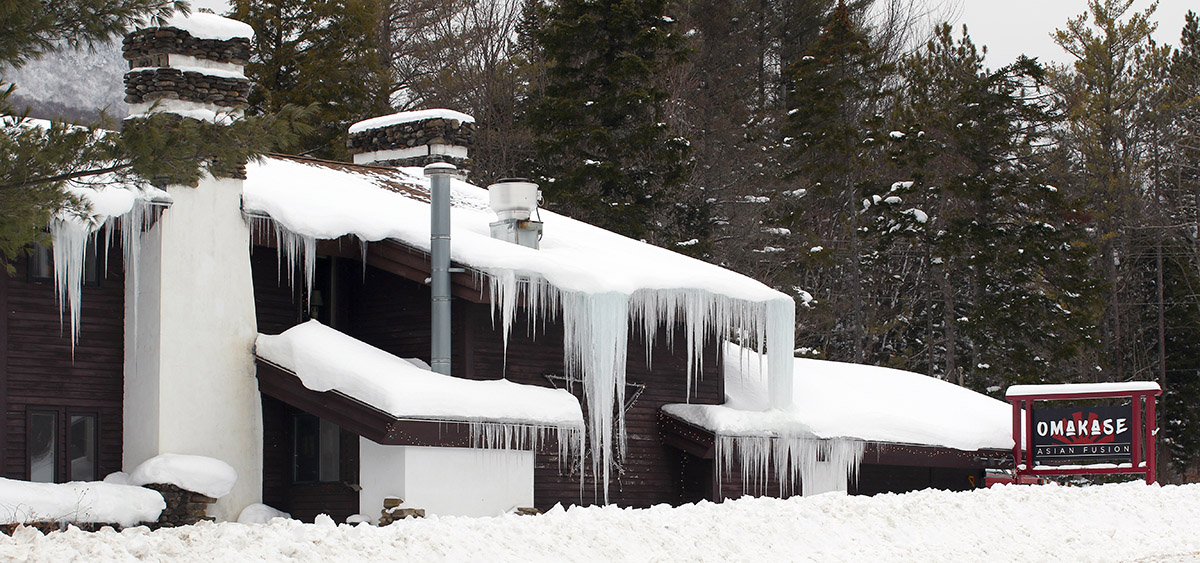
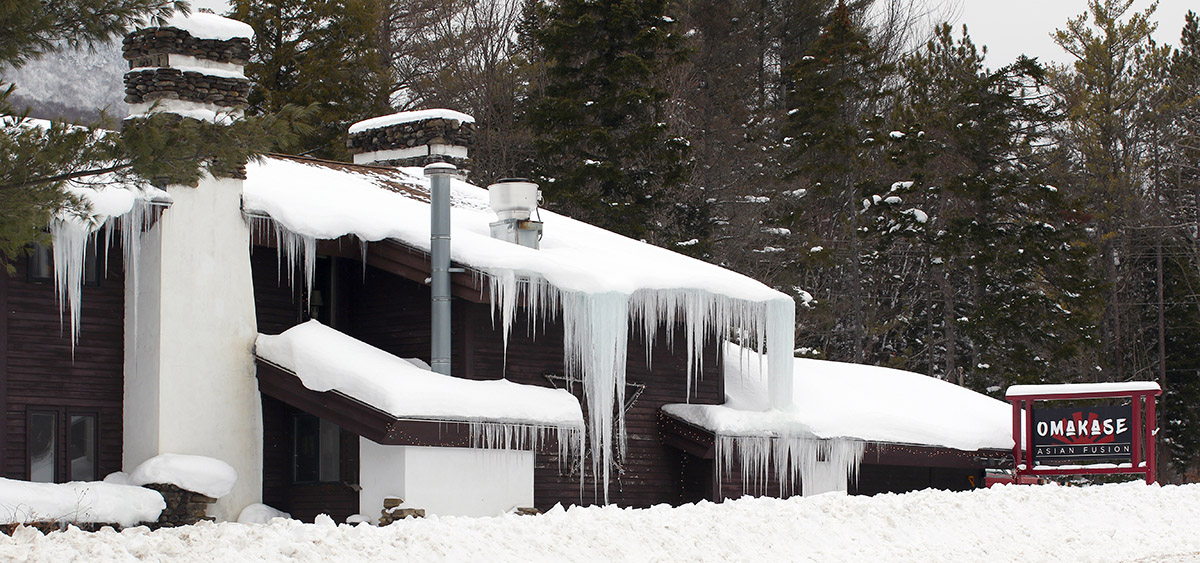
An image of the Omakase Asian fusion restaurant on Route 242 near Jay Peak in Vermont with snow on the roof and huge icicles hanging down to the ground.
The Omakase Asian fusion restaurant on Route 242 really fit the look of the Jay Peak area with its snow on the roof and huge icicles hanging down to the ground.

As of this morning, Jay Peak is reporting 203 inches of snowfall on the season, and you can really feel it when you’re out there in the nearby backcountry. The snowpack depth at the Mt. Mansfield Stake at 3,700’ is around 55 inches, but based on what I found out there on our tour in the Gilpin/Domey’s area, that snowpack depth is probably obtained at a lower elevation in the Jay Peak area. We weren’t even out in the Big Jay Basin area, which seems to collect some of the most snow in the area due to its leeward position, so I bet the snowpack is quite deep out there. Dylan and his friends are planning to head out to Alyeska in March for some skiing during spring break, and he mentioned that as of now they apparently have the most snowfall for the season of any ski area in the U.S. at 346 inches. That got me wondering about how things are going for some of the well-known, snowier resorts in western North America with respect to snowfall, and I saw that Steamboat is at 143 inches, Whistler Blackcomb is at 197 inches, Grand Targhee is at 211 inches, and Alta is at 233 inches. So, Jay Peak’s 203 inches is certainly in that ballpark, and the area’s snowpack is definitely doing well. I’d say what’s really helped with making Jay Peak’s snowfall perform in terms of building the snowpack is that they haven’t had to deal with many thaws, especially in the past few weeks when they’ve has so much continuous snowfall.

Bolton Valley Nordic & Backcountry, VT 05JAN2025

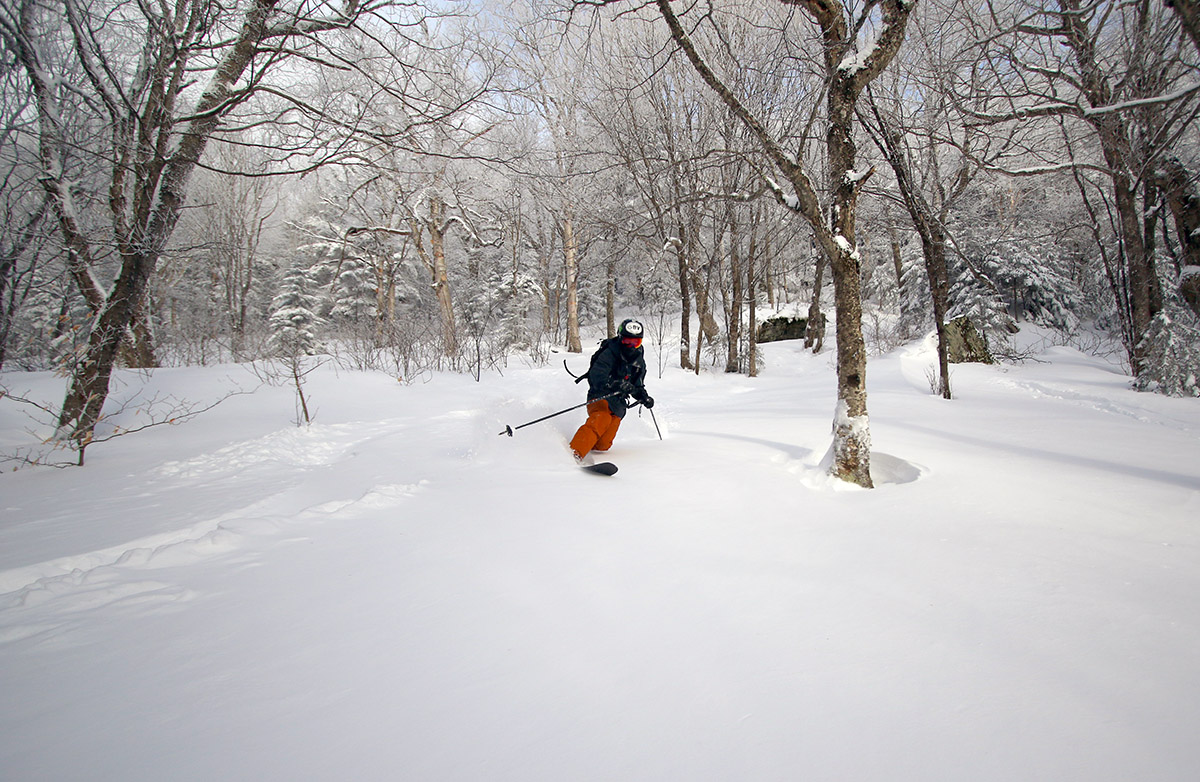
An image of Ty Telemark skiing in powder in the White Rabbit area of the Nordic & Backcountry Network in January at Bolton Valley Ski Resort in Vermont
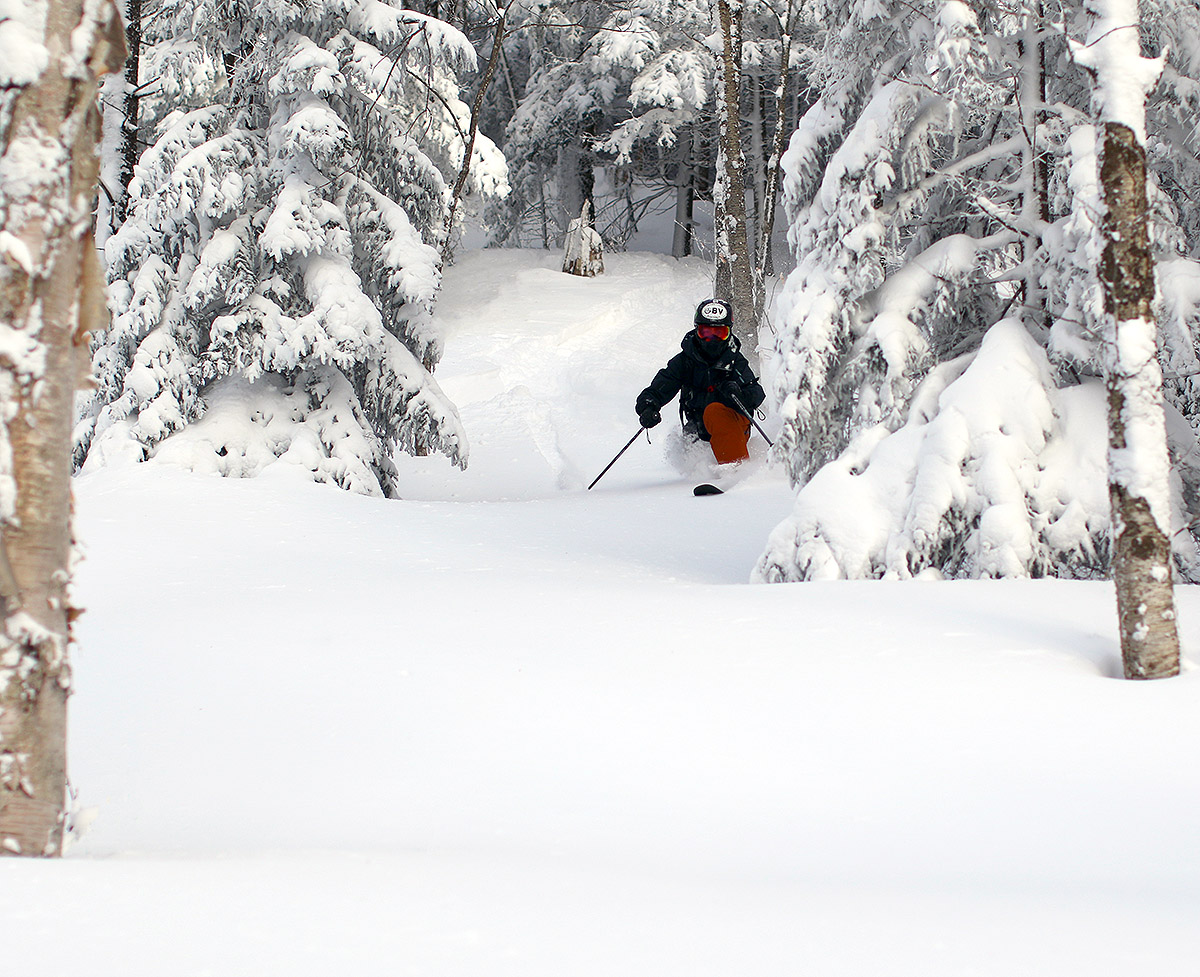
An image of Ty make a deep Telemark turn in powder during a backcountry ski tour in the Snow Hole area of Bolton Valley Ski Resort in Vermont
Ty diving through the powder on today’s tour as we descend in Bolton’s Snow Hole area

Based on the quality of yesterday’s skiing, I was leaning heavily toward heading out for another tour today. The backcountry conditions around Bolton are already quite good, and they were reporting another 2 to 4 inches of new snow this morning, so that was a nice bonus. Temperatures were expected to be about the same as yesterday, which meant single digits F.

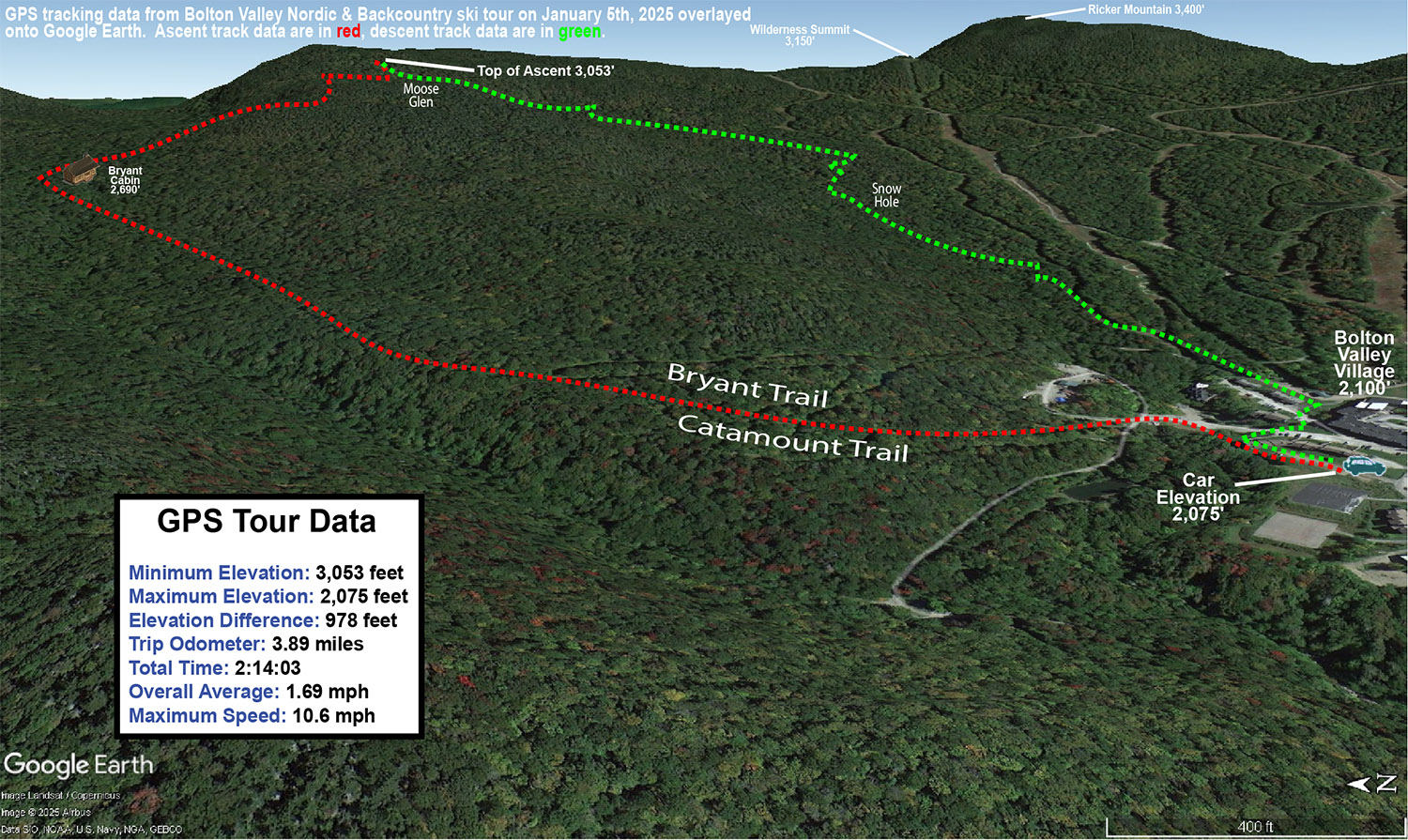
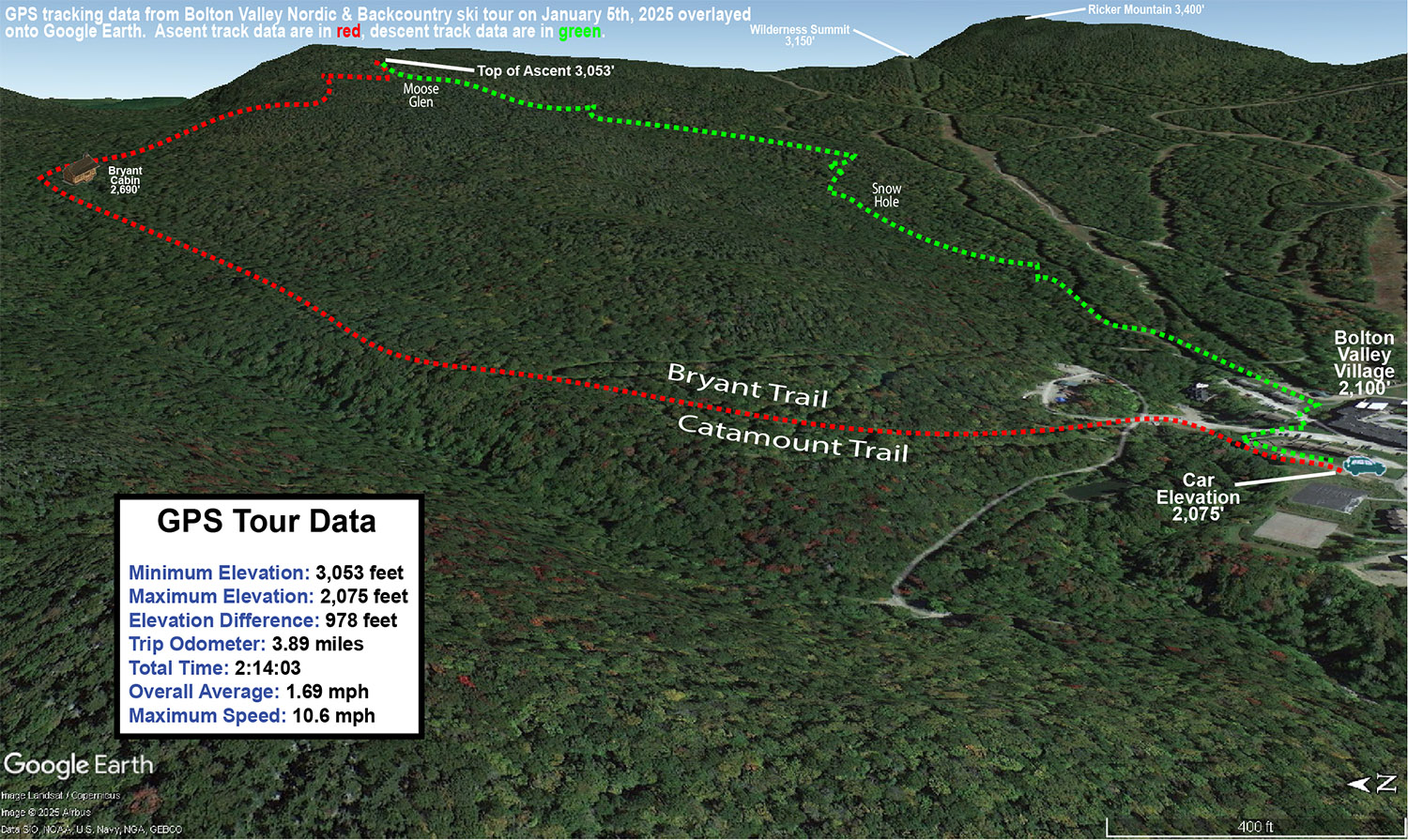
Ty was able to join me today, so it was great to have company, and we were able to get some actions shots in the powder. We did a tour somewhat similar to what I did yesterday, but we lengthened it out a bit more. Instead of heading up to Heavenly Highway and working our way down to North Slope, we went all the way up to Moose Glen and then wrapped around on a descent toward the glades around Snow Hole, which was roughly a four-mile tour. I chose that route to get us some relatively high altitude turns after observing the notable improvements in the overall snowpack above 2,500’ yesterday.

An image of Ty standing on one of the glades of the Nordic and Backcountry Network of trails during a January ski tour at Bolton Valley Ski Resort in VermontThe number of visitors at the resort seemed a bit less today – there was no sign posted about the Village lots being full, and we easily grabbed a parking spot in the upper lot by the entry to the Backcountry Network. With cold temperatures preserving the snow, conditions were similar to yesterday with 1 to 2 feet of powder available wherever wind hadn’t scoured it to lower depths. Touring some of the higher elevation trails allowed us to see the various areas that had been hit by wind, and you just had to be cognizant of where winds had affected the snowpack to pick the lines with the best undisturbed powder. The middle elevations were much less disturbed by the wind, and you could pick just about line and get some great powder turns.

A Google Earth map with GPS tracking data for a January ski tour on the Nordic & Backcountry Network at Bolton Valley Ski Resort in Vermont
The Google Earth map with GPS tracking data for today’s ski tour on the Bolton Valley Nordic & Backcountry Network

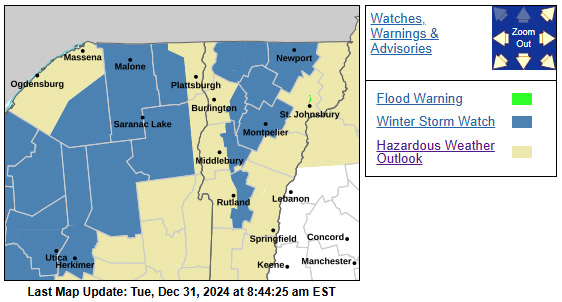
The models suggest we might have another long-duration system like this past one starting up tomorrow night and running right through the week, and I see that Winter Weather Advisories are already up for the Northern Greens in anticipation of some of that snowfall.

Bolton Valley Nordic & Backcountry, VT 04JAN2025

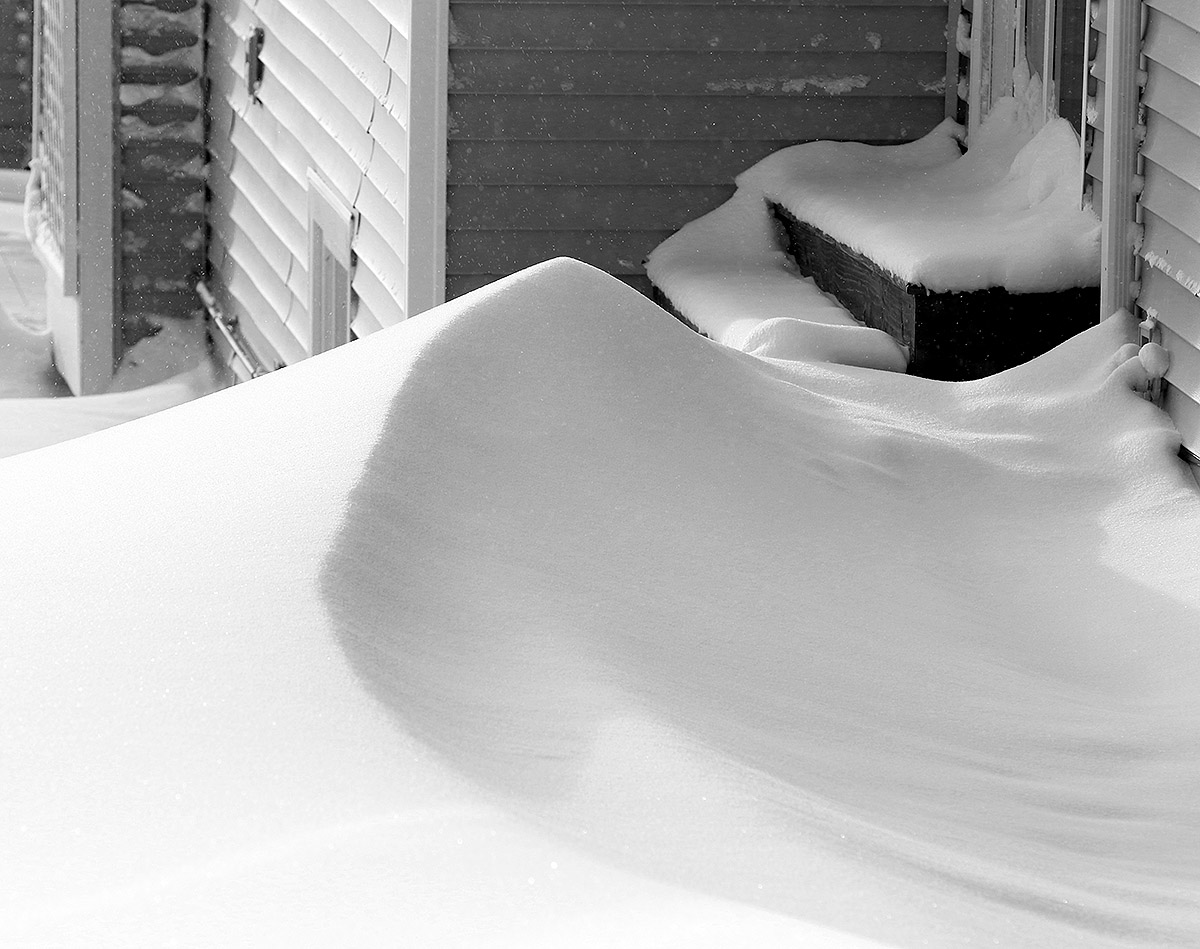
An image of a snowdrift outside the condominiums near the base of the Wilderness Double Chairlift during a January snowstorm at Bolton Valley Ski Resort in Vermont
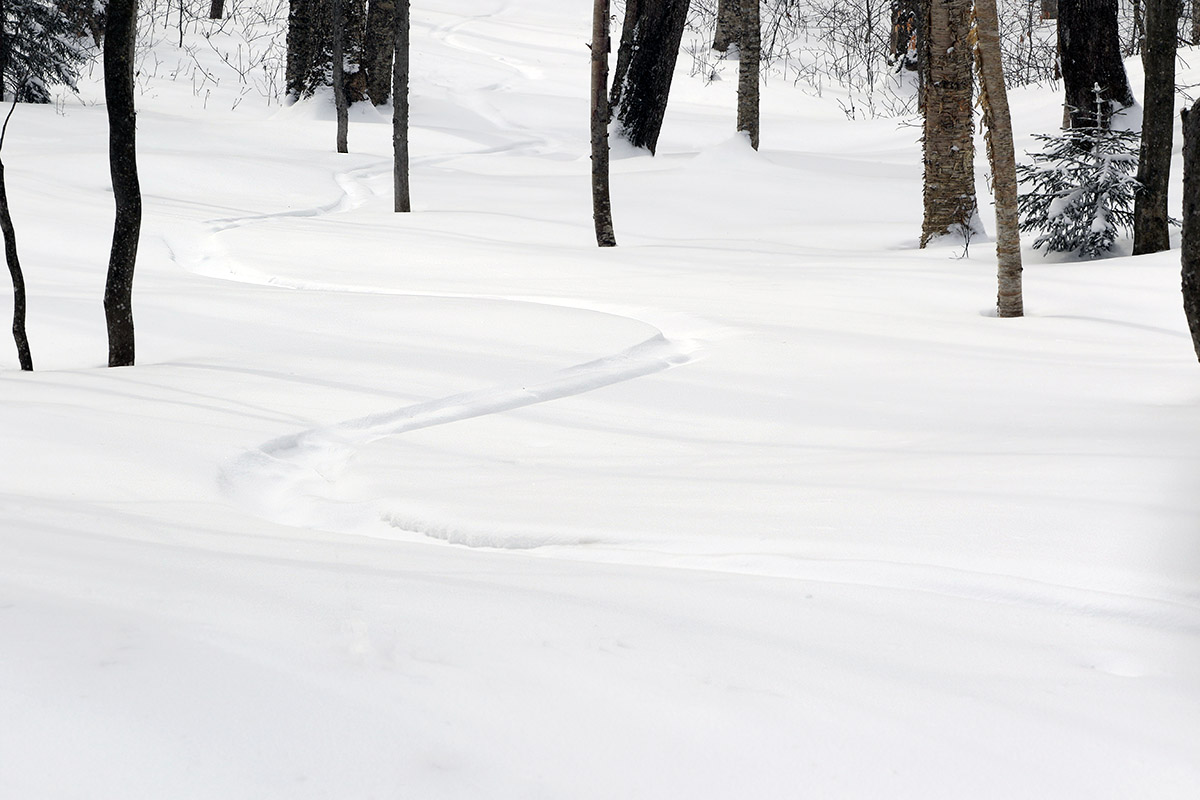
An image of ski tracks in powder snow in the Cup Runneth Over area of the Nordic and Backcountry Network of trails at Bolton Valley Ski Resort in Vermont
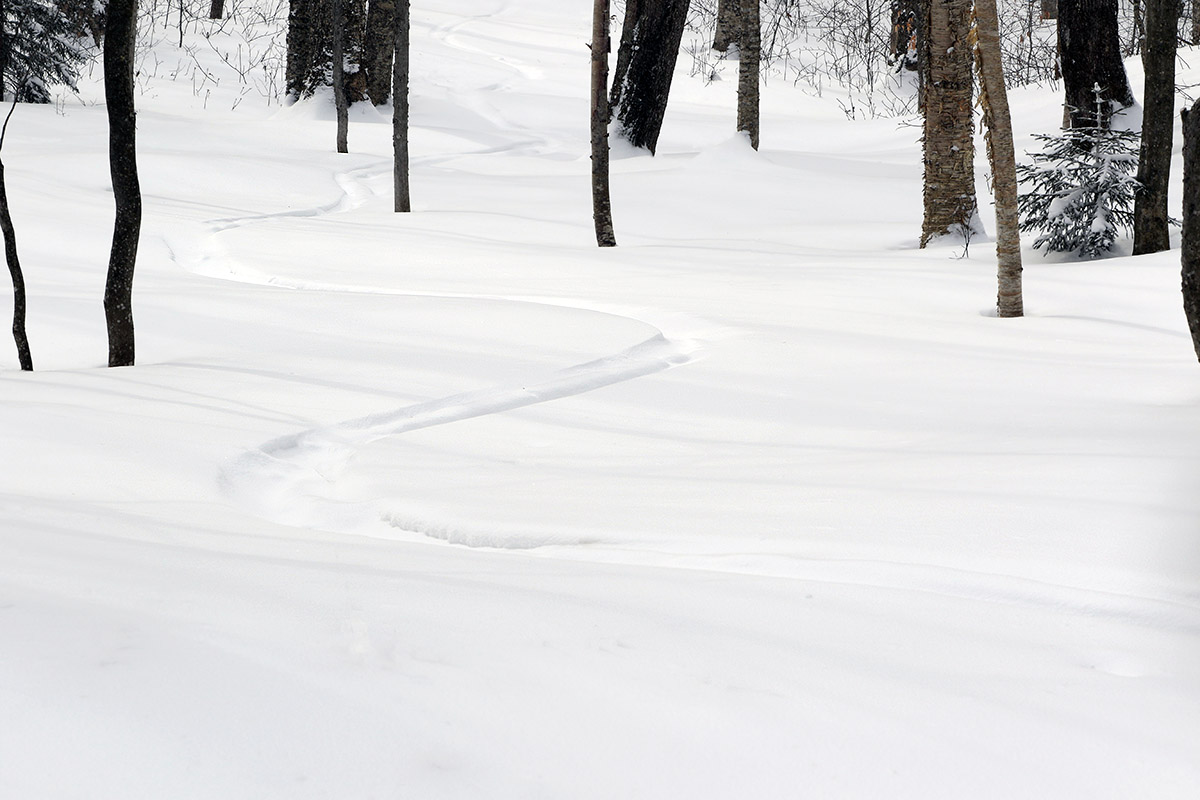
The powder is great and the backcountry ski traffic has generally been light – as I passed by, I saw just one old set of tracks in the Cup Runneth Over area.

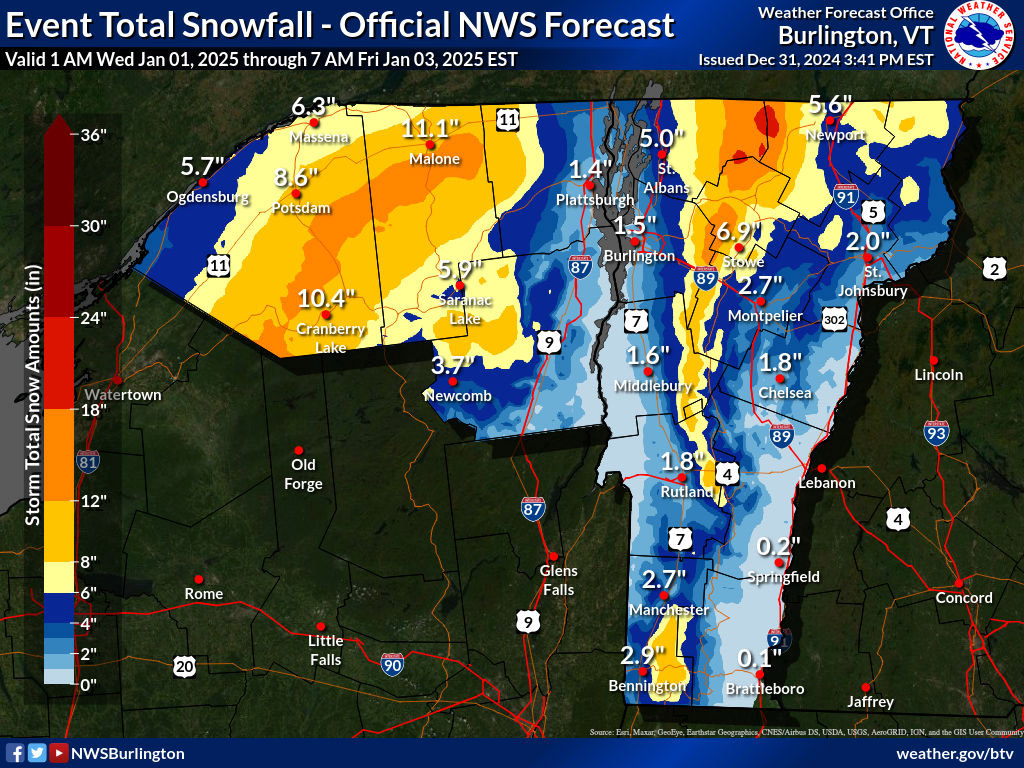
Our current storm cycle started up back on Wednesday, with low pressure deepening as it passed over southeast New England and up into Maine. It then headed on up into eastern Quebec, stalled there for a bit, and finally moved to northwest to James Bay, where it’s expected to sit until about Monday. While this isn’t a stacked low-pressure system sitting in the Canadian Maritimes feeding continuous 1+”/hr. snows into the Northern Greens, the broad cyclonic flow supported by the various positions of the low pressure has kept the area in a nice moist westerly/northwesterly flow that’s been feeding snow into the mountains. So, this isn’t a typical 24-, 48-, or 72-hour type of storm cycle; it’s a much more drawn-out sort of “cycle”. I wasn’t sure how the positions of this low would actually play out with respect to snowfall, but since well before the start of the storm the National Weather Service Office in Burlington has been on it – they felt that the potential was there for solid amounts of snow over the protracted period. And they certainly weren’t wrong. It’s been a little tough to total up the mountain accumulations for the full event because it’s already been going on for four days, and the resorts typically only report up to 48-hour accumulations, but it looks like anywhere from roughly 1.5 to 3 feet have fallen in the Northern Greens from the system as of today.

Bolton Valley was reporting 4 to 6 inches of new snow overnight on top of their previous accumulations from the system. I’d already been finding snow accumulations of 9 to 10 inches when I was out touring at Bolton on Thursday, so between whatever fell Thursday night into Friday, plus these additional Friday night accumulations, there seemed to be some good powder potential out there. Temperature forecasts for the mountains were in the single digits F today, so touring seemed to be the best option. E was initially going to join me for a ski tour, but after thinking about the temperatures for a bit, she ultimately decided to work out at home instead.

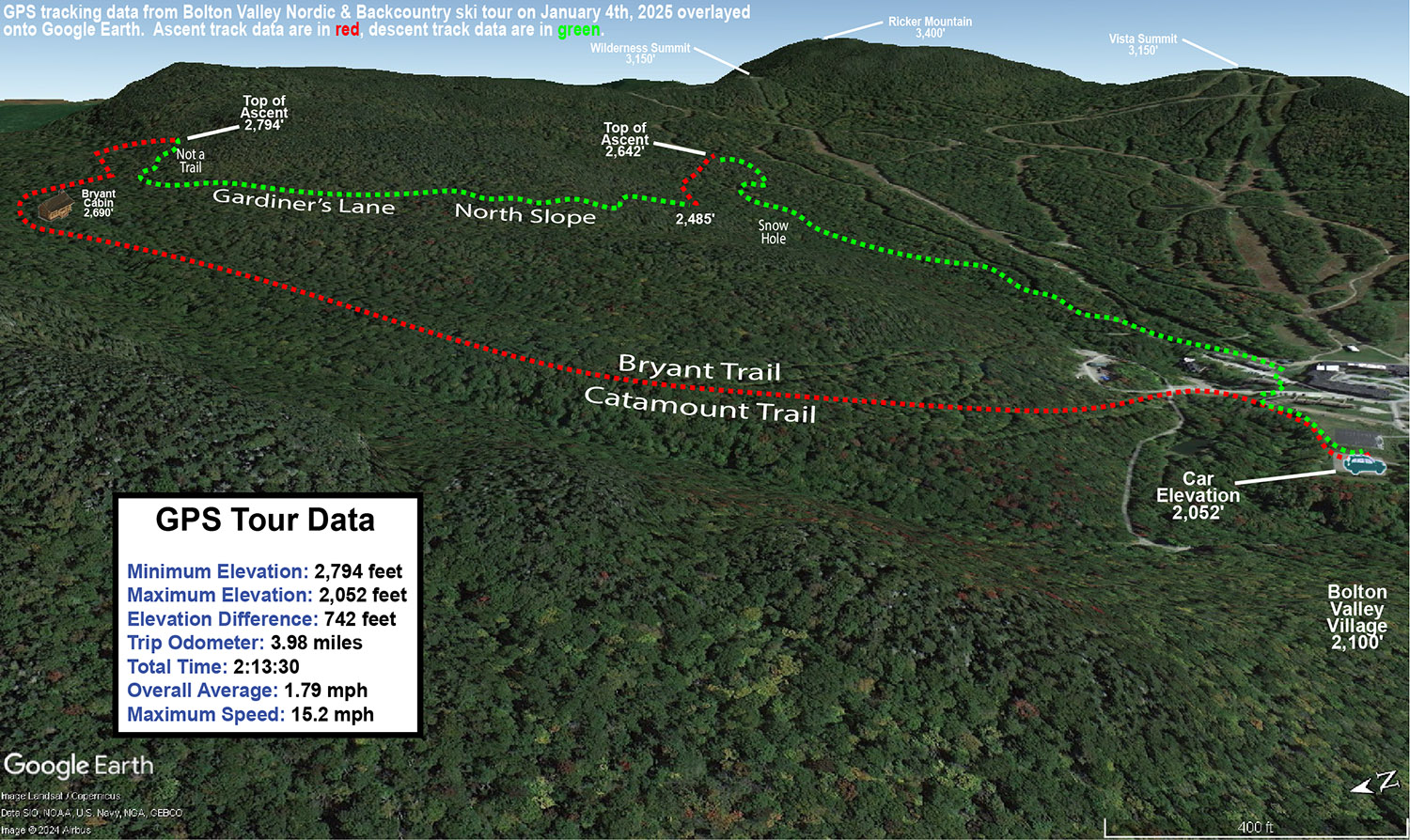
An image of icicles and snow hanging off the roof of the Bryant Cabin on the Nordic and Backcountry Network of trails at Bolton Valley Ski Resort in VermontI headed up to the mountain a bit after noontime, and people certainly didn’t seem to care about the temperatures – the signs were up for visitors to park at Timberline because the upper lots were full. Being after noon, I knew I’d be able to get a spot from someone who was leaving for the day, so I headed up to the main base anyway. I still ended up getting a spot in the lowest tennis court lot though, and that changed up my touring plans a bit. I had initially planned to ascend at the start of the Wilderness Uphill Route and then make my way toward Gardiner’s Lane, but since I was parked right down by the Pond Loop area with easy access to the Bryant Trail, I ascended there instead. I had just planned to loop around Bryant Cabin and then head out to start my descent on North Slope, but the temperatures felt great while touring, so I continued on up to Heavenly Highway, topped out around 2,800’, and started my descent via the “Not a Trail” glade. From there I continued down North Slope and then made a second ascent to ski some of the glades in the Snow Hole area.

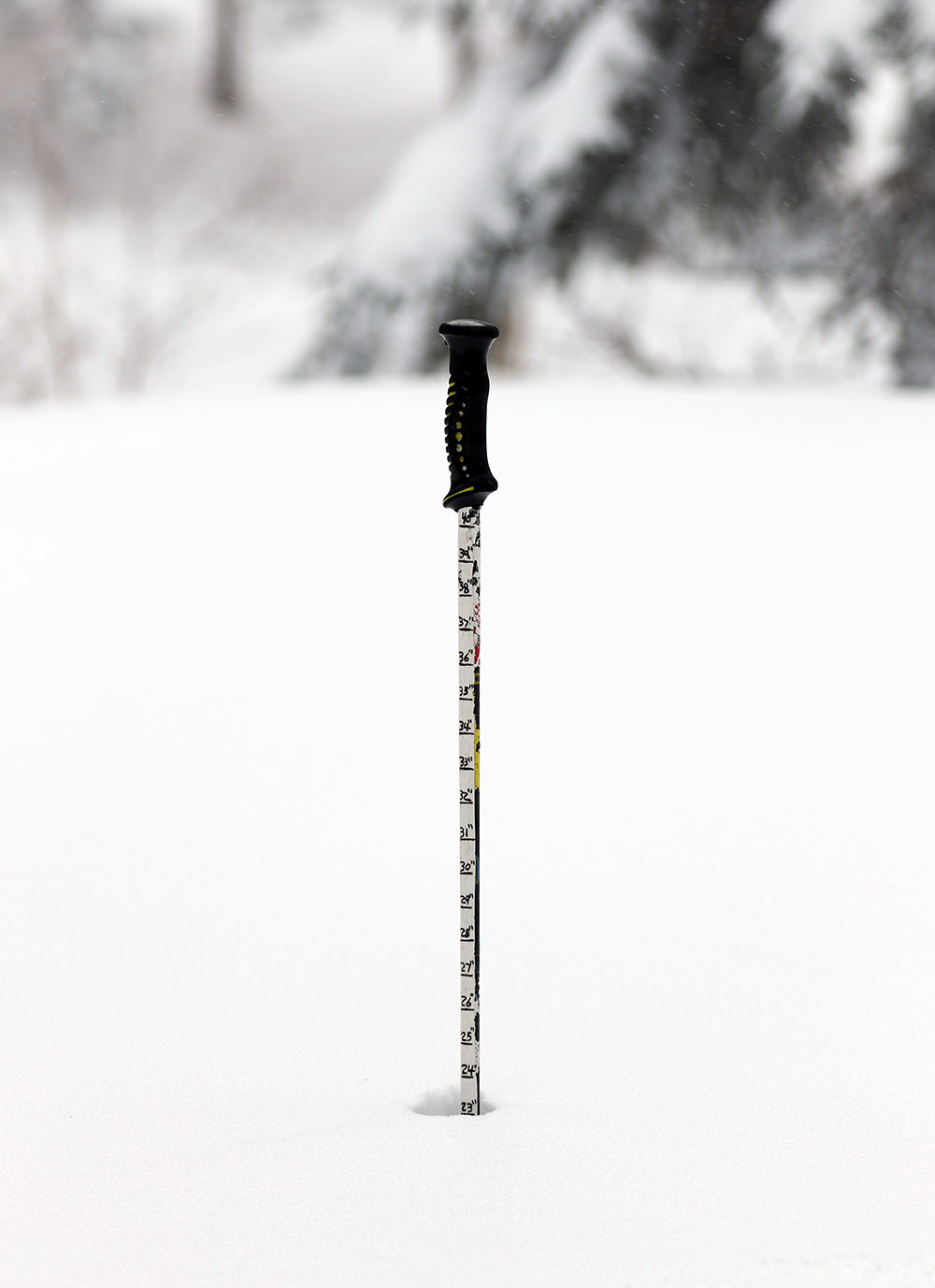
An image of a ski pole with measurement of the powder in the snowpack showing a depth of 24 inches during a backcountry ski tour on the Nordic and Backcountry Network of trails at Bolton Valley Ski Resort in Vermont
Up above 2,500′ there were frequently areas with 24 inches of powder atop a substantial base for what must have been a snowpack depth in the range of 40 inches

It was clear that powder depths had increased at the resort since I was last there on Thursday. Winds have died down substantially now, so measuring the snow is much easier, and right at the car at ~2,000’ I was getting 8-12” depths for the surface snow above the base. By 2,500’ the typical depths were in the 12-16” range, and around 2,800’ I’d say they were 12-18”. I’d still think that’s somewhat conservative though, because I was often finding powder depths of 24” up around 2,700’-2,800’. Right now, getting up above 2,500’ makes a real difference in the snow though, because those areas must have done really well during our previous warmup – the interface between the surface snow and the base has mostly disappeared by that point (making it harder to measure just the new snow), and the skiing is really good. Dropping into my initial descent, I could tell that the overall snowpack was really deep.  Below that top 24” of powder there was substantial base, and I’d say the snowpack there has to be 40 inches. The snowpack at the Mt. Mansfield Stake was at 39” as of a couple of days ago, and it hasn’t been updated since then, but based on what I found out there today a few miles to the south, it’s got to be over 40 inches by now.

Anyway, I’d recommend doing most of your touring up in that 2,500’ to 3,500’ elevation range if you can – it’s just a notable improvement in the overall snowpack below 2,500’. It’s still nice skiing down there, but it’s sort of mid-fat powder conditions below 2,500’, and full-fat conditions above 2,500’. I toured on mid-fats today, but I was wishing I had fat skis in that deep snowpack above 2,500’. The powder is of medium weight, so there’s plenty of liquid equivalent in there to really keep you off the base. As of this evening we’re approaching an inch of liquid equivalent from this system at our site in the valley, so you know the mountains have had at least an inch of two of liquid equivalent from this system so far, and it definitely felt like it based on what I experienced above 2,500’ today.

A Google Earth map with GPS tracking data from a ski tour out on the Nordic and Backcountry Network of trails at Bolton Valley Ski Resort in Vermont
A Google Earth/GPS map of today’s tour out on the Bolton Valley Nordic & Backcountry Network

With respect to the ongoing storm, there was generally light but consistent snow falling when I was out on the mountain today. The flakes were small, in the 1 to 2 mm range, so it was hard to gauge snowfall rates, but I had to clean a decent layer off my car when I got back to it after just an hour or two of touring. Toward the end of my tour, the flake size was picking up noticeably to roughly 2 to 8 mm flakes. Down here at the house, we’ve had light snow all day, but it’s picked up more this evening with larger flakes, especially when strong echoes come through as more pronounced shortwaves embedded in the overall cyclonic flow move through the area. Based on what we’ve been seeing here at the house this evening, there should be at least another few inches out there by tomorrow morning for the mountains.

Bolton Valley Nordic & Backcountry, VT 15DEC2024

An image of ski tracks in powder snow in mid-December in the Big Blue area of the Nordic and Backcountry Network of Bolton Valley Ski Resort in Vermont
An image of Ty Telemark skiing through trees in the Cup Runneth Over glade as twilight approaches and we near the end of today's ski tour on the Nordic and Backcountry Network at Bolton Valley Ski Resort in Vermont
Ty slipping his way down through trees in the Cup Runneth Over glade as twilight approaches and we near the end of today’s ski tour on the Bolton Valley Nordic & Backcountry Network

After the relatively warm midweek storm moved across the area, we picked up an inch or two of snow in the valley between the back side of that system and the lake-effect snow that followed it. While the storm wasn’t quite a net gain for the snowpack here at our site, we only lost a couple tenths of an inch of snow water equivalent in the snow on the ground, so it was fairly inconsequential in that regard. It did mean a thaw-freeze cycle for the snowpack though, so once temperatures came down, the snowpack was solid with just a bit of fresh snow on top. This was the first notable consolidation event of the season at our site, so we finally transitioned to a much more robust snowpack down at the house now vs. what was there before. It had slowly been settling and consolidating on its own, but it was still somewhat dry, and you could dig down to the ground fairly easily.

That midweek storm was likely a net gain for liquid in the mountain snowpack, but I assumed off piste surfaces would be quite hard after the thaw-freeze, similar to what we experience down in the valley. I’d been hearing some good reports out of the mountains with regard to the backside accumulations from the storm, but it was hard to image it would be enough to really get the off piste and backcountry conditions back to where there were earlier in the week.

With that in mind, E and I headed up to Bolton Valley for some snowshoeing yesterday. We always find that snowshoeing is a nice change of pace if the snowpack is likely to be punchy, crusty, or icy, since even Nordic skiing with those conditions can be unpleasant if the snow is too firm. We figured we’d mostly be using the crampons on our snowshoes during the tour as we expected something in the range of a dust-on-crust snowpack, but that wasn’t the case at all. I was amazed to find that at around the 2,000’-2,200’ elevations where we toured, there were 6 to 10 inches of powder above the base layers. And, the base wasn’t even rock hard, it was a crumbly interface with the powder above it that made for excellent touring. We couldn’t believe that we were actually having to use the floatation of our snowshoes because of the depth of the powder, and the crampons were needed only occasionally in packed areas. The resort was reporting 8 inches of new snow in the previous 48 hours, and it really wasn’t just eye candy; all that new snow set up some very pleasant snow surfaces.

The only major issues we noted yesterday were that some of the water bars had been blow out by the rain. Those areas required some extra navigation, and we could see that people had established routes around them on popular ascents like the Bryant Trail. I’d say our observations were right in line with the big washout on Gondolier at Stowe that Powderfreak talked about – the snowpack itself wasn’t damaged all the much by the rain, the more notable effects were on drainage/water bars.

An image of Ty Telemark skiing in some powder snow in the Big Blue area of the Nordic and Backcountry Network of trails at Bolton Valley Ski Resort in Vermont
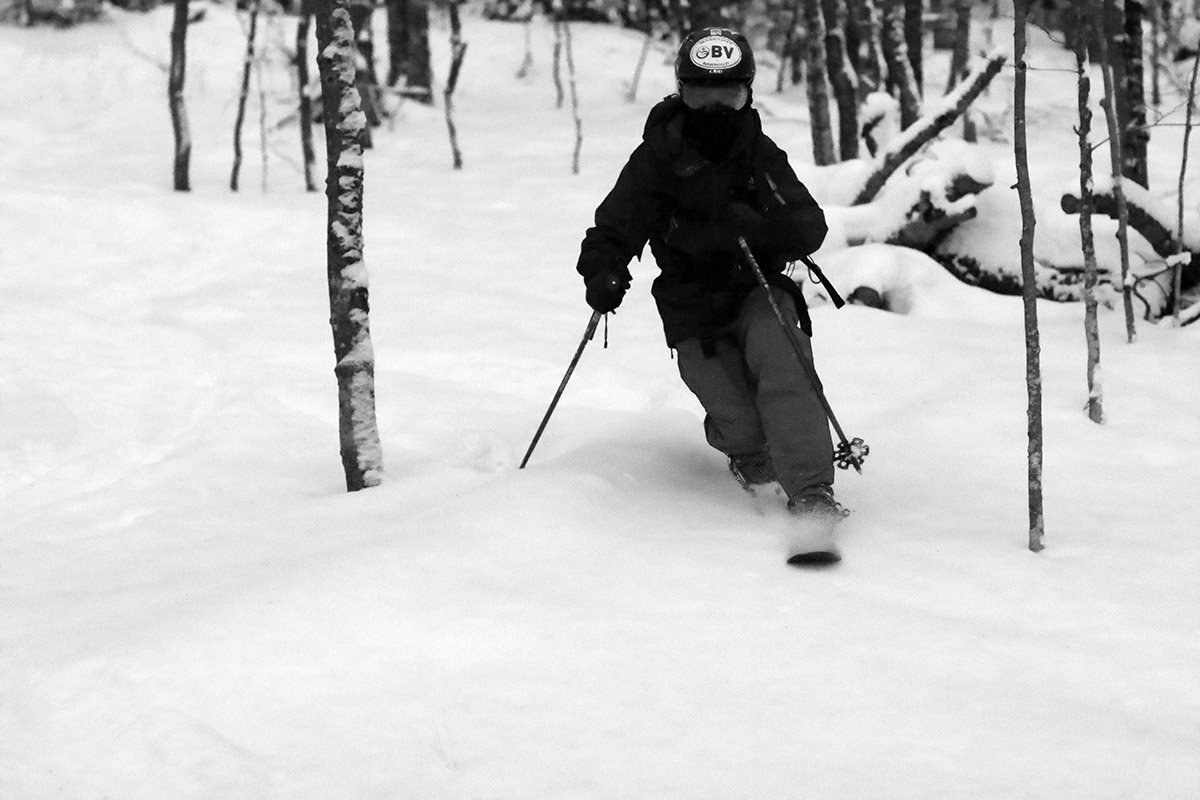
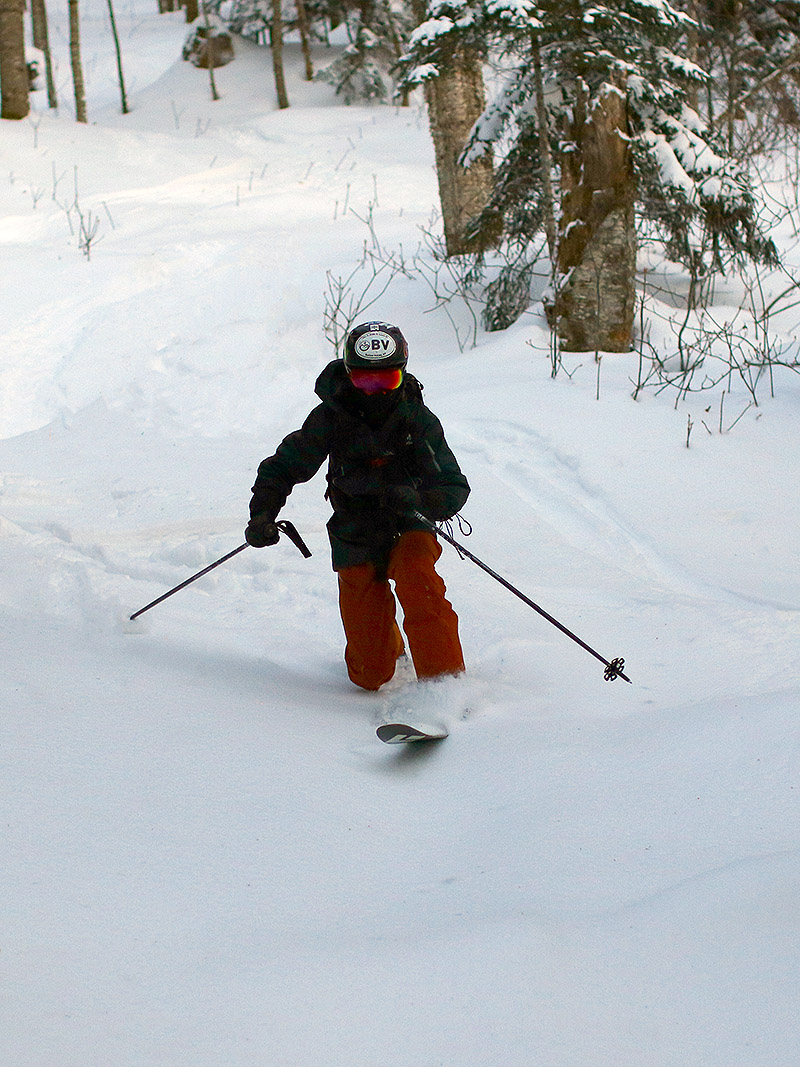
Ty dropping through some powder in the Big Blue area on today’s backcountry ski tour at Bolton Valley

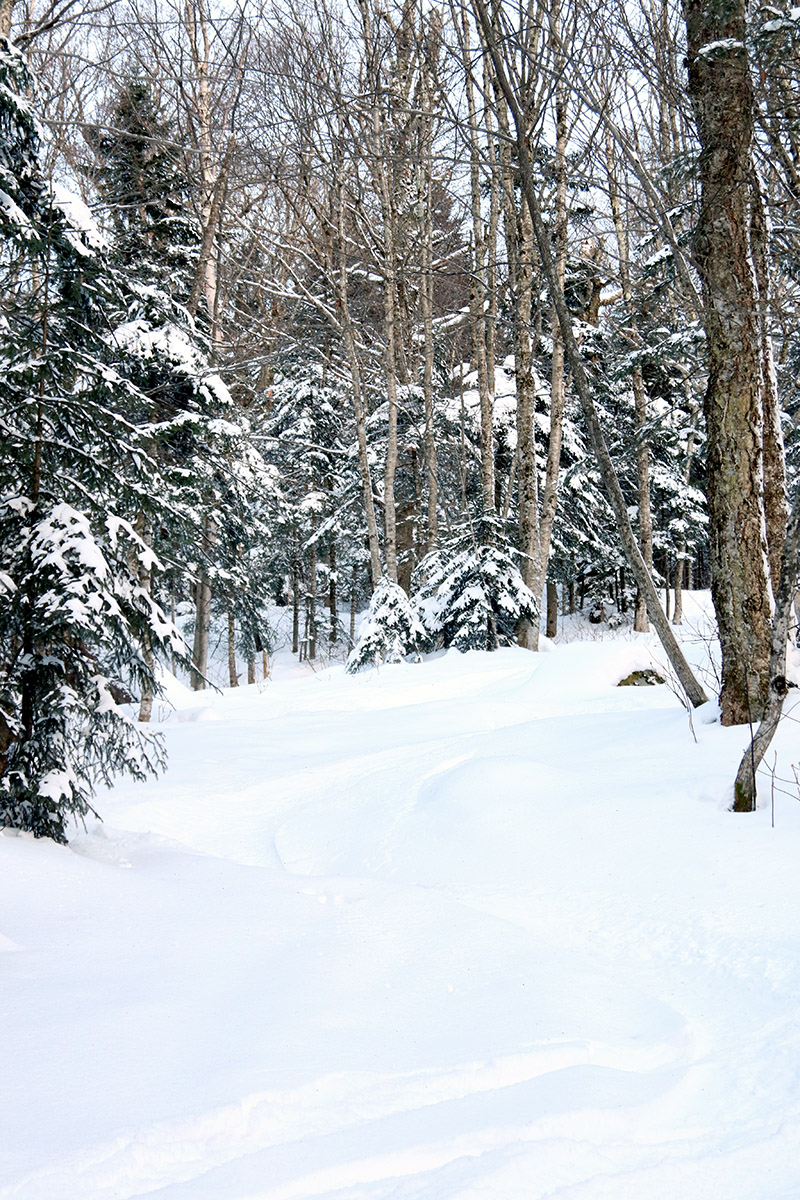
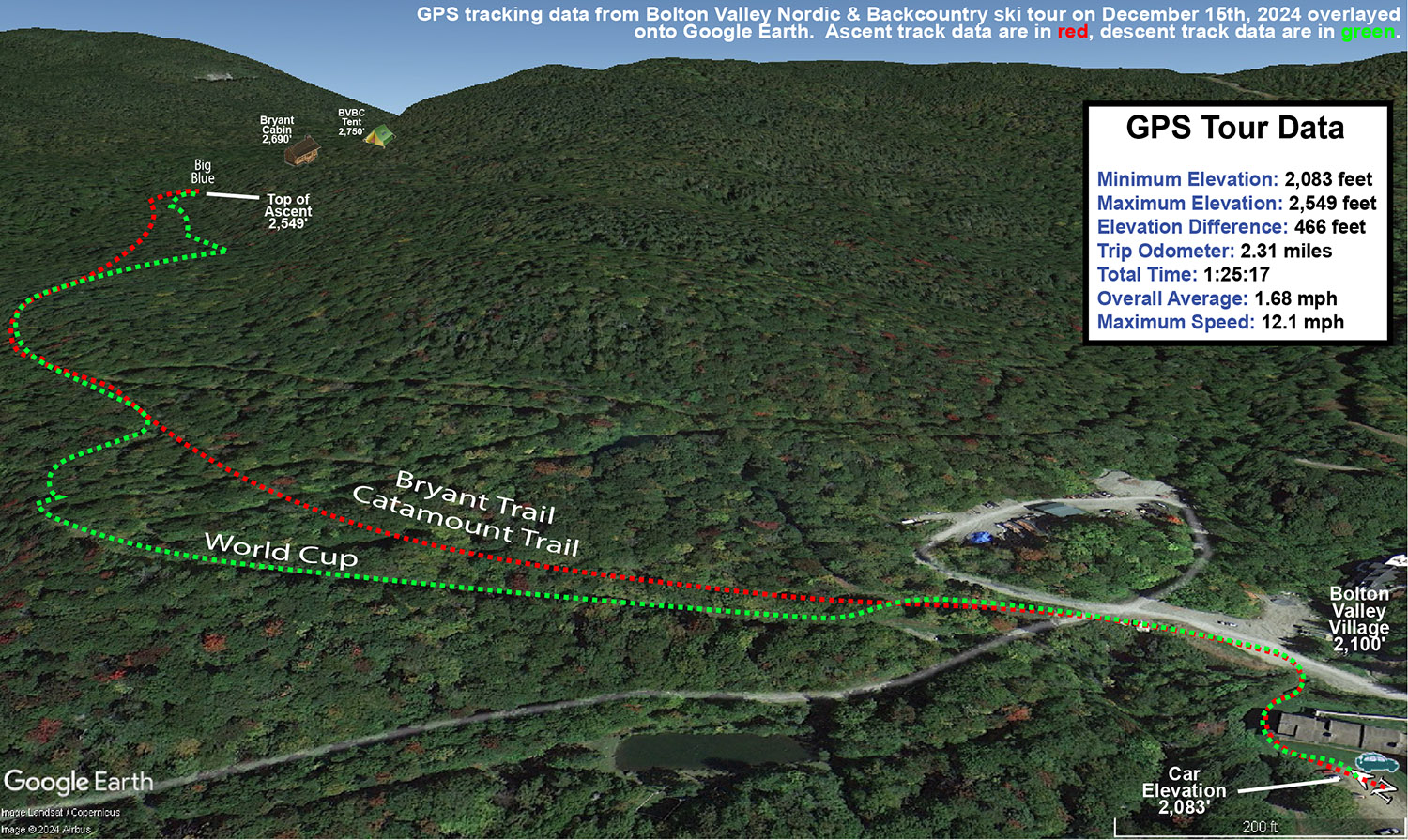
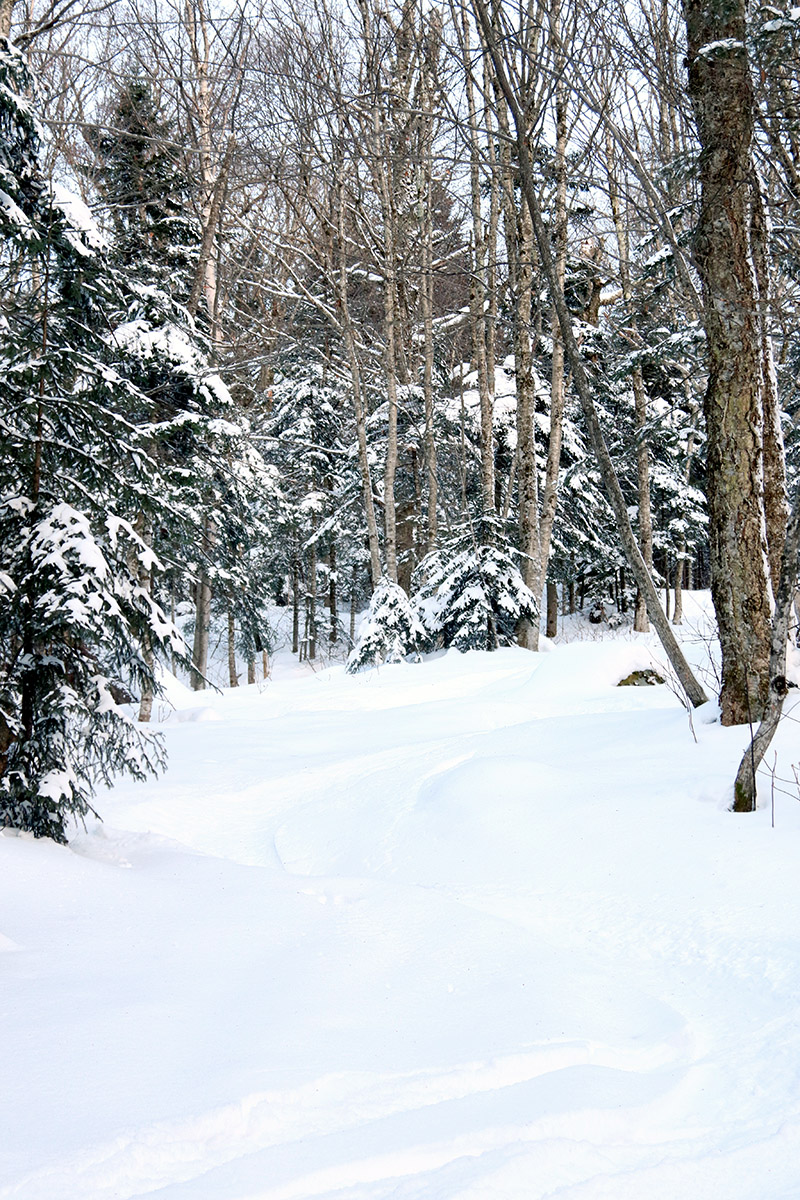
Experiencing the quality of the snow yesterday, it was obvious that the powder skiing would be great on low to moderate angle terrain, so Ty and I headed out for a ski tour on Bolton’s Nordic & Backcountry Network today. We toured up the Bryant Trail to about the base of the Big Blue area. We wanted to stick to more moderate and low-angle terrain that was a best fit for the depth and density of the powder, so we began our descent in the lower reaches of Big Blue, then worked our way through the relatively low-angle terrain between the Bryant and Coyote trails. Later on the descent we crossed to the west side of Bryant, skied the upper sections of the Cup Runneth Over glade, and finished out with turns on the untracked areas of World Cup. The resort hadn’t set formal Nordic grooming tracks up in those areas of World Cup, but there was a track line that had been made by skiers, and the rest of the trail was untracked powder. Those areas of World Cup were very open and provided some of the most consistent powder turns of the day. The pitch was also perfect for the depth and consistency of the powder, and Ty said those sections were actually his favorite turns of the tour.

A Google Earth map with GPS tracking data for a ski tour Nordic & Backcountry Network of trails at Bolton Valley Ski Resort in Vermont
The Google Earth map with GPS tracking data for today’s ski tour on Bolton Valley’s Nordic & Backcountry Terrain

Bolton Valley, VT 05DEC2024

An image of Ty skiing in the Snow Hole area in early December after a continuous flow of smaller winter storms builds up the snowpack at Bolton Valley Ski Resort in Vermont
An image of Ty getting some early season Telemark ski turns in the backcountry after a series of small storms begins to set up the snowpack at Bolton Valley Ski Resort in Vermont
Ty getting in some early season backcountry turns during today’s ski tour at Bolton Valley

Ty was off from work today, so the two of us decided to head up to Bolton Valley for some turns. With the generally unconsolidated snowpack, it was a bit tough to tell how much new snow fell from this most recent Clipper system, but based on the resort’s snow report, it seemed like they picked up a few inches, similar to what we received down here in the valley.

With tomorrow being their opening day, there was a lot of activity on the mountain today as they made final preparations for opening. At the base, one of the patrollers asked if we could stay off Wilderness for touring and instead head over to the Nordic and backcountry network, so we were happy to oblige. Although there’s no snowmaking on Wilderness, there snowpack is substantial enough that they could open the area for lift-served skiing if they wanted to. I wouldn’t be surprised if they were doing some grooming and prep work/obstacle marking over there today, so I suspect they wanted to minimize skier traffic as much as they could.

I wouldn’t normally have defaulted to touring on the Nordic and backcountry Network at this stage of the early snowpack, since the Wilderness trails are just a safer bet for quality turns; they have been mowed and have a more substantiated base due to some skier traffic packing it down. But since I’ve been out on Wilderness for a few ski tours now this season, getting out onto the nearby backcountry terrain gave me a nice opportunity to compare the quality of the turns in both places. Although we made our ascent on the Nordic and backcountry Network terrain, we were actually touring in the area over near Snow Hole and made most of our descent on the edge of the on piste Wilderness terrain. That allowed us to directly experience the skiing in both areas today.

An image of early December snow accumulations from various modest storms recently affecting the Village area of Bolton Valley Ski Resort in Vermont
Views of the recent accumulating snows in the Bolton Valley Village during today’s ski tour. We’ve had round after round of snow from a series of modest systems coming through the area, and they look to continue for days to come.

For overall skiing and powder turns, the experience was unquestionably better on piste at Wilderness. It’s not an issue of overall snow depth on the backcountry terrain; snowpack depths were closing in on 20 inches when I was out for my ski tour on Tuesday, and that was before the Clipper and the cold front brought a lot more snow to the area over the past couple of days. The depth of the snowpack has gone up substantially at this point – as of today the depth at the Mt. Mansfield stake is at 30 inches. What’s needed off piste to really improve the quality of the skiing is some consolidation. There is some base snow in the snowpack below the fluff, and it’s a decent base for on piste turns, it’s just not enough to sufficiently cover the contours of your typical off-piste terrain yet. Although a storm with above-freezing temperatures isn’t going to be great for snow quality, it would help in that consolidation. Alternatively, a nice dense snowfall storm would also help, and of course that would be much better for snow surfaces in general. It would temporarily ruin the current dry powder and might give us a bit of an upside-down snowpack, but it would really help set things up long term. The only other alternative would be to continue to get the type of dry snow we’re getting and wait a while for settling over time as the lower layers get compressed. This just takes a lot longer and requires a lot of snow, going the route of a continental/Colorado type snowpack.

From our experience touring today, it’s not that the off-piste skiing is horrible, it’s just that you need to stick to places that have seen a bit of skier traffic, or you know are well manicured with minimal hazards underfoot.

Bolton Valley Nordic & Backcountry, VT 25MAR2024

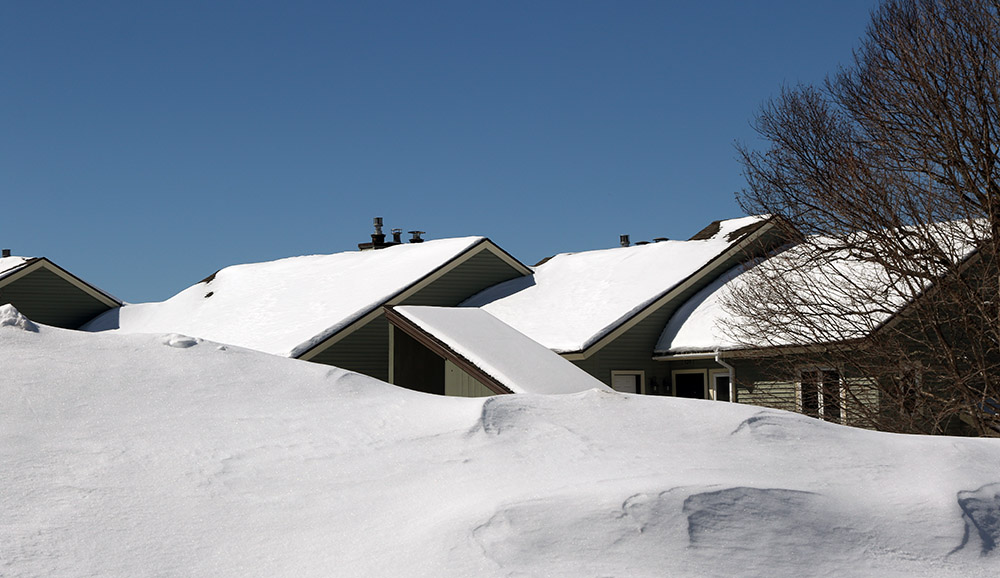
An image of large snowbanks and snow on houses from recent Winter Storm Ronnie in the Village area at Bolton Valley Ski Resort in Vermont
An image of the spring snowpack and a skin track in the Gotham City area during a March backcountry ski tour on the Nordic and Backcountry Network of trails at Bolton Valley Ski Resort in Vermont
A view of the snowpack and the skin track as I make my way up into the Gotham City area during today’s ski tour

Today was another chance to take advantage of the new snow from Winter Storm Ronnie, and I had time in the morning to head up to the mountain for some turns. Based on the incredible numbers of visitors yesterday, I figured that untracked lines would be few and far between on the lift served terrain, so I decided to hit the Bolton Valley Nordic & Backcountry Network for a ski tour and get some exercise.

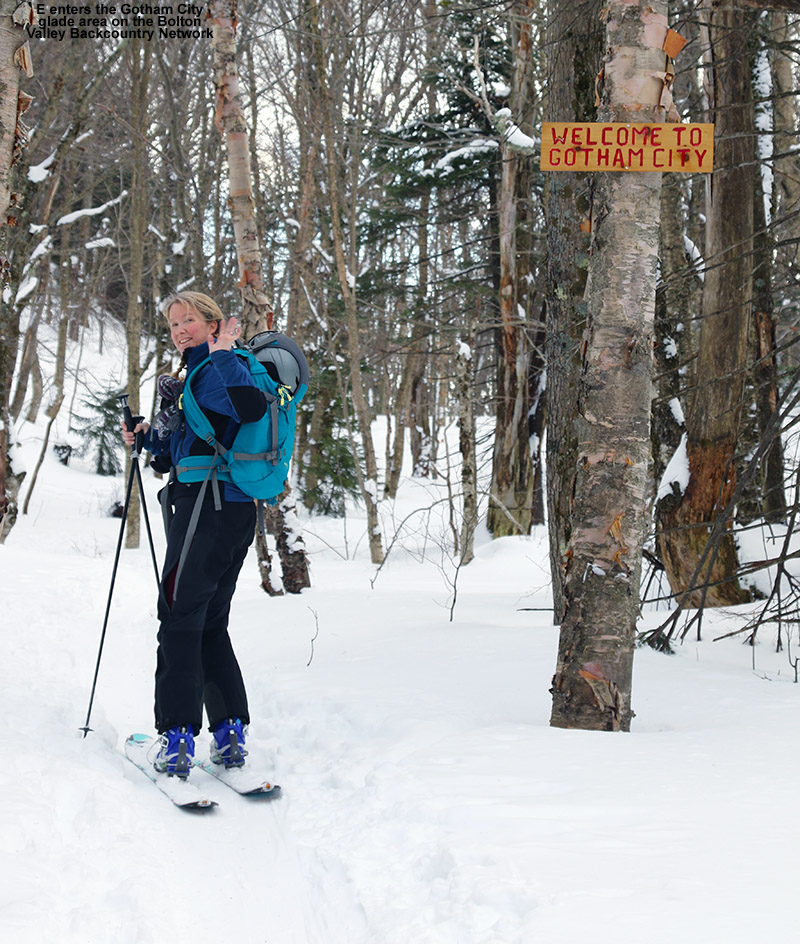
The morning weather was very similar to what we’d been gifted yesterday – sunny, with little wind and temperatures a bit below freezing. I didn’t have time to head all the way up to Bryant Cabin, but I was able to go for a nice loop up the Bryant Trail, onto Coyote, and then up to Gotham City on my tour. With the number of visitors yesterday, I thought that even the backcountry terrain might be heavily tracked up, but that wasn’t the case – there had been a moderate amount of activity, and plenty of untracked lines remained.

There was excellent powder to be found, and I’d say it was just as good as yesterday – if it was protected from the sun. Even with temperatures generally below freezing yesterday, the clear and sunny skies with that late March sun angle were too much for the snow. I suspect the situation was somewhat better if you went high enough in elevation, but least in the 2,000’ to 2,500’ elevation band where I was skiing, areas that had seen direct sun had a substantial sun crust. The effect of the sun was potent enough that it absolutely wrecked the powder skiing in those exposed areas, and it was such a thick and semi-breakable crust in places that the skiing was extremely challenging there. Thankfully, if you skied shaded snow, the powder was in beautiful shape, so I certainly stuck to those lines as much as possible. We’ll likely be warming up at all elevations this week with some spring-like weather, but we may have another substantial storm cycle coming in next week to bring back more spring powder skiing.

An image of a Google Earth map with GPS tracking data from a ski tour on the Nordic and Backcountry Network of trails at Bolton Valley Ski Resort in Vermont
A Google Earth map with GPS tracking data from today’s ski tour on the Bolton Valley Nordic & Backcountry Network