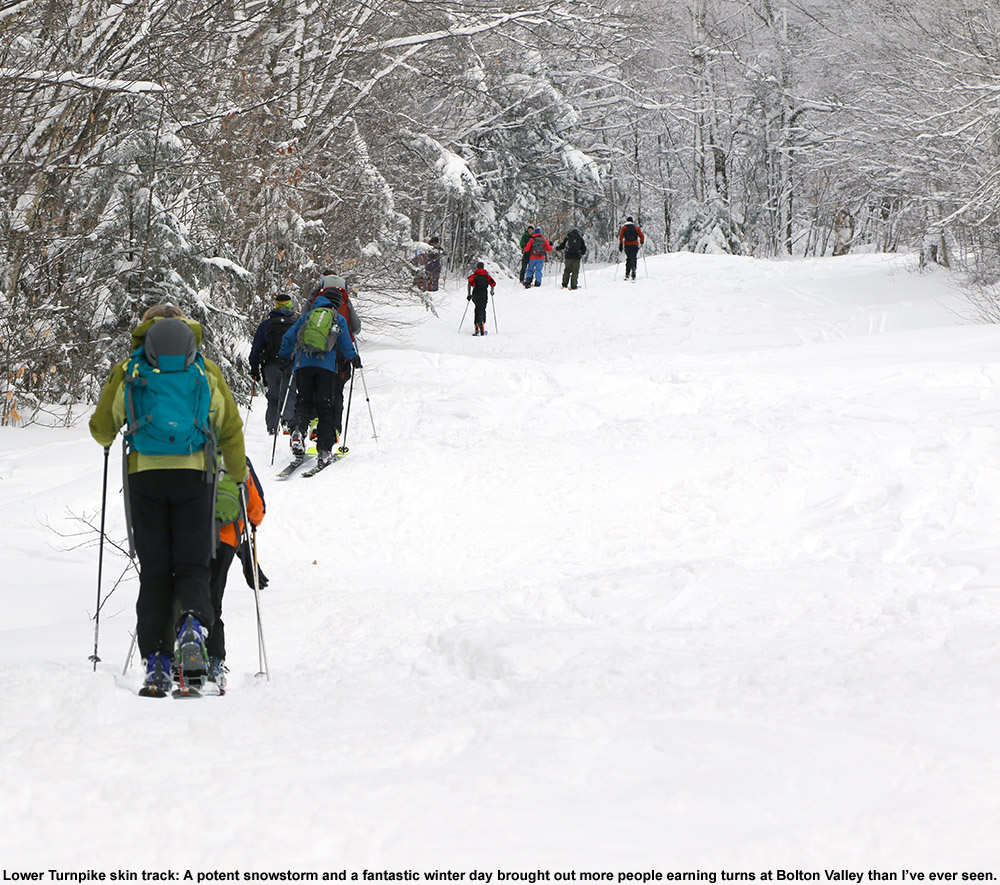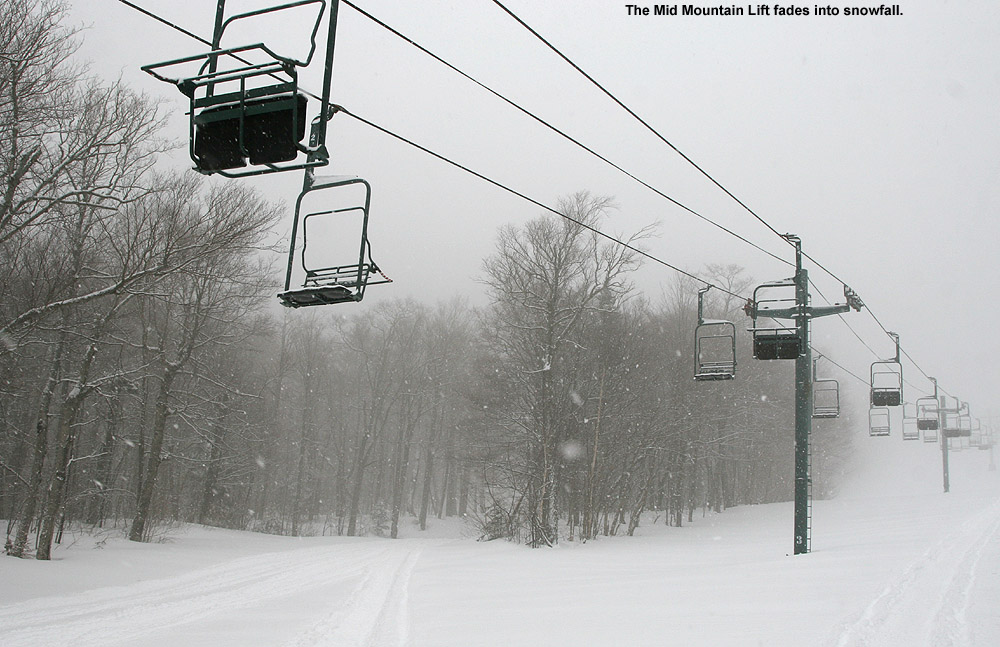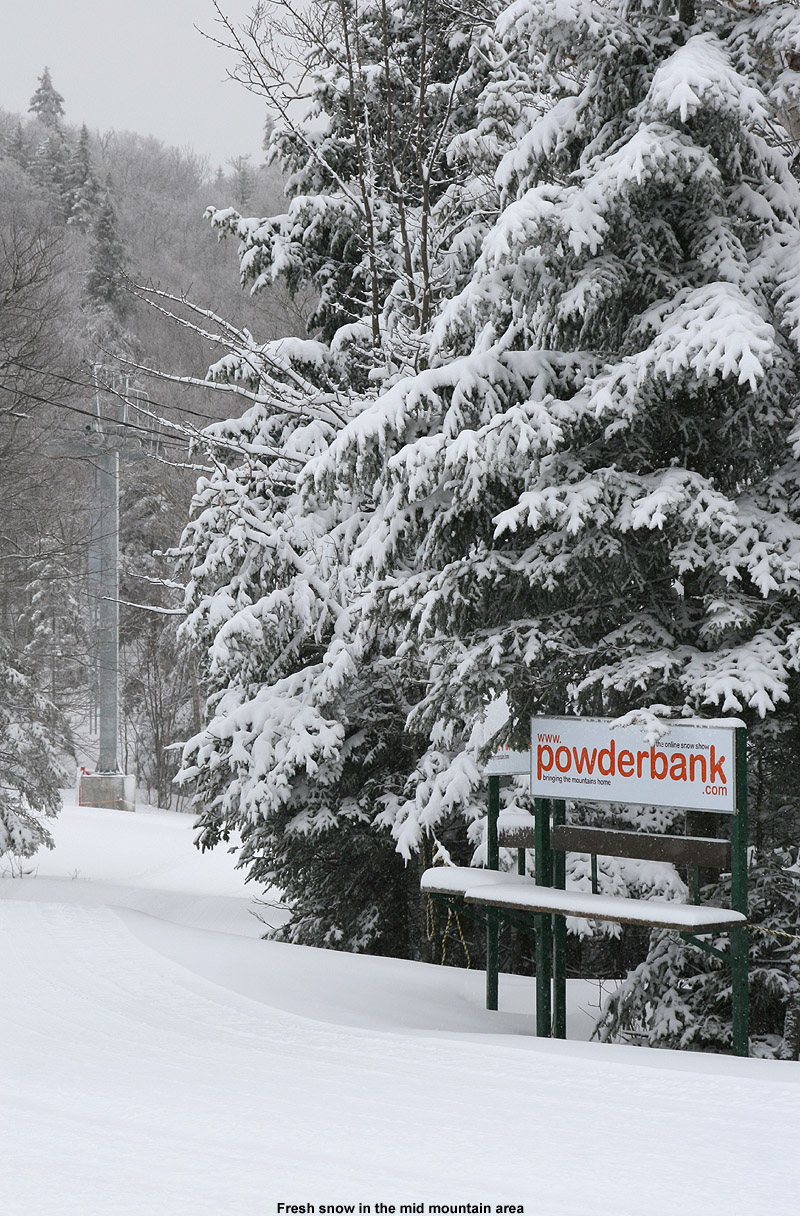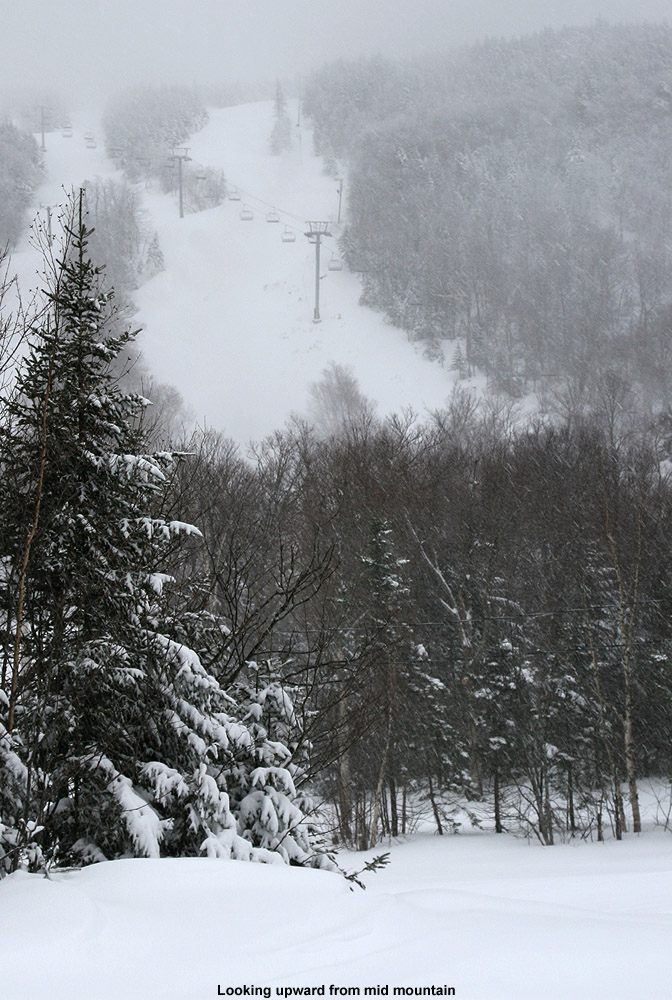


It was Winter Storm Bellamy that hit parts of the Midwest fairly hard yesterday to become TWC’s second named storm of the season, and then the system continued its eastward trek and started to affect our area by early this morning. Throughout the day it brought light snow to the area, and by the afternoon we’d picked up about an inch of accumulation in the valley. Coupled with the accumulations from the midweek system, I figured it would be worth a quick ski tour to see how the powder was building up in the higher elevations, so Ty and I headed up to Bolton Valley in the mid to late-afternoon.
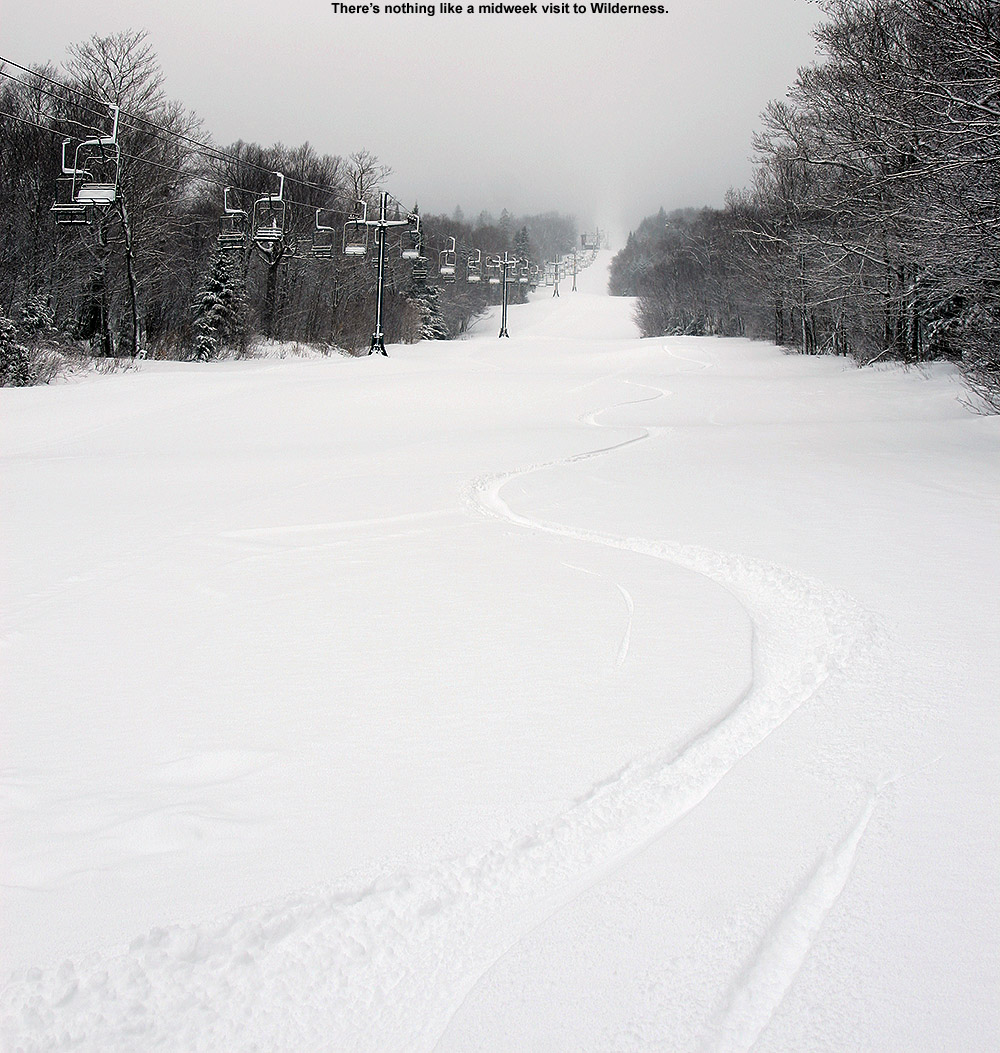
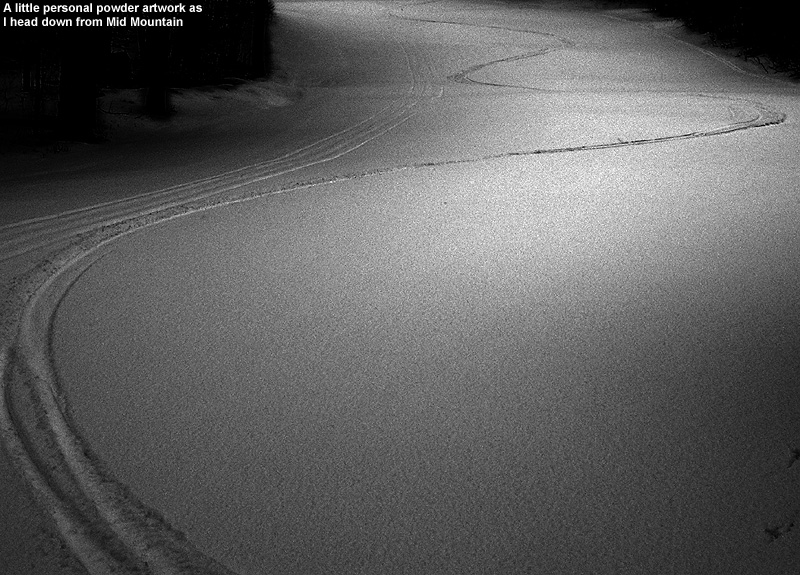
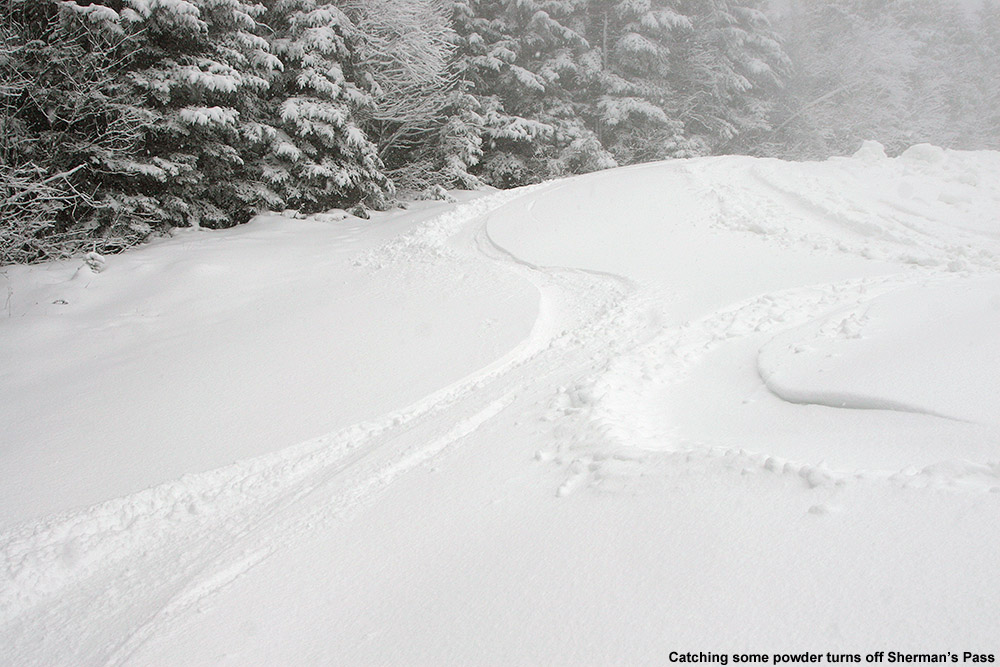
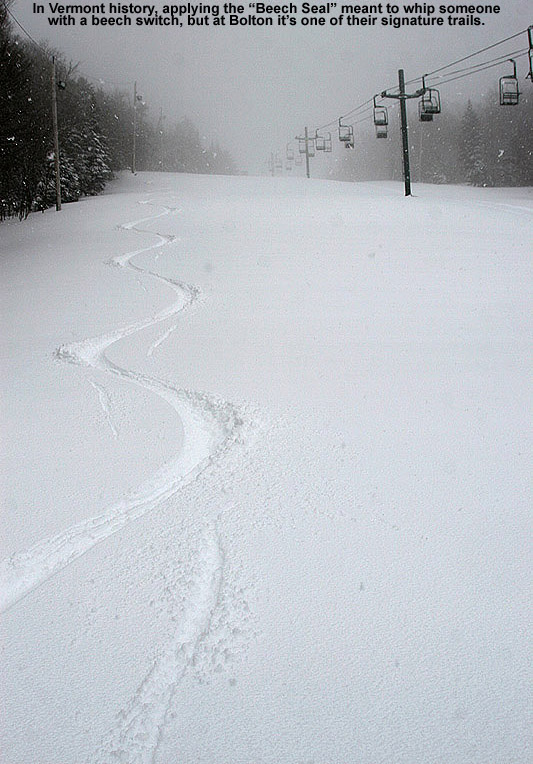
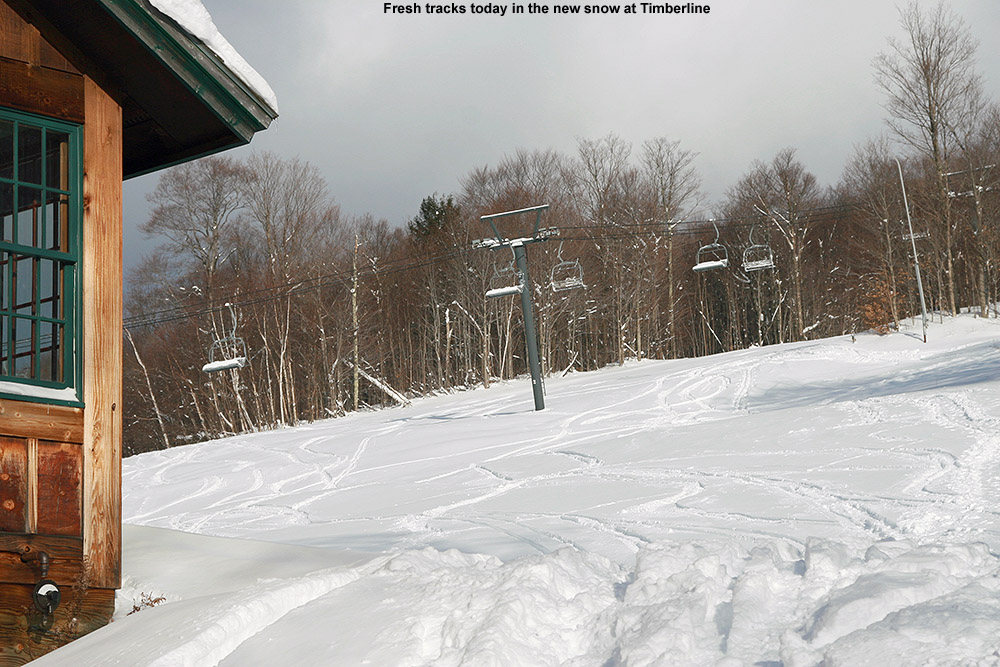
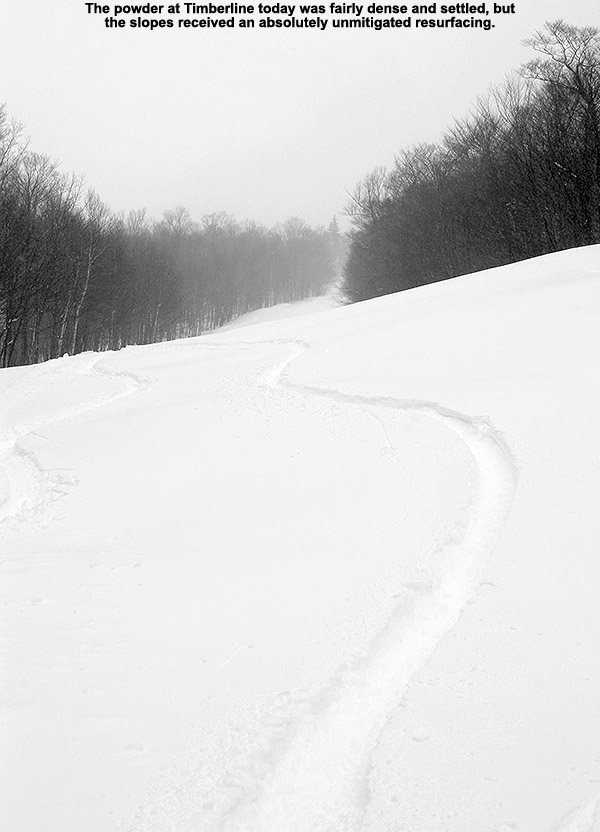
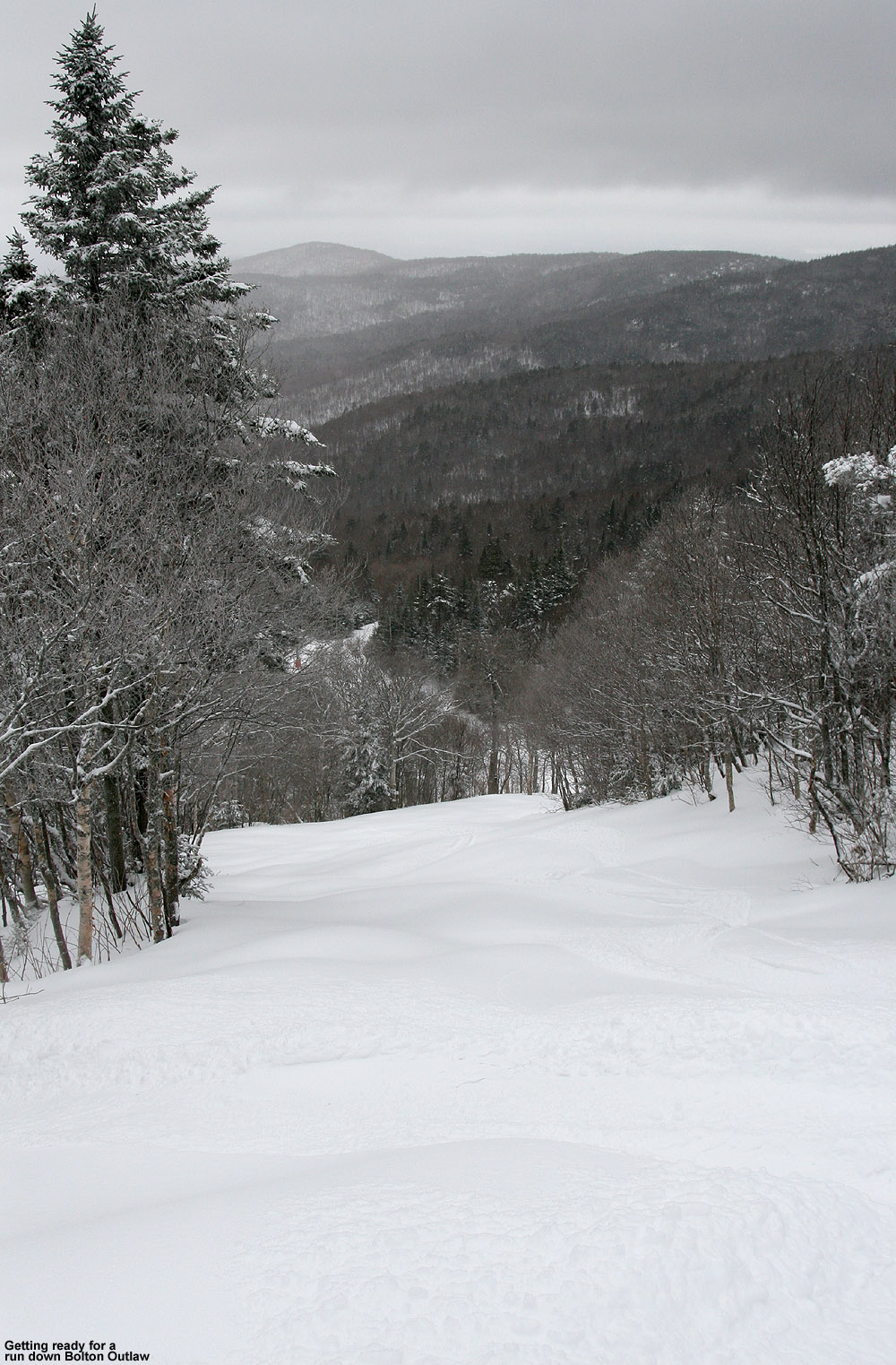
We toured on the lower 2/3 of Wilderness and found a general 3 to 4 inches of powder coating the existing base in untracked areas. That seemed about what one might expect based on picking up a couple of inches from each of these past couple of systems, and conditions were actually a bit better than I’d expected because I was worried that the wind might have blown the snow around and left us with little powder to ski. Indeed the snow was fairly light and dry (my liquid analyses from the two storms averaged out to snow in roughly the 5% H2O range for liquid equivalent), so it was nowhere near enough for a full resurfacing, but it definitely offered up some nice turns on lower angle terrain. Most turns weren’t bottomless, but you’d get some here and there where the powder had settled in a bit deeper. This was certainly a case where denser snow would have made a huge difference in resurfacing, but there was only so much liquid equivalent with these past couple of systems in this area, so they could only do so much to cover the subsurface.
The next storm in the queue has been named Winter Storm Chan, and it looks like it could add a more substantial shot of snow to the slopes – Winter Storm Warnings and Winter Weather Advisories are going up throughout the area. So, on top of the snow that’s already fallen in the past few days, it definitely holds the potential to kick the conditions up another notch.