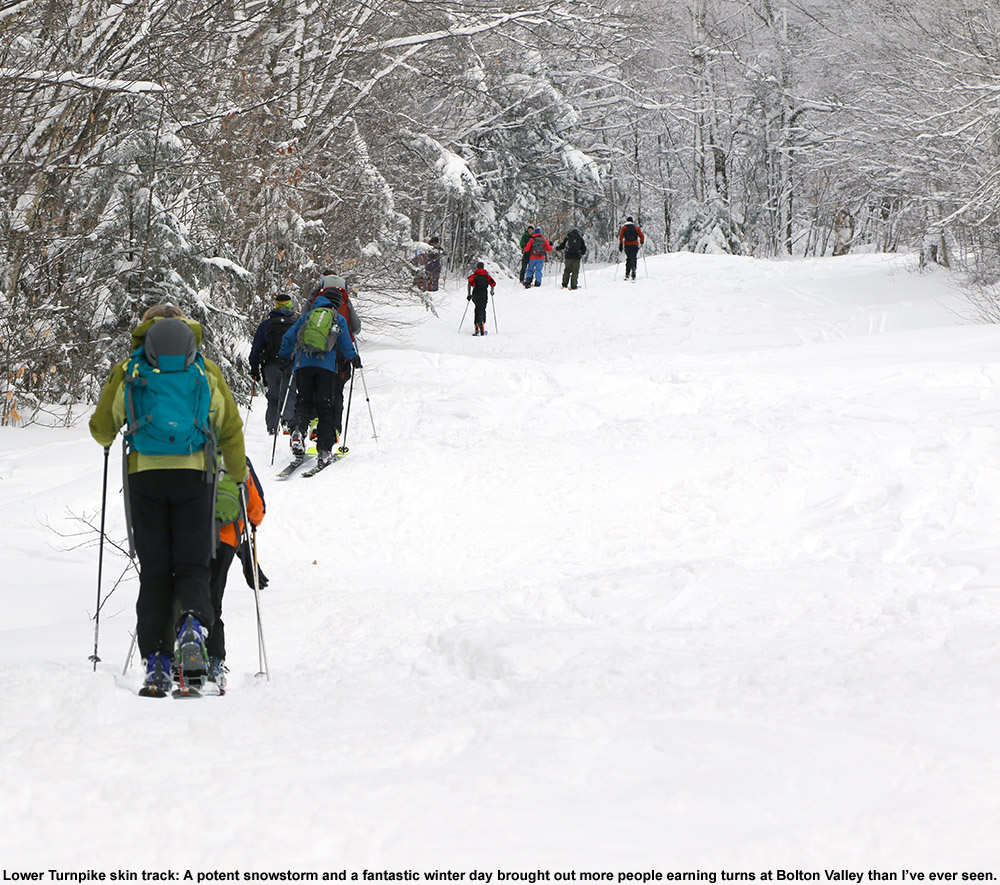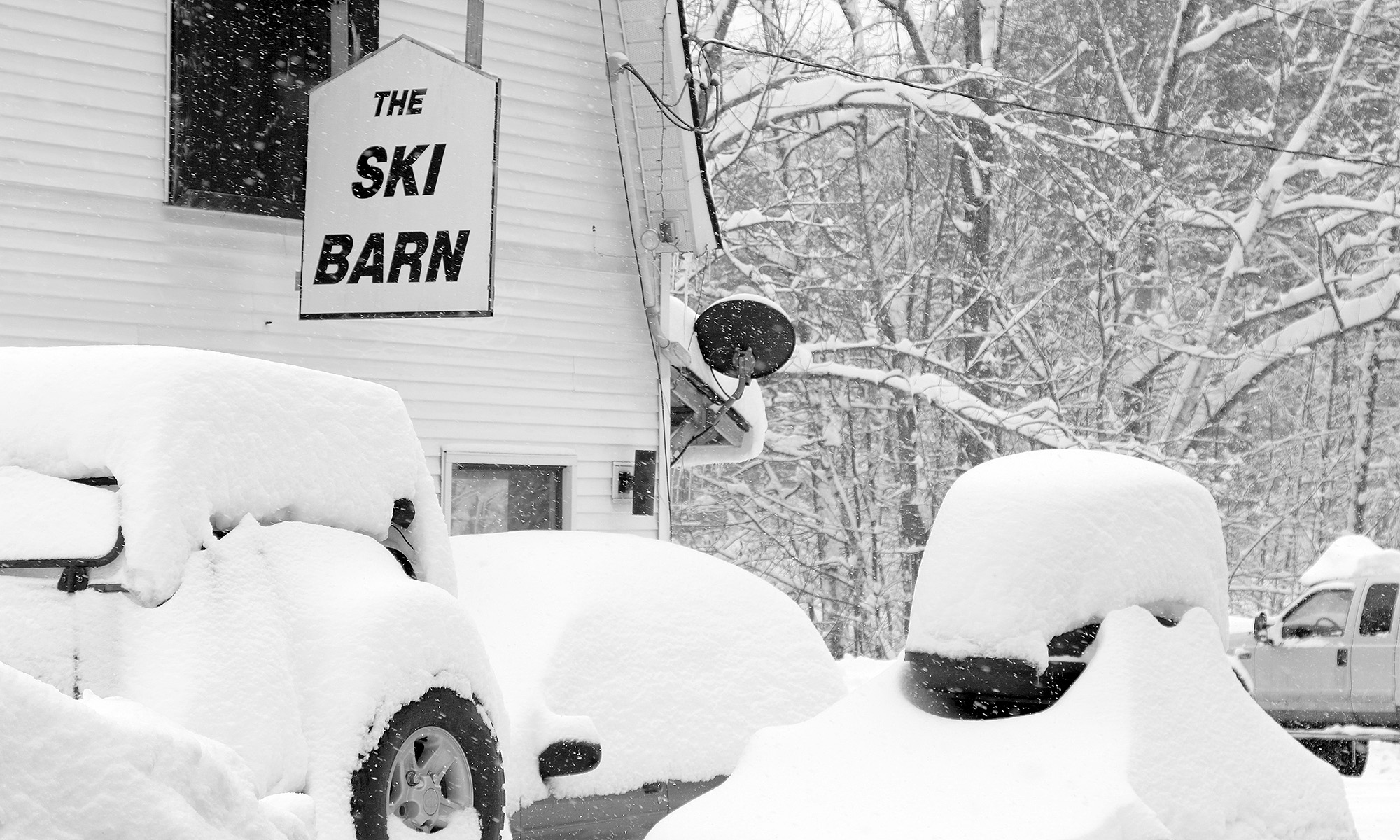


The clipper system that came through the area over the past couple of days was relatively weak, but in general agreement with the forecast, we still picked up close to 2 inches of new snow at our site down in the Winooski Valley. I was up in the Bolton Valley Village yesterday, where it was snowing at a decent clip, and as of their evening snow report, they indicated that they’d already picked up 3 inches of new snow. I’m not sure how much more they picked up overnight, but at the pace the snow was falling, it seemed like it was worth taking a tour to check things out.
Valley temperatures were marginal for parts of the event, and as I headed up the Bolton Valley Access Road this morning, there weren’t any substantial signs of new snow until I’d reached roughly 1,000’ of elevation. After a couple of tours from Timberline’s lower base elevation over the past several days, it was clear that the better play with this system would be to start my tour up at the Village. The cloud ceiling as I ascended was around 1,800’, and above that point, everything was socked in with dense clouds and lightly falling snow.
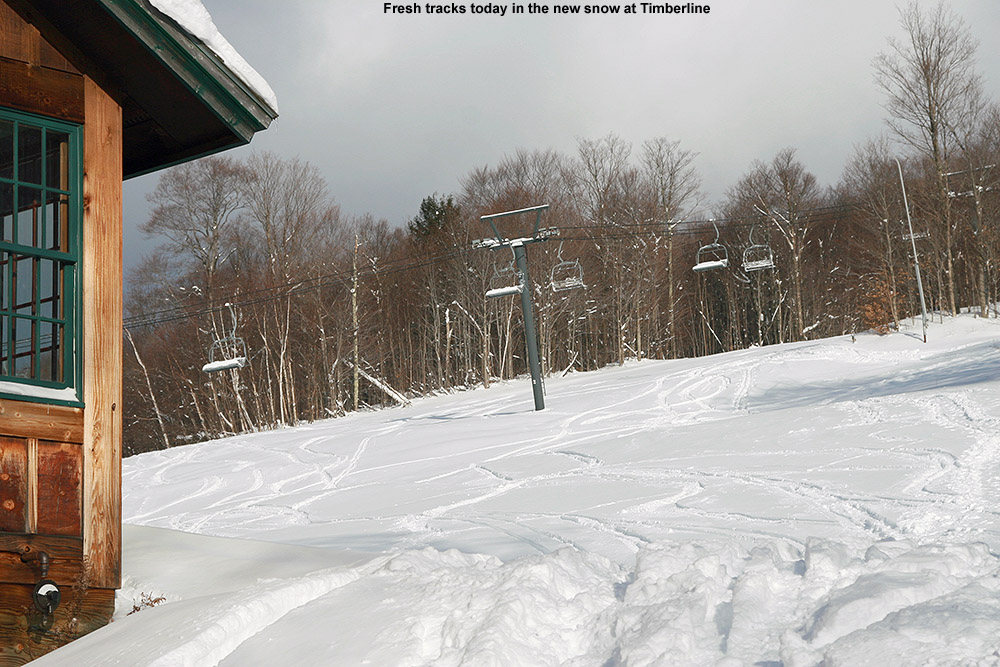

At ~2,000’ in the Bolton Valley Village, I found 1-2” of new snow accumulation. From my visit to the mountain on Saturday, I knew that temperatures above freezing had affected the snowpack, at least up to the 2,500’ elevation. So, the new snow from our small system certainly wasn’t going to resurface that snowpack, but I was curious about what was going on in the higher elevations.
The accumulations of new snow did increase the higher I went, but more importantly, at some point between 2,500’ and 3,000’ you reach a level where it’s clear that the temperatures haven’t gone above freezing in quite some time. The snow quality there is excellent aside from areas affected by the wind or some sort of skier of resort vehicular traffic.
I did my best to estimate the accumulations from this latest system at various elevations, but once you get up to the point where there’s no consolidated melt layer to mark the surface of the old snowpack, it becomes difficult. In any event, here are the estimates for accumulations I found from this event at various elevations in the Bolton Valley area:
340’: 0”
500’: 0”
1,000’: 0-1”
1,500’: 1”
2,000’: 1-2”
2,500’: 3-4”
3,000’: 5-6”
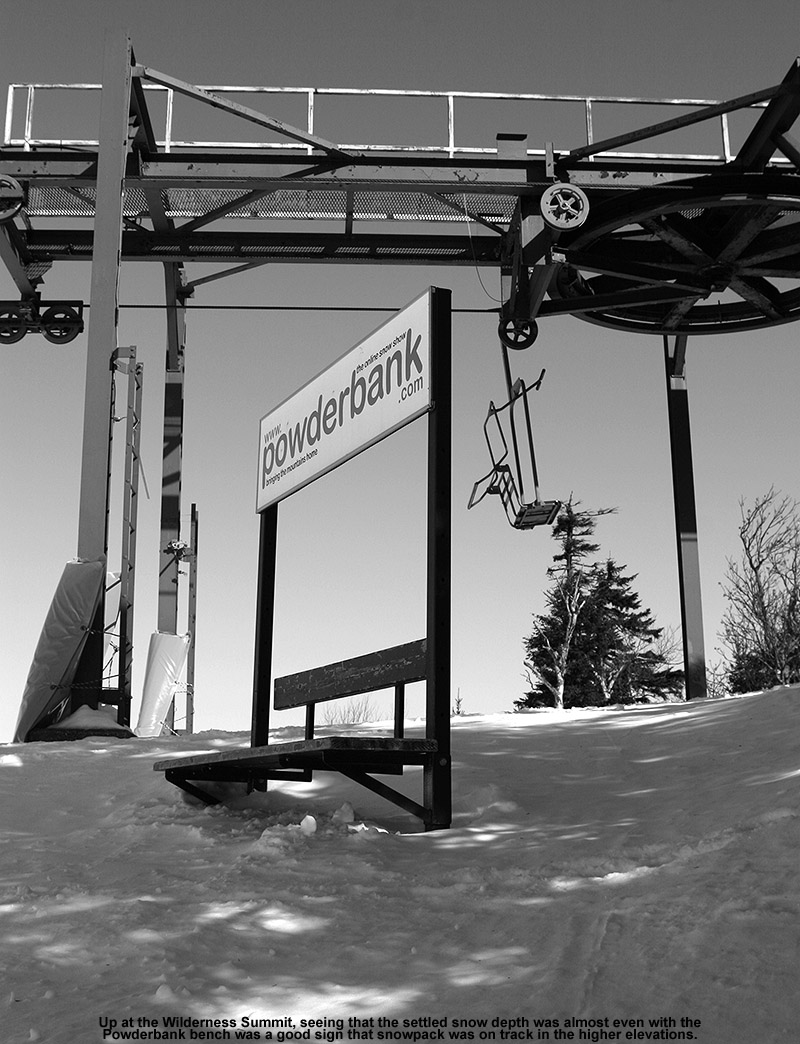
All the snow from these November storms has really been accumulating on the trees, and in places where it hasn’t gone above freezing to melt some of it off, it’s a lot of weight on the evergreens. In fact, I saw several evergreen trees that had recently fallen onto the trail along the Wilderness Uphill Route. There’s also a layer of ice on the trees that accumulated from whenever we had some mixed precipitation earlier in the month, and that is definitely adding to the weight the trees are bearing. While I was up at the Wilderness Summit, I watched a small section of trees on Ricker Mountain just collapse from the weight of the accumulated snow and tear away a large chunk of soil as they tumbled down the slope. In any case, many of the evergreens in the higher elevations are absolutely caked with midwinter levels of snow.