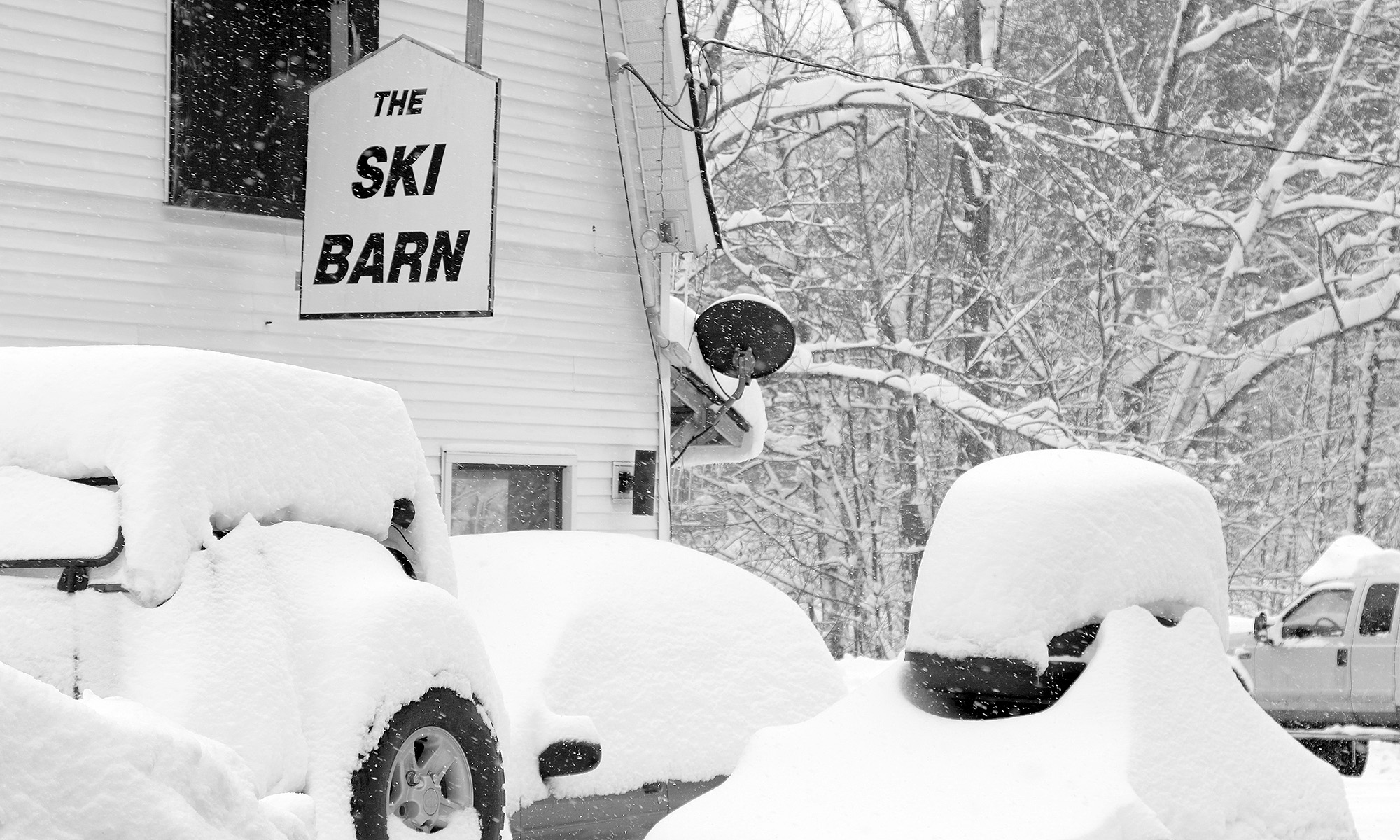
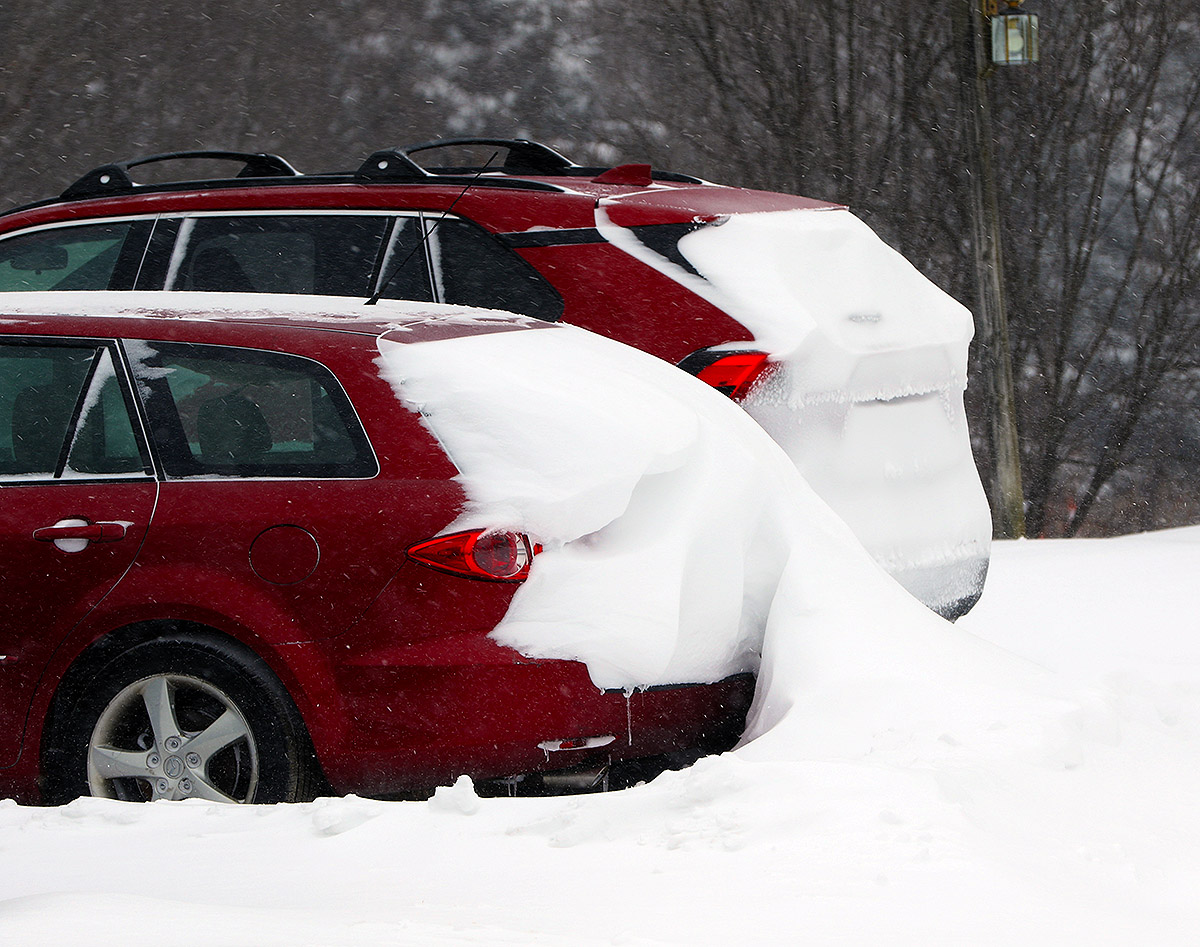
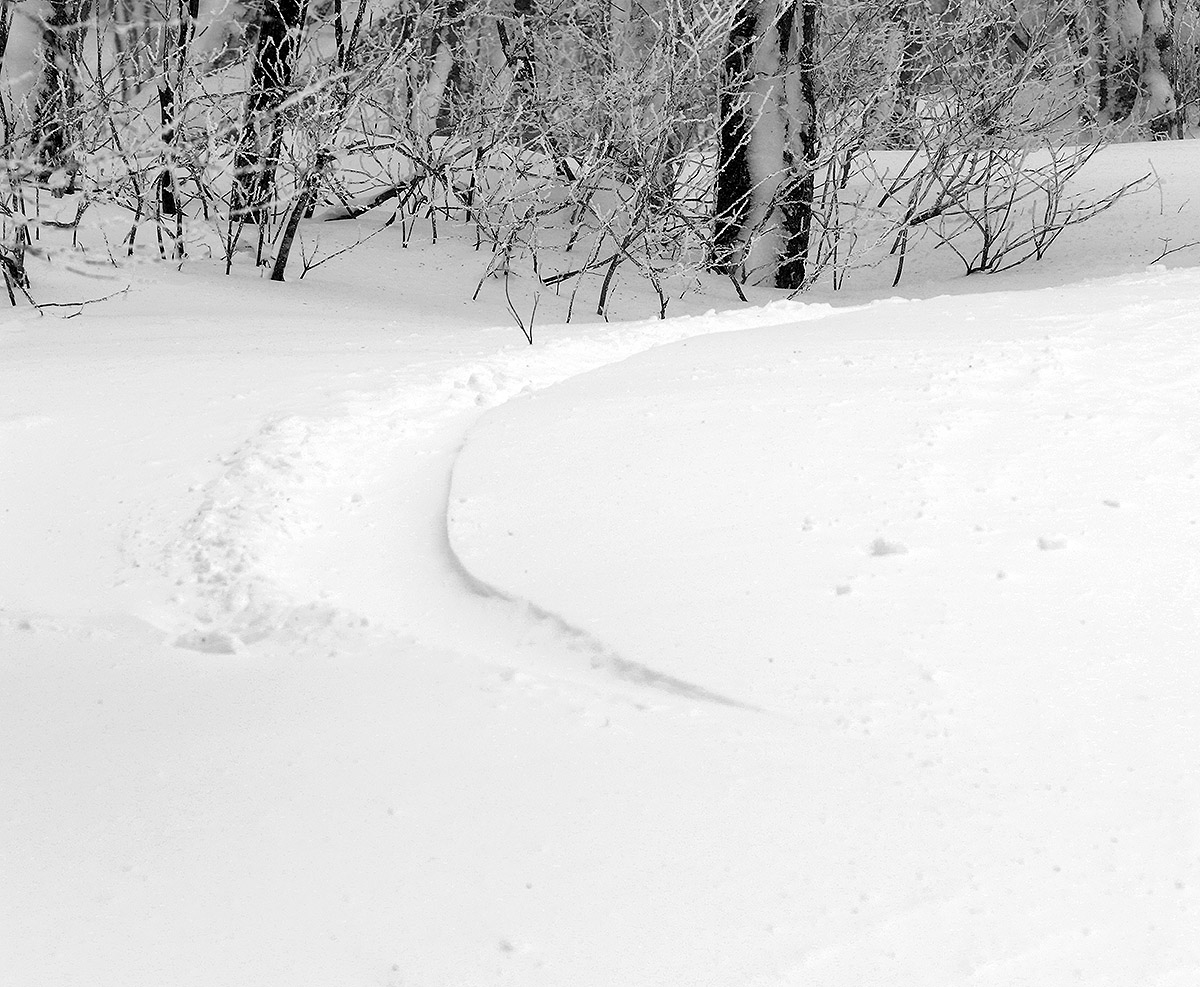
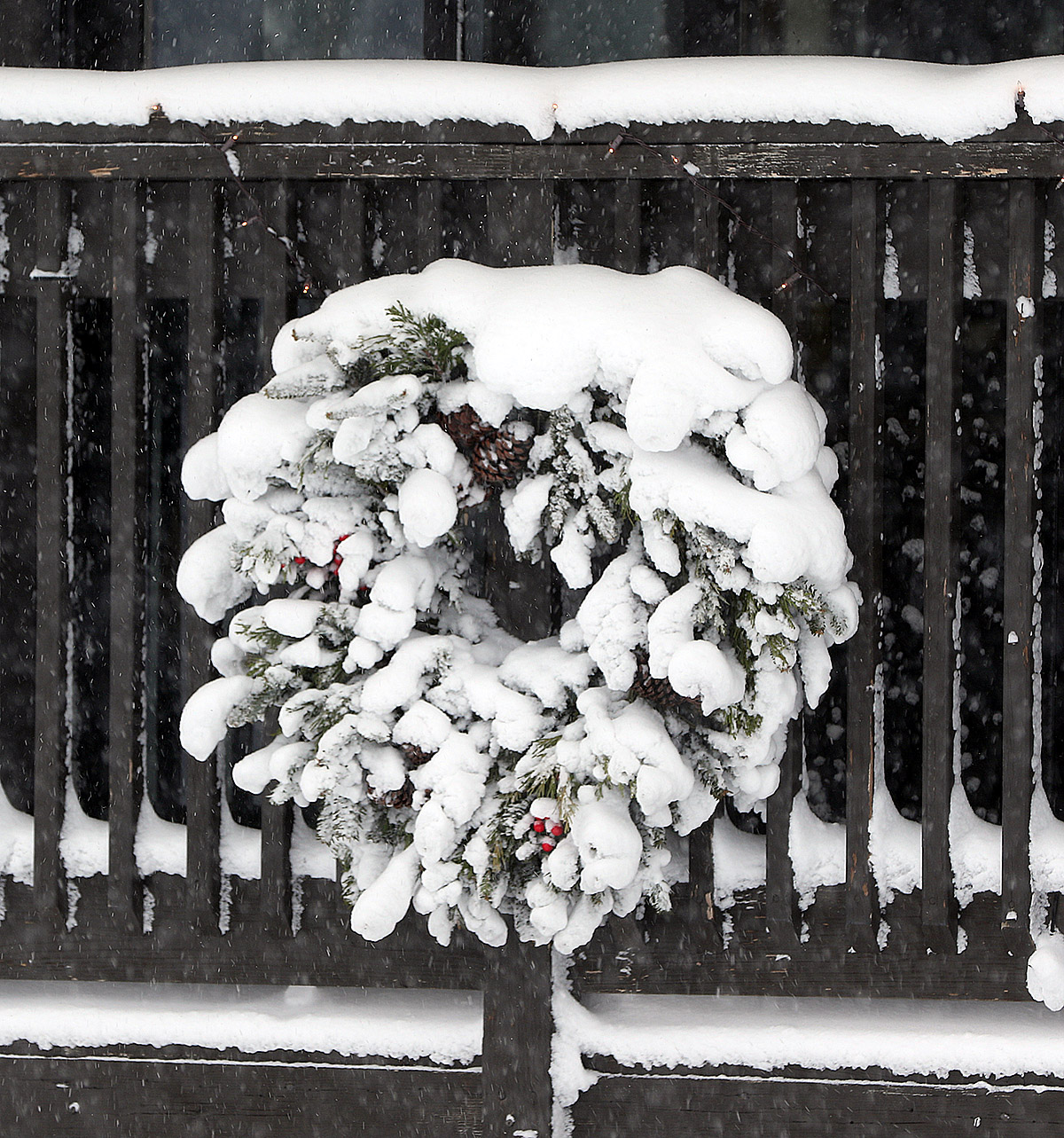
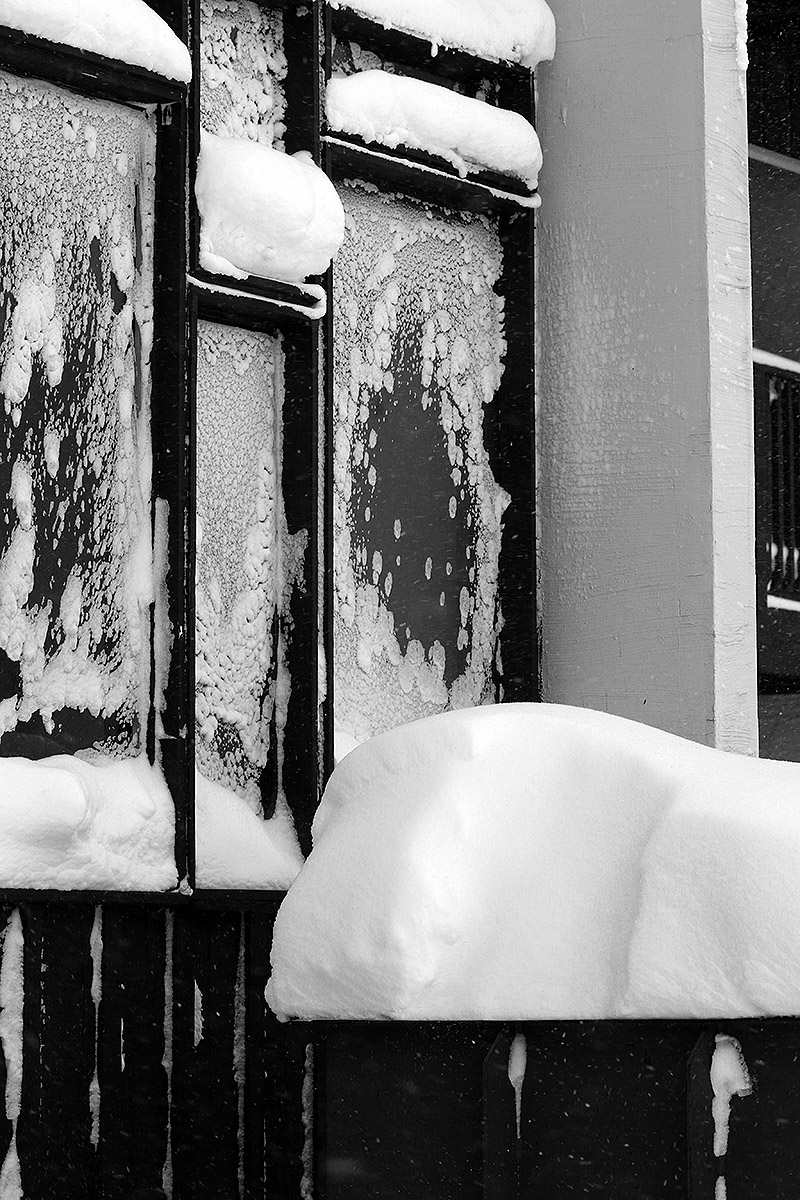
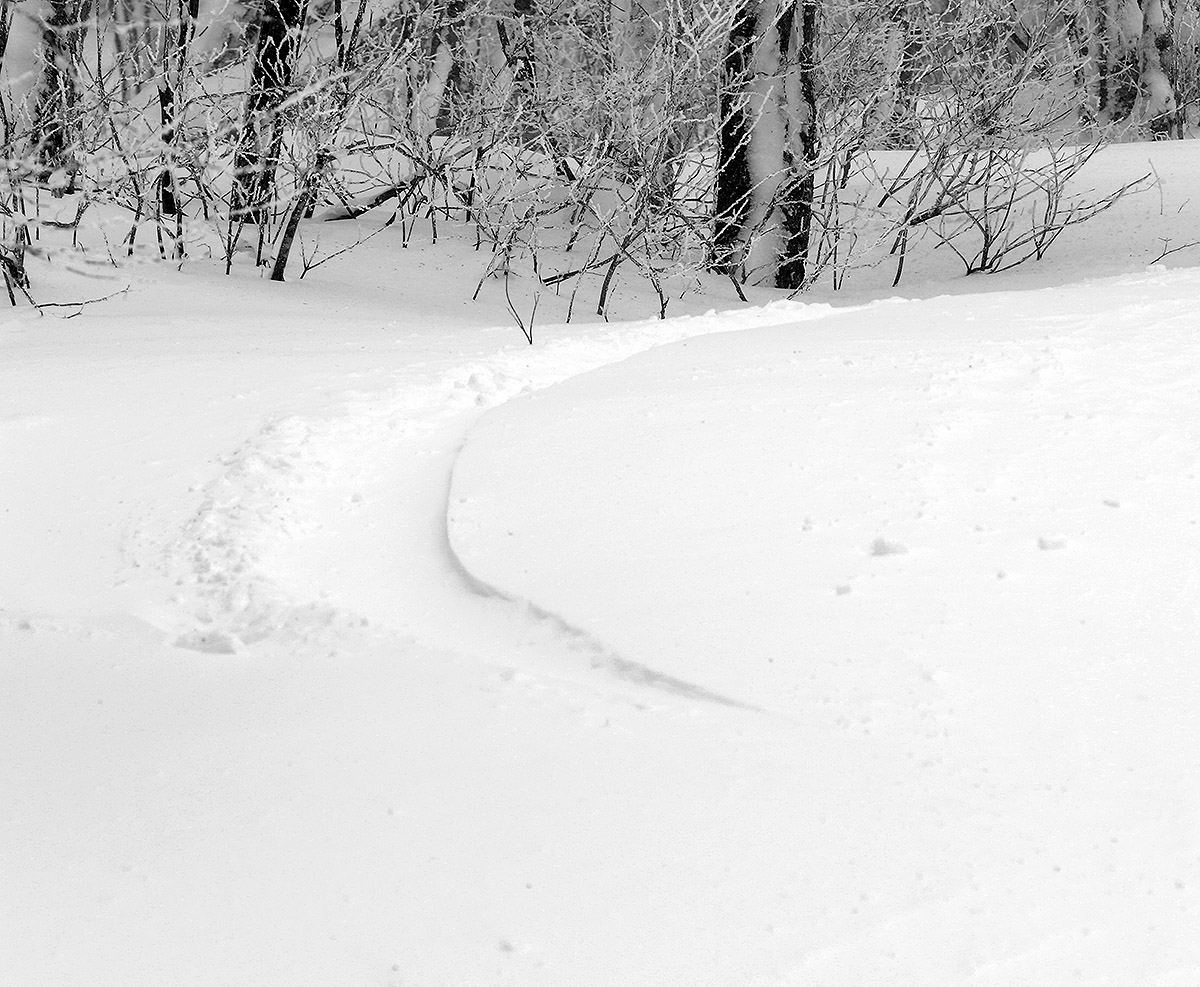
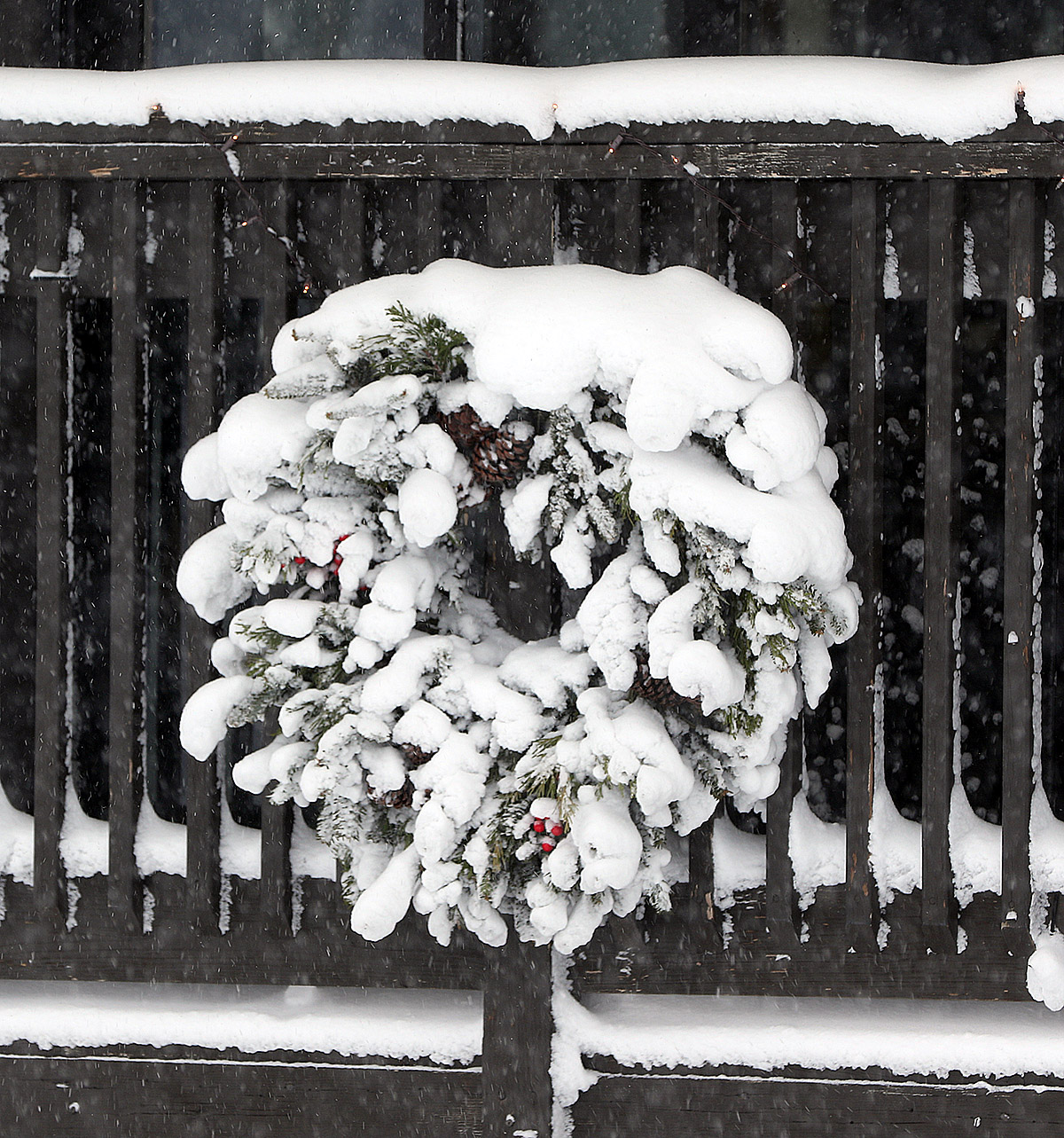
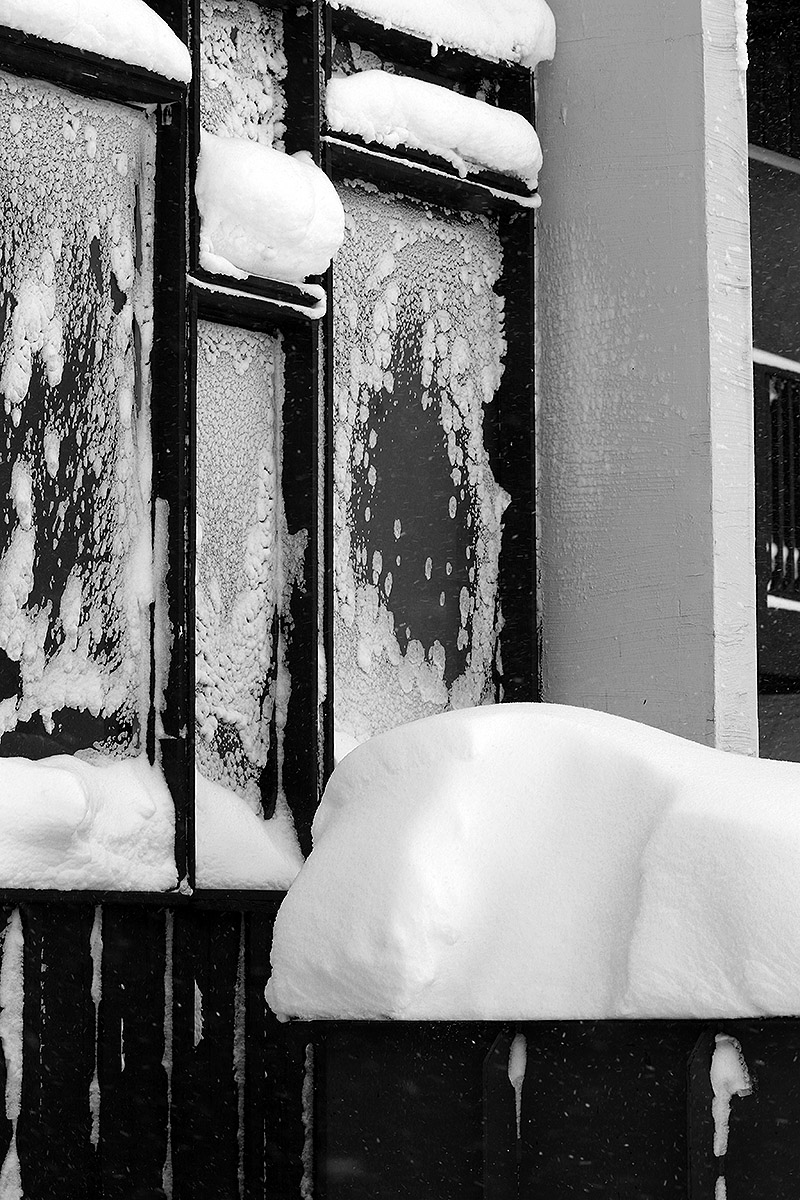
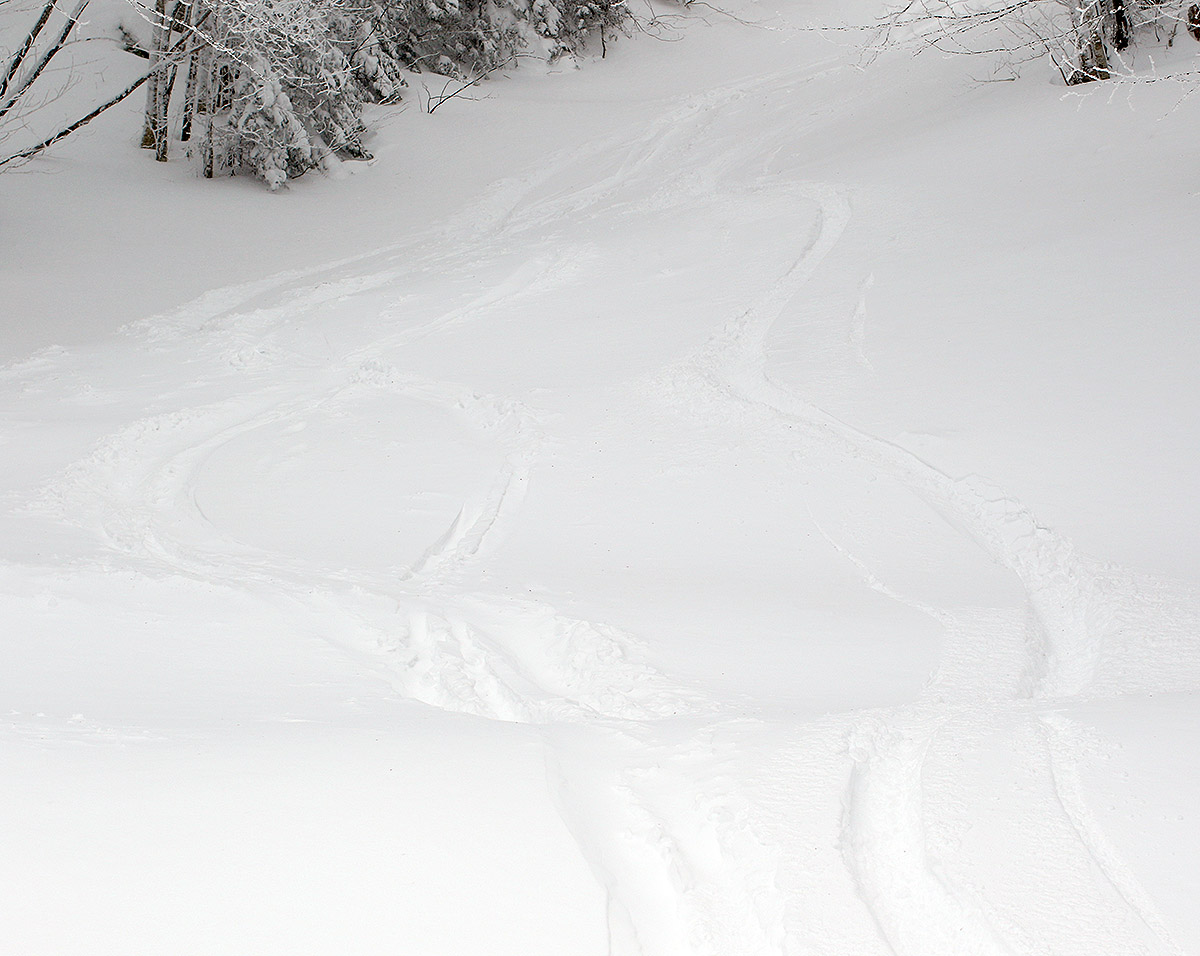
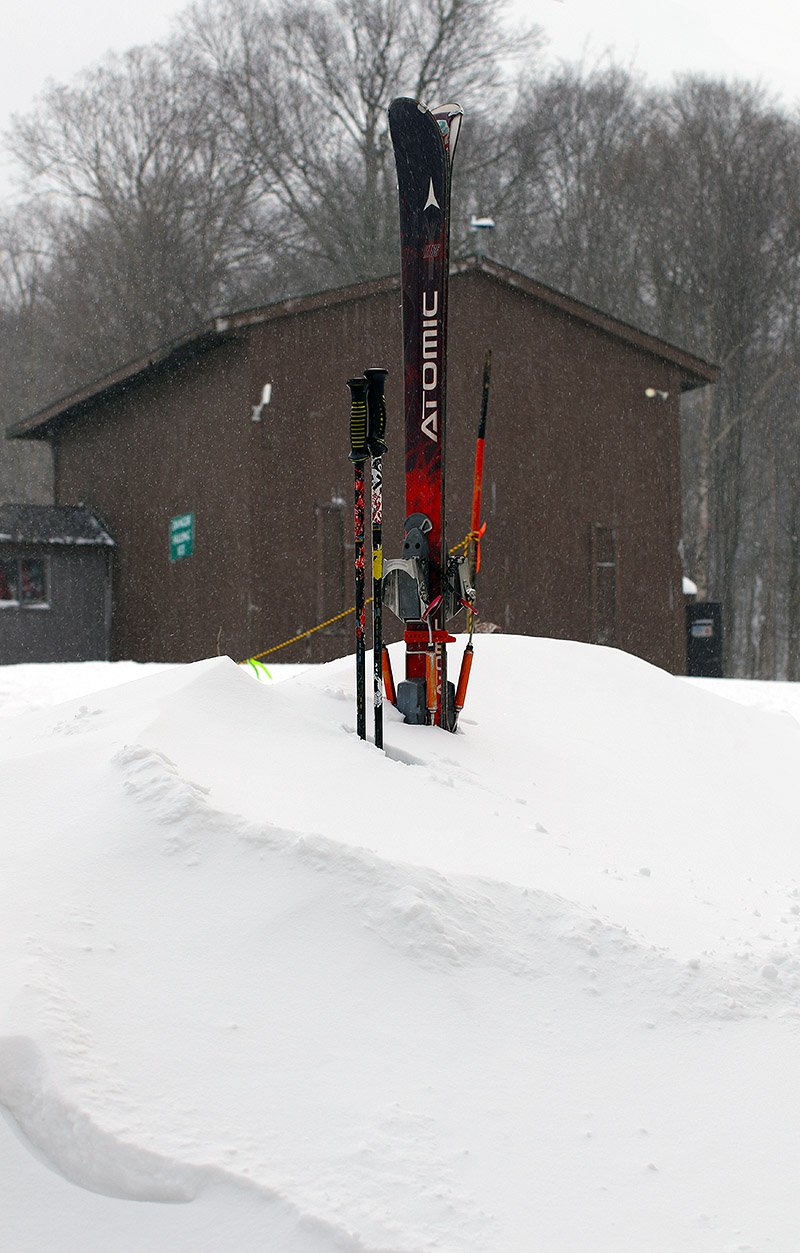
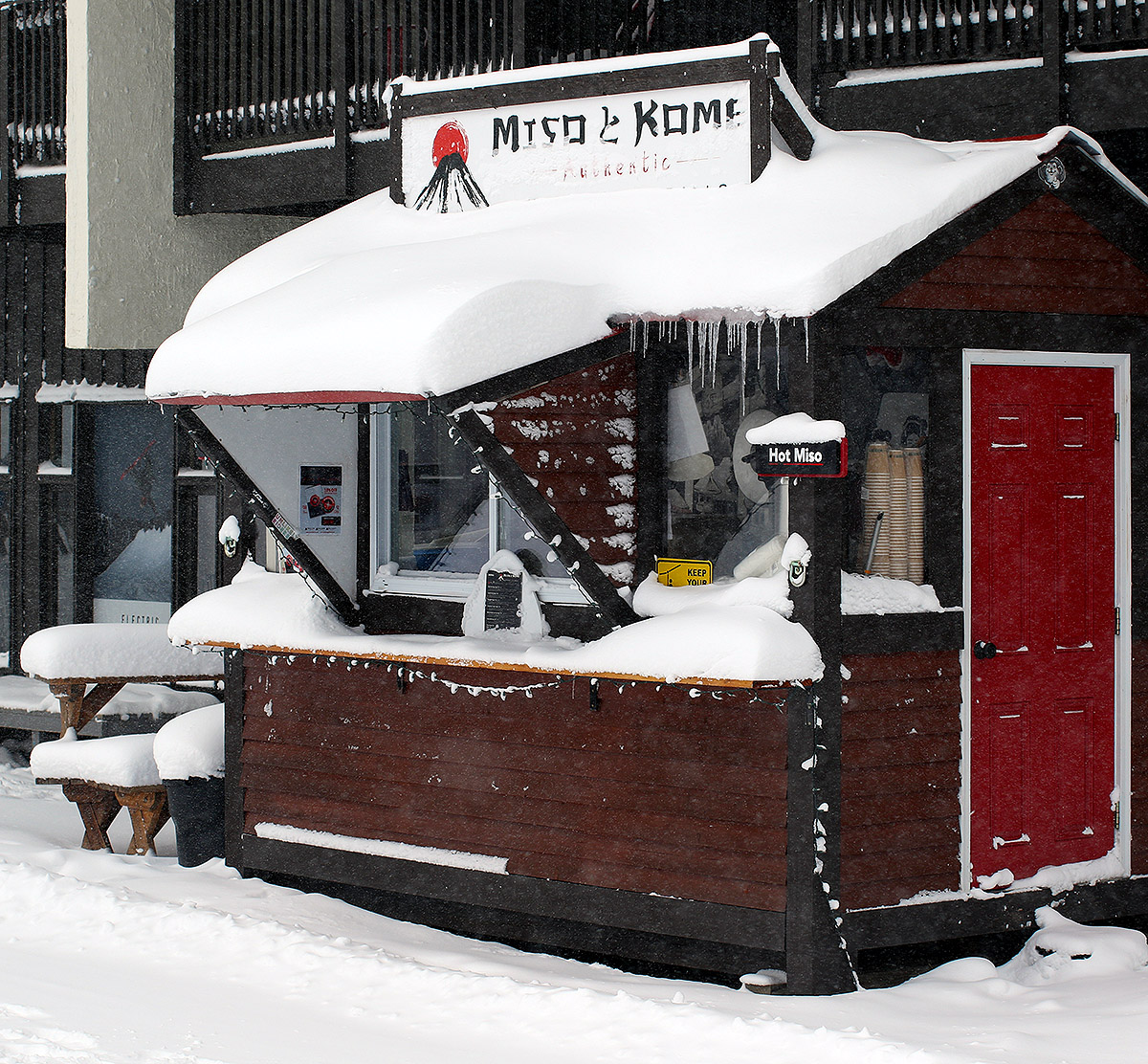
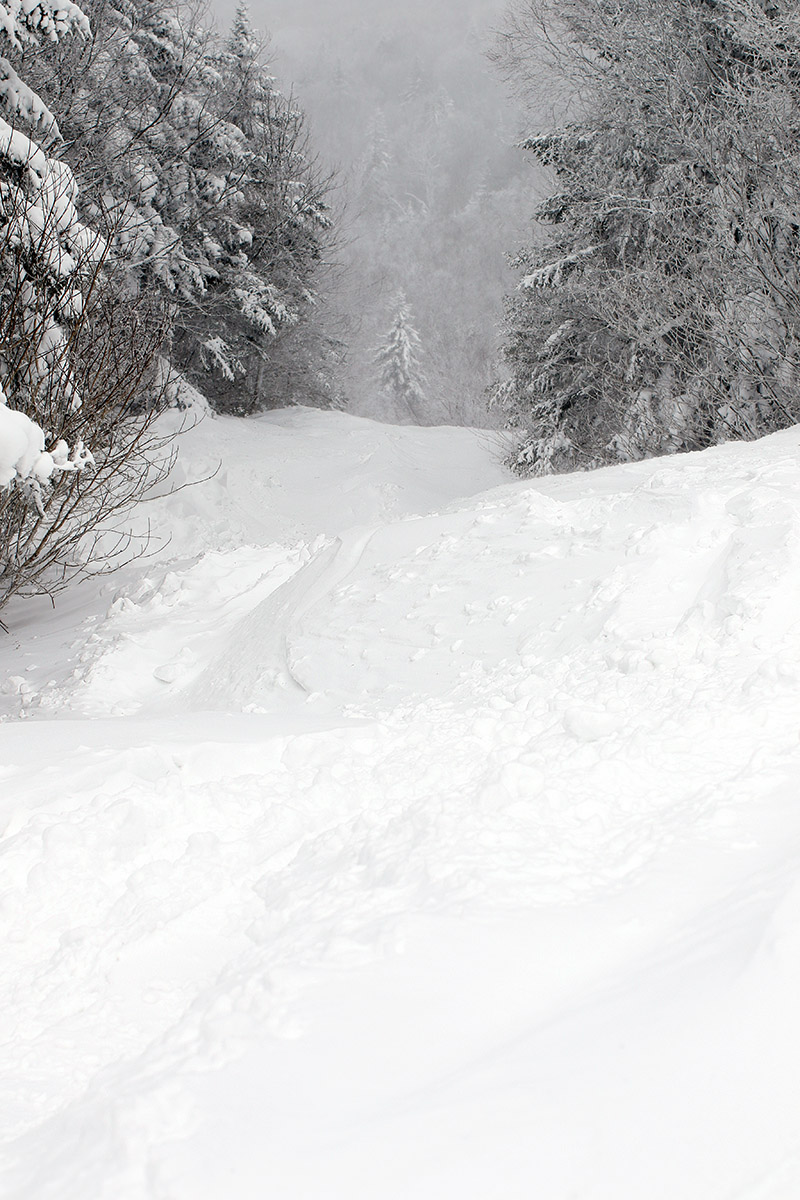
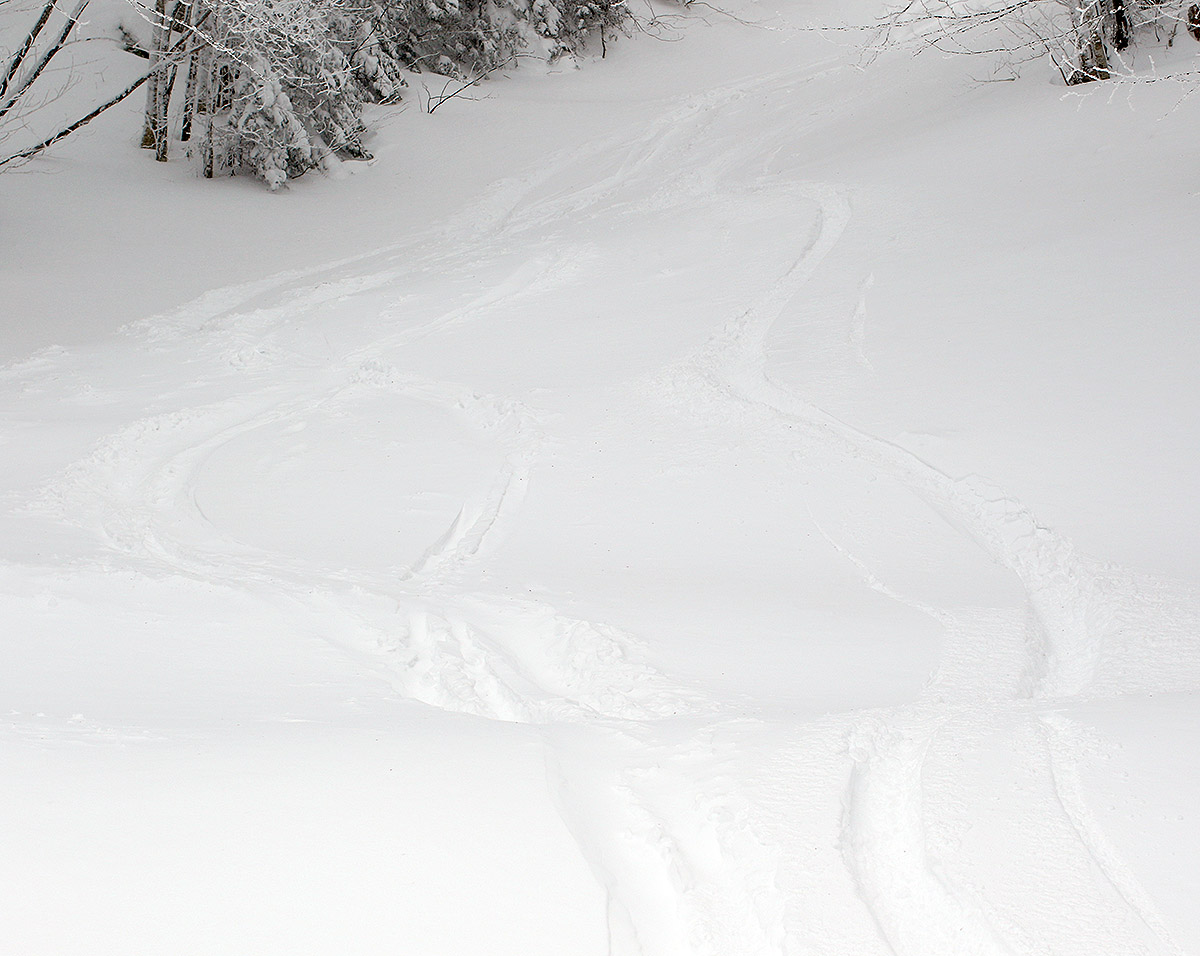
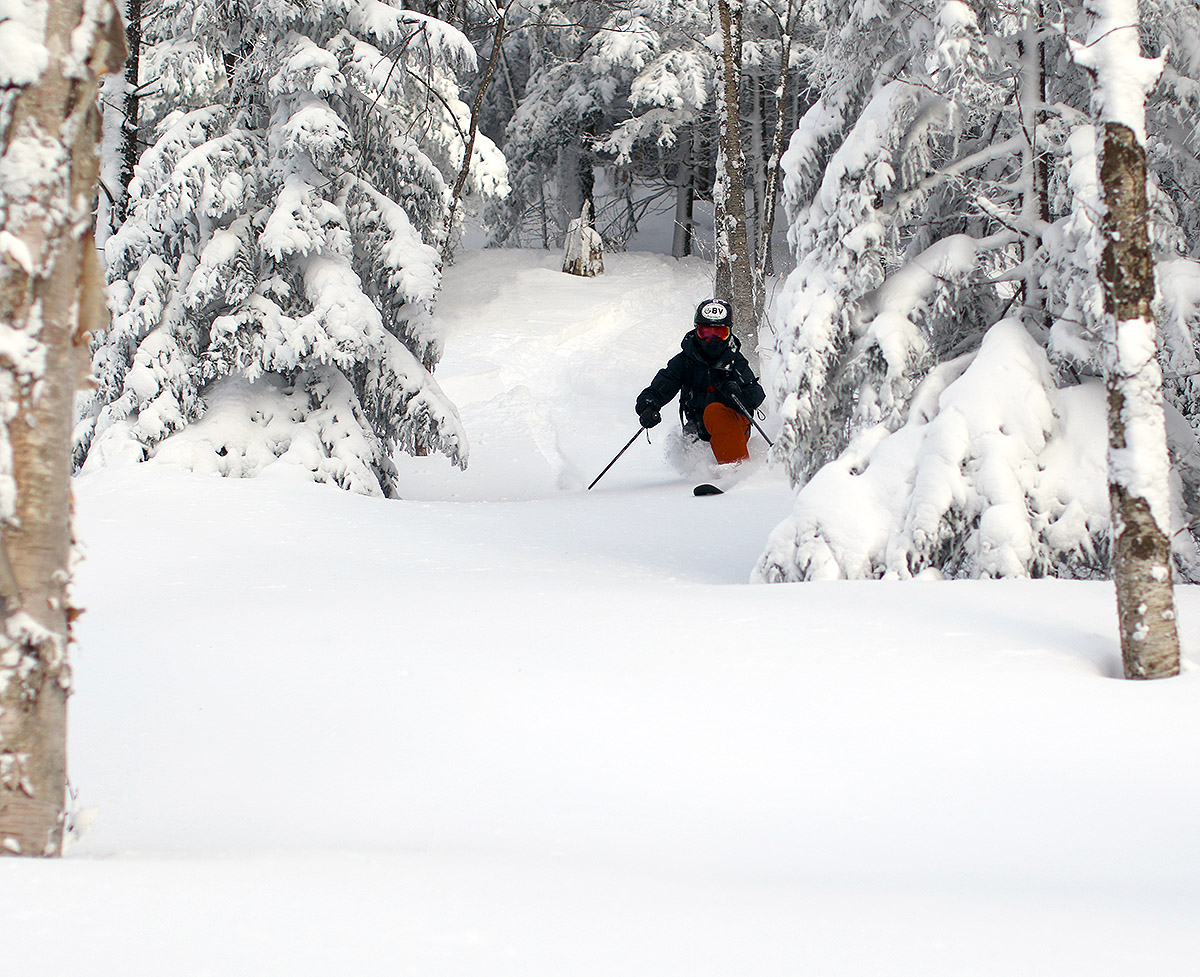
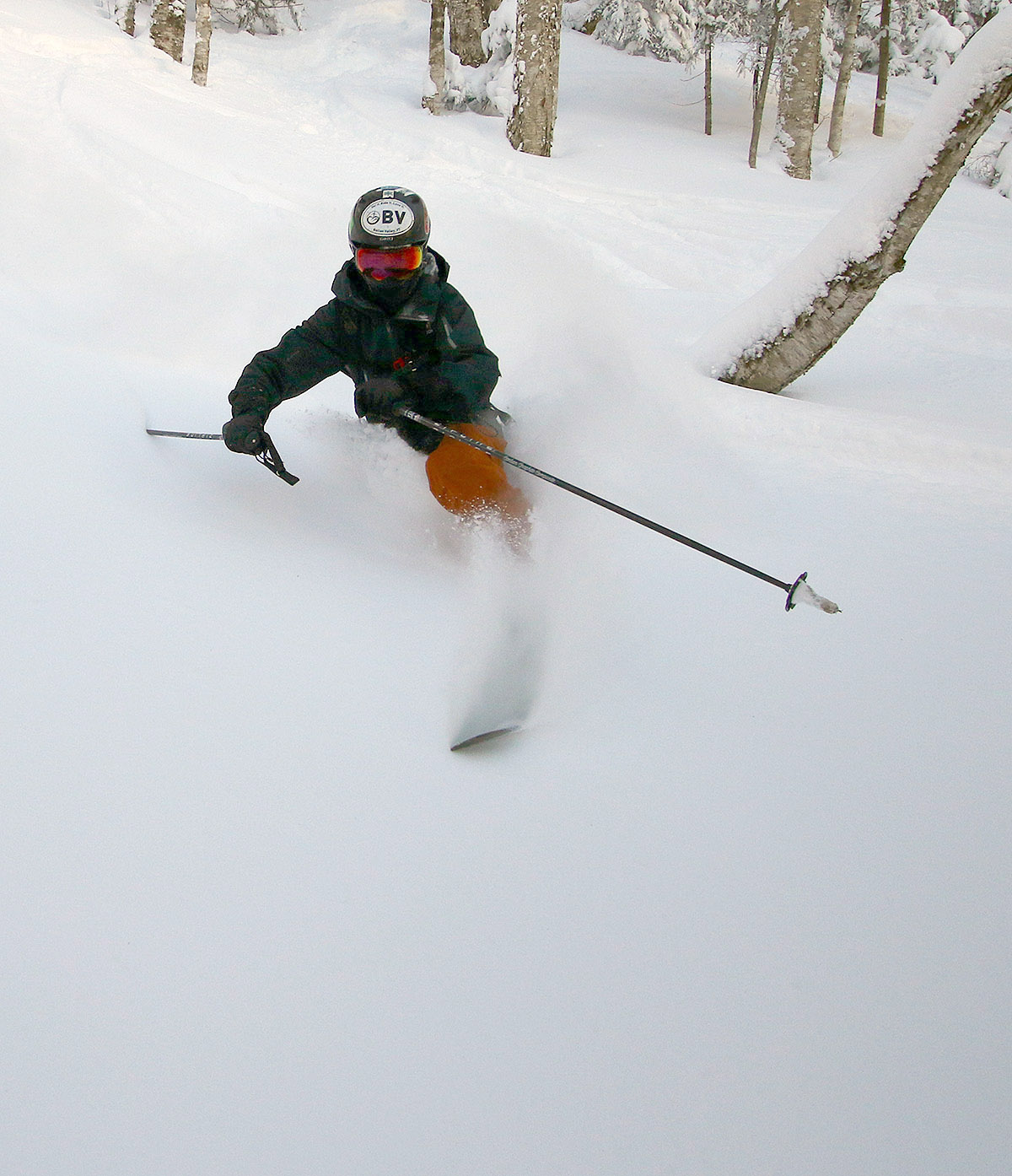
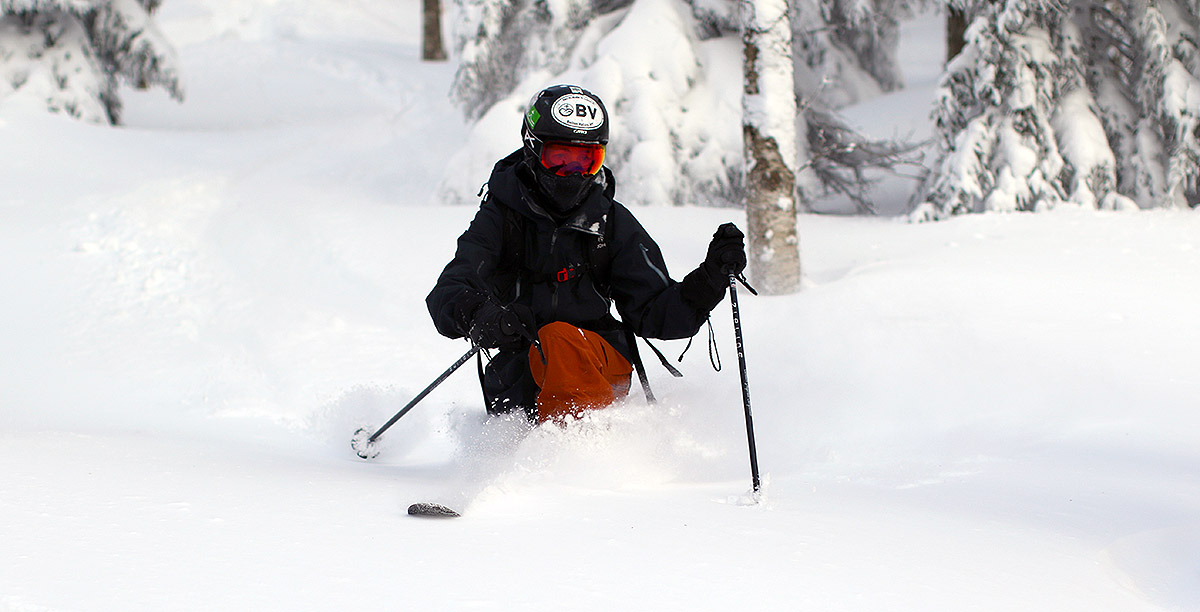
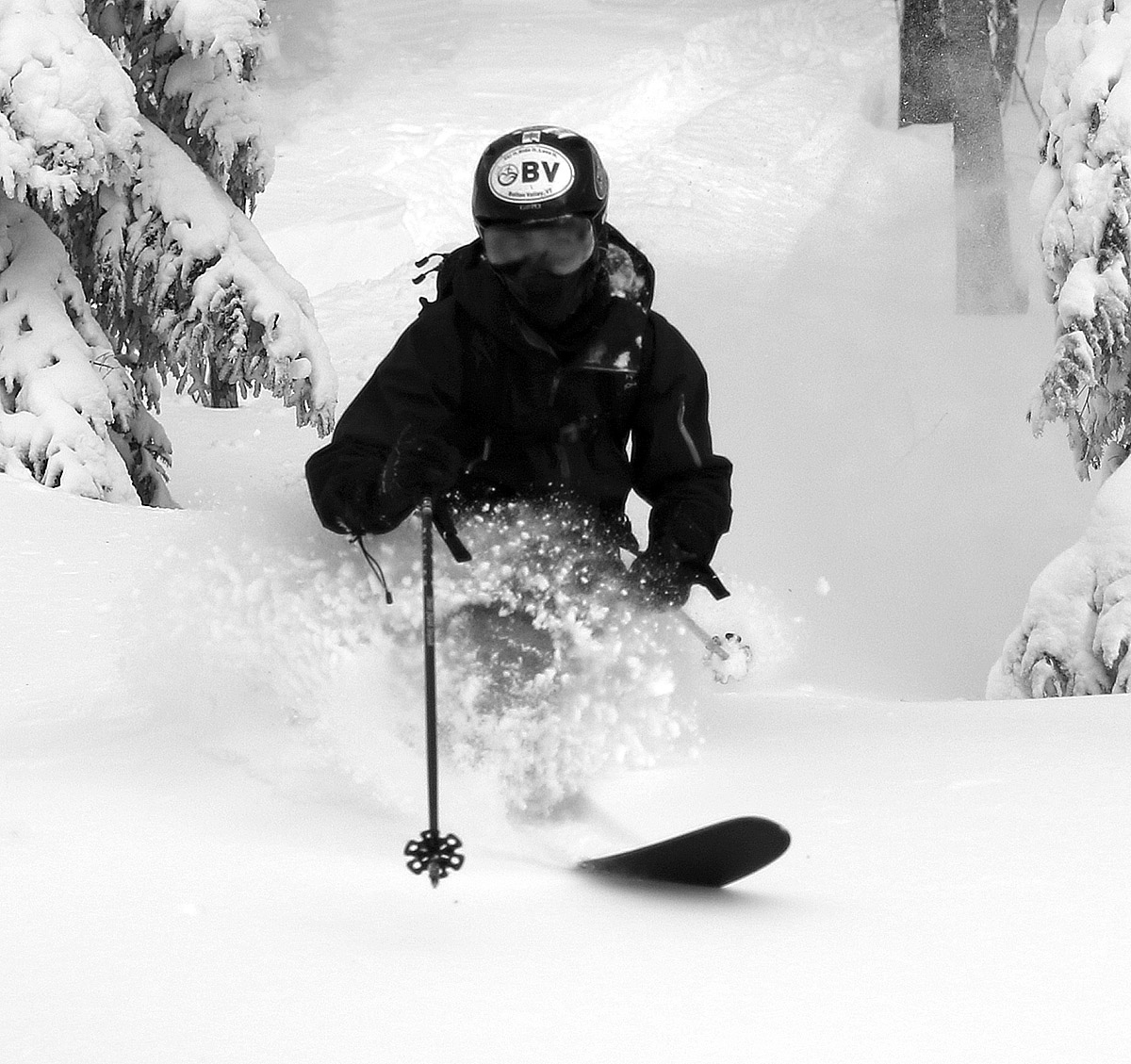
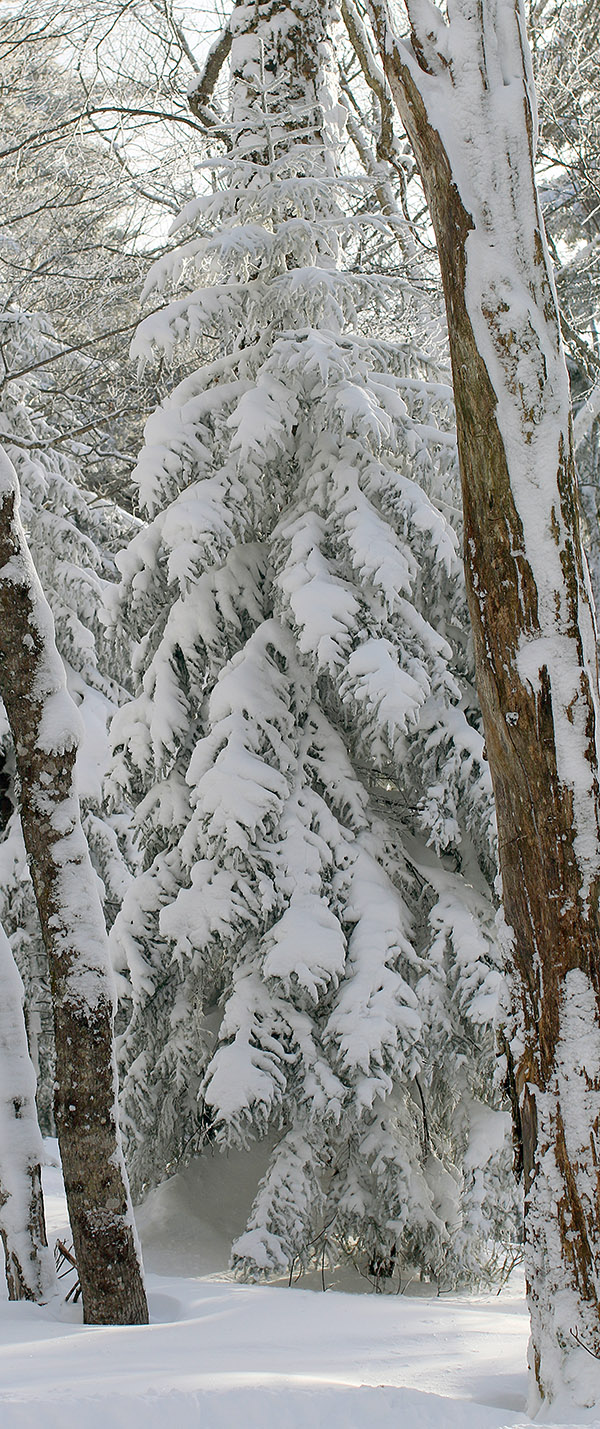
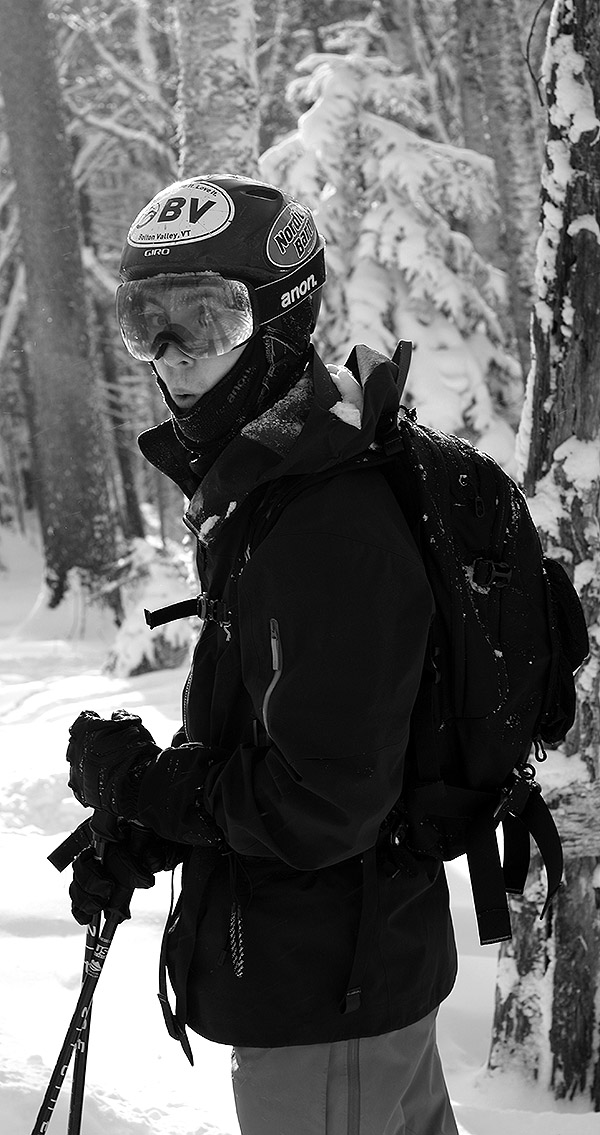
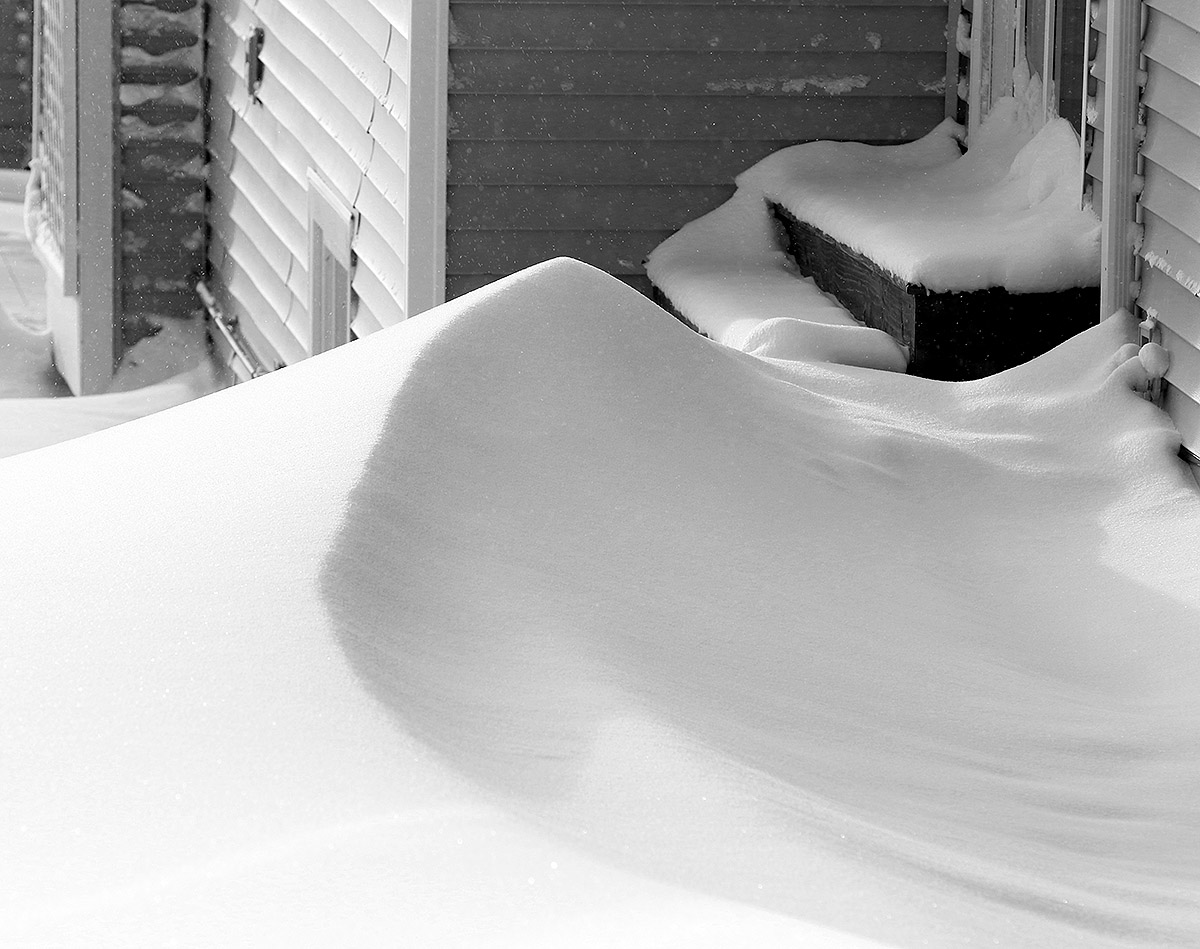
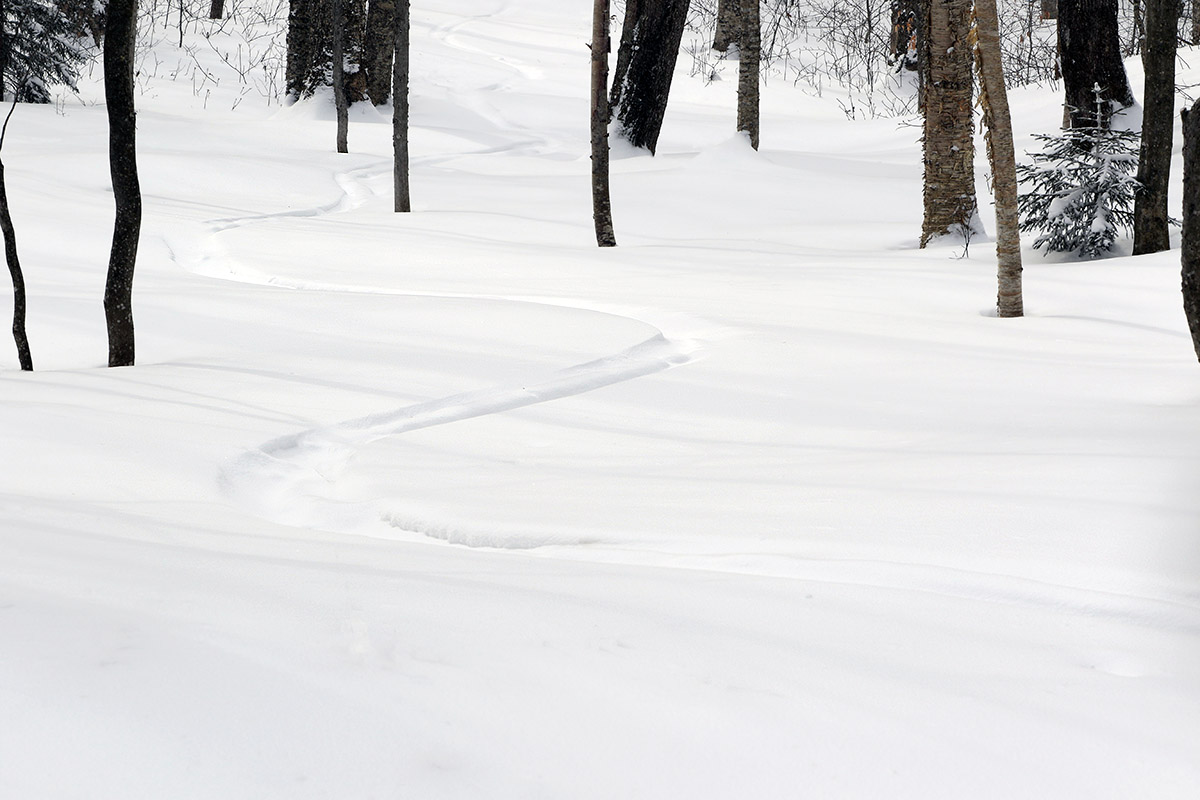
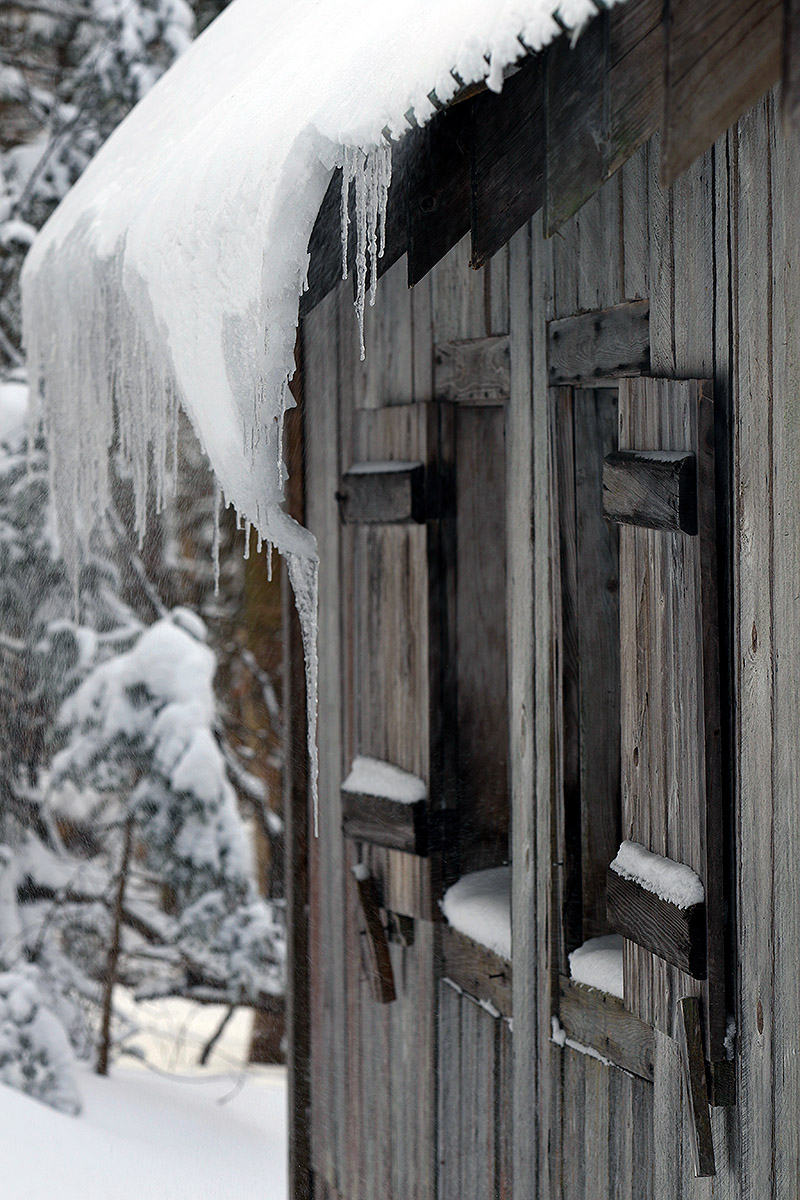
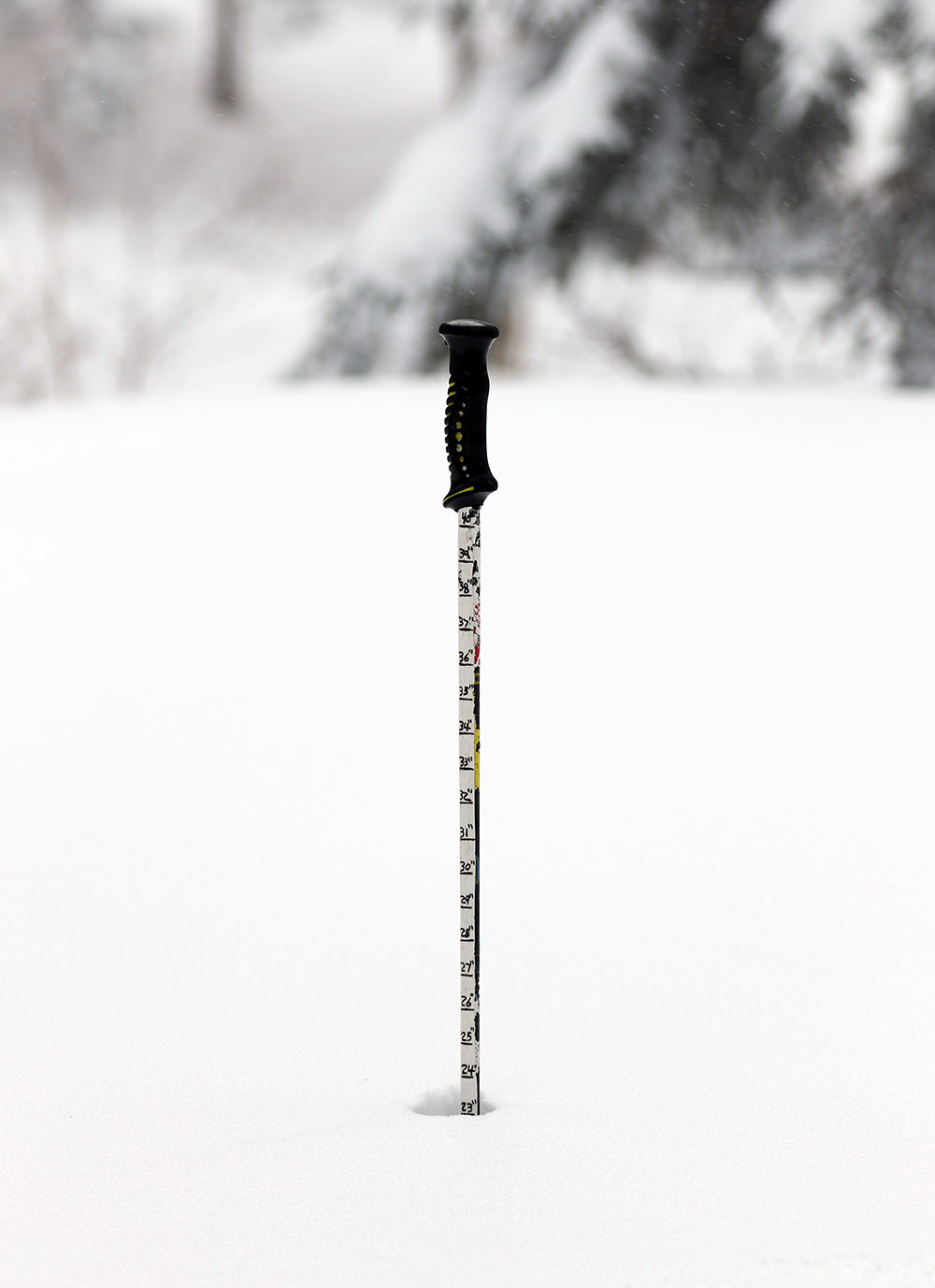
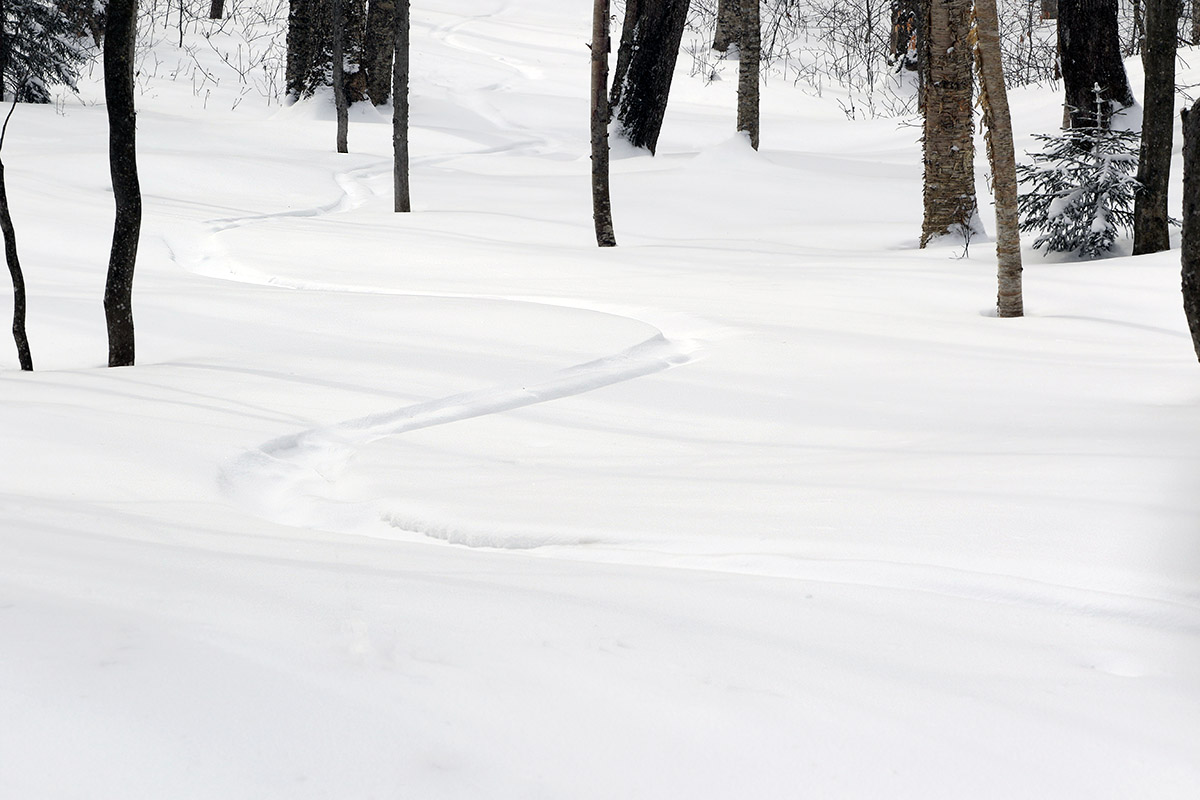
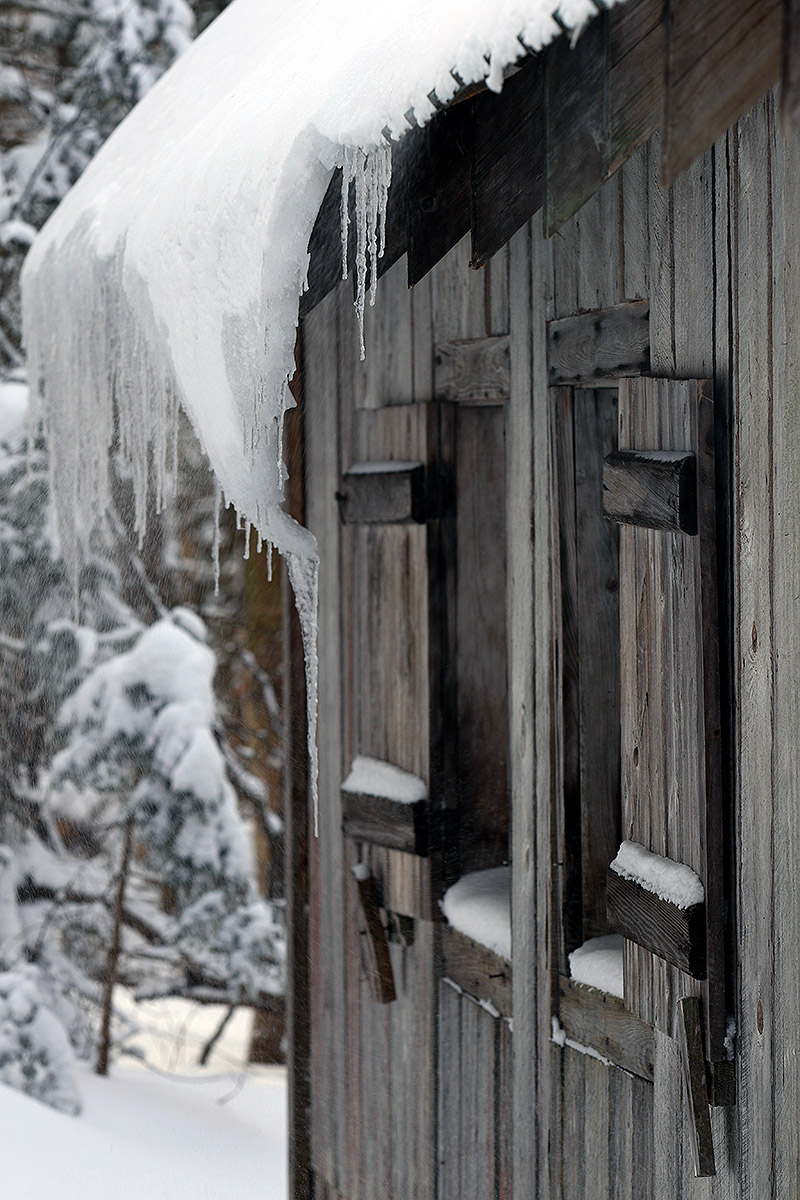
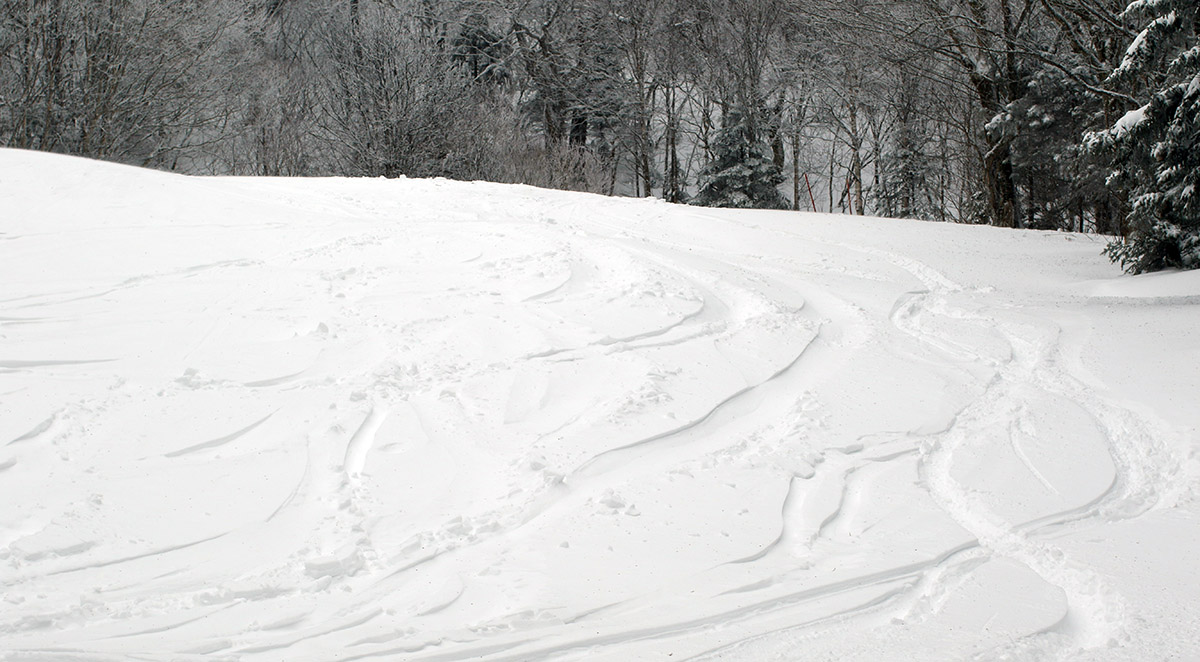
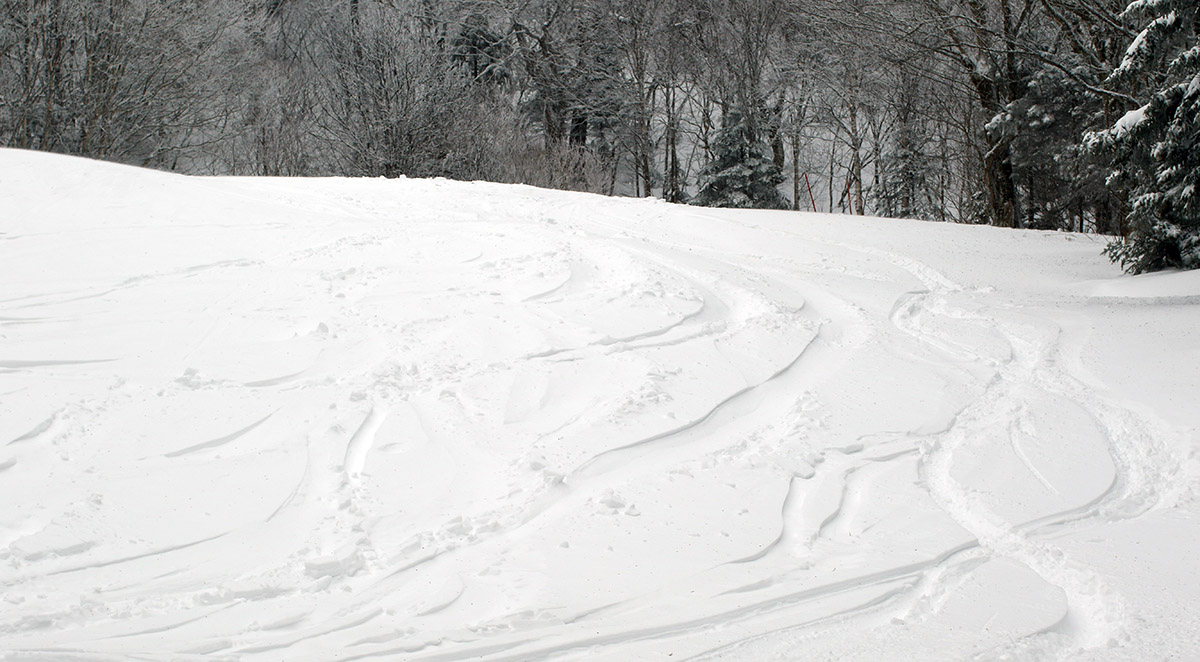
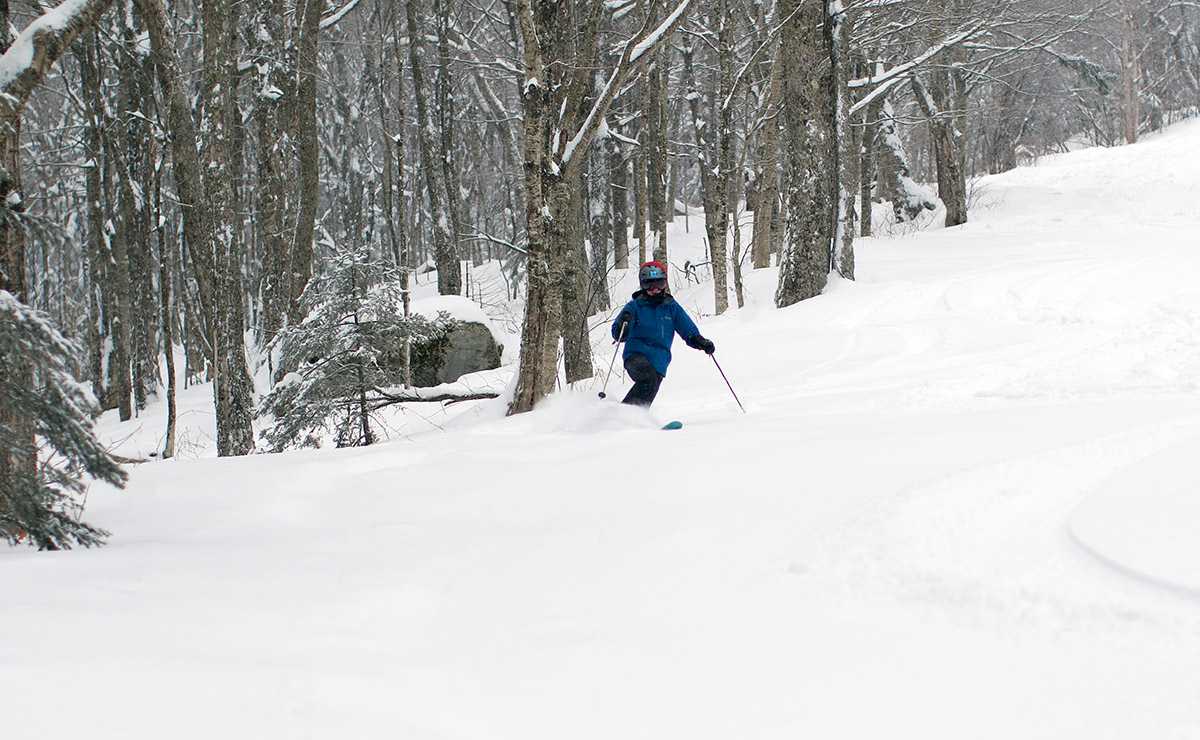
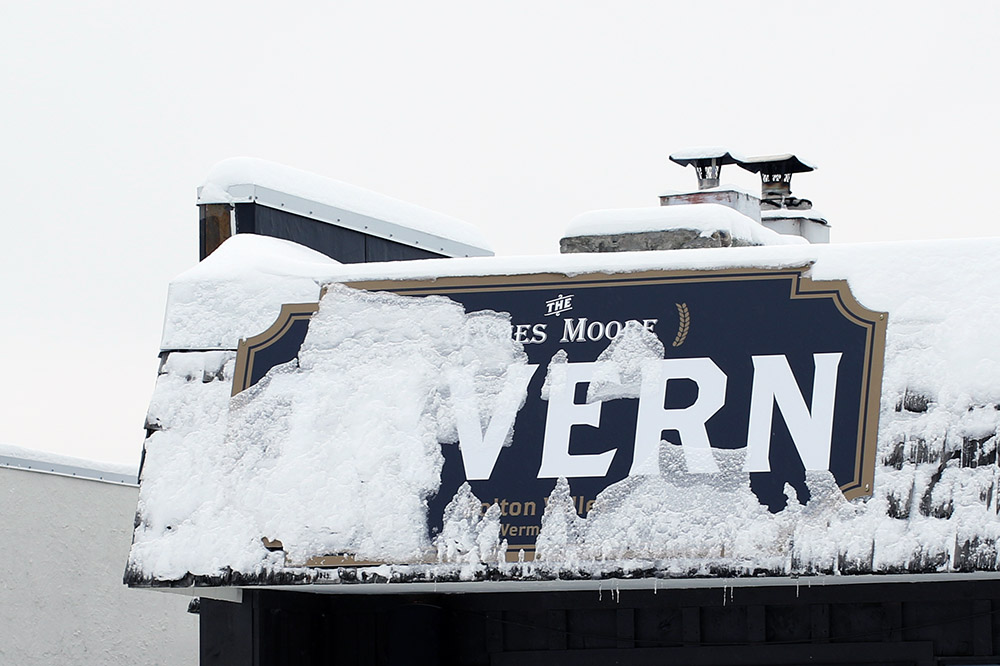
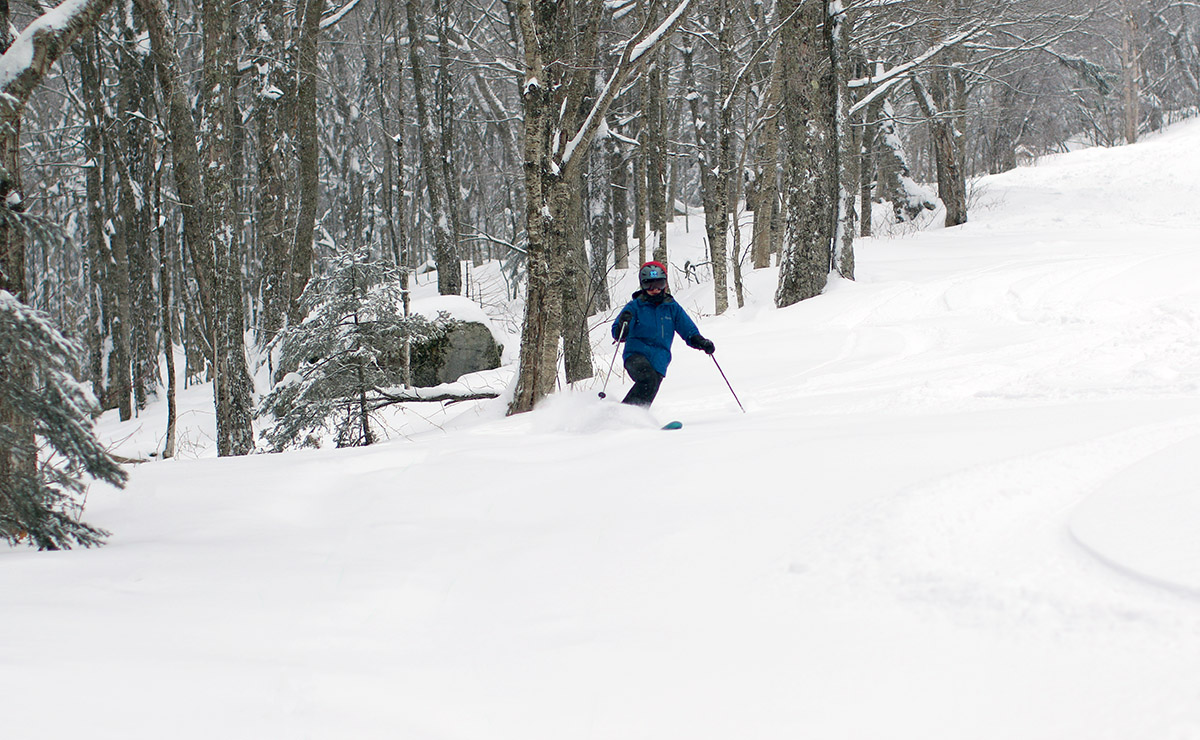
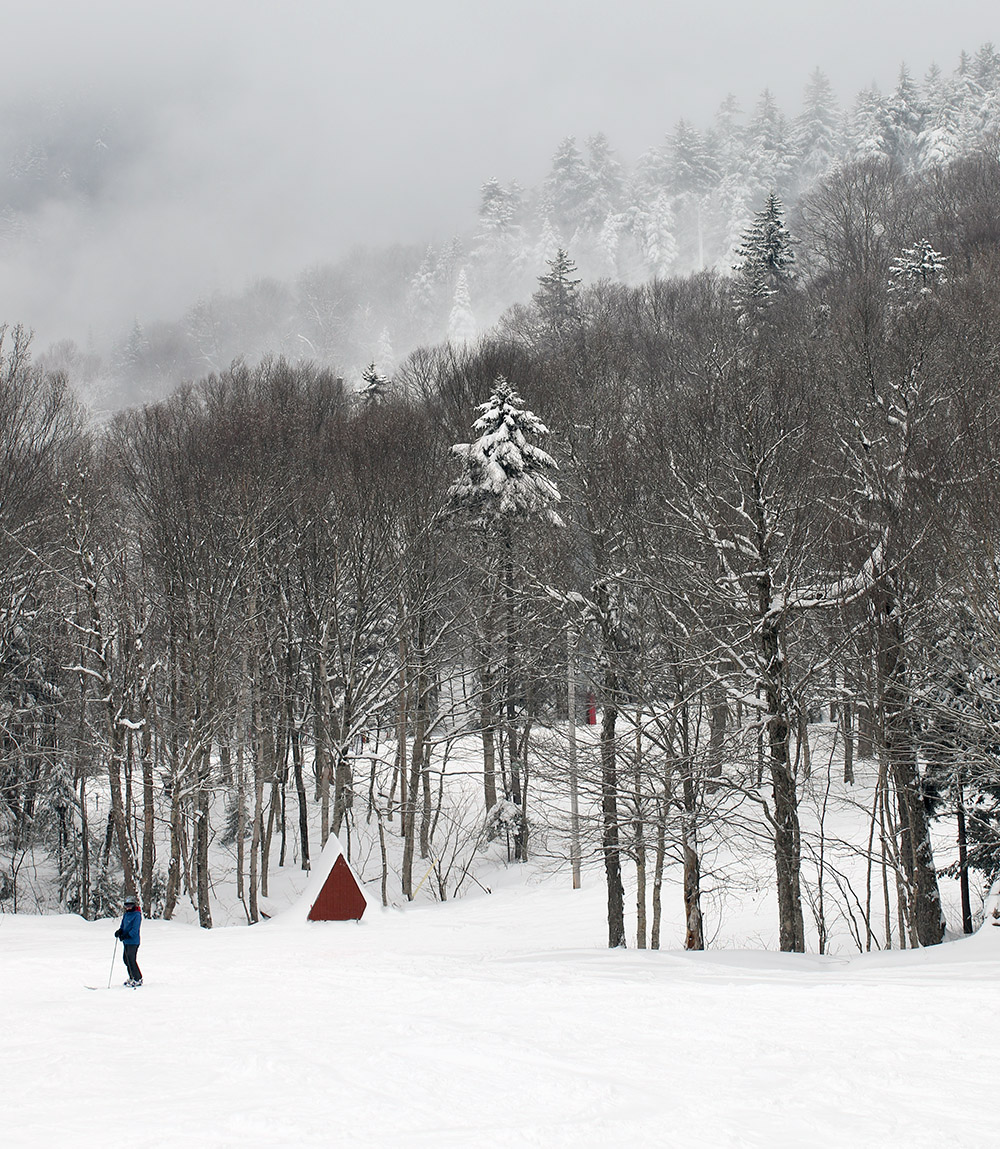
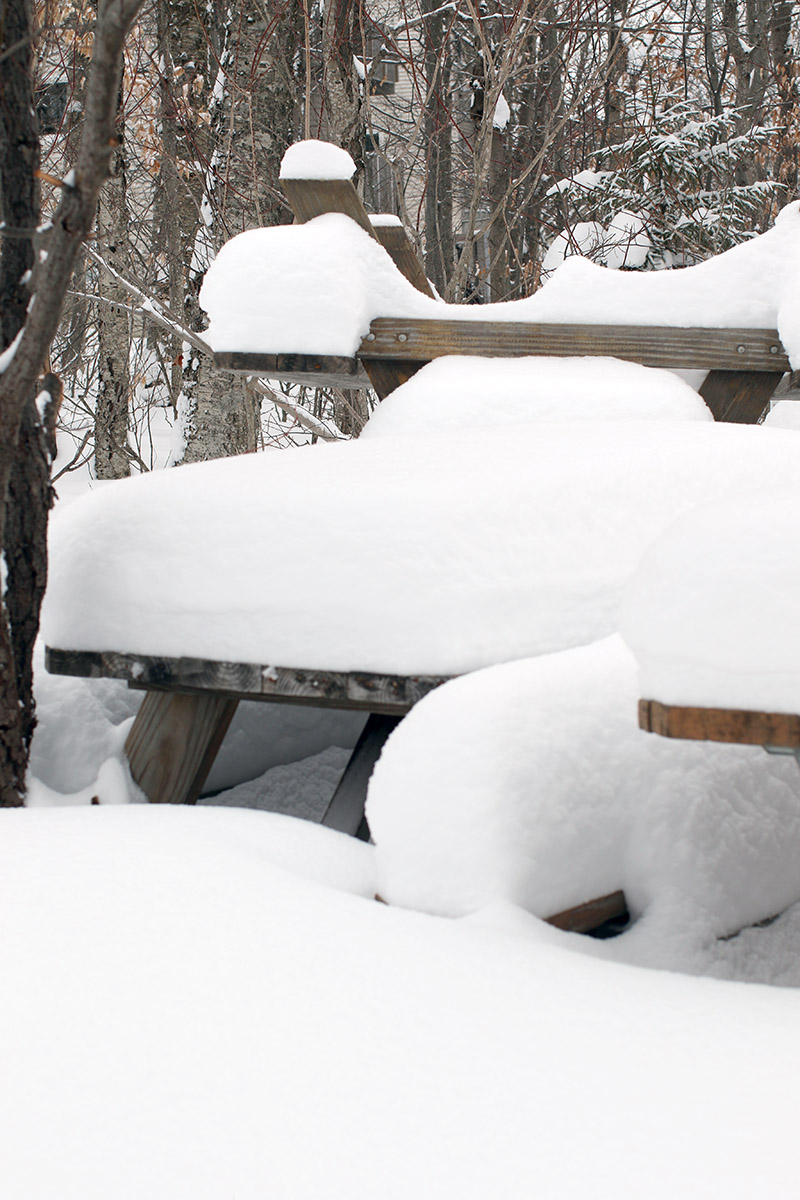
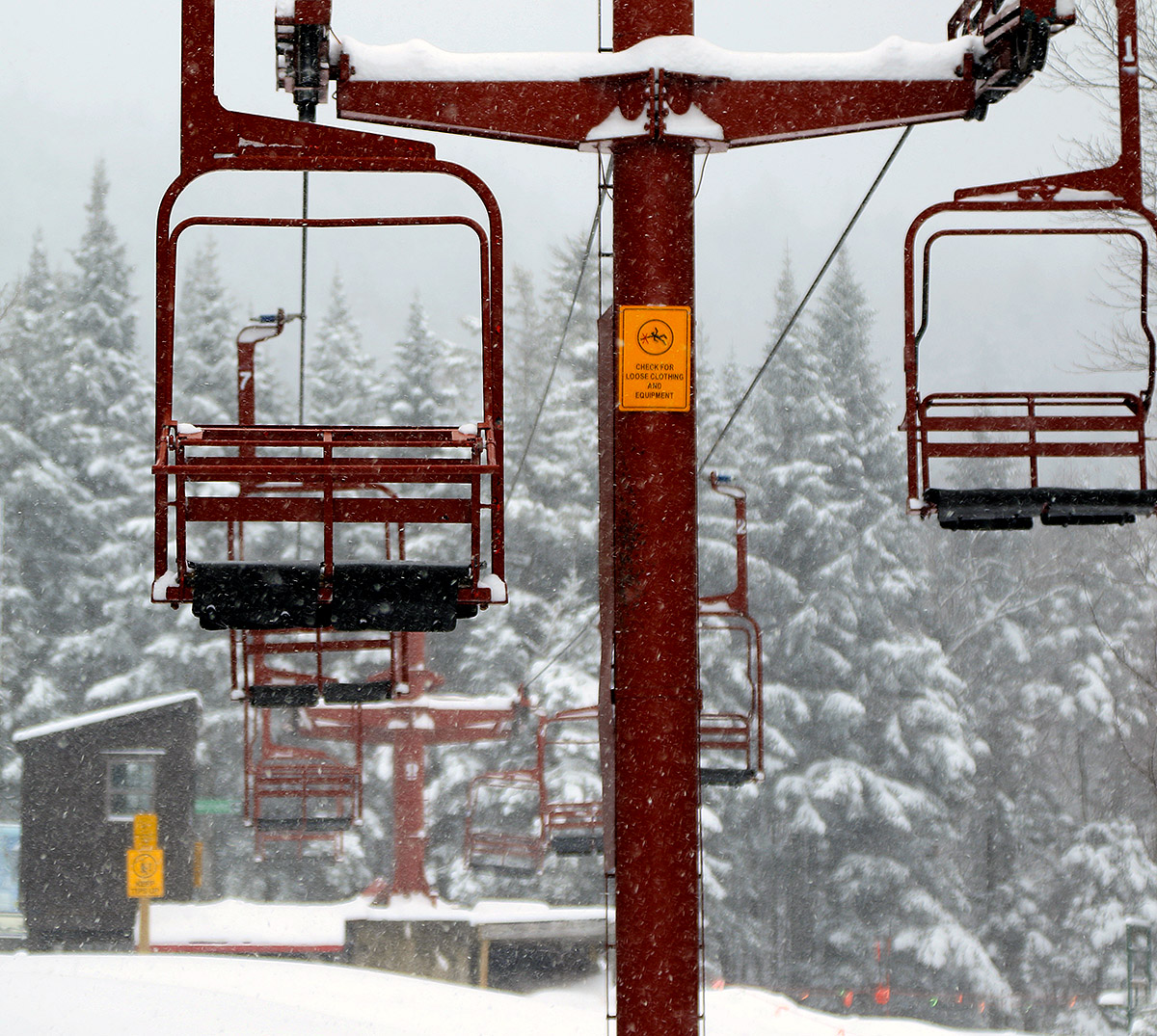
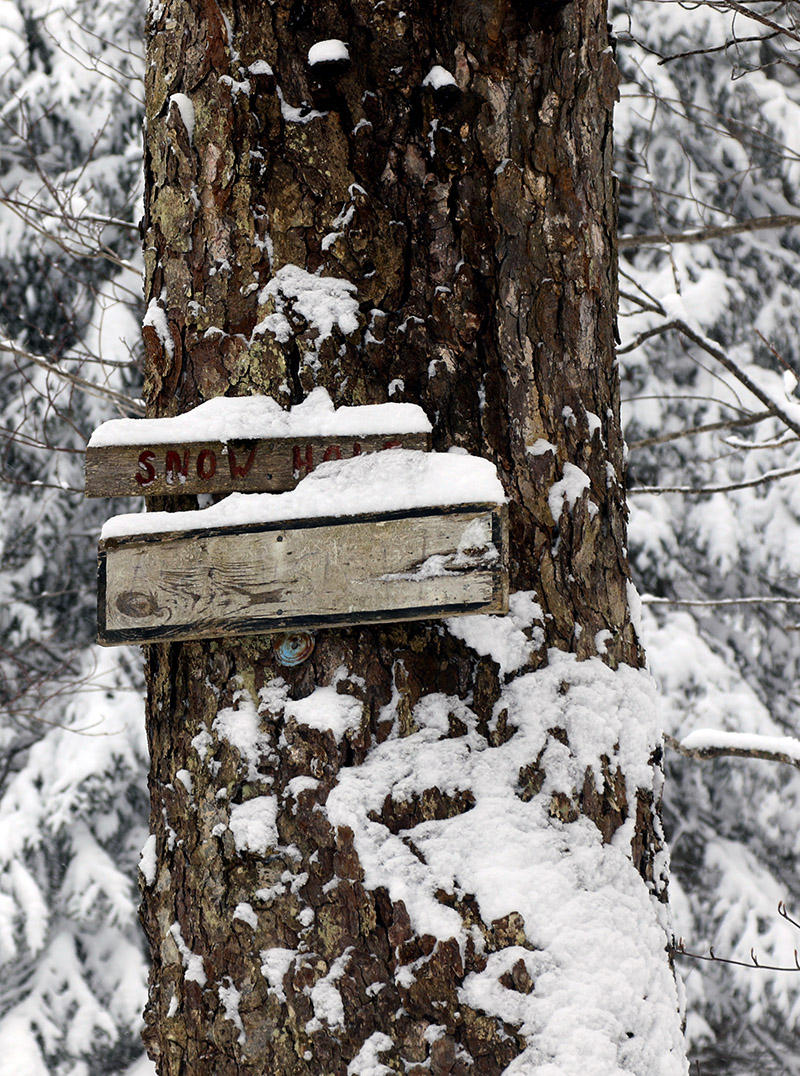
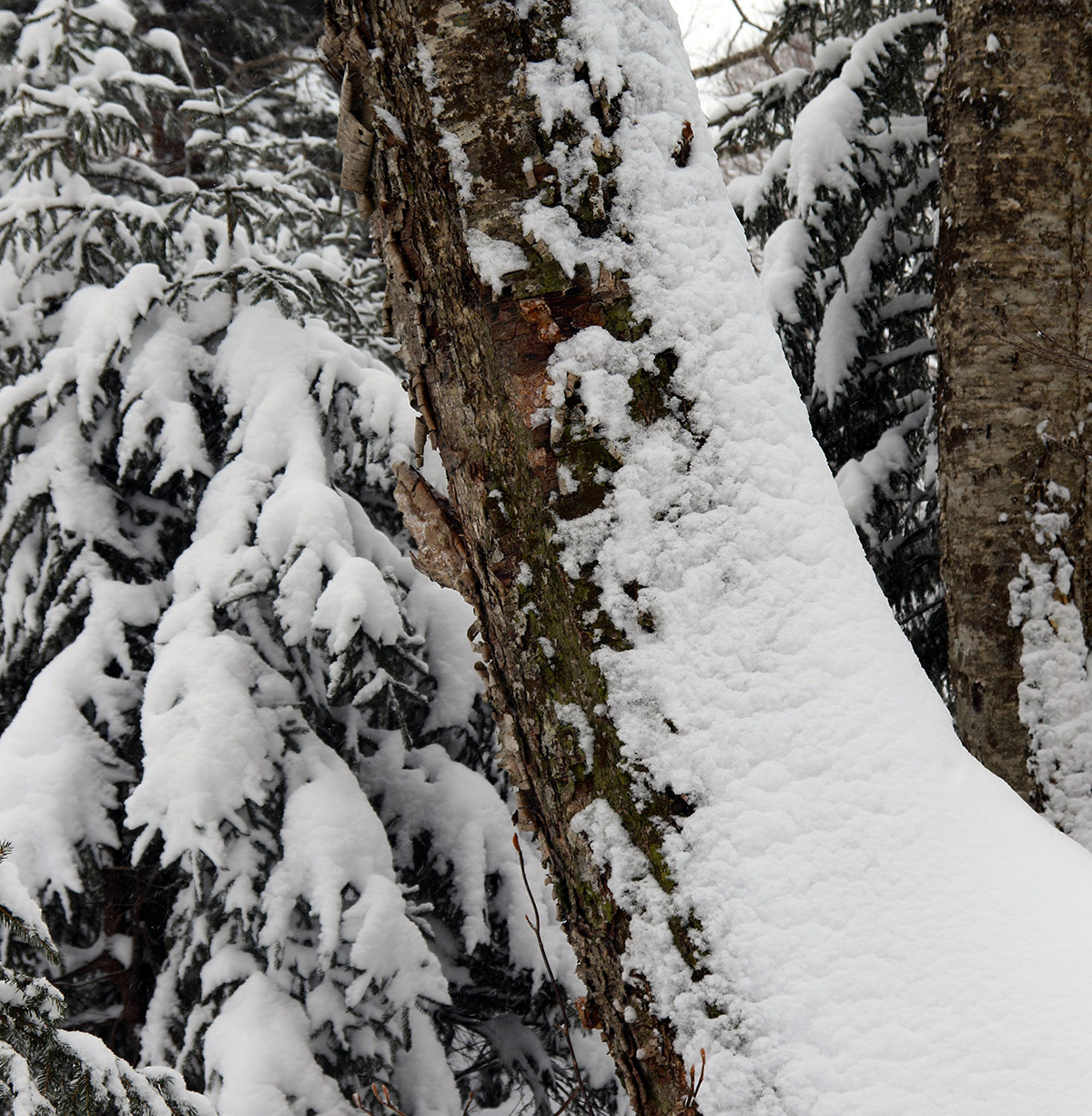
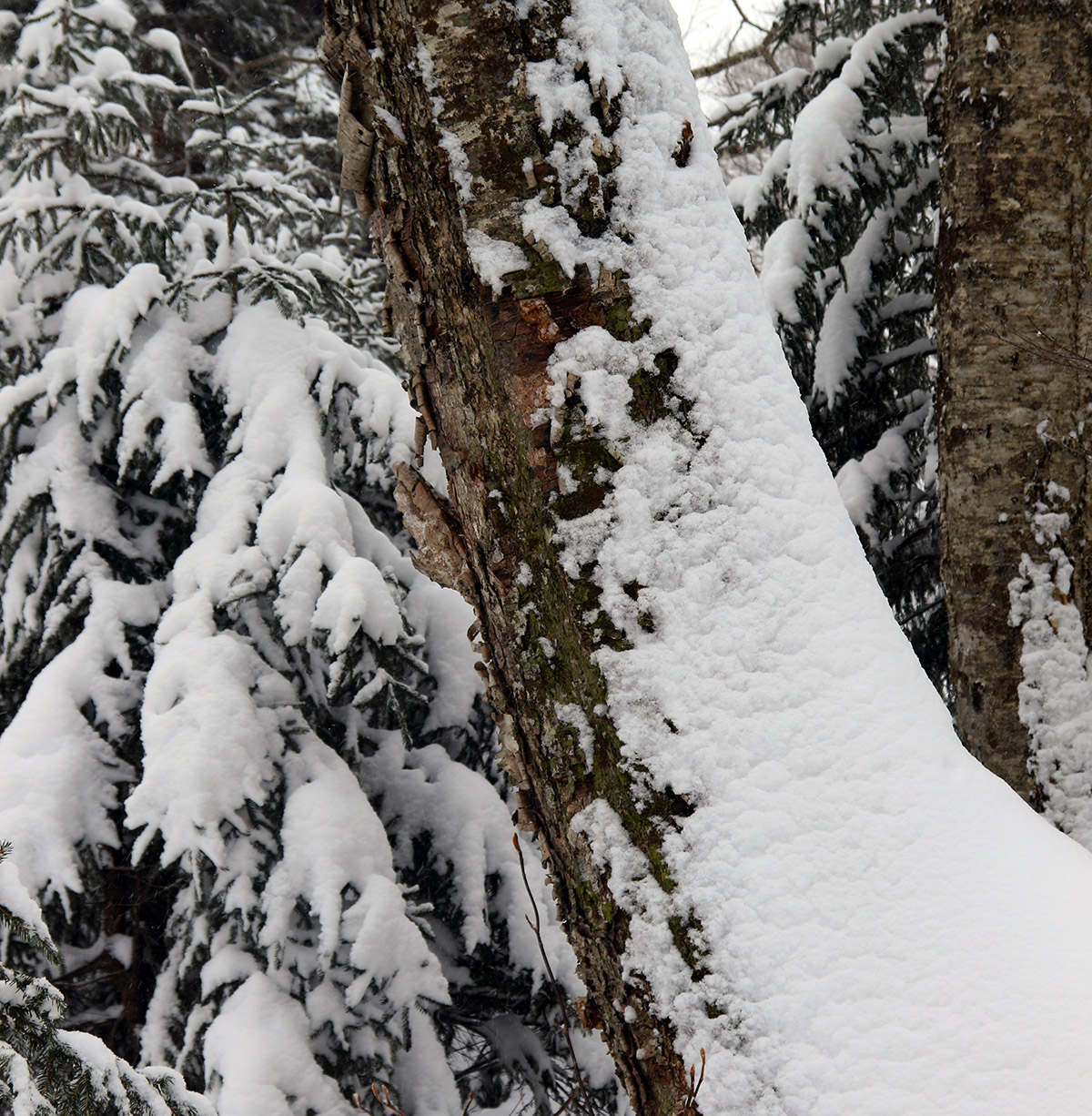
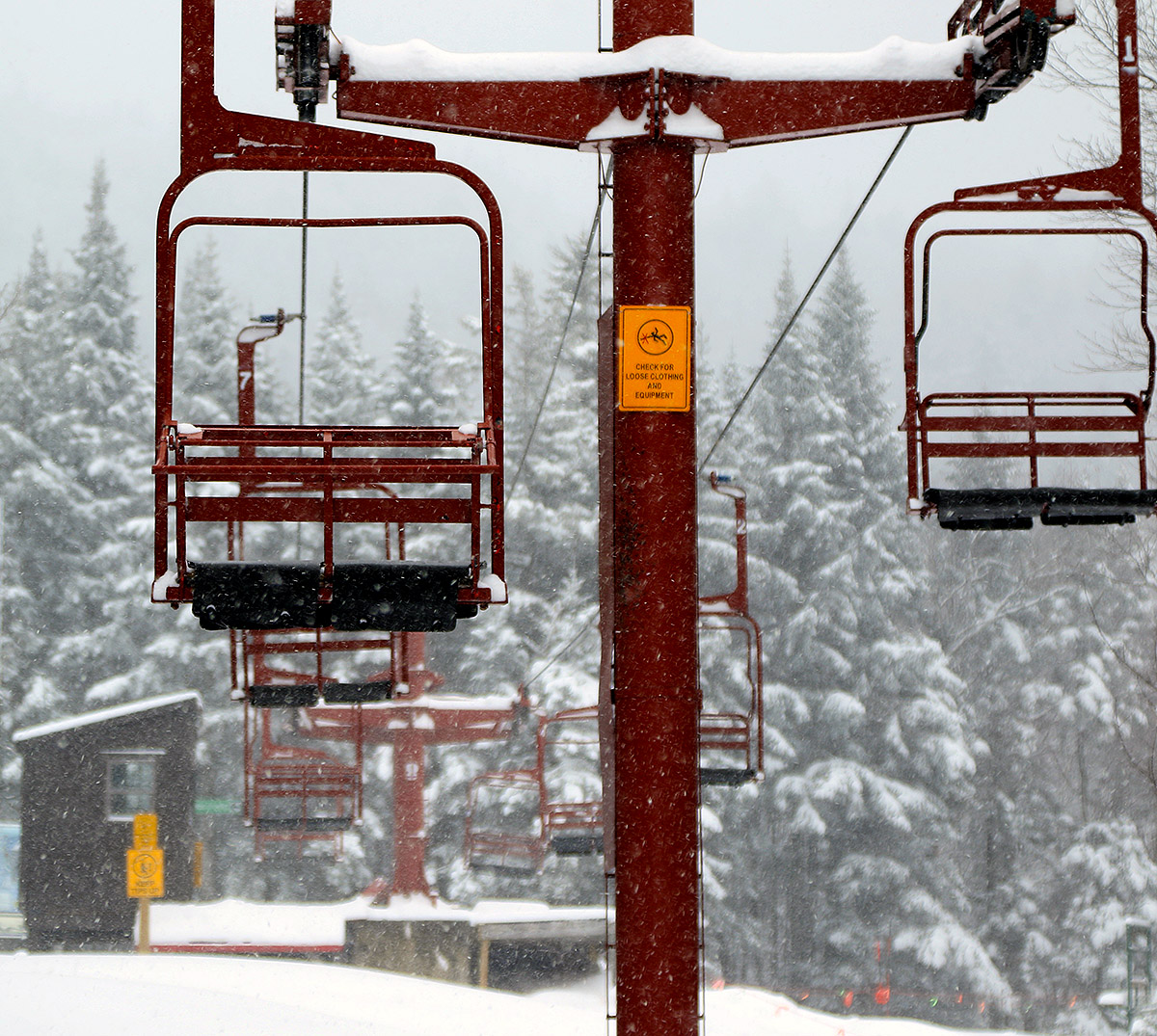
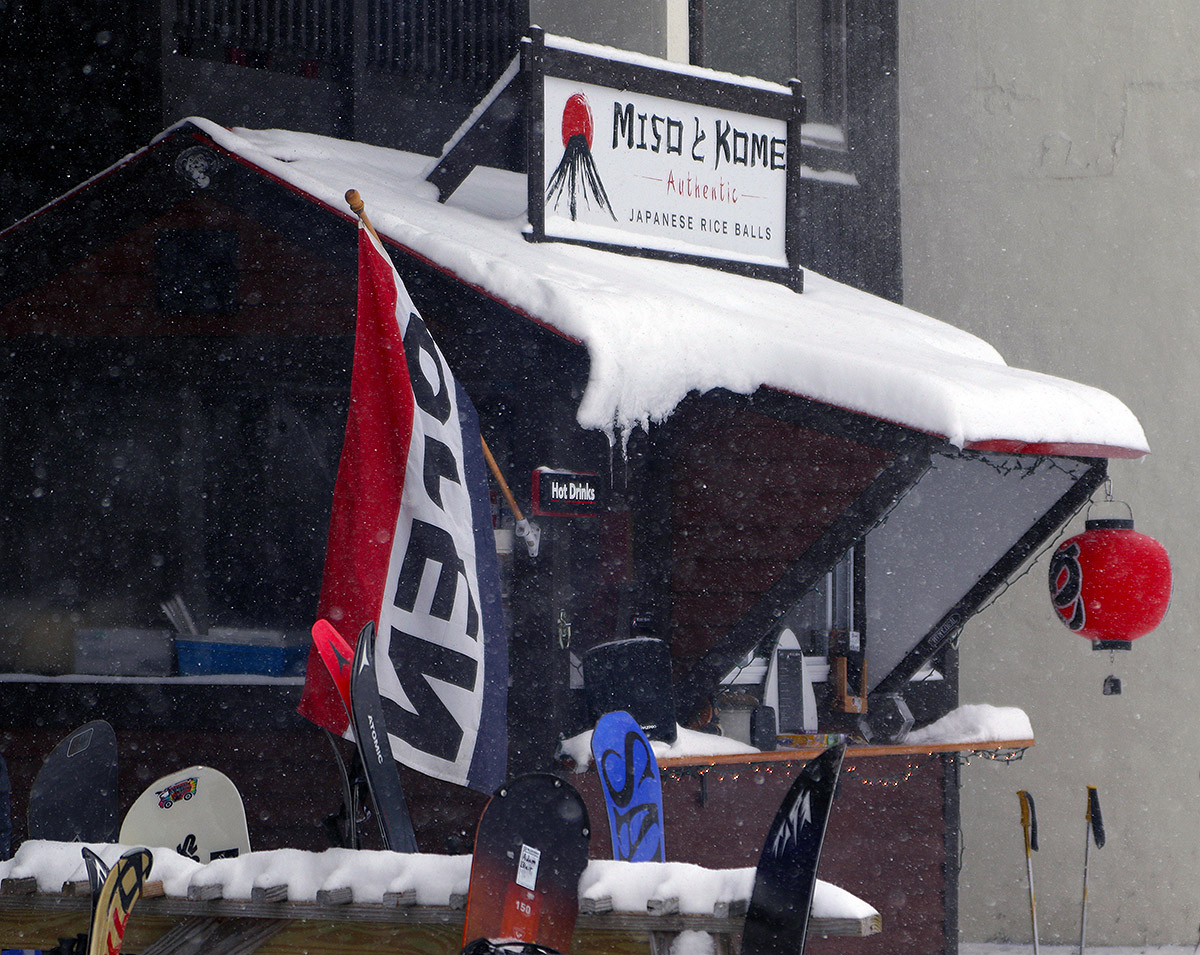
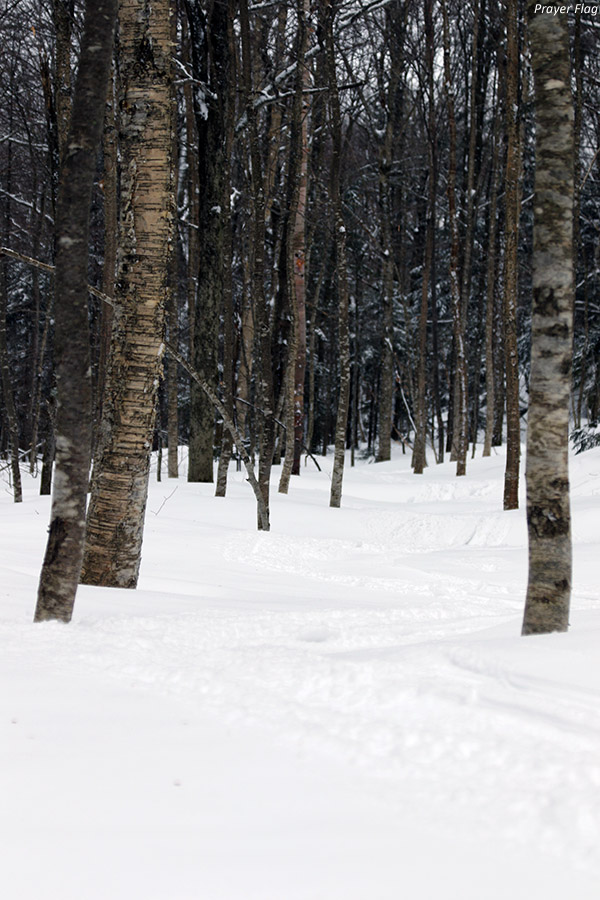
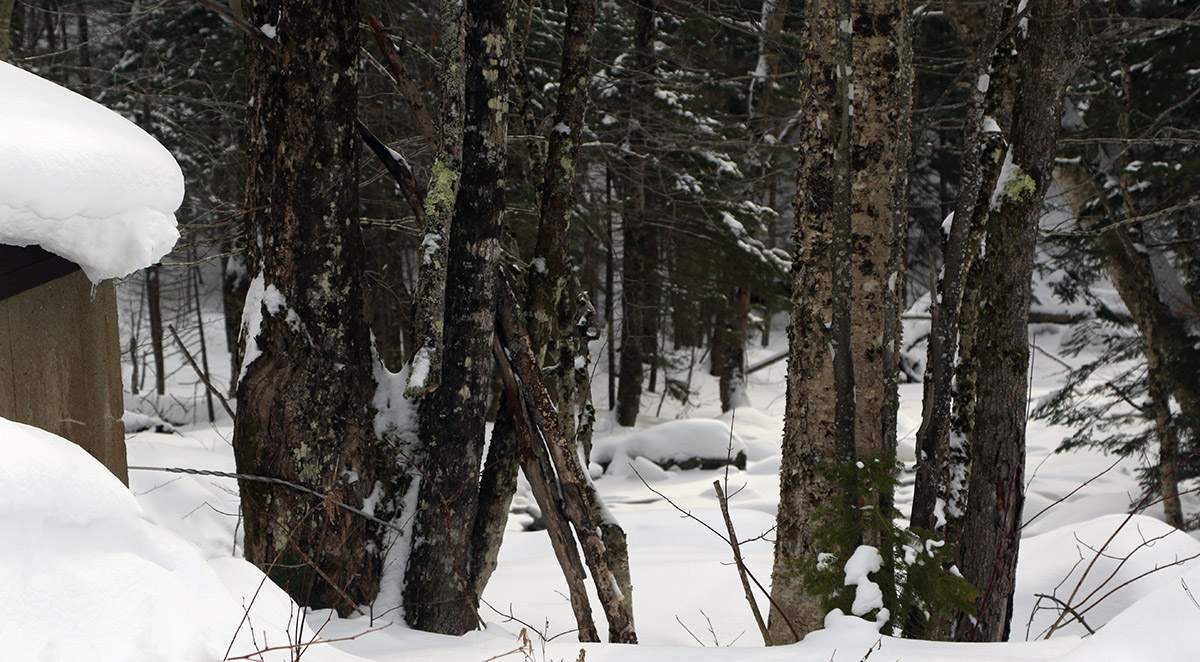
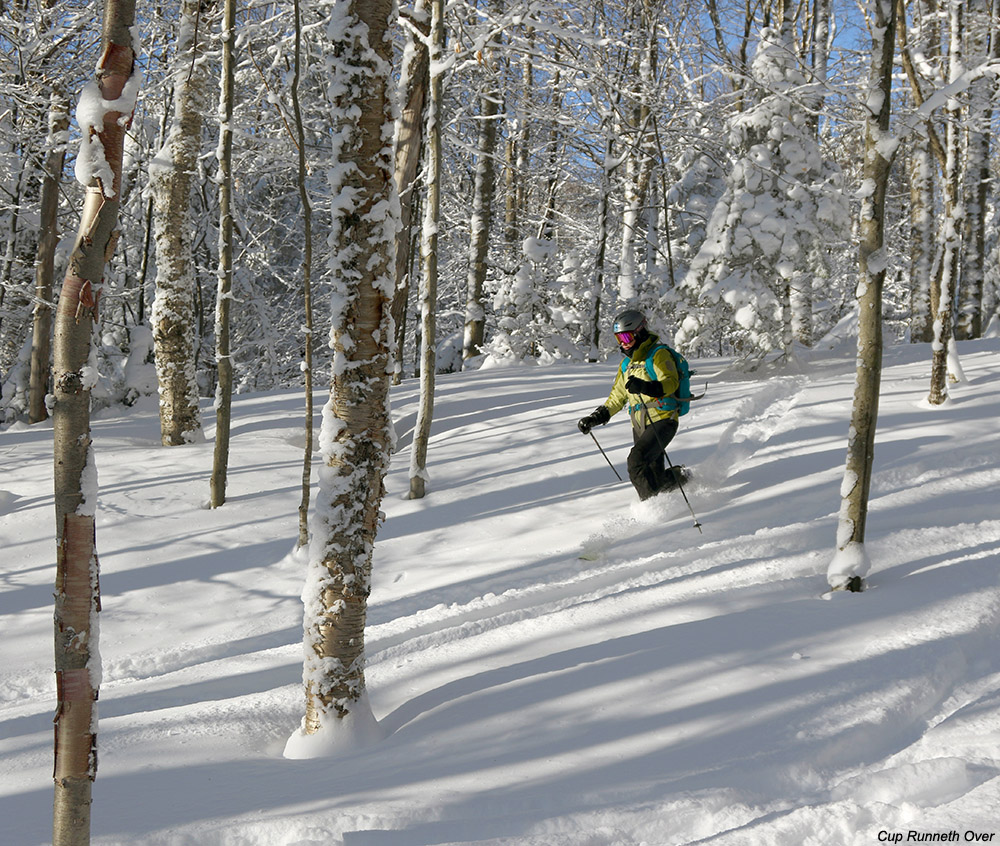
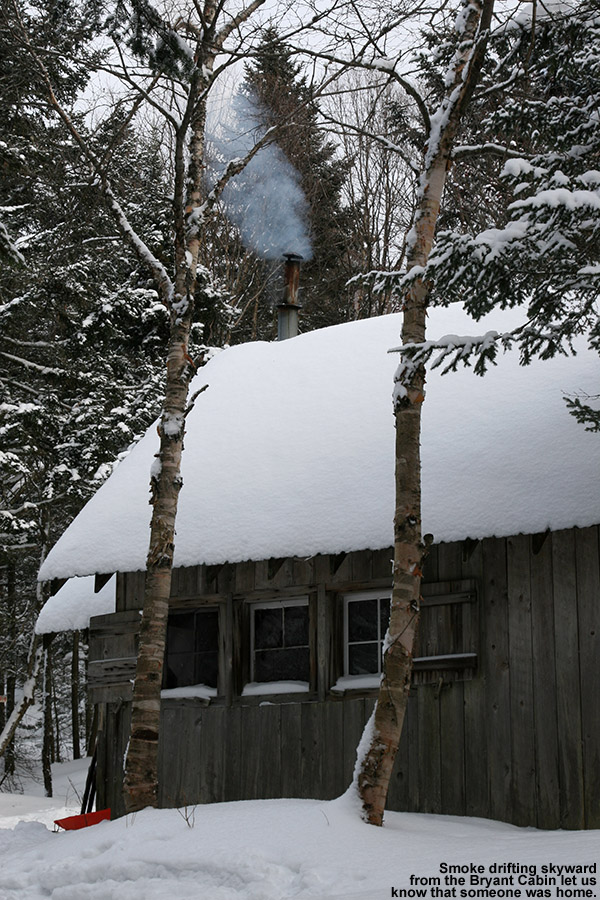
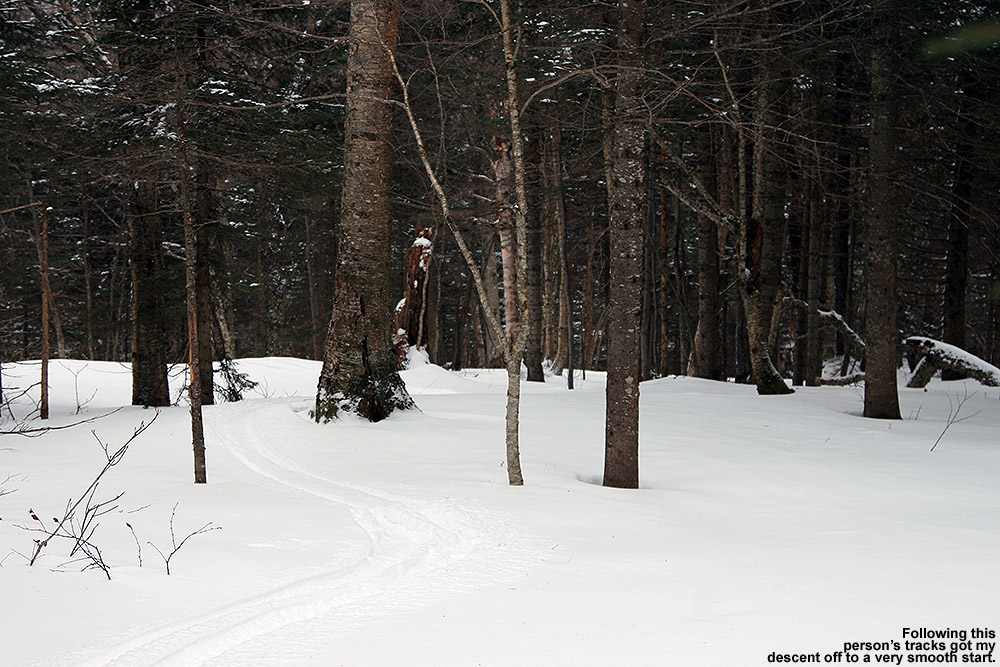
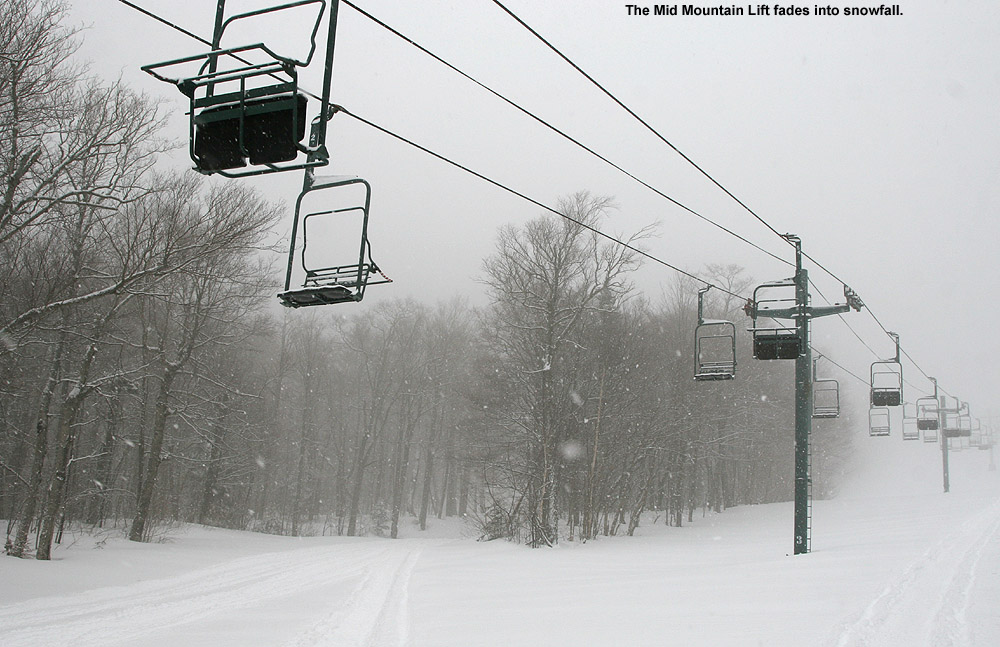
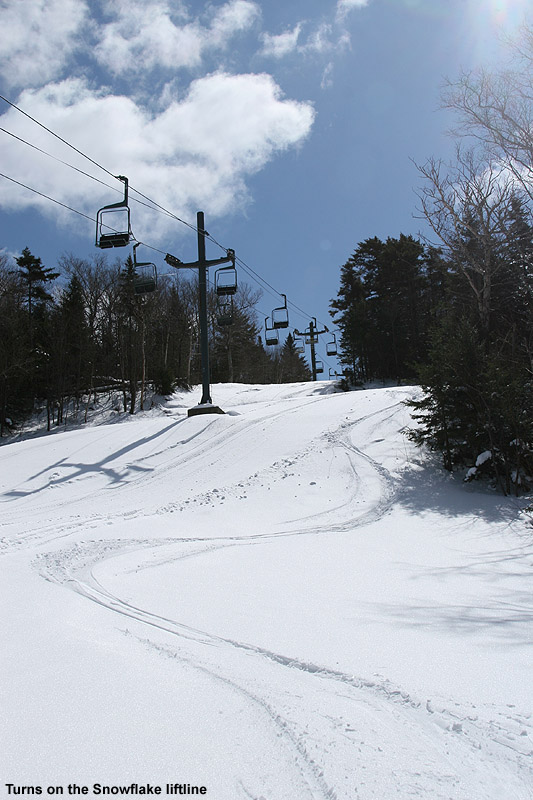
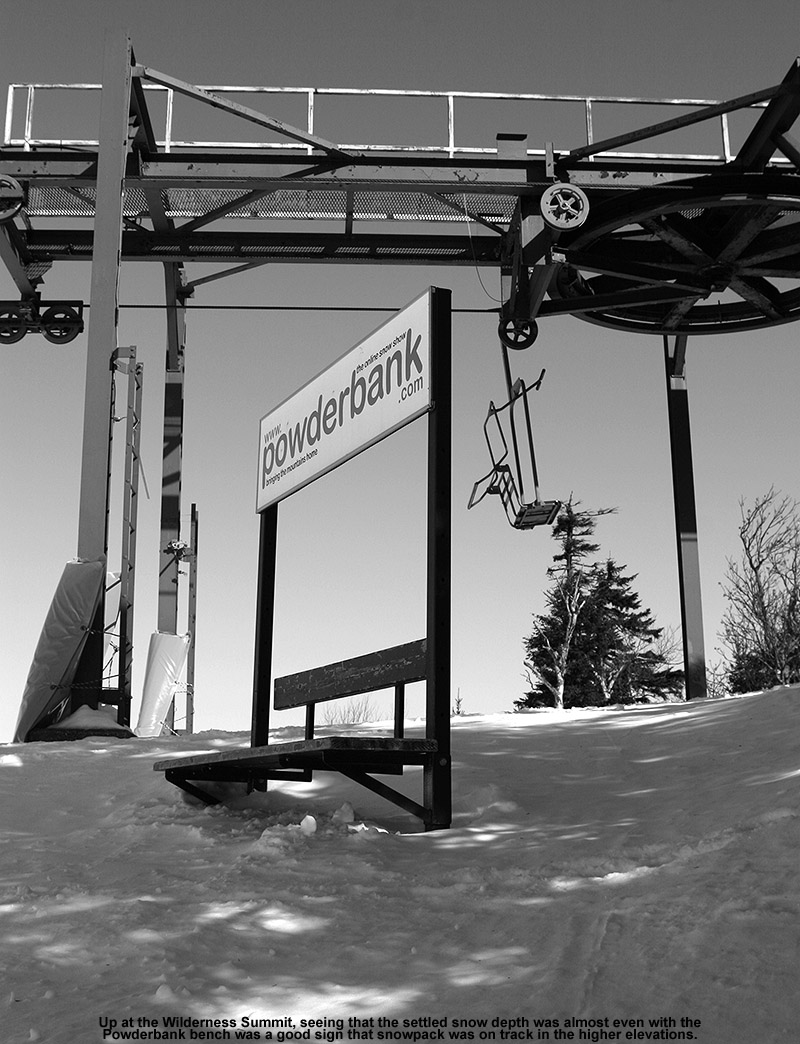
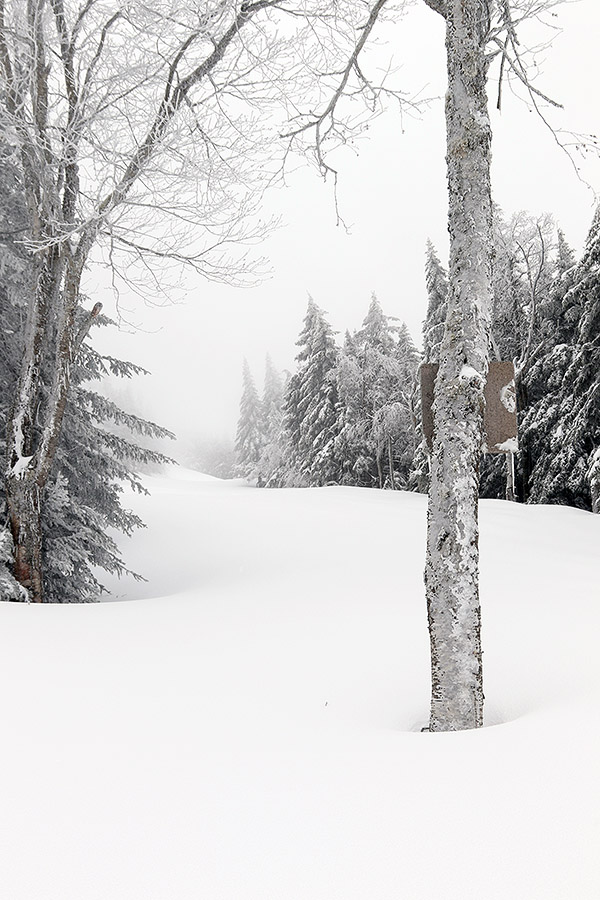
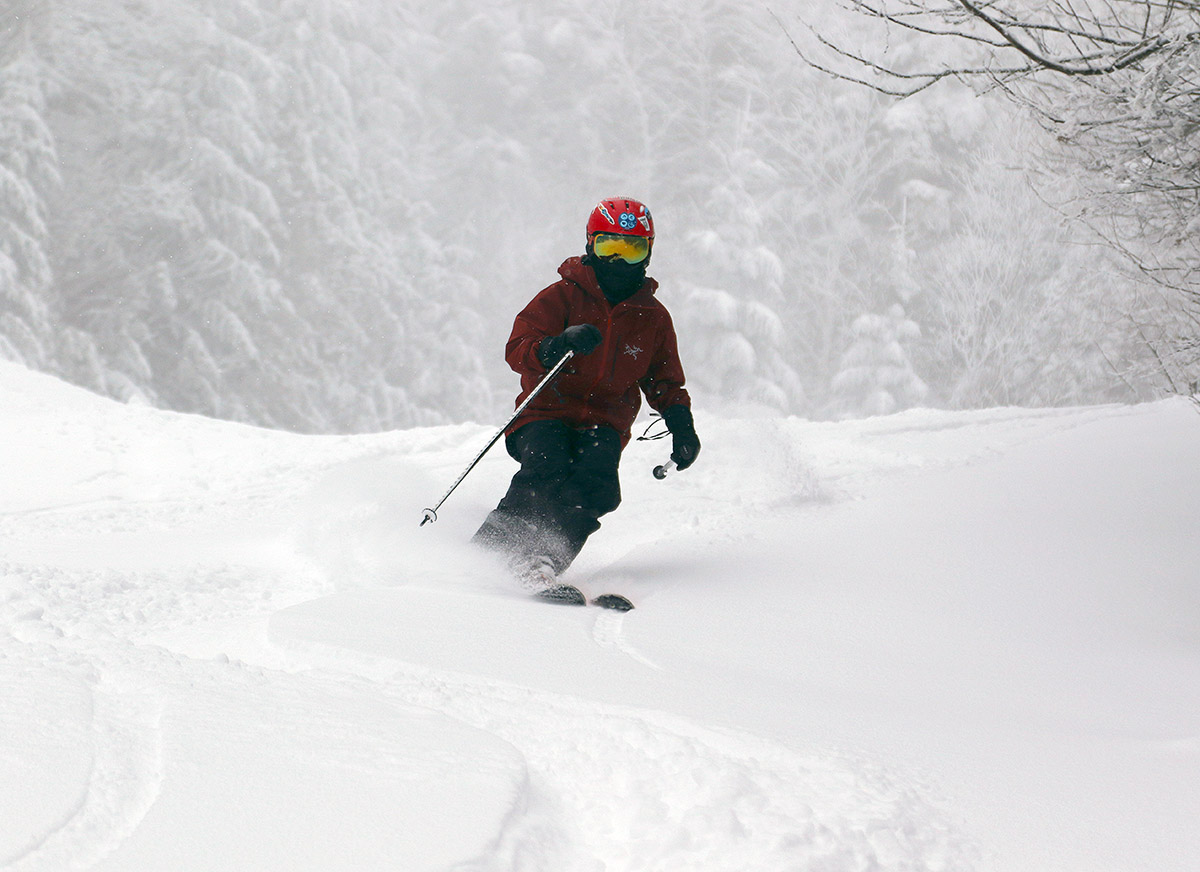
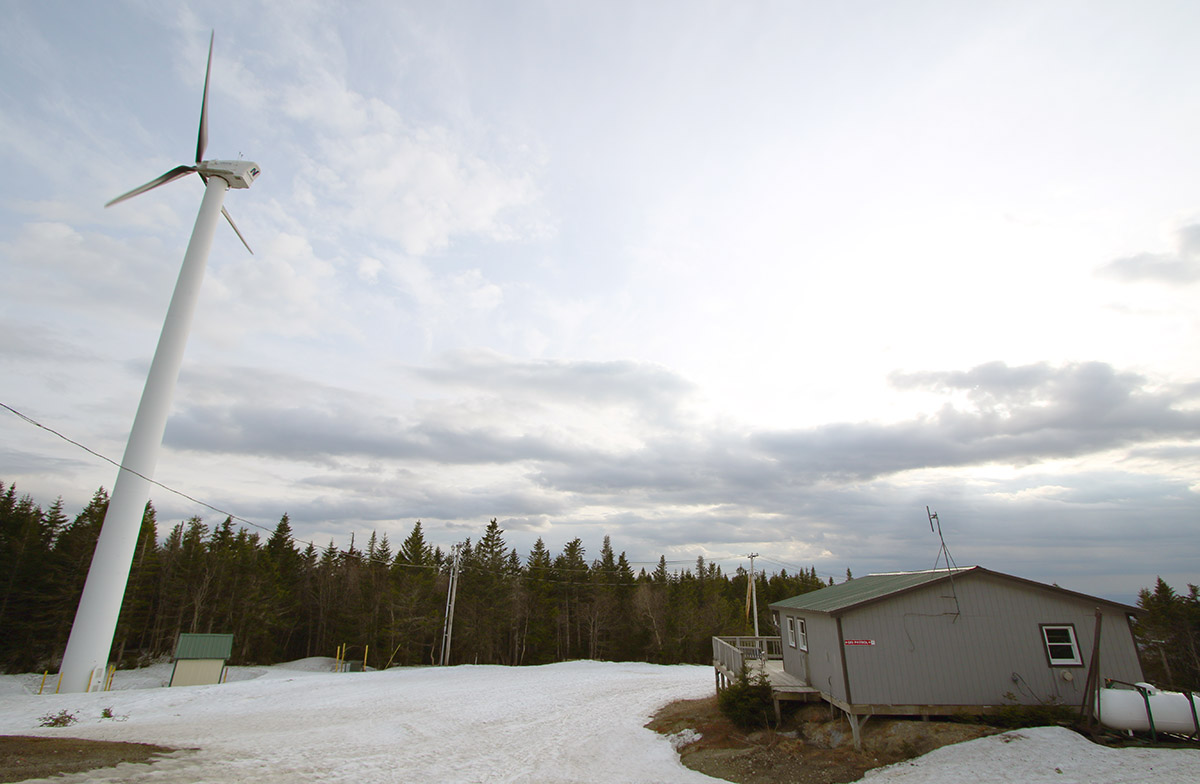
We haven’t had much new snowfall in the past couple of days, so the powder is settling on objects throughout the Bolton Valley backcountry in a variety of fun ways.
The pace of snowfall has slowed down a bit over the past few days here in the Northern Greens, so heading into the backcountry seemed like today’s call for good access to untracked powder. It was a sunny midwinter day, so my wife and I went snowshoeing in Morrisville in the morning, but I had time to head up to the Bolton Valley area in the afternoon for some ski touring.
I haven’t really done any ski touring west of the Bryant Trail yet this season, so I decided to head out to the Prayer Flag area on today’s tour. Although the main lines of Prayer Flag had seen a decent amount of skier traffic, the natural glades surrounding the area were nearly untracked. As Prayer Flag began to narrow and dive down to Brook Run, I traversed to the right through the trees toward the Holden’s Hollow Glades. The main lines there were well tracked as I’d expected, so I continued on into the surrounding trees to finish my run down to the Joiner Brook bridge. I felt like extending my tour a bit, so I skinned back up and did a run down the Cup Runneth Over glade before heading back to the car.
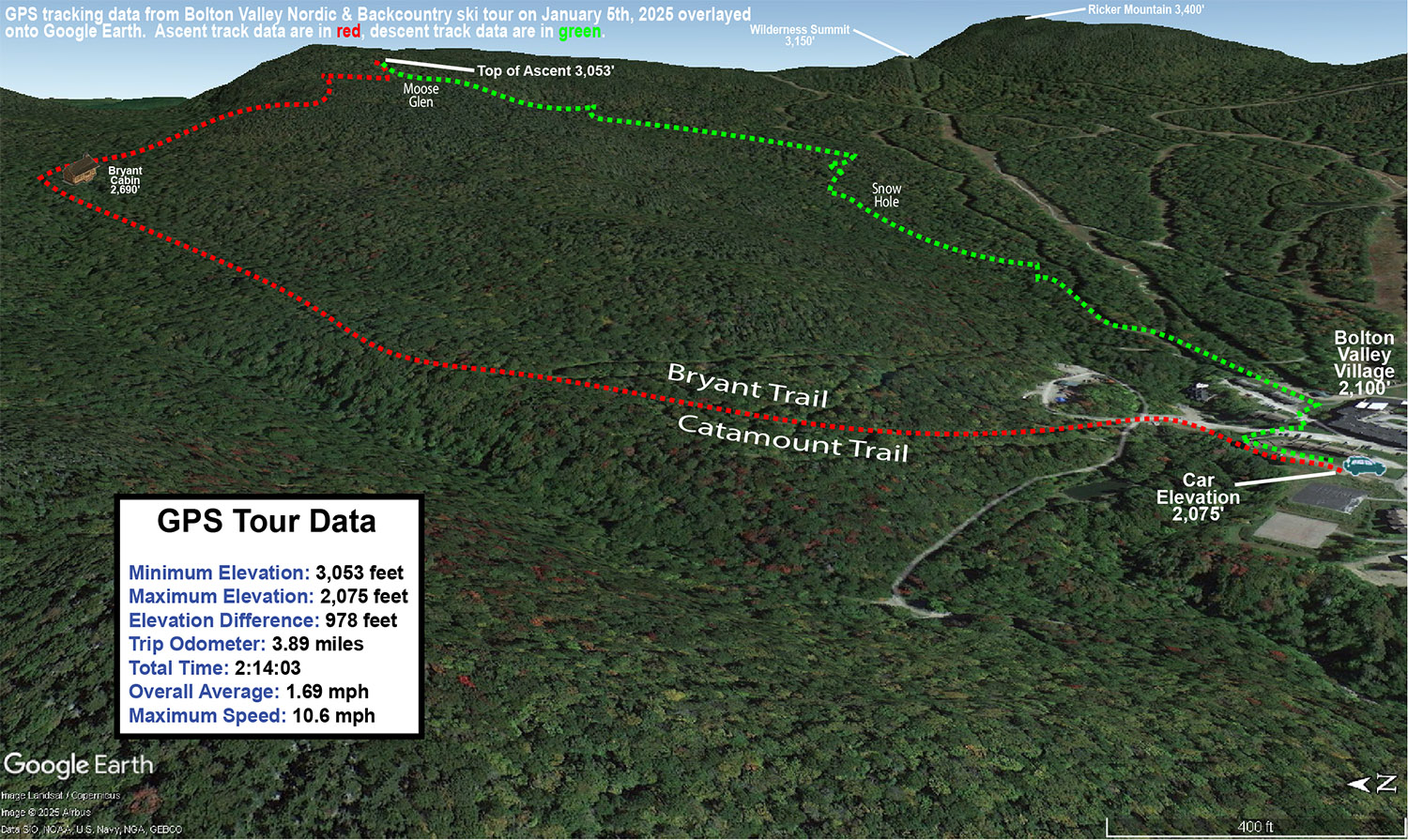
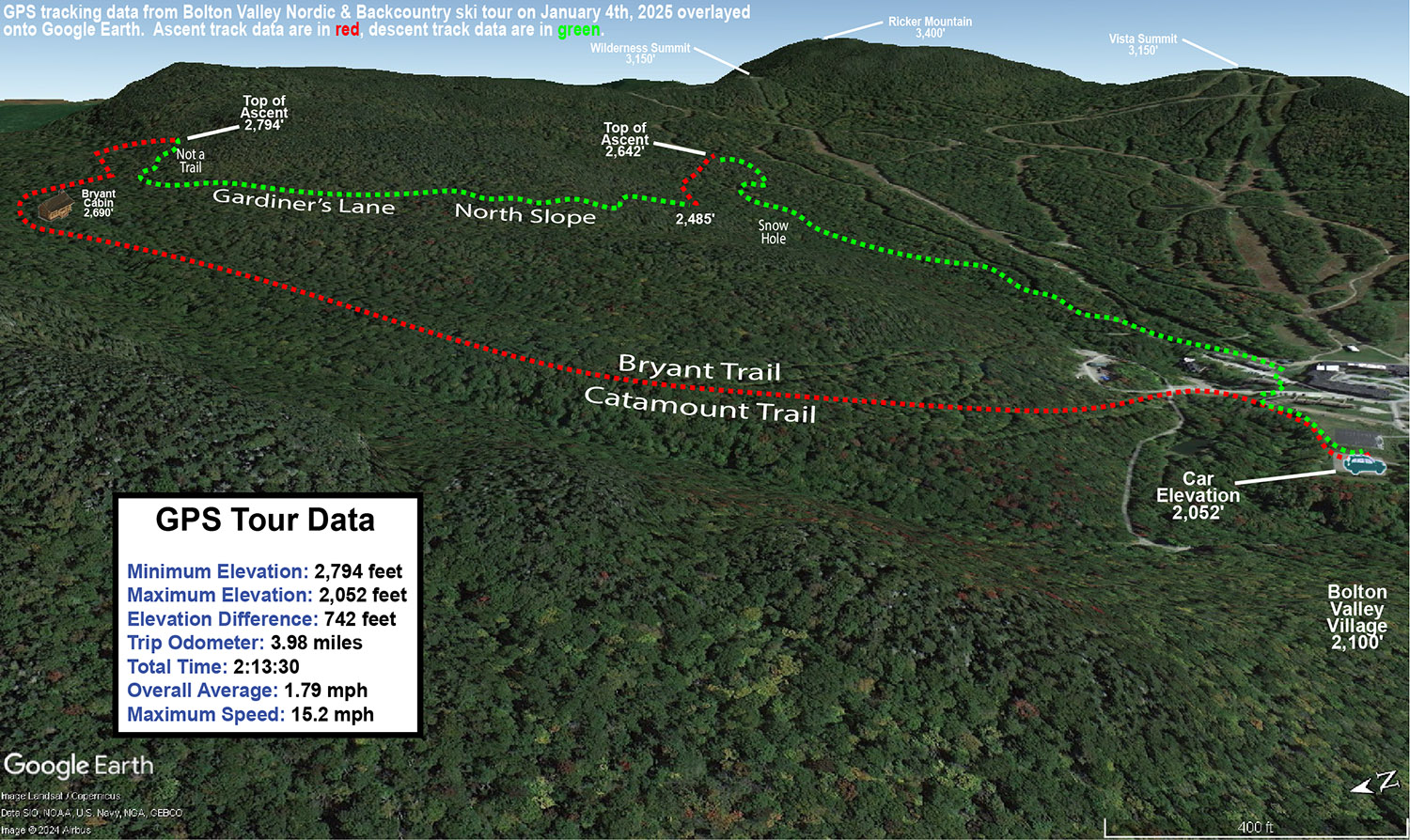
A map of today’s ski tour on the Bolton Valley Nordic & Backcountry Network using GPS tracking data displayed via Google Earth
Although we didn’t get a ton of new snow this week, what we did get over the past couple of days was incredibly dry, so it topped off the existing powder quite well. We’ve also had the type of cold, dry weather this week that has allowed the powder to settle and dry out to enhance its right-side-up density gradient and improve with age. The quality of the powder out there today was excellent, and the density gradient was such that it skied well on any pitch. In terms of depths, my measurements at the 2,000’ level revealed 17 to 18 inches above the subsurface, and at 2,400’ I found 22 to 24 inches of depth. In general, I found that the main lines of most glades had seen a decent amount of skier traffic, and that’s not surprising without much fresh snow this week, but snow is in the forecast in the coming days to hopefully help reset the powder in those areas.
The views of snow and sun at the Bolton Valley Nordic ticket booth suggested that Mother Nature was setting up another great day for ski touring.
We were back to highs in the single digits F today, and I’d certainly call those touring temperatures. With the cold weather, I wasn’t sure if I was going to head out for turns today or not, but with snow quality this good and snowpack this deep, it’s easy to tip the scales toward skiing vs. doing something else for exercise. Bolton Valley was also reporting another 2 to 3 inches of fresh snow from Winter Storm Demi, so the January snowfall just keeps piling up, inch by inch.
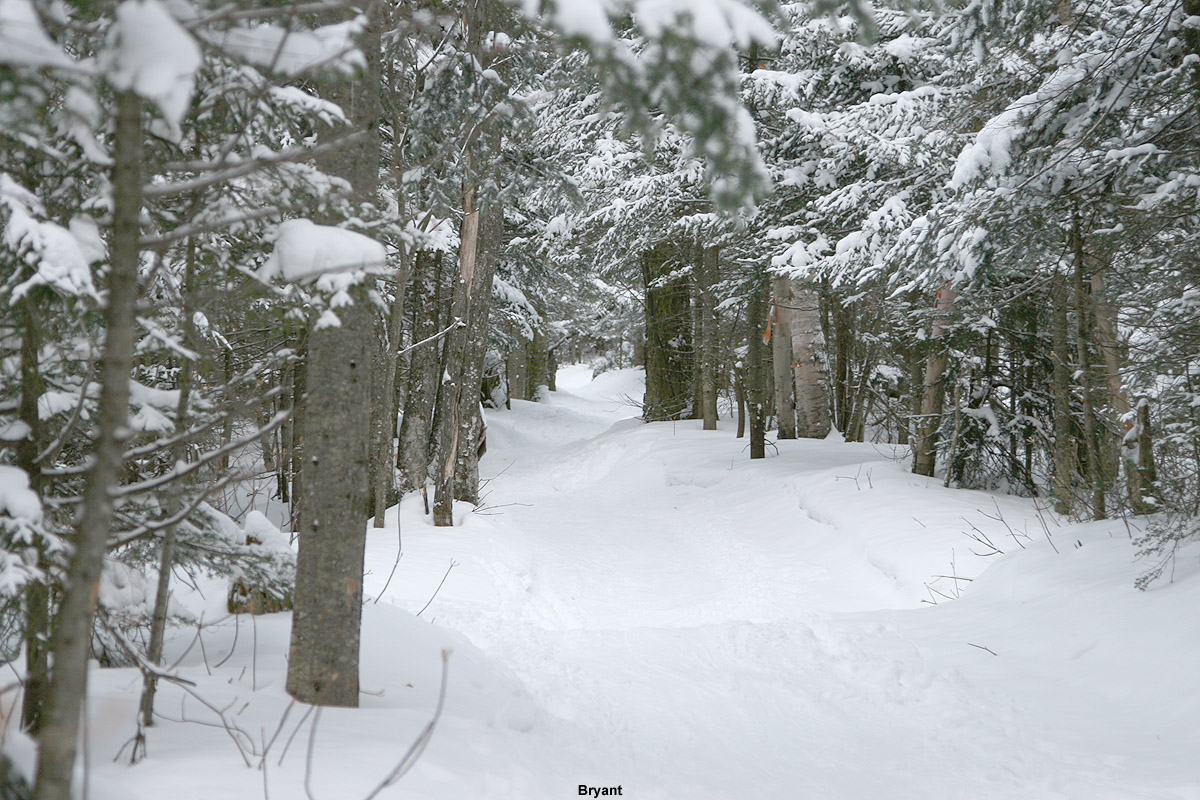
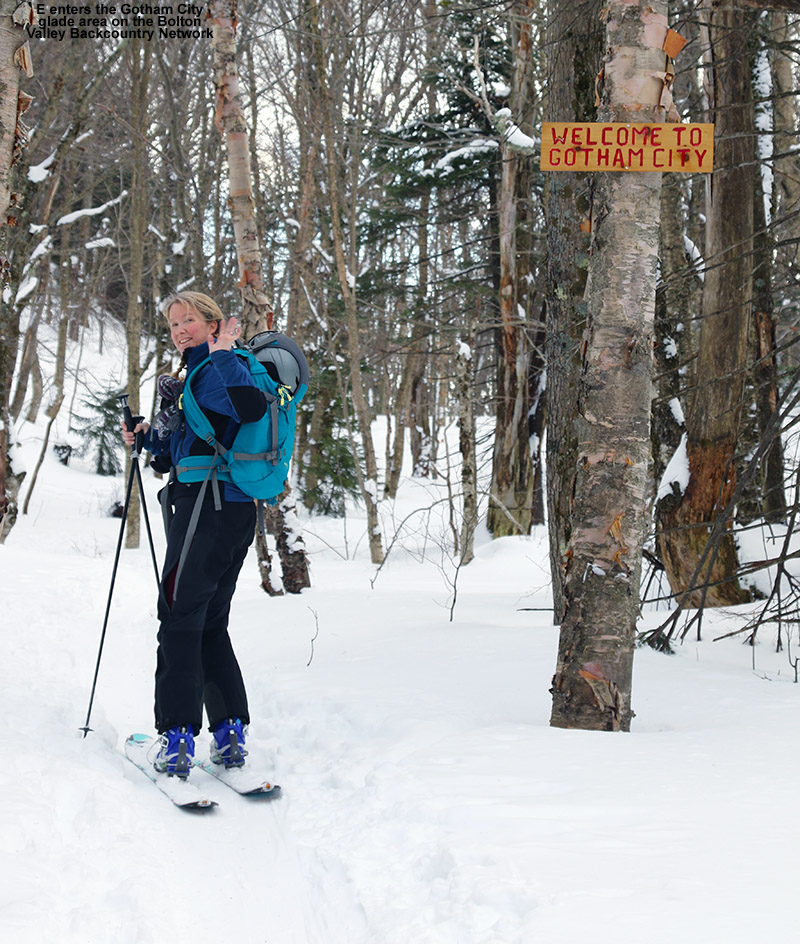
There are a number of main sectors of the Bolton Valley Nordic & Backcountry Network that I haven’t visited yet this season, and with the current snowpack, essentially everything is in play, so it was difficult to choose where to go. I ultimately decided on a loop up to Bryant Cabin and a descent in the Gotham City area, since I hadn’t been out there yet this season. Indeed, the afternoon temperatures were in the single digits F in the mountains today like we had back at the beginning of the month, but it was sunny, and there was little wind, so that made it feel noticeably different from the snowy, windy single-digit temperatures we had before. It was really quite comfortable out on the ascent, and I was cruising up the Bryant Trail, it was feeling so nice that I decided to extend my tour a bit higher.
A view of snowy Brant Cabin today as I stopped by briefly during my ski tour for a drink and some photos.
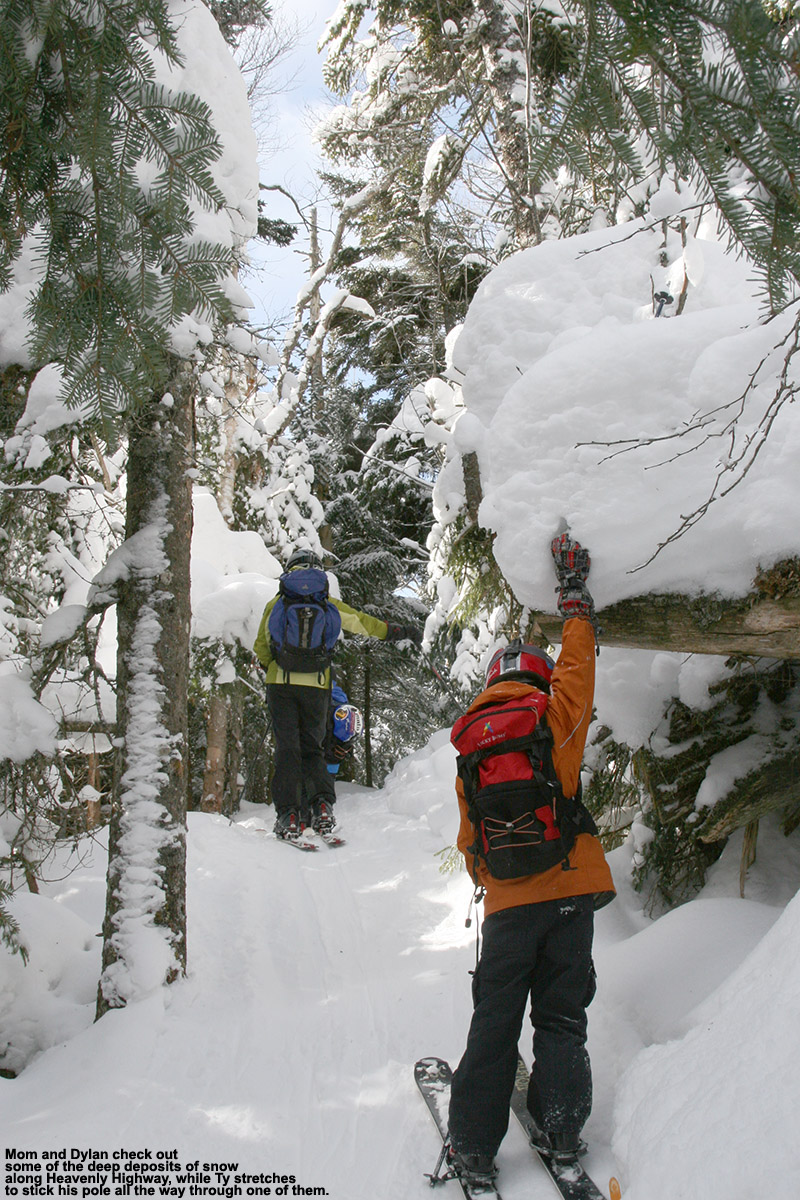
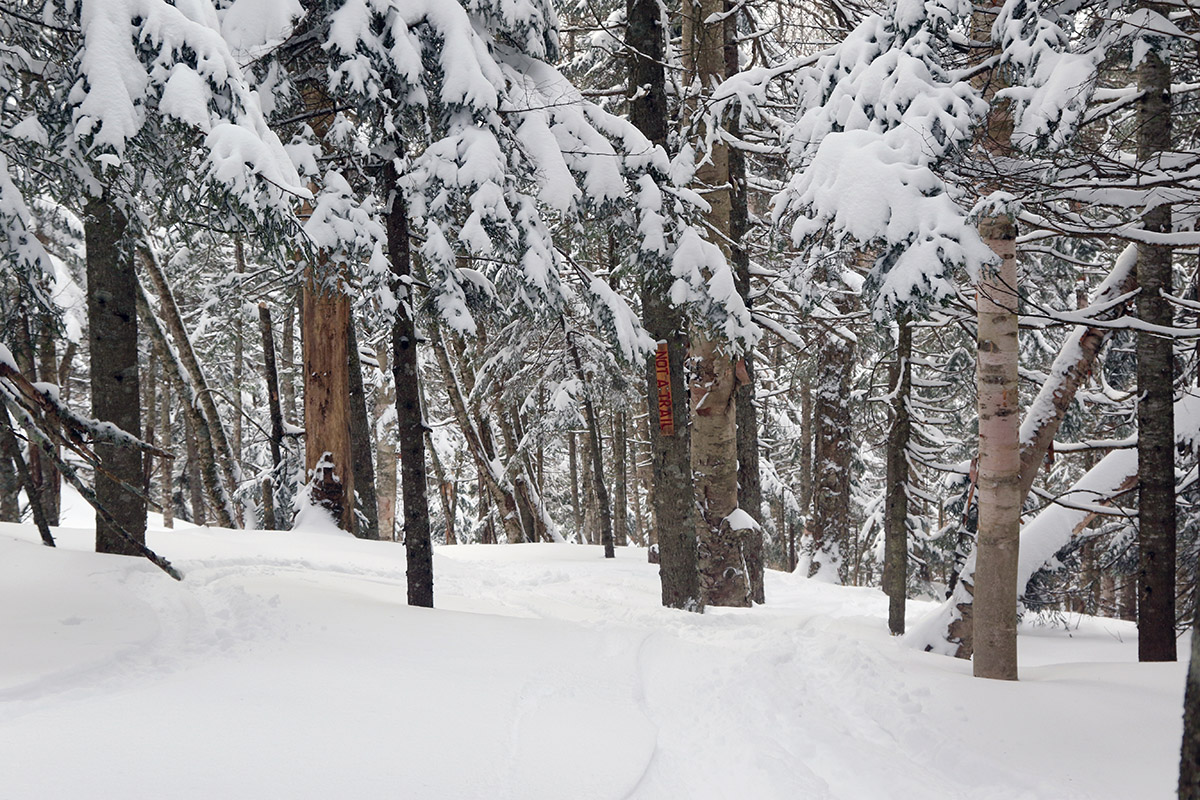
I stopped briefly at Bryant Cabin for a drink and some photos, then continued on up Heavenly Highway to the Not a Trail area at around the 2,800’ elevation. I did some checks on the snowpack depth and was typically getting numbers in the range of 35 to 45 inches. I think I was getting to the bottom of the snowpack when probing with my ski pole, but it’s hard to know for sure without digging a pit. When I was out in the Jay Peak backcountry touring the west face of the Gilpin Mountain/Domey’s Dome range on Saturday, snowpack probing at similar elevations was typically giving me depths of 45 to 50 inches. So, as one might expect with the snowfall the Jay Peak area has seen thus far this season (a bit over 200 inches), the snowpack seems to be a bit deeper there at equivalent elevations.
It’s only mid-January, but the forest is getting check with snow and evergreens are beginning their process of disappearing into the snowpack
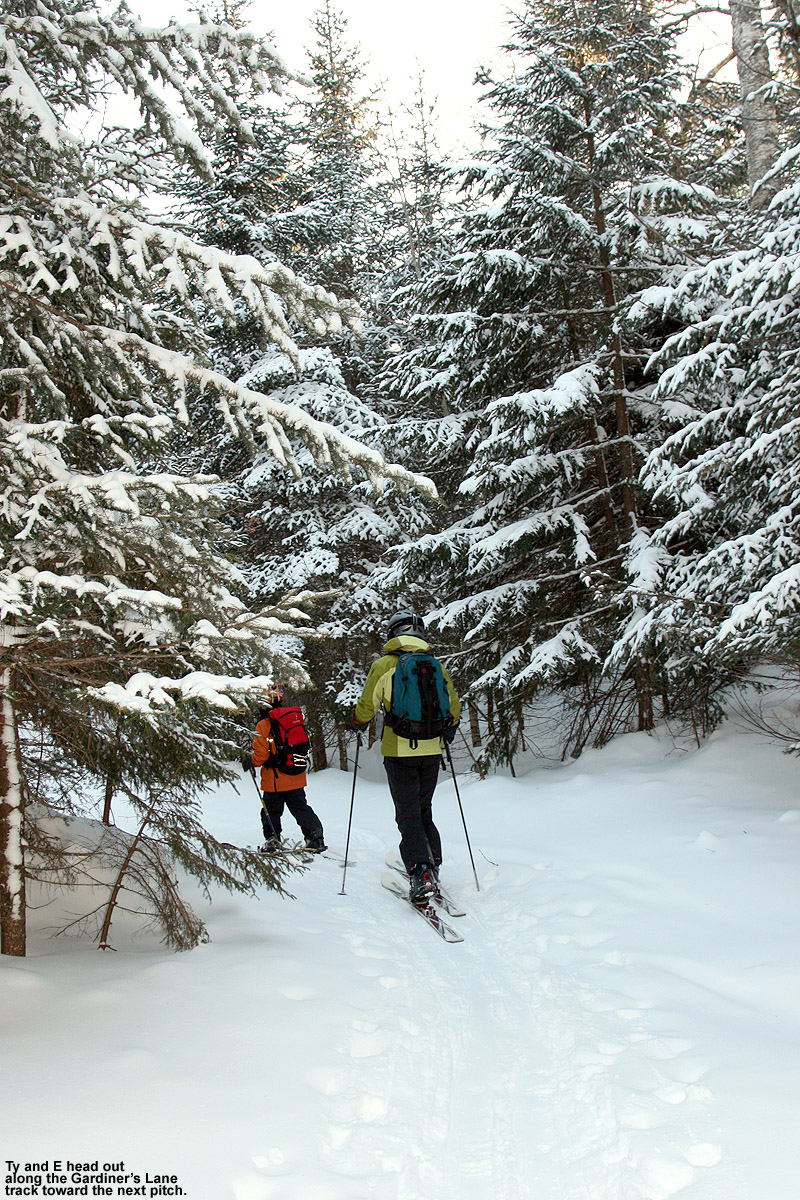
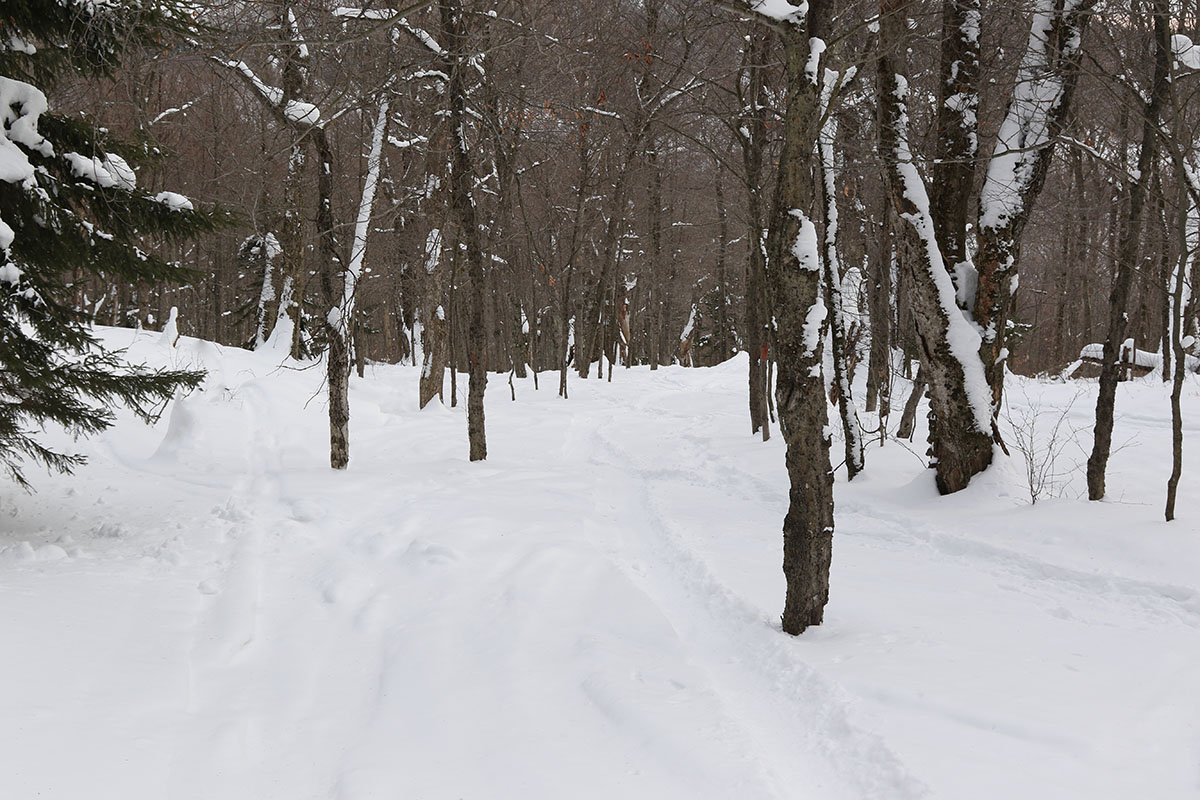
For my descent, I skied a bit of Not a Trail, took the Not a Trail high traverse, then dropped into a nice line that brought me across North Slope and down to Gardiner’s Lane. From there I headed to Gotham City, and since the weather has been so cold and snow preservation so solid, I decided to check out the south-facing Alchemist glade. That area typically suffers from coverage in sunny and warm conditions, but we haven’t had much of that lately, and coverage was excellent. Since our most recent snow, there were only a couple of new tracks in the main Alchemist lines, but there were a number of older tracks that had packed the snow down a bit more, so I ended up heading off to some ancillary lines on the skier’s left. I found acres of terrain over there that was virtually untracked, and it was so good that I put my skins back on and made a quick second ascent via one of the descent tracks on Alchemist to get in another run.
Looking back at some lines after floating down through the powder in Bolton Valley’s Alchemist Glade
If one wants to split hairs, I’d say that the new snow that fell from Winter Storm Demi may have knocked the quality of the powder skiing down just a touch. Up here in the Northern Greens we weren’t in any of the heavier snowfall banding from the storm, so snowfall rates were modest, and flake sizes were as well. My liquid analyses from down in the valley indicated that the powder came in at 8.6% H2O, so that’s getting up there toward the density of standard 10% H2O synoptic snow. That was probably a bit denser than the powder that was sitting on the surface before it fell, so it altered the developing right-side-up density gradient in the surface snow just a touch. Also, the snow skis a bit slower in single-digit temperatures, so the combination of the powder density and temperatures meant that turns were a bit sluggish on lower-angle terrain. Moderate-angle and steep terrain skied great though, and remember, we’re talking about the finer details of powder quality here, so it comes down to the difference between maybe a point on a 10-piont scale. As mentioned, as soon as I reached the bottom of my run, I turned around and skinned up for another go, so that tells you how good the skiing was. With the low temperatures and dry air that we’re expected to have over the next couple of days, and indeed all the way into next weekend, I wouldn’t be surprised to find the top layers of the powder drying out and the density gradient gradually resetting itself for even better powder quality as time goes on. That process has actually happened a decent amount over the past few weeks, which is one of the benefits of consistently cold temperatures and very low humidity.
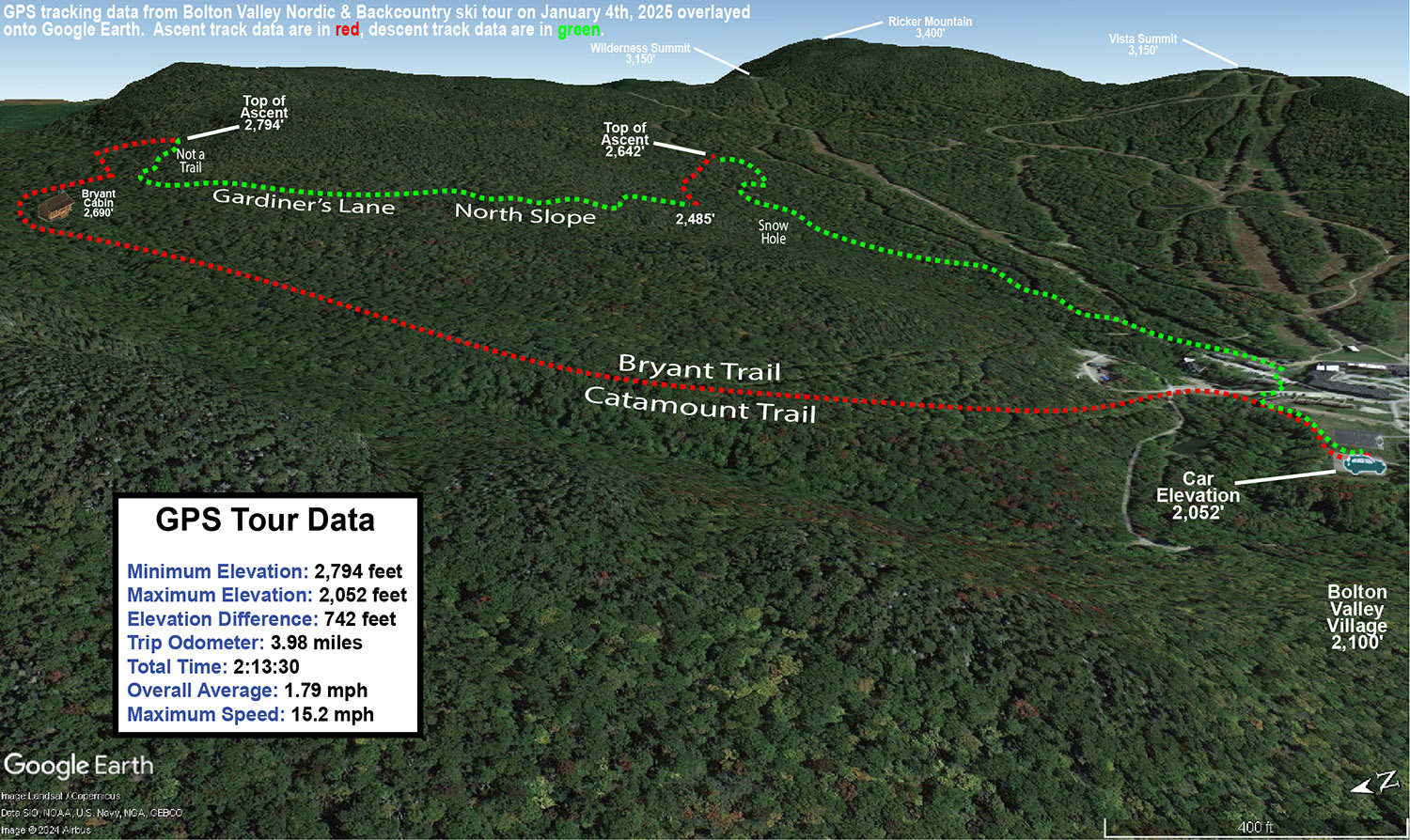
The GPS tracking data for today’s ski tour on the Bolton Valley Nordic & Backcountry Network overlayed onto a Google Earth map
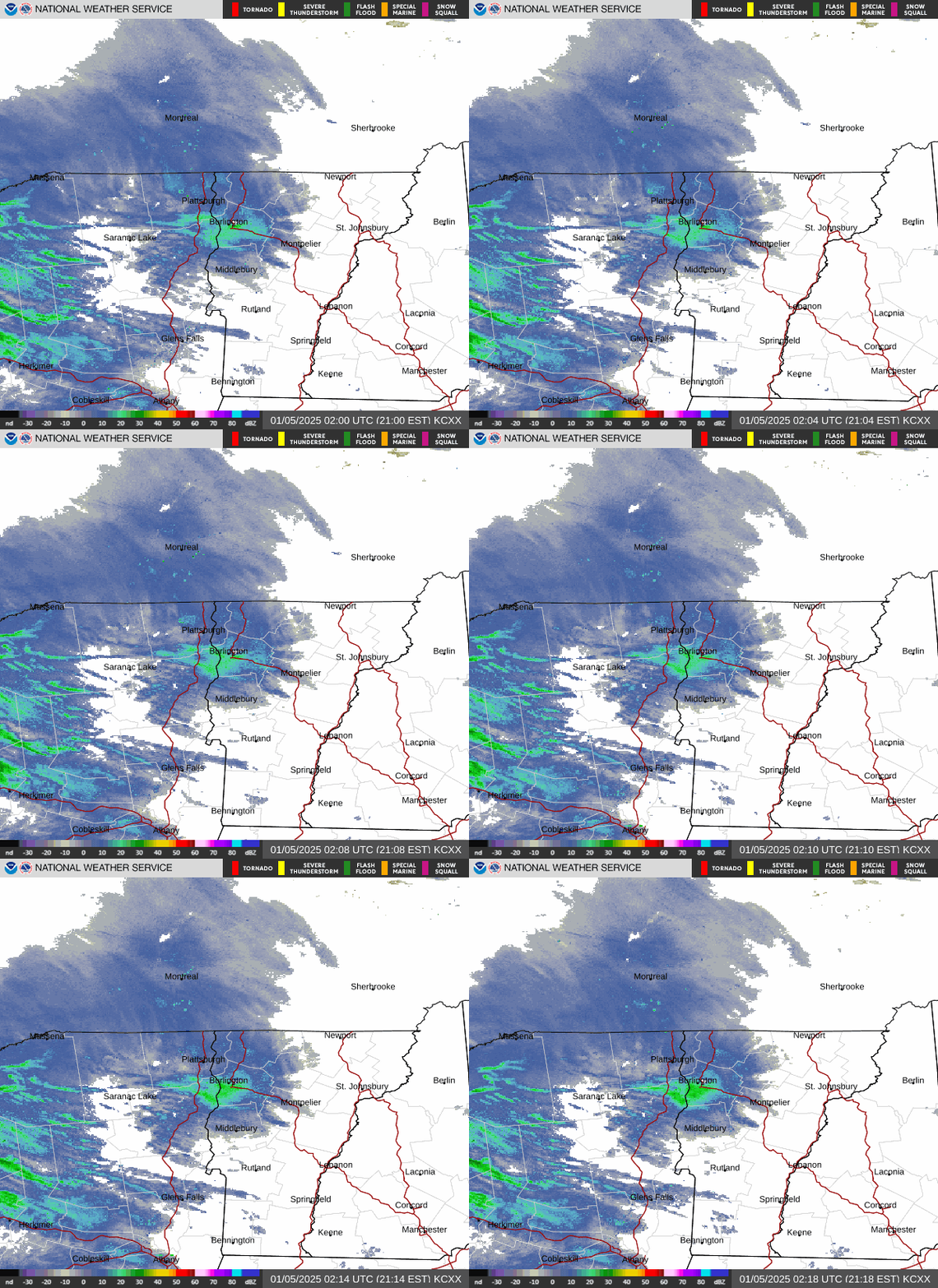
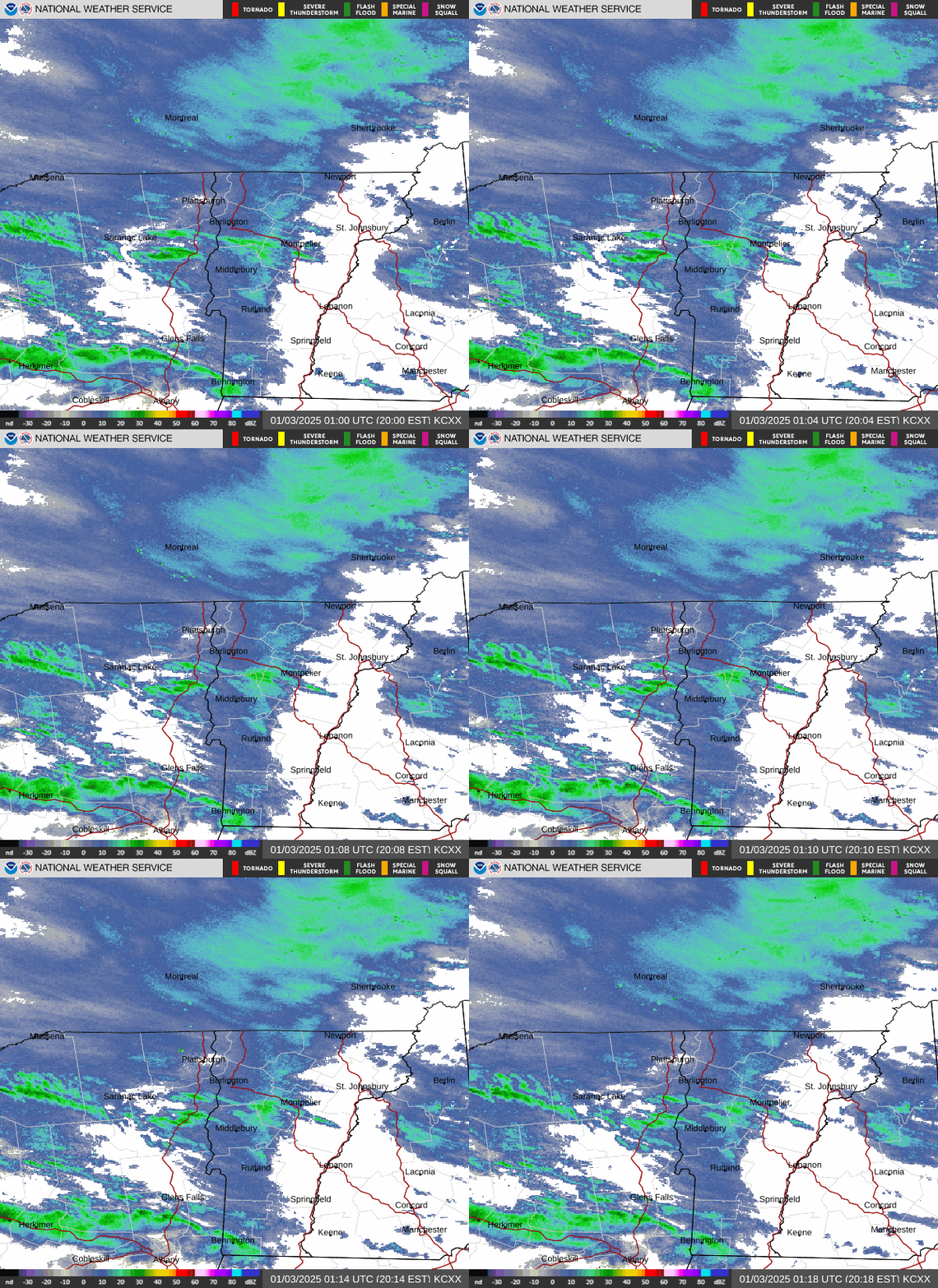
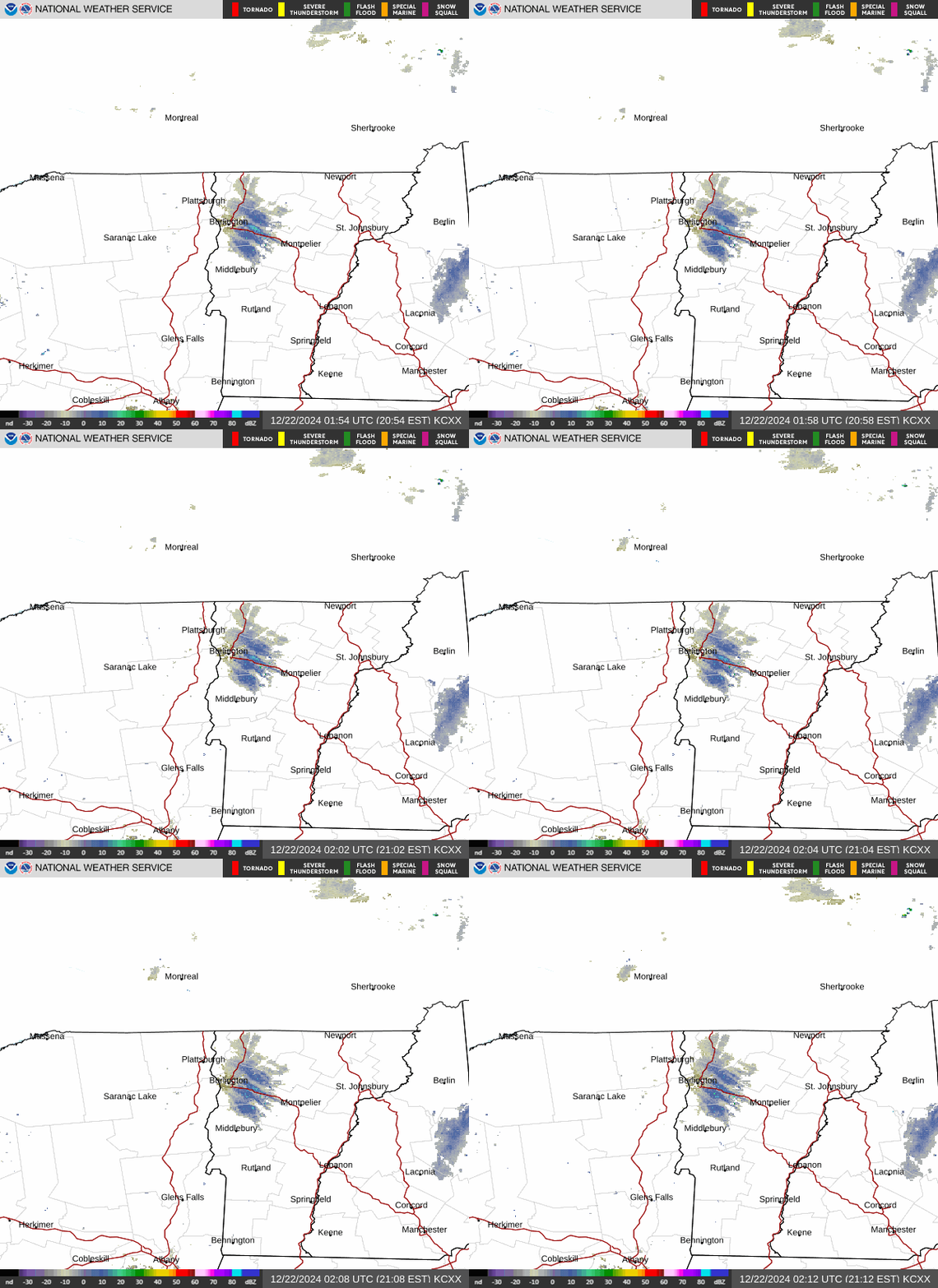
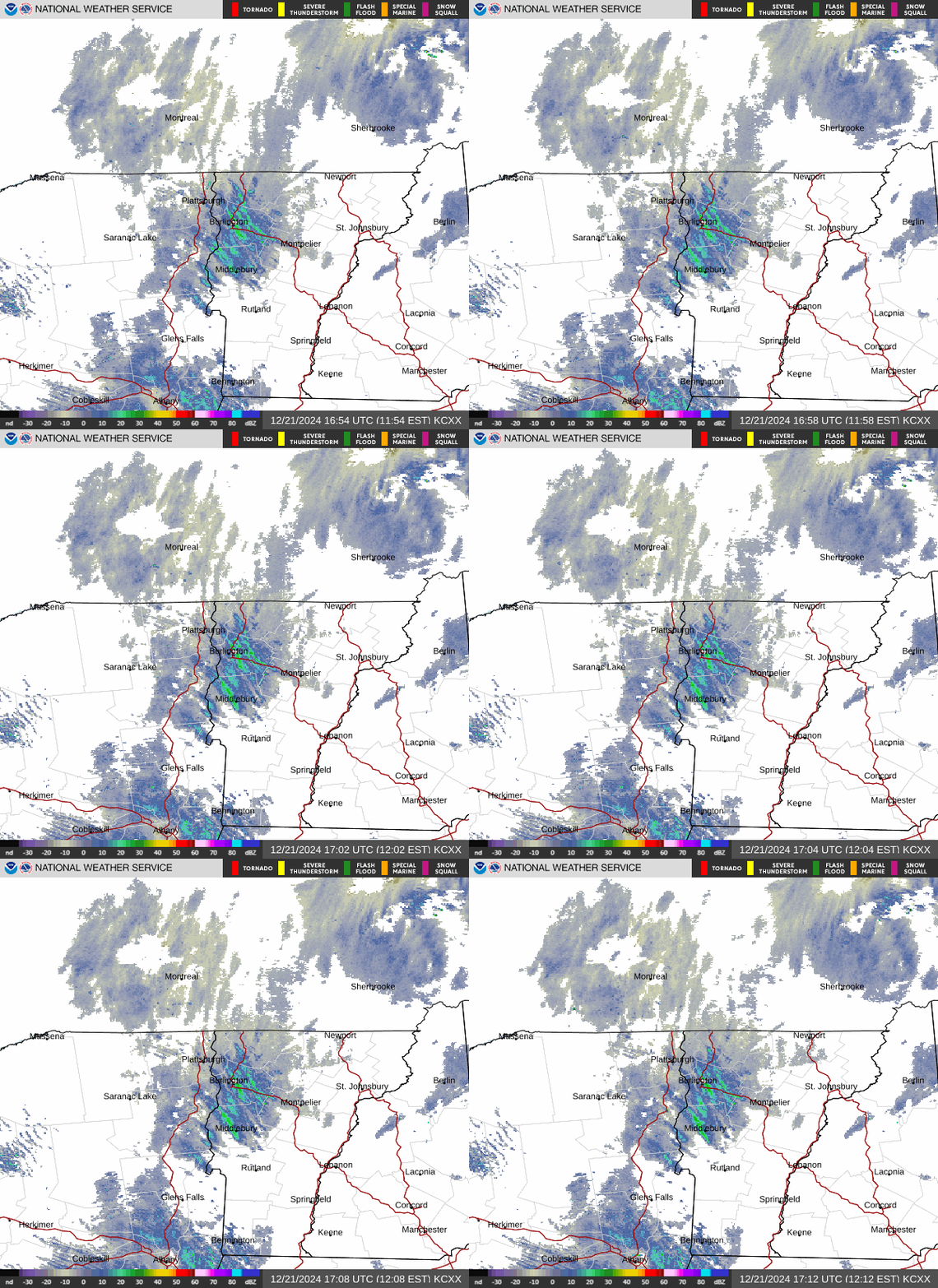
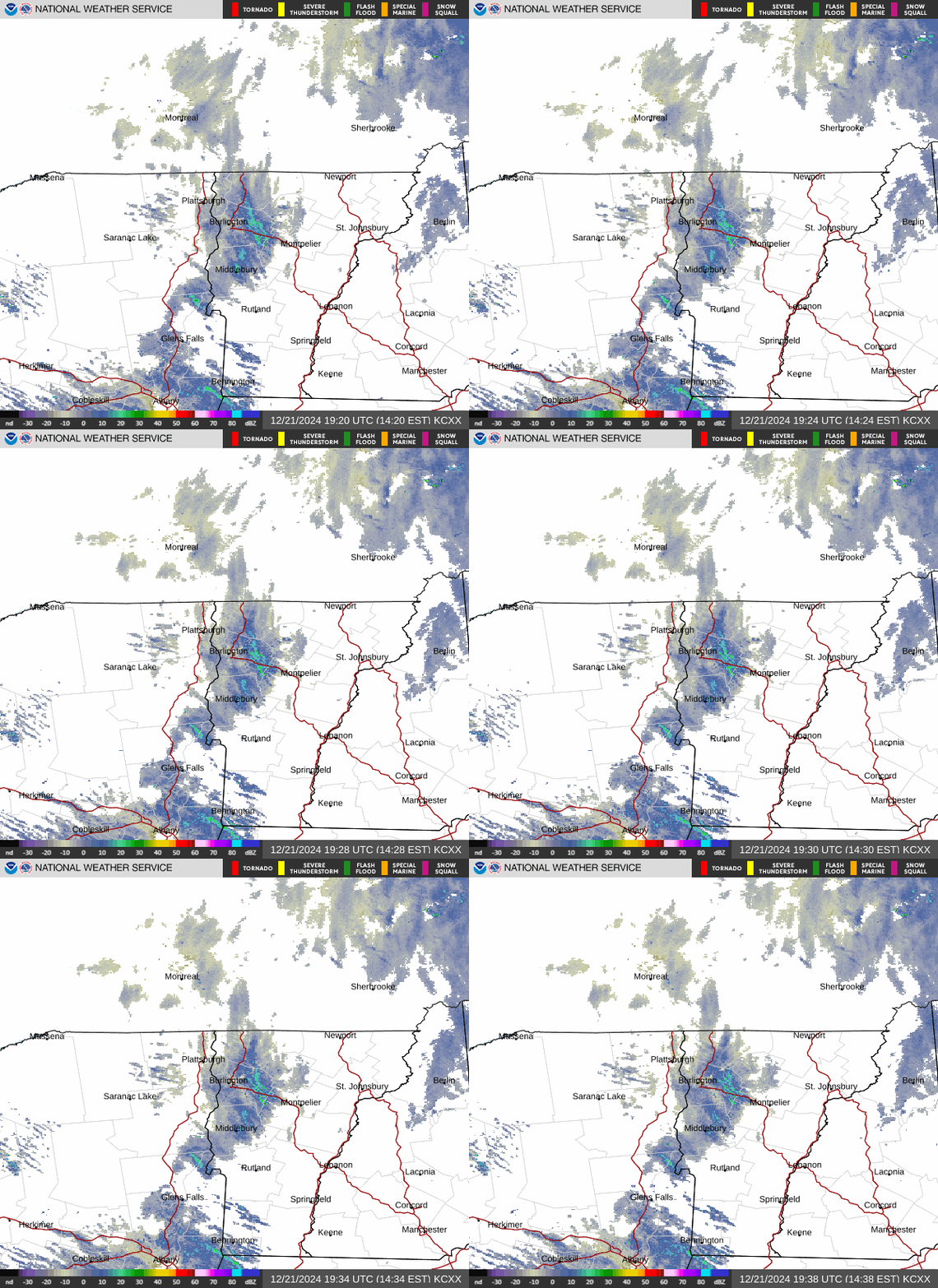
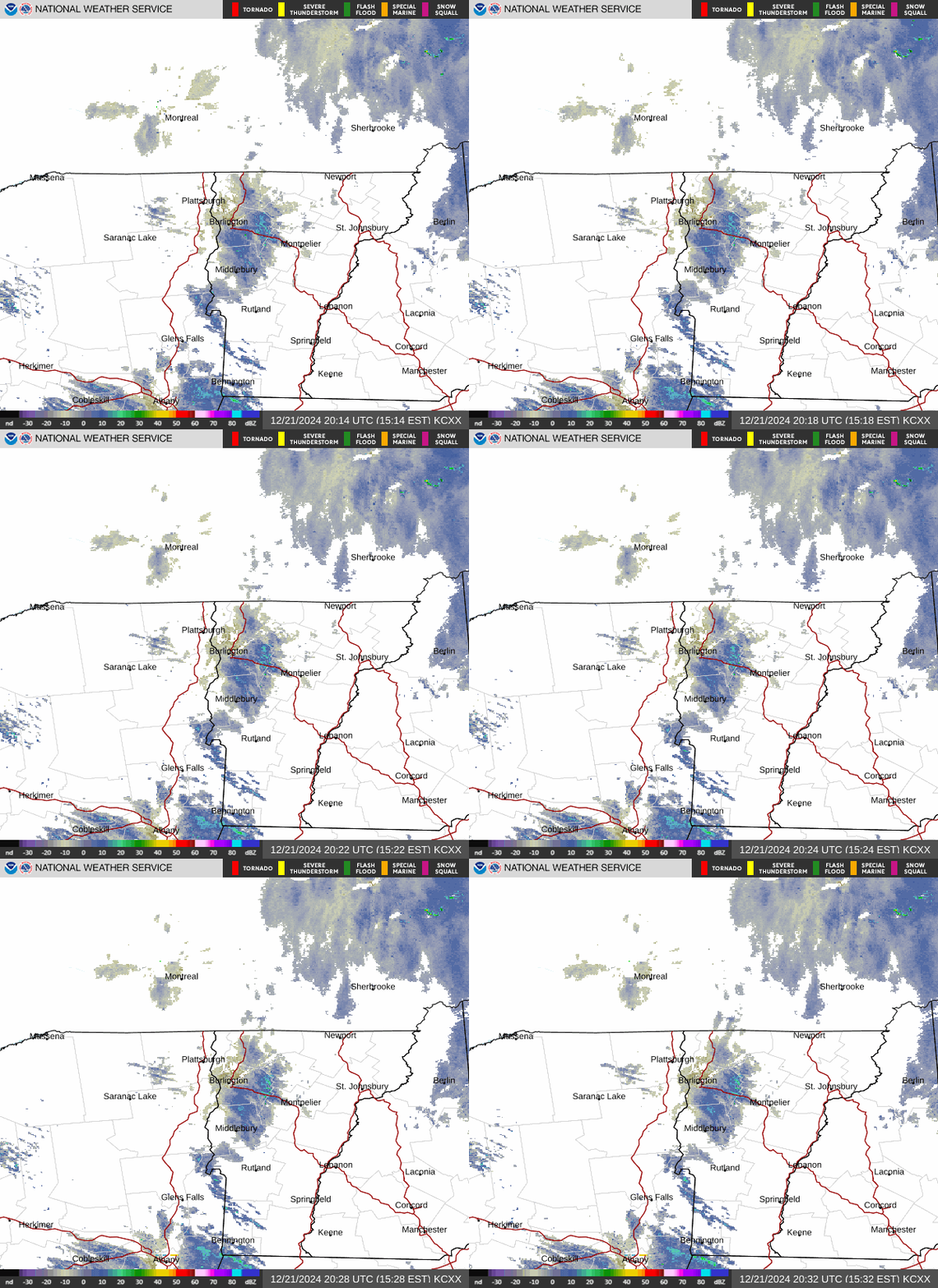
There aren’t any major systems expected to hit the area in the next couple of days, so the only potential snow during the midweek period would be if any of the moisture from Lake Ontario makes it over here to the Northern Greens. There’s not much expected, but there were a few radar echoes approaching the area in the evening, so the mountains may have pulled a few flakes out of that. Anything we get from lake moisture would be very dry snow, so it would top off the powder nicely in terms of the density gradient. Once we get out toward Friday and the weekend, there may be a couple chances for Clipper systems to affect the area.
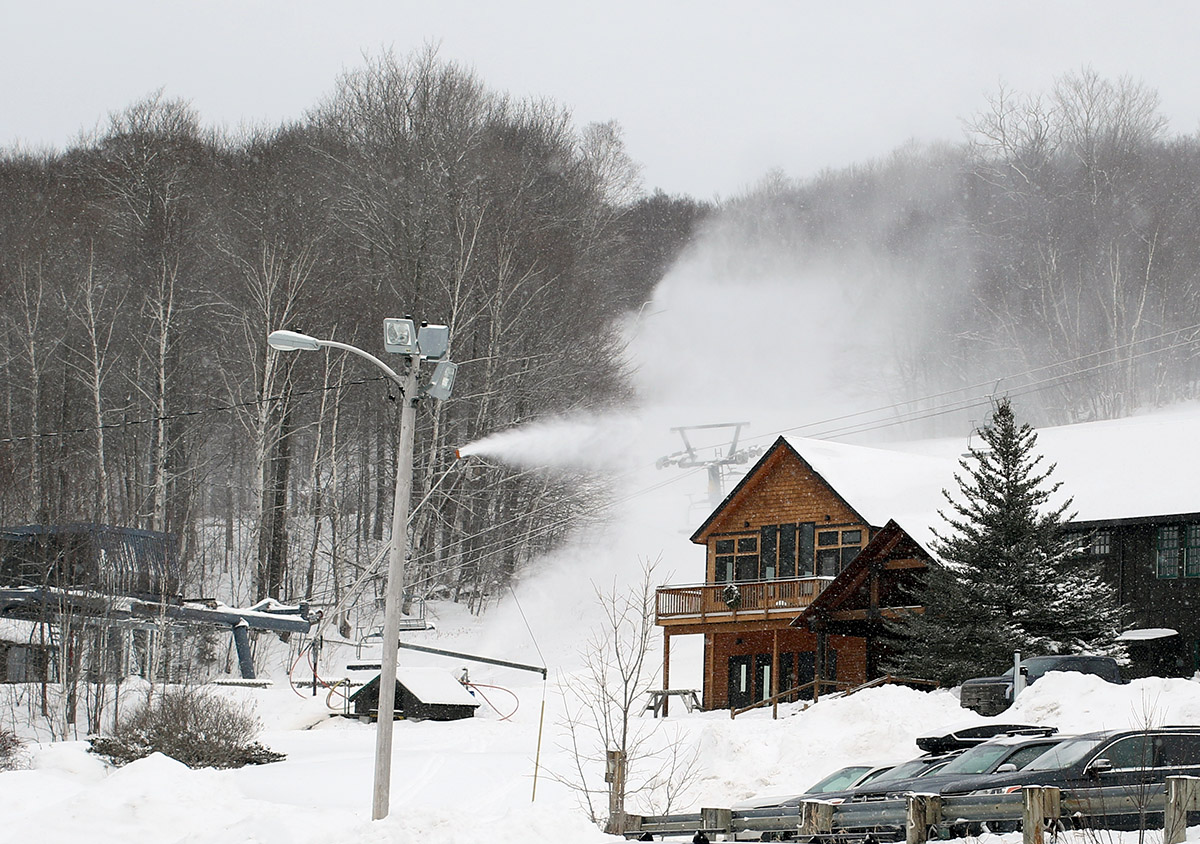
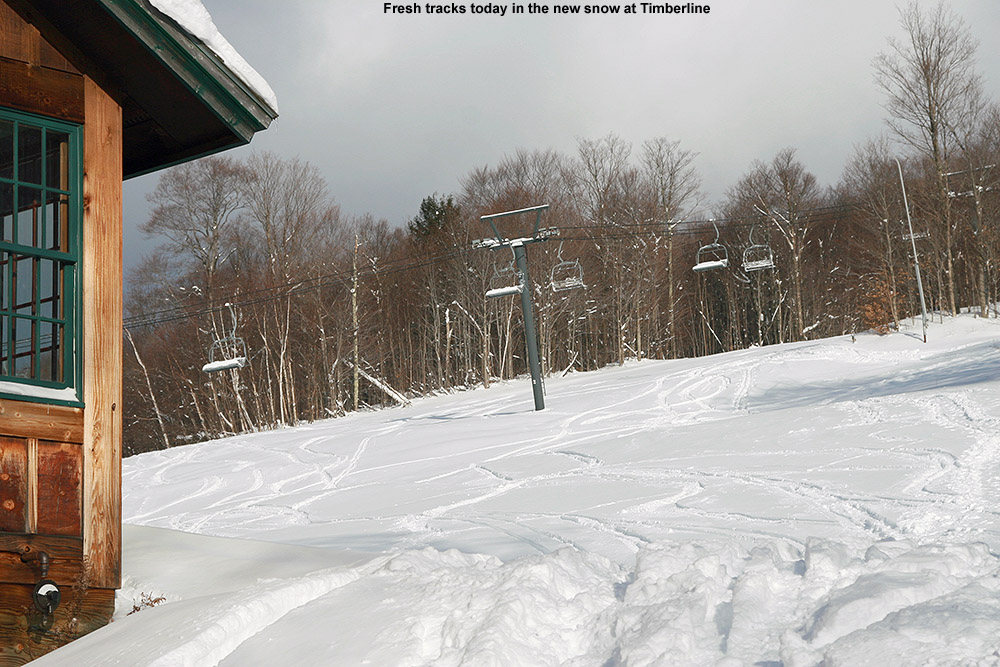
Bolton Valley has finally fired up snowmaking at the base of the Timberline area, so Timberline’s slopes will likely be opening to lift-served skier traffic soon.
Our recent long-duration system finished up on Friday, and the next winter system moved into the area today, so Mother Nature continues to deliver snow and enhance the conditions on the slopes. E and I headed up to Bolton Valley this morning to check out the conditions with some lift-served skiing, and there’s no doubt that the word is out about the conditions. It was midmorning when we arrived at the resort, and people were already parking at the third tier of Timberline and being shuttled up to the main base. The good news is that they resort has fired up the snow guns on Timberline, so they’ll probably be opening that area to lift-served skiing soon.
Erica enjoying some powder today in the Snow Hole area
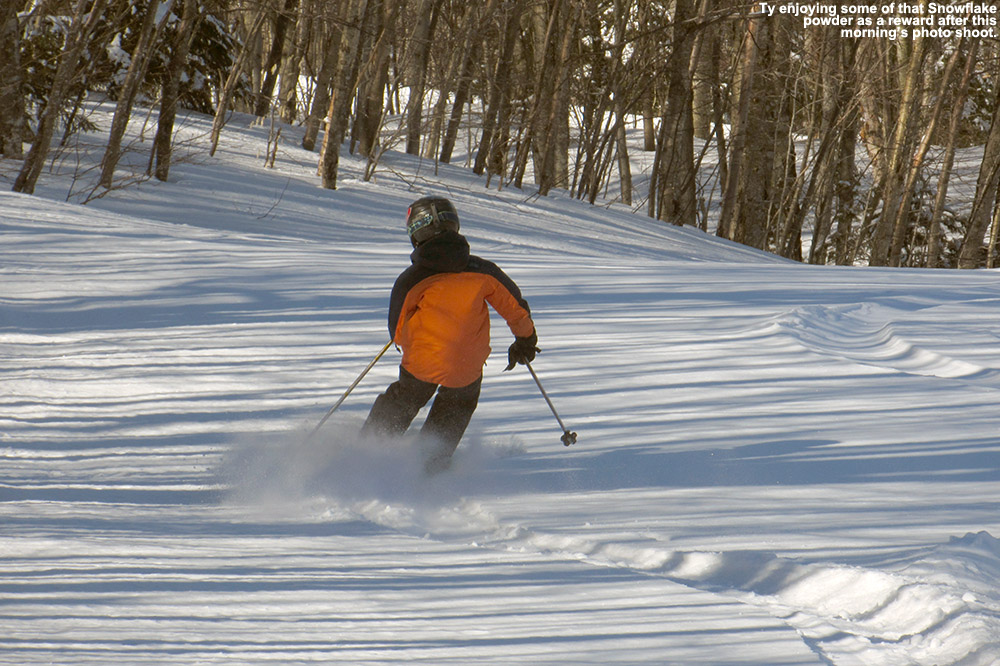
After the run of relatively cold, windy (and thankfully snowy) weather we’ve had for the first third of January, today was extremely comfortable with temperatures around 20 F, no wind, and light snow falling. So, everyone we saw at the resort seemed to be excited about that. The resort had received another few inches of snow as the previous system wrapped up, and conditions on the slopes were very similar to what I experienced on Wednesday and Thursday with a touch of improvement thanks to the additional snow and more grooming. The scoured areas were still thin on snow, but grooming had definitely help equalize and soften the conditions there a bit. Natural snow areas out of the wind continue to offer fantastic snow – and when that snow is groomed it skis beautifully; you’re not hitting anything under the packed powder. Off piste, there is a lot of powder as one would expect. We were finding depths of around 20 inches, which is similar to what I’ve been finding this week. In general, areas with that sort of deep powder are skiing fine, but it’s not outstanding powder skiing. The powder is of roughly medium-density, but its density is generally equivalent throughout its depth, so you can sink in pretty far and get a bit bogged down on lower-angle terrain. It’s not upside-down powder, but it just doesn’t ski as well as it would with a really nice right-side-up arrangement. Some areas did offer a better powder experience though. They have finally opened up more of the Snowflake terrain, and we found about a foot of powder over places that had either been groomed or had more settled snow underneath, and those spots offered some very pleasant powder skiing today.
Areas protected from the wind continue to offer great powder turns as our second long-duration winter storm this month dops more snow in the local mountains.
I had time to head up to Bolton Valley for another ski tour this morning, and the weather was very much like what we’d had in the mountains for the past few days: temperatures in the single digits F with a lot of wind. Thankfully, yesterday appeared to be the coldest of the days this week, and the temperatures this morning were about 5 to 10 degrees F warmer.
Yesterday I’d done a bit of lift-served skiing after my tour, but today I decided to make my tour a bit longer instead of sitting on the lifts. On my ascent I topped out around 2,900’ on Wilderness, and I figured I’d gone high enough to get a good sampling of the snow at various elevations.
With a few more inches of snow each day, the conditions on the slopes have just continued to improve aside from those areas exposed to the wind where scouring has been incessant. Exposed areas just continued to be scoured, and I wouldn’t be surprised if some of those exposed spots had less snow than they did before this system began. Protected areas had simply fantastic snow though. Like yesterday, I typically measured 20 inches or more of powder in protected areas today, and the subsurface snow is a distant memory there. I also measured depths as great as 35 inches in some non-drifted spots, where it seemed like I was just pushing down into the older layers in the snowpack without even hitting any firm layer to differentiate the snows from these recent couple of systems. That’s a good sign about the overall quality of the snowpack though if you can’t even find a subsurface layer until you head down 35 inches into the snow.
Throughout the Village, snow has been accumulating in various ways on all sorts of surfaces due to the continued wind and snow from our ongoing long-duration winter storm.
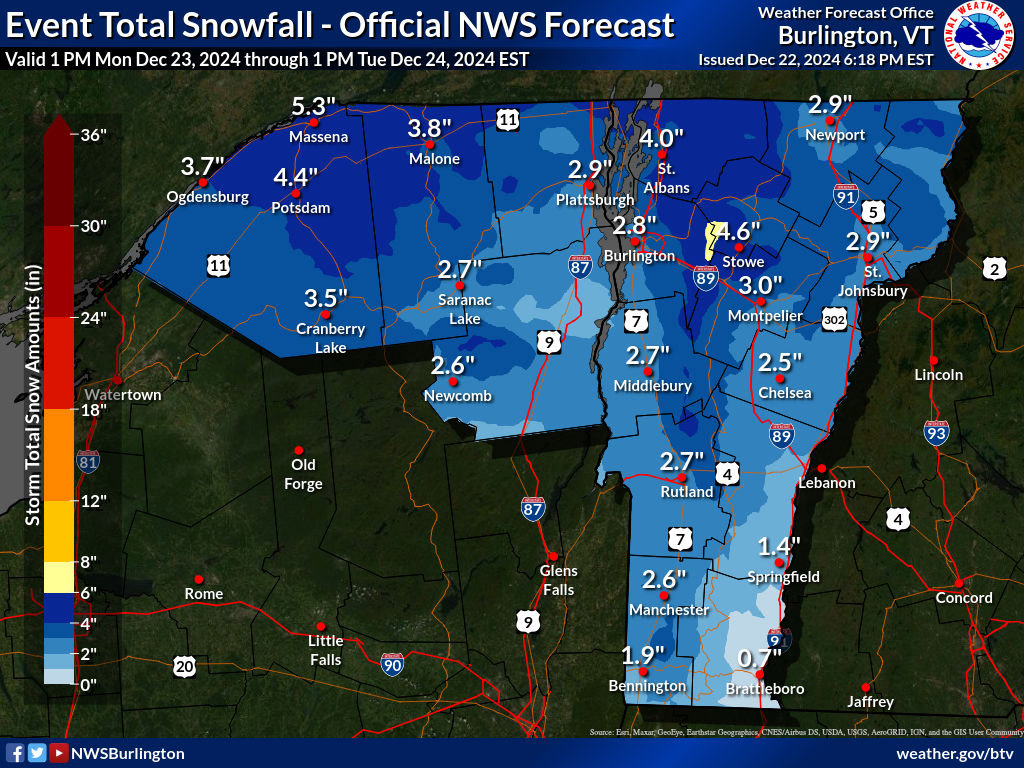
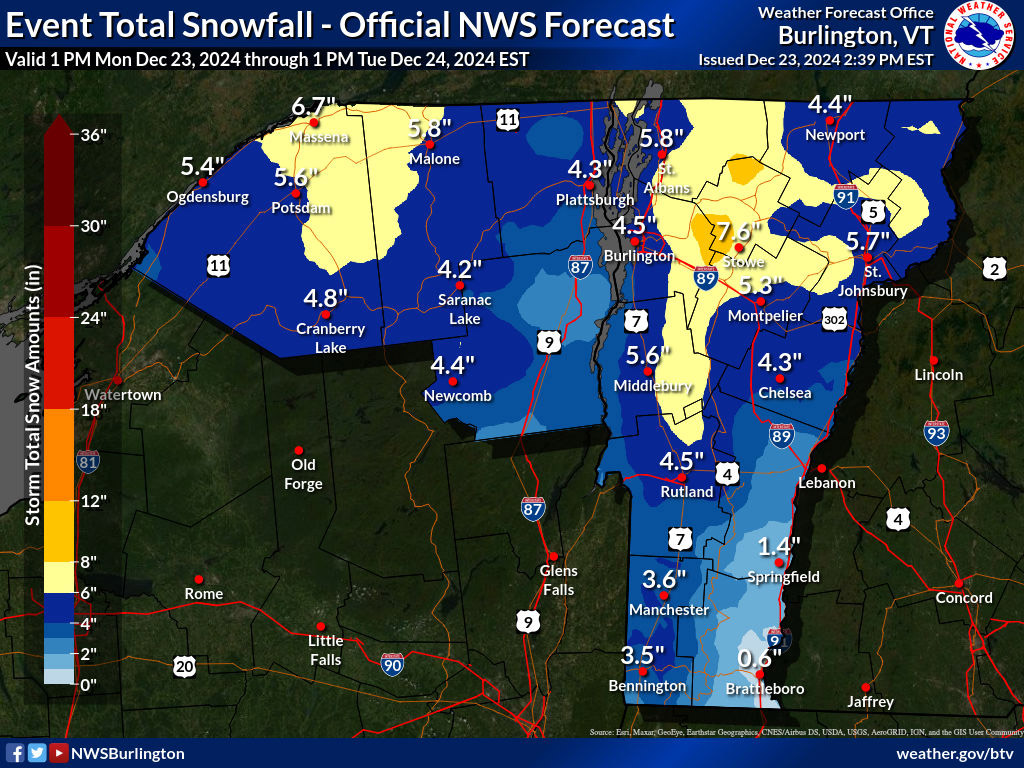
With the end of this most recent long-duration system, it looks like we could be moving into a pattern featuring some Clipper systems. The first one is coming into the area tomorrow, with another expected for Monday into Tuesday.
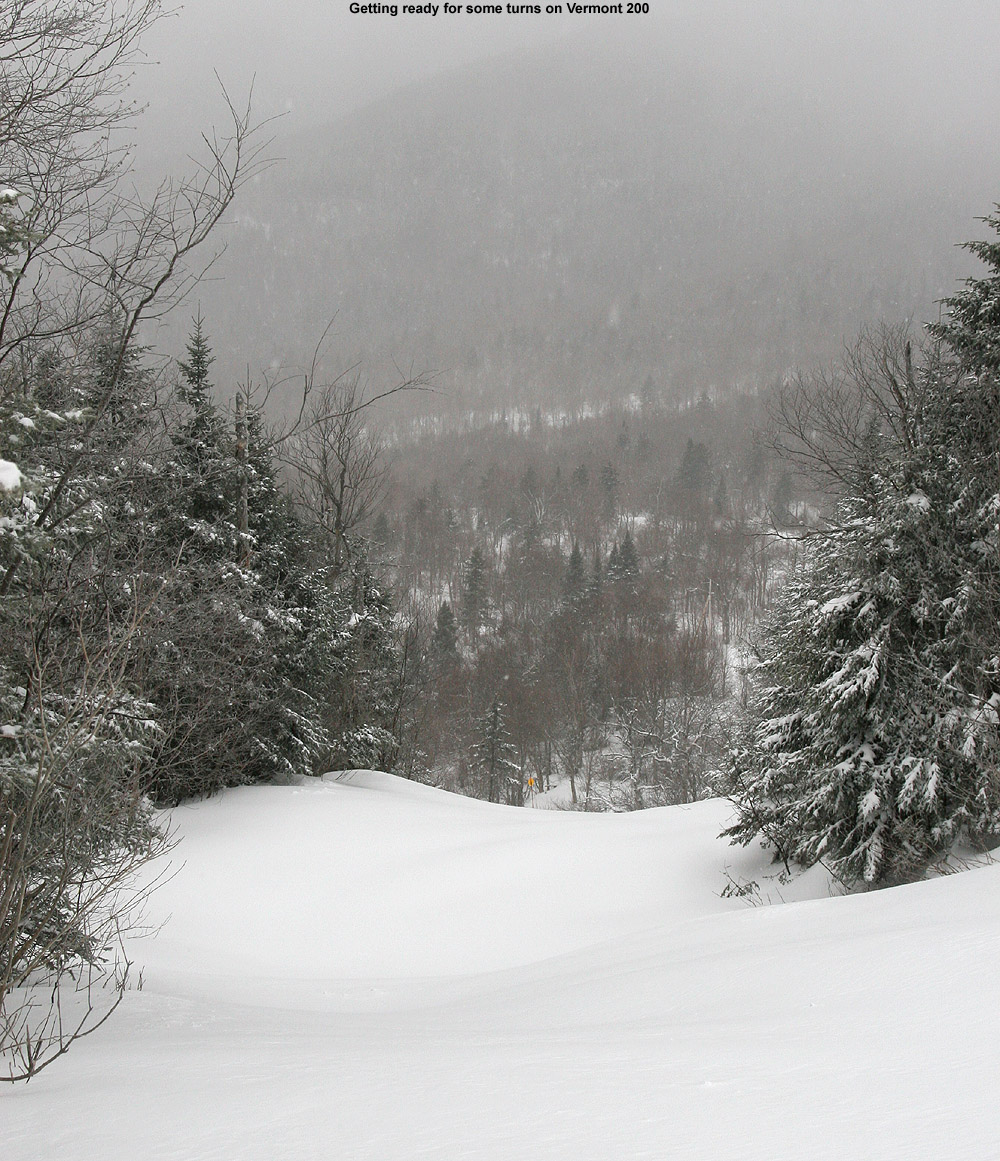
Peering down Vermont 200 this morning, it was clear that its protection from the winds was allowing some nice snow accumulations to settle in for some great soft conditions.
I’d hoped to head up to the mountain for some turns yesterday afternoon to see how accumulations were settling in from our current system, but it was a bit close to sunset after I finished the work I wanted to get done. I wasn’t too worried about it though, since this is another long-duration system, and the snow accumulations are slowly building up. I did manage to get out for some turns this morning on my way into Burlington, so I can report on that outing. In the weekly forecast, today had the coldest temperatures of any day, with valleys in the single digits F. So, in that respect, this wasn’t my preference for days to get on the skis, but it’s been snowing, and it worked out.
In most respects, the weather up at the mountain was sort of status quo for what we’ve had over the past several days – at the Village elevations it was still in the single digits F. In this case, the temperature was barely in the positive category, but it can definitely get far worse in January. A big current factor in comfort on the slopes though is the wind – those winds are still howling out there with this system. With that in mind, I started the morning with an ascent via the Wilderness Uphill Route to get my body up to temperature, and that worked well. Then I was warm enough to take a trip up the Vista Quad and make another run.
As the snow continues to fall, the persistent northwest upslope winds are forming drifts all across the resort in exposed areas.
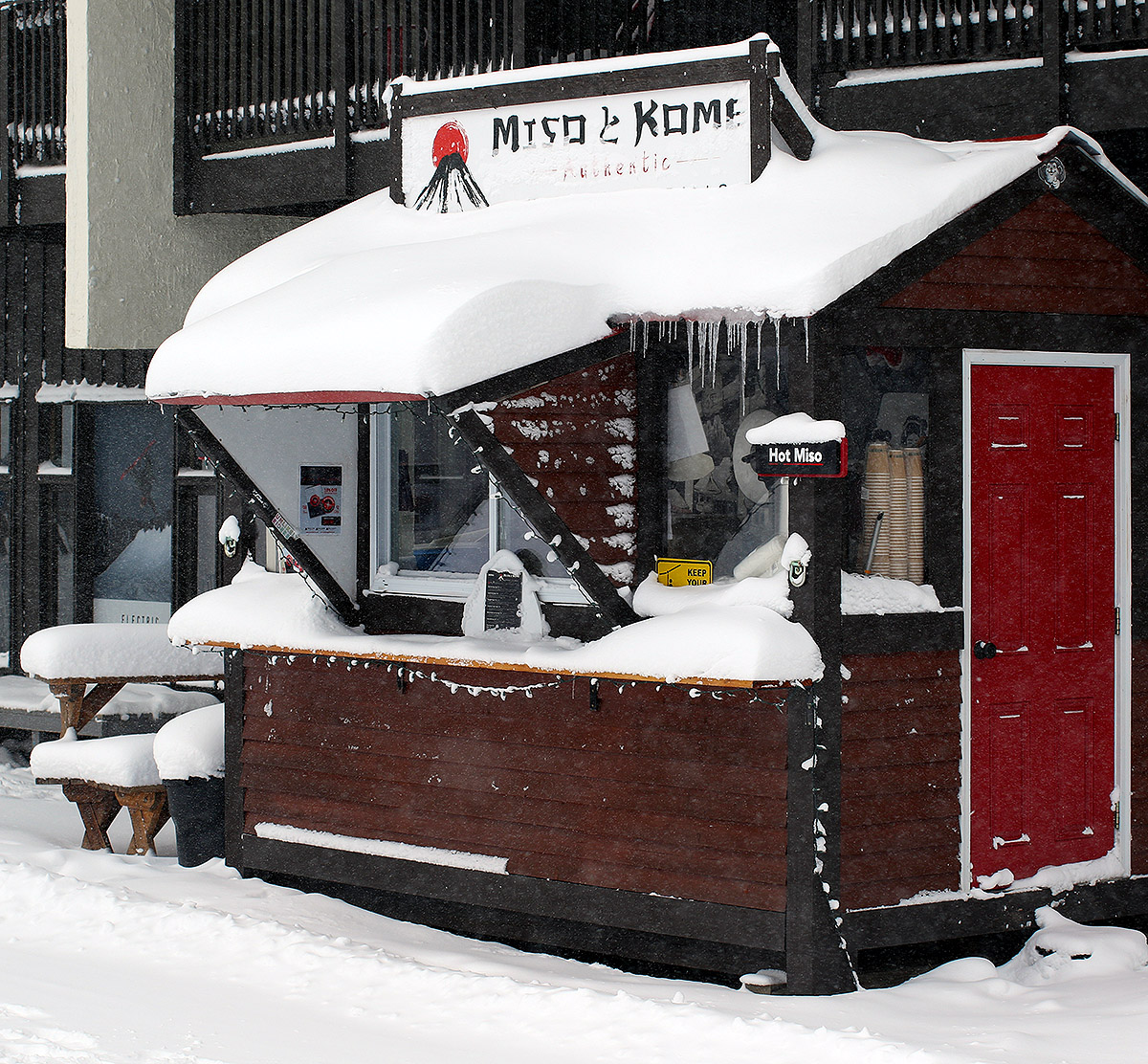
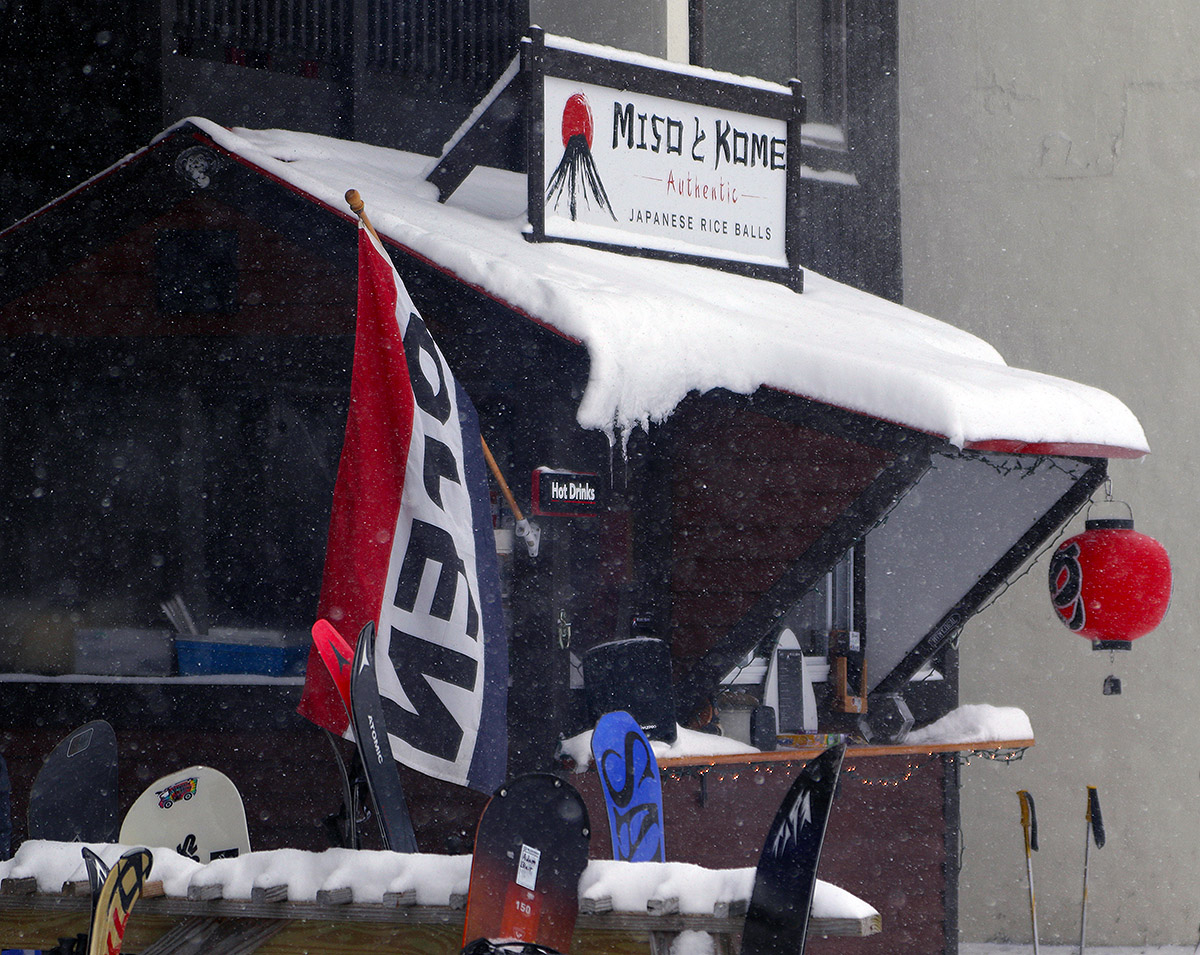
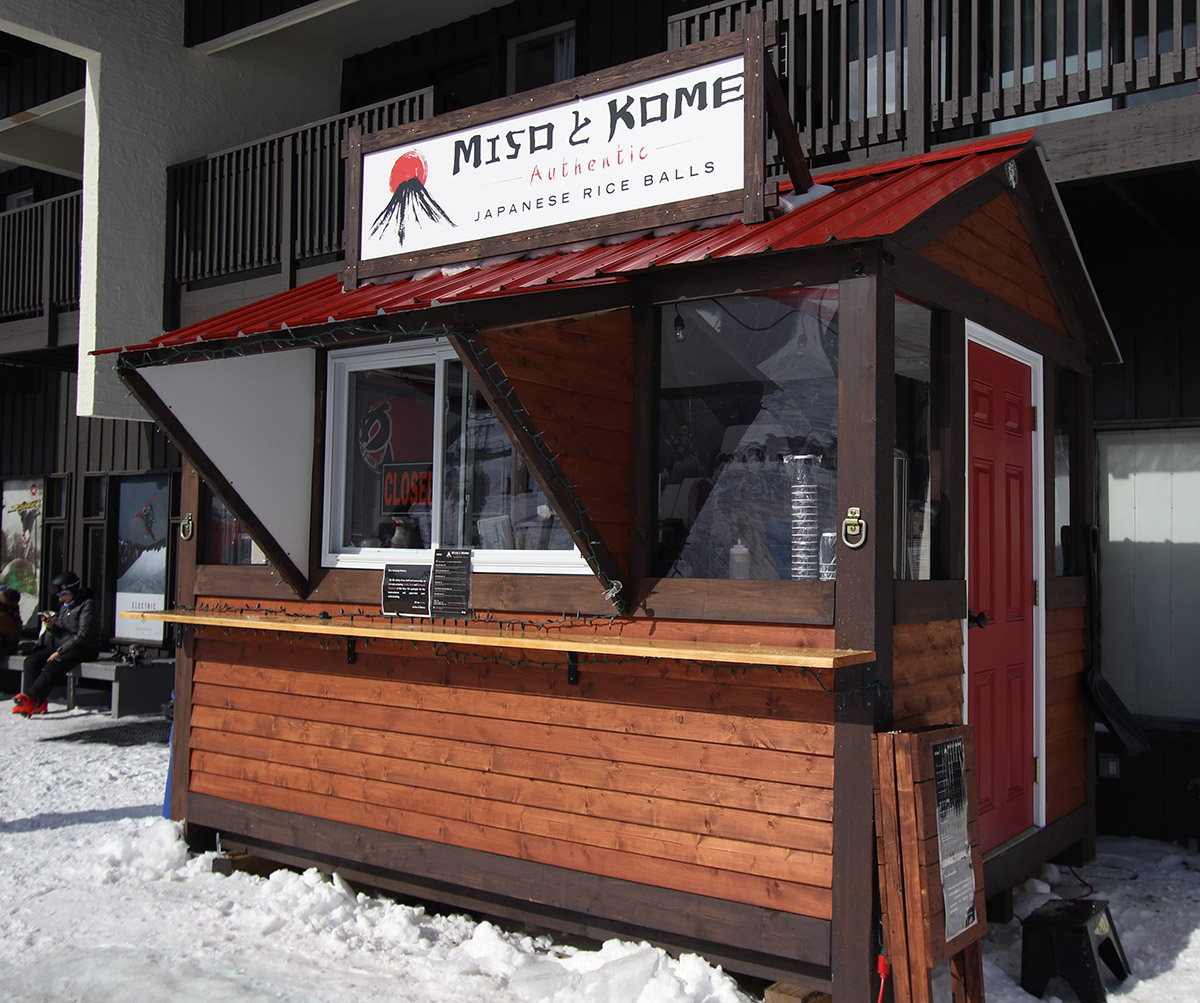
The snow report from Bolton Valley was indicating 6 inches for their 48-hour total/storm total as of this morning, which doesn’t seem like much, but this system has brough decent moisture with it. The flakes have been small in many areas because of poor dendritic growth. Combine that with those winds blowing it around and packing it together, and measuring accumulations in the mountains has been tough. For example, I’ve recorded almost a foot of snow from this system down at my house in the valley, not because we actually got more liquid equivalent than the higher elevations, but because we’re sheltered from the high winds, and the dendrites can actually stack up with loft and not get smashed and compacted. In any event, we’ve recorded about a half inch of liquid equivalent from this storm so far at the house, so the mountains have probably picked up somewhere between a half inch and an inch of liquid. In areas protected from the wind, such as by the Miso Toh Kome hut, there are some snow stacks that give you a nice sense of how much has fallen with this event in unscoured areas, and the stacks looked like they were about 10 inches deep.
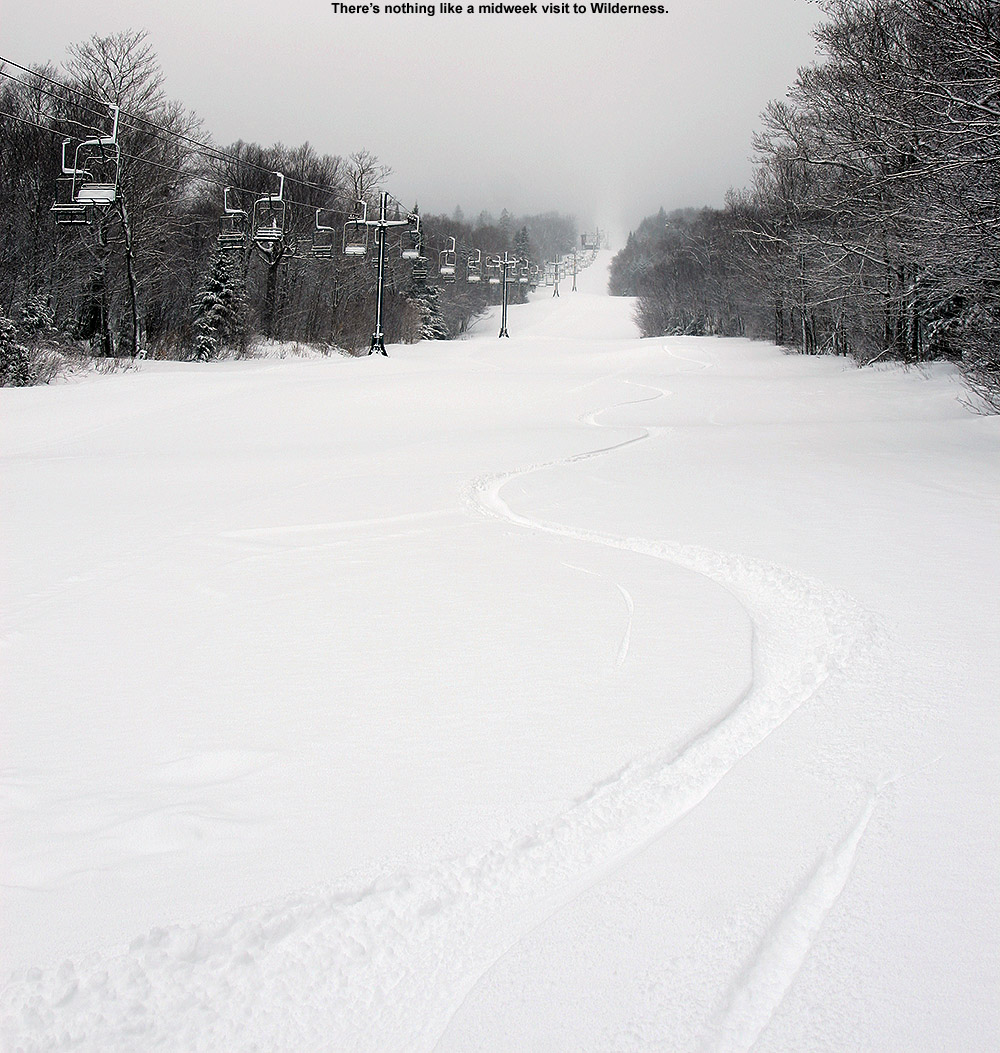
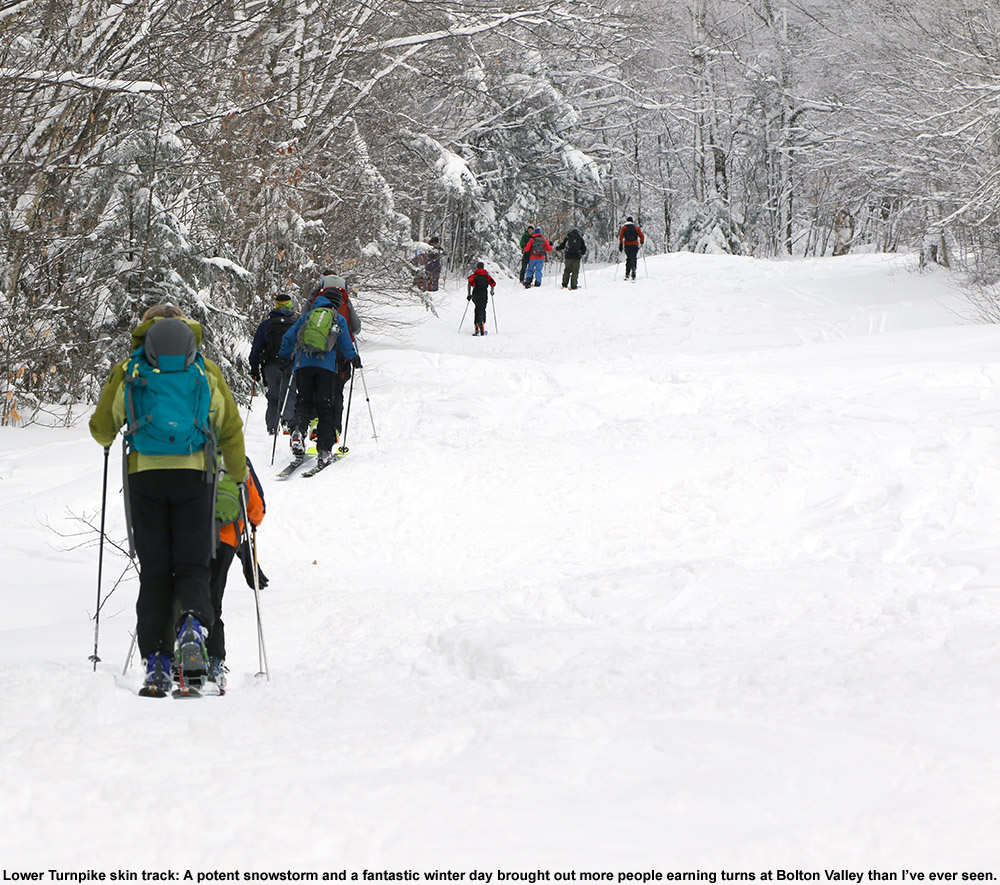
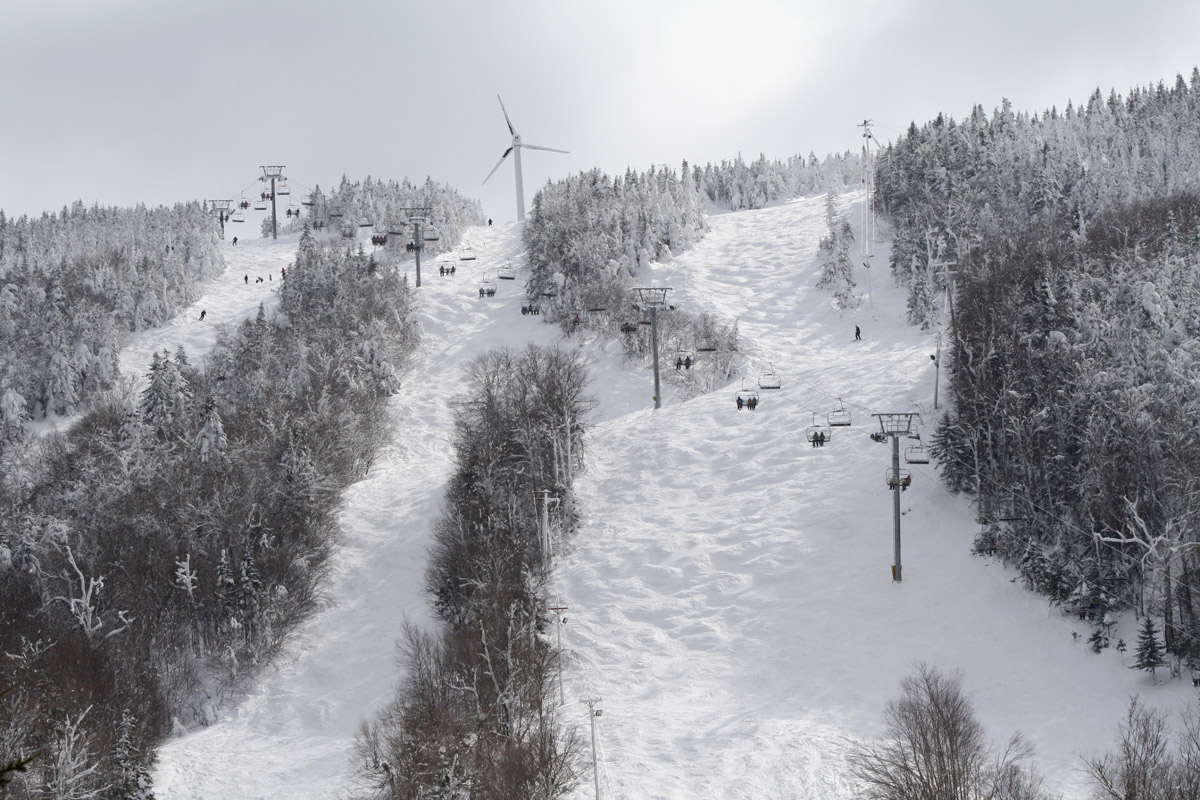
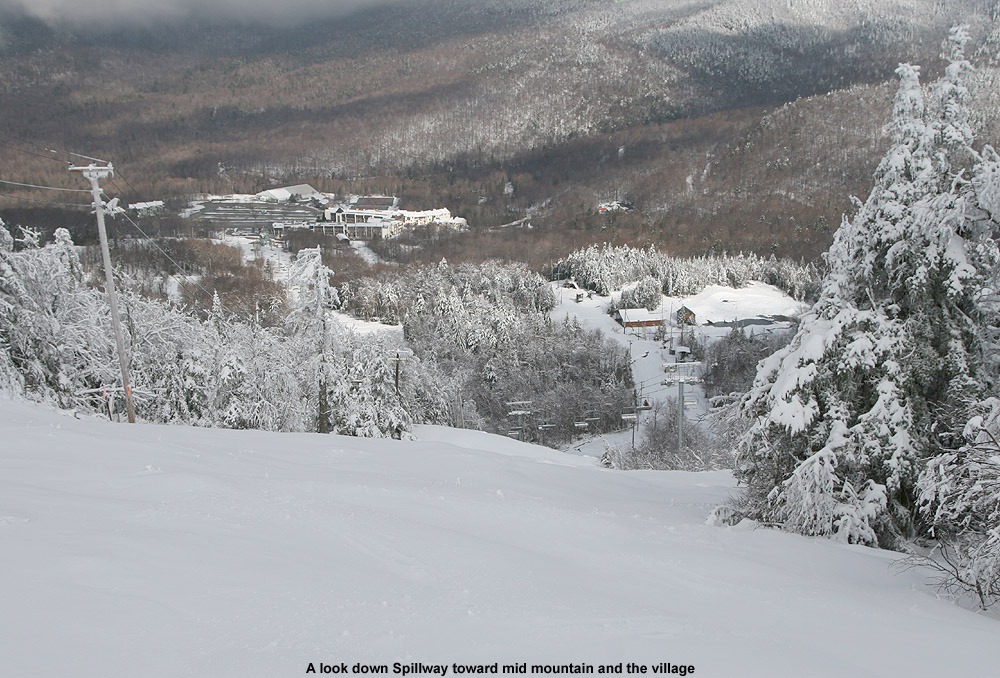
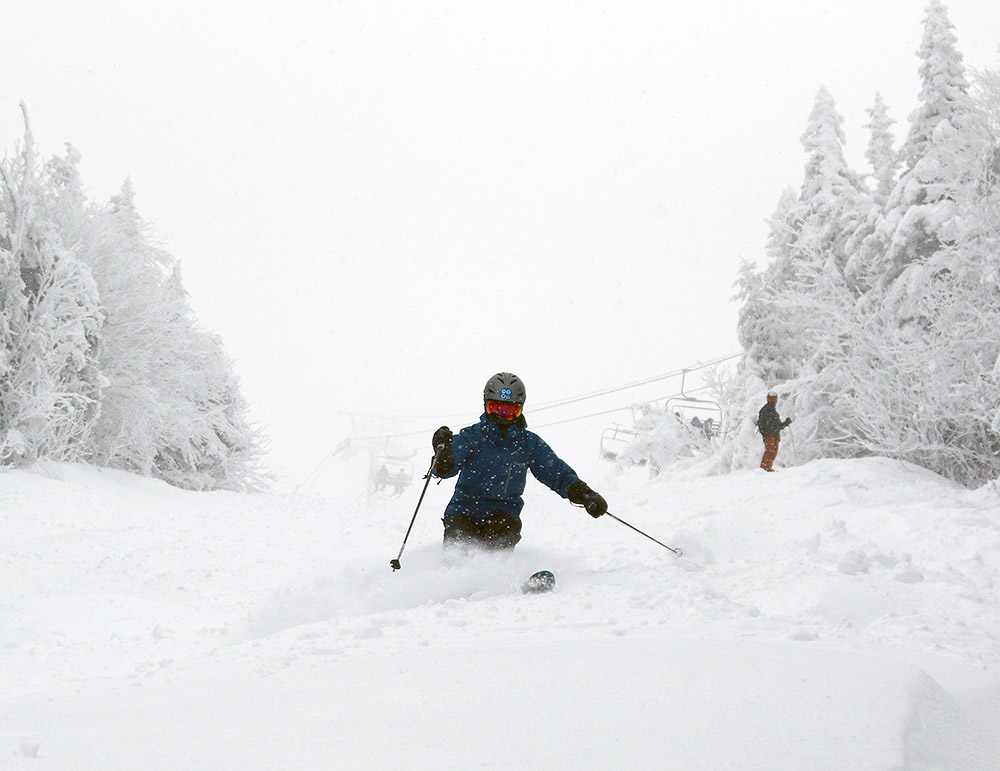
In terms of the ski conditions, with a lot of its terrain facing west, those usual exposed areas at Bolton without snowmaking are scoured down to just a couple of crusty inches. Areas out of the wind have lots of great medium-weight powder though. Measurements I took in protected, non-drifted areas in the 2,000’ to 2,500’ elevation range revealed up to 20 inches of powder, so where it’s not blown away, even the lower elevations of the main mountain are really starting to accumulate quite a stack of surface snow atop the base. I skied Lower Turnpike on my touring run at Wilderness, and being protected from the wind, it had great snow wall-to-wall, with some spots having a foot of powder, and others just a few inches of powder if they had seen grooming and/or skier traffic. With the cold temperatures, the snow was a bit slow, but not so slow that I had trouble maintain speed even in those deeper areas of powder. Off the top of Vista, I stayed away from Spillway and Hard Luck, which are much more exposed and get scoured, and chose Vermont 200, which is much more protected. It had just a couple of small, scoured spots, but beyond that it was a playground of 1 to 3 feet of nearly untouched powder depending on whether or not you were blasting through a drift.
Traffic at the resort was fairly light this morning, with some trails having just a few tracks as the snow from our current windy storm system just continues to bury the mountains.
Although we’re not currently getting tons of champagne powder turns from this system with its prodigious winds, I did notice one great thing that this current system is doing. Aside from some nice resurfacing outside of the exposed areas, the winds are really filling in any of those deeper water bars in the lower elevations that just hadn’t managed to get there yet. I really noticed it on Lower Turnpike – there are those certain water bars in lower elevations where you have had to direct yourself to an optimal spot along the width of the trail because it’s got the smoothest transition for crossing. That issue has largely disappeared now with this meaty snow being driven into the hollows of the water bars by those winds.
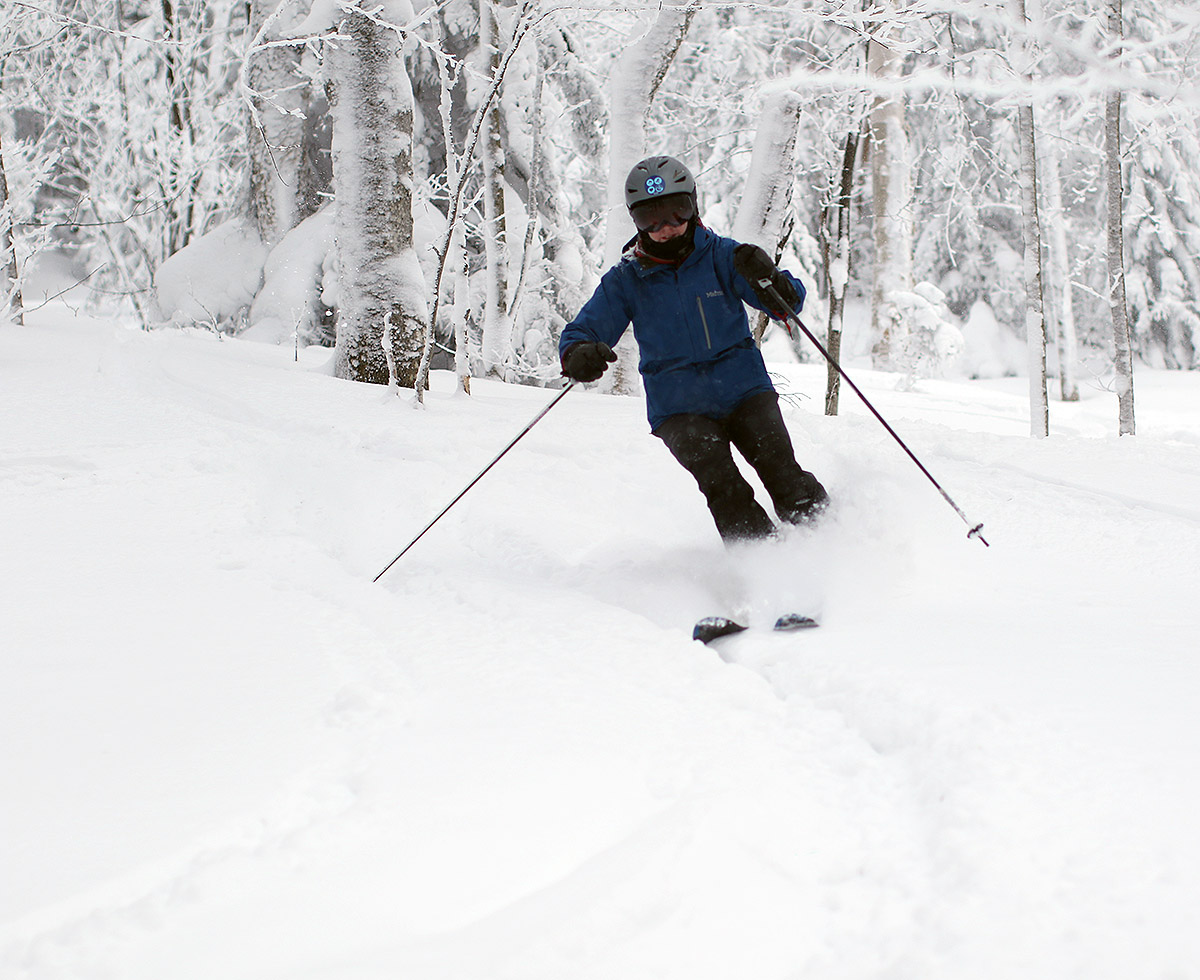
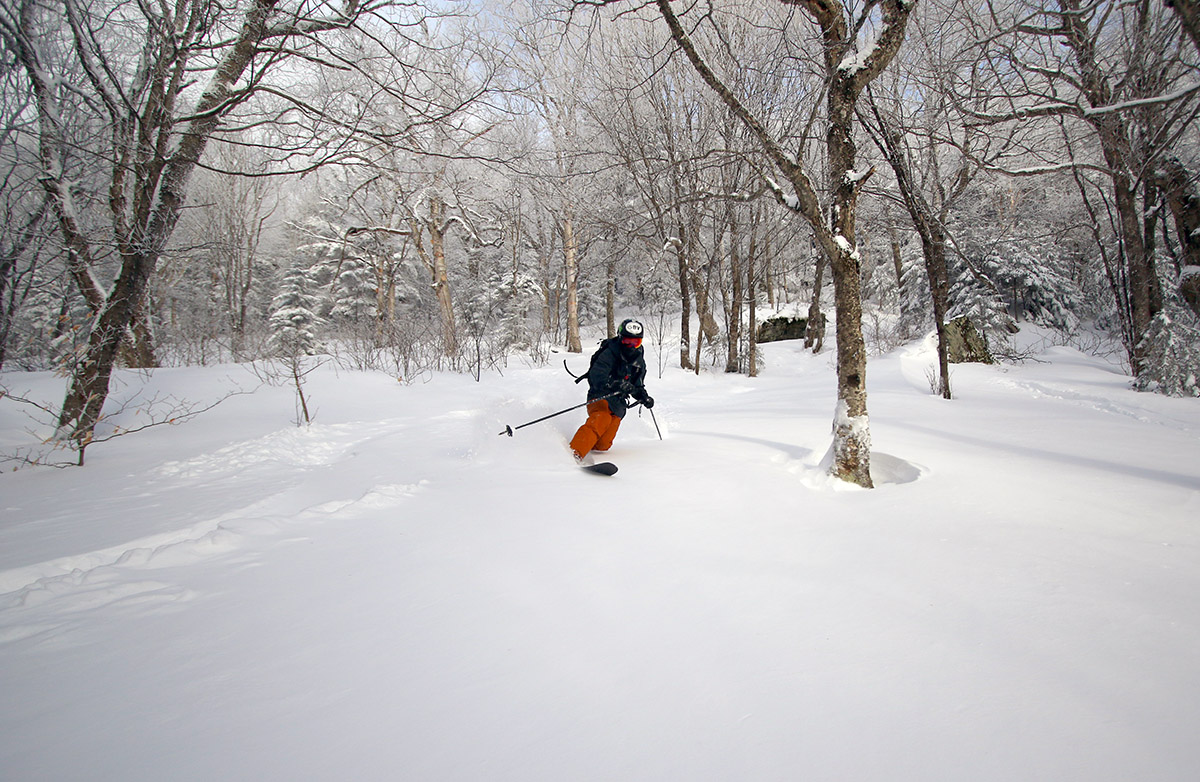
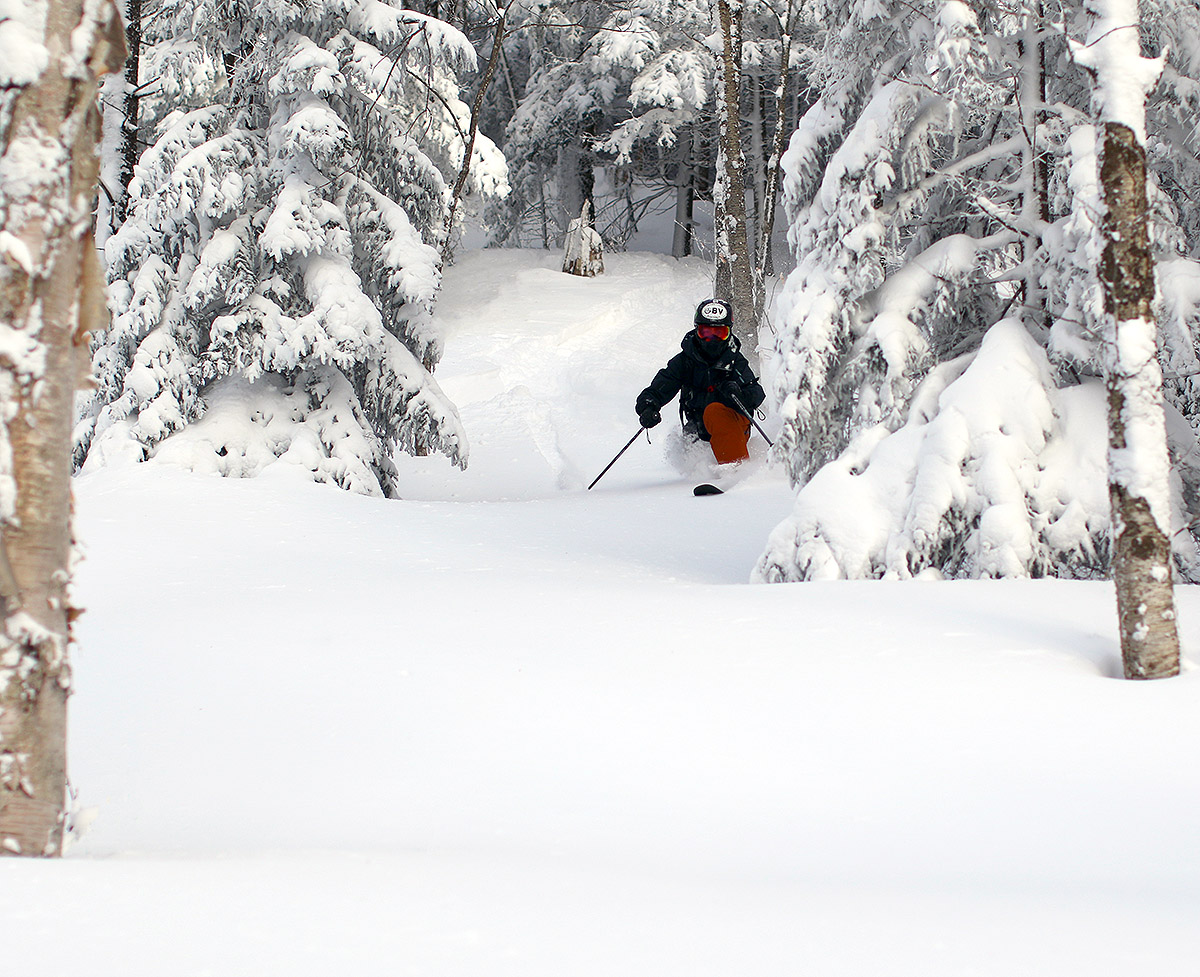
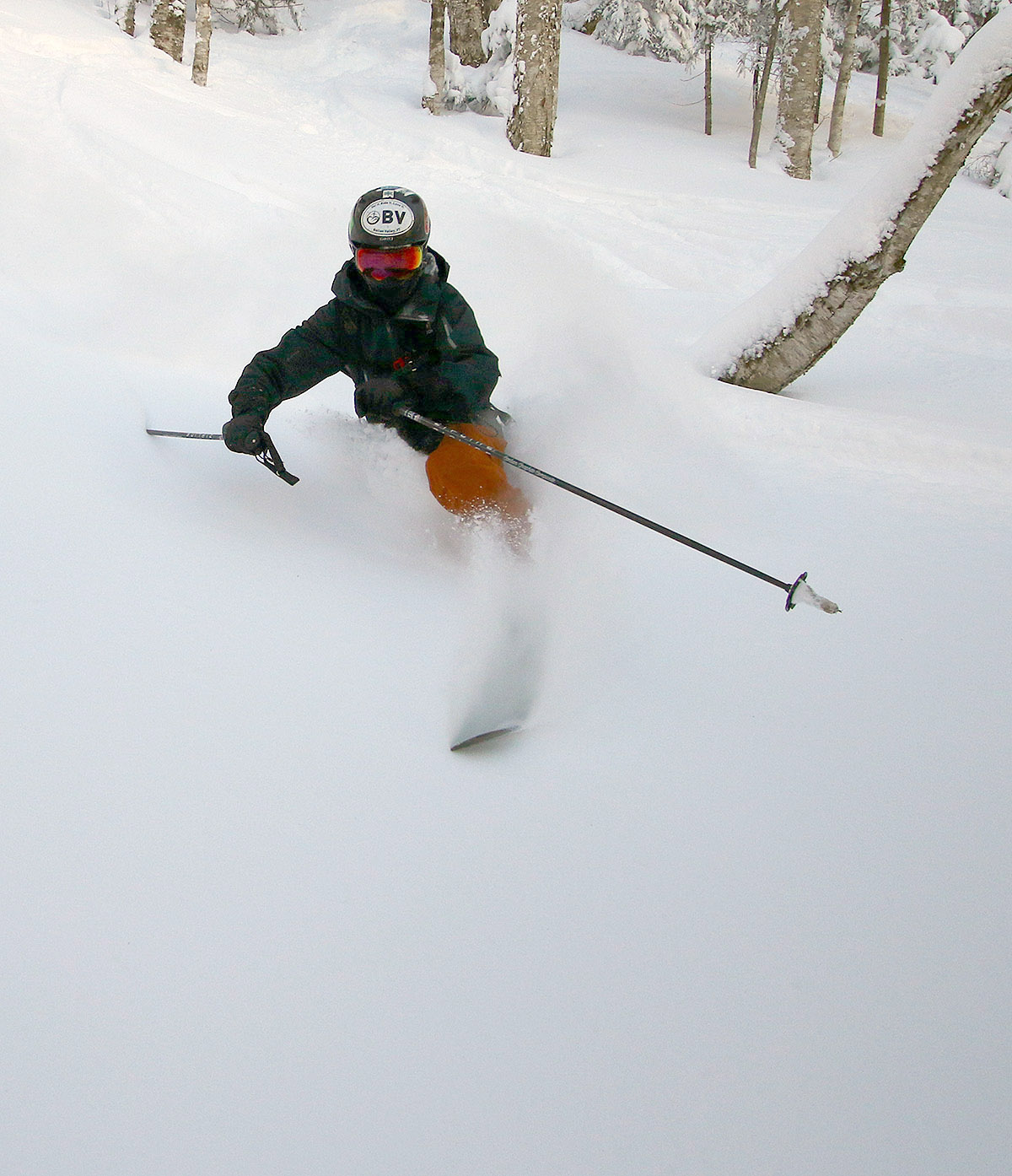
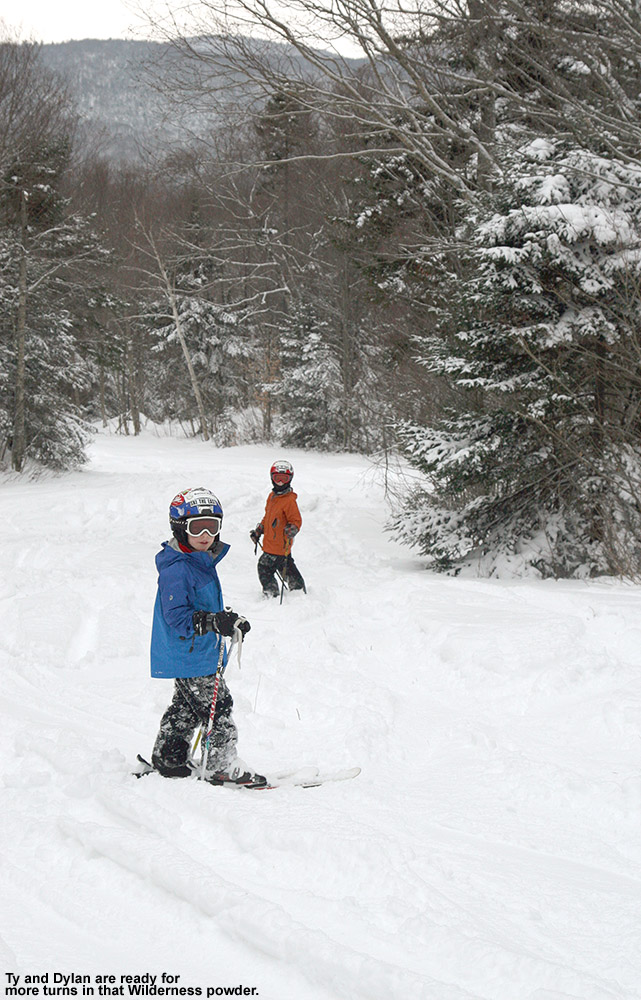
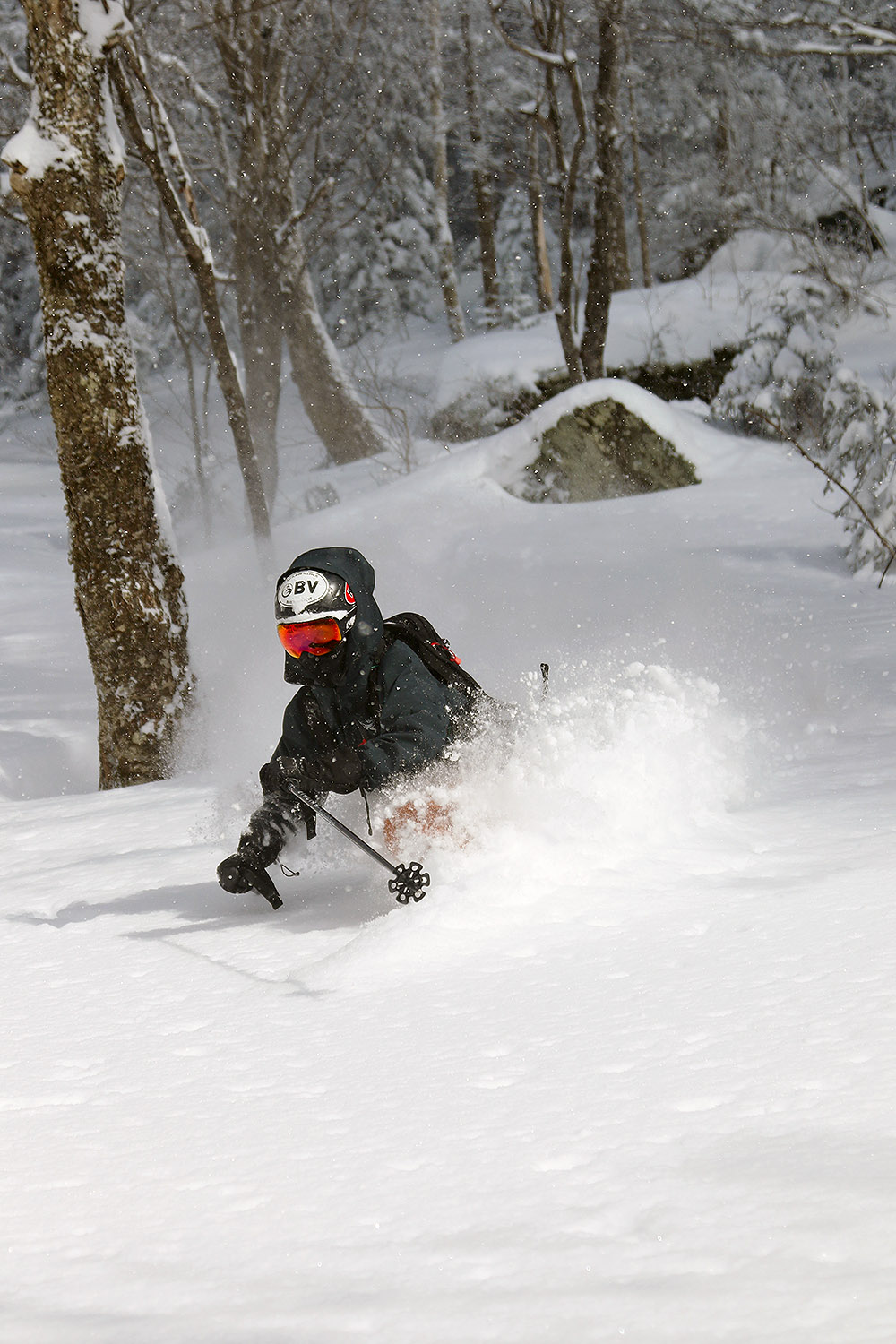
Ty diving through the powder on today’s tour as we descend in Bolton’s Snow Hole area
Based on the quality of yesterday’s skiing, I was leaning heavily toward heading out for another tour today. The backcountry conditions around Bolton are already quite good, and they were reporting another 2 to 4 inches of new snow this morning, so that was a nice bonus. Temperatures were expected to be about the same as yesterday, which meant single digits F.
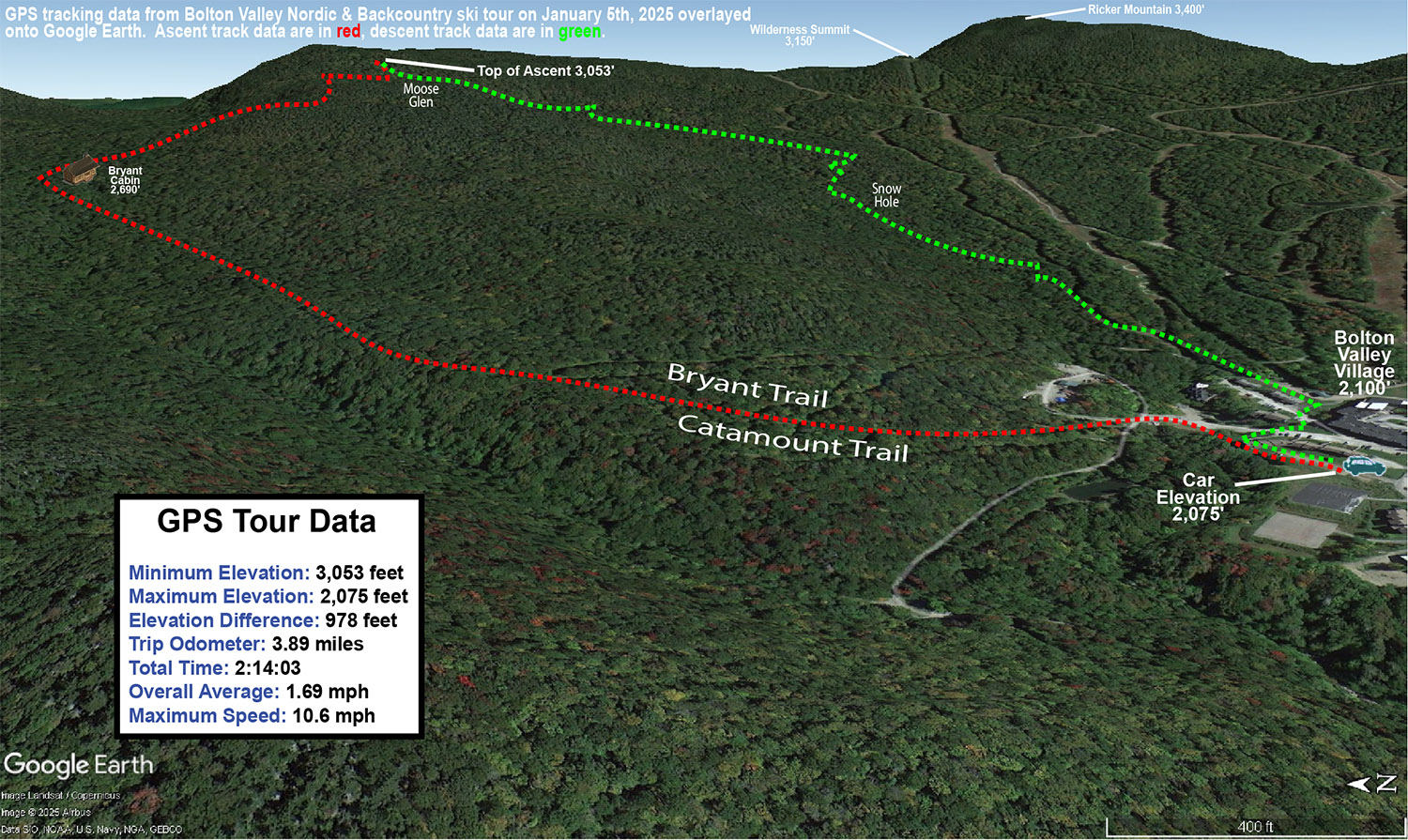
Ty was able to join me today, so it was great to have company, and we were able to get some actions shots in the powder. We did a tour somewhat similar to what I did yesterday, but we lengthened it out a bit more. Instead of heading up to Heavenly Highway and working our way down to North Slope, we went all the way up to Moose Glen and then wrapped around on a descent toward the glades around Snow Hole, which was roughly a four-mile tour. I chose that route to get us some relatively high altitude turns after observing the notable improvements in the overall snowpack above 2,500’ yesterday.
The number of visitors at the resort seemed a bit less today – there was no sign posted about the Village lots being full, and we easily grabbed a parking spot in the upper lot by the entry to the Backcountry Network. With cold temperatures preserving the snow, conditions were similar to yesterday with 1 to 2 feet of powder available wherever wind hadn’t scoured it to lower depths. Touring some of the higher elevation trails allowed us to see the various areas that had been hit by wind, and you just had to be cognizant of where winds had affected the snowpack to pick the lines with the best undisturbed powder. The middle elevations were much less disturbed by the wind, and you could pick just about line and get some great powder turns.
The Google Earth map with GPS tracking data for today’s ski tour on the Bolton Valley Nordic & Backcountry Network
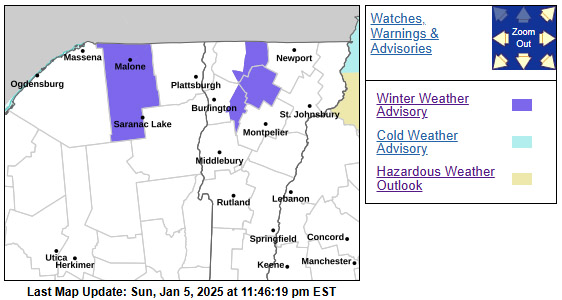
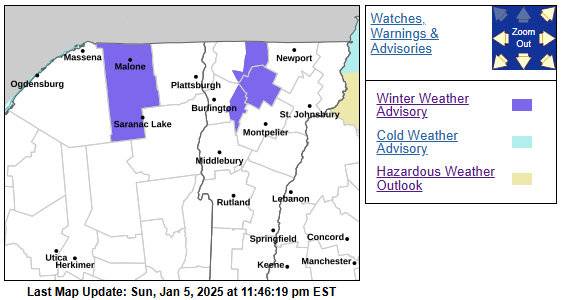
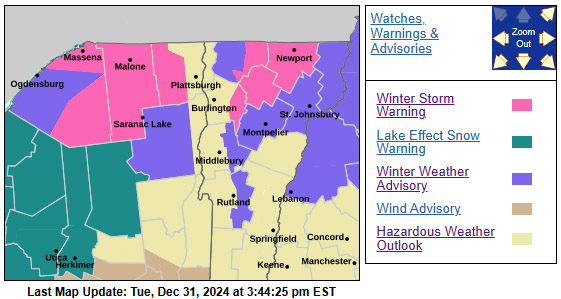
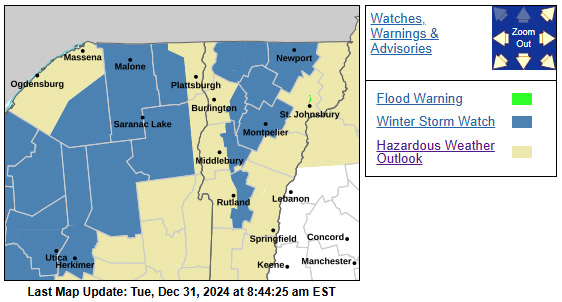
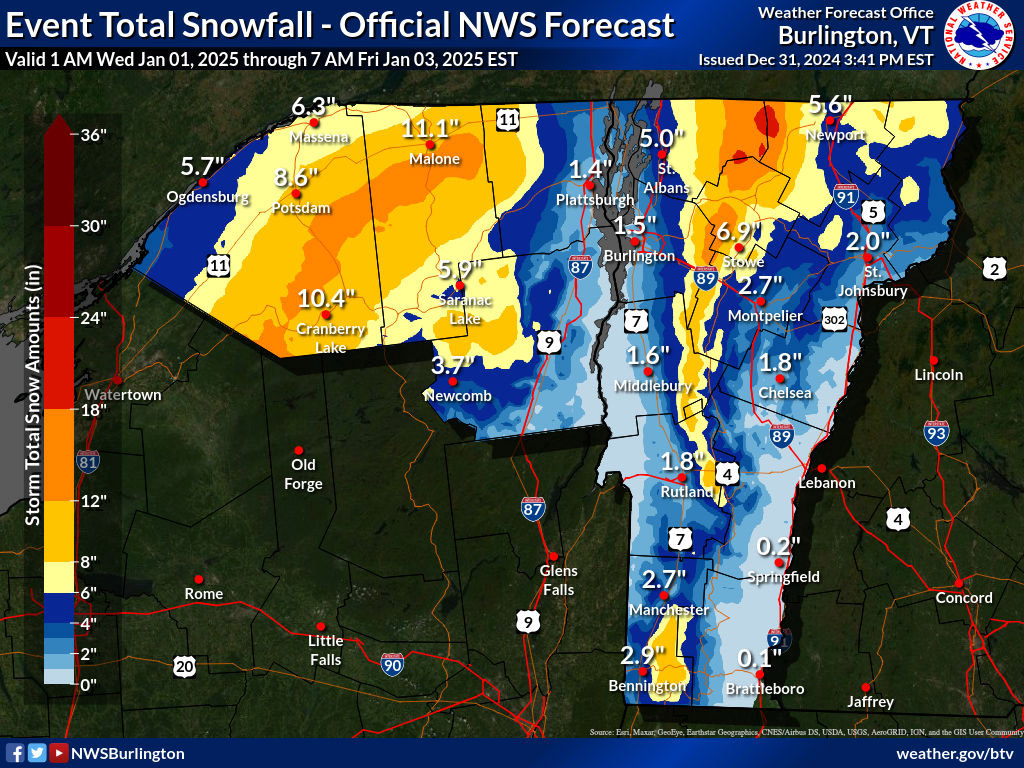
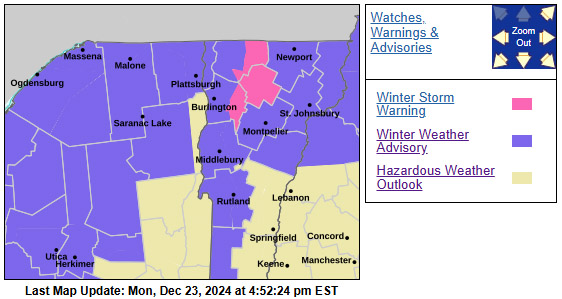
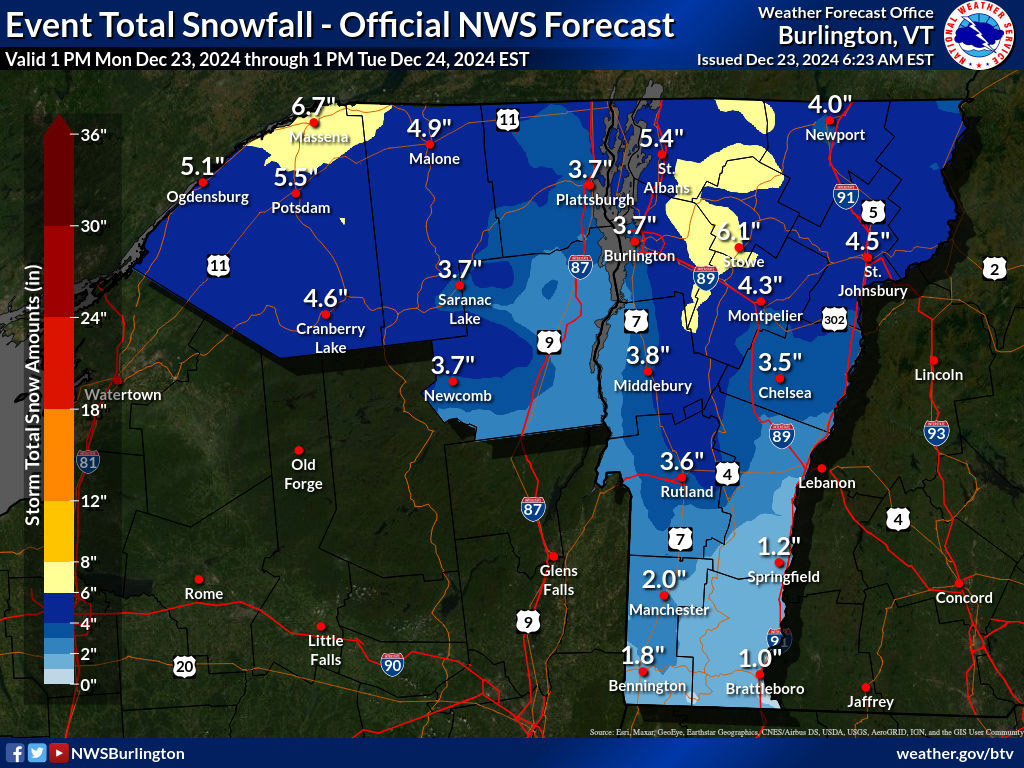
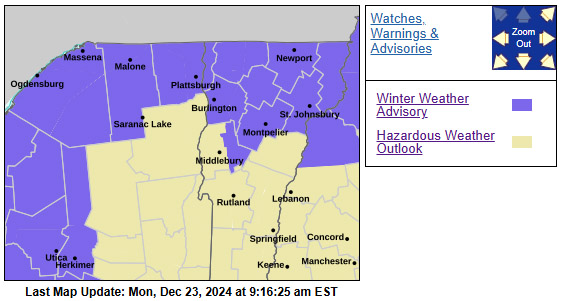
The models suggest we might have another long-duration system like this past one starting up tomorrow night and running right through the week, and I see that Winter Weather Advisories are already up for the Northern Greens in anticipation of some of that snowfall.
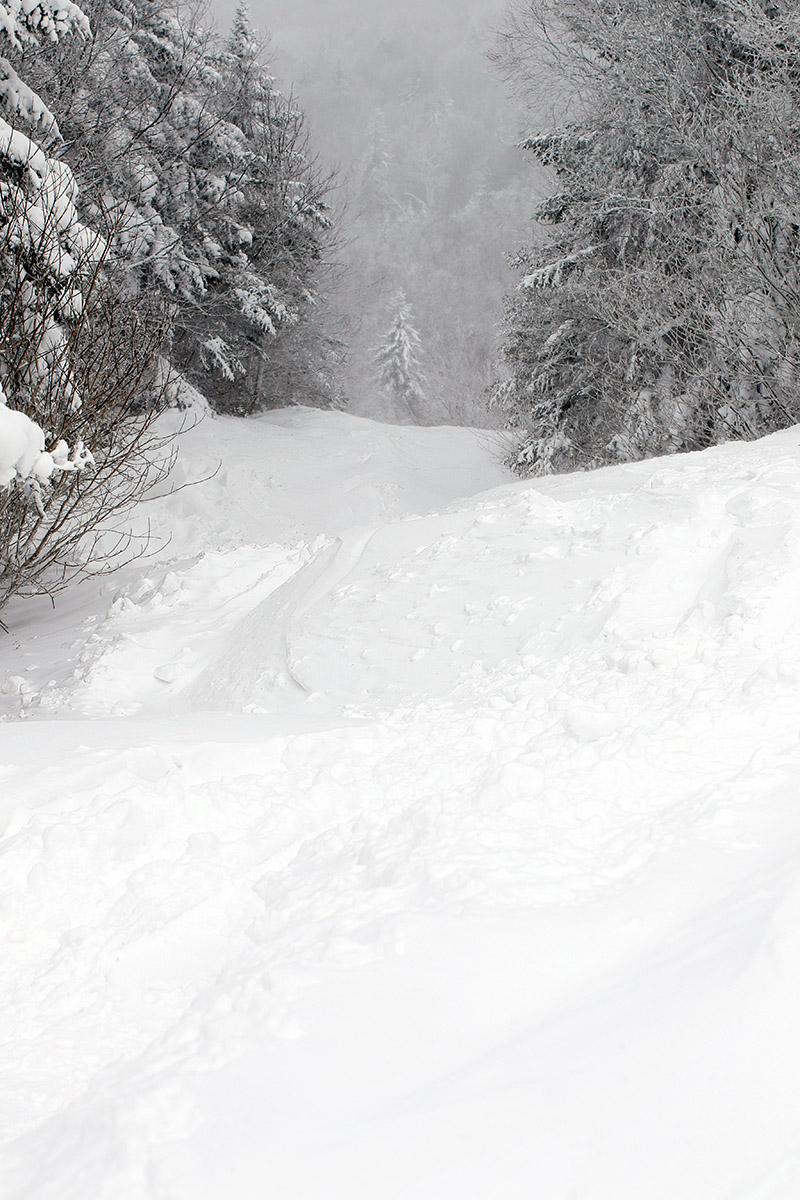
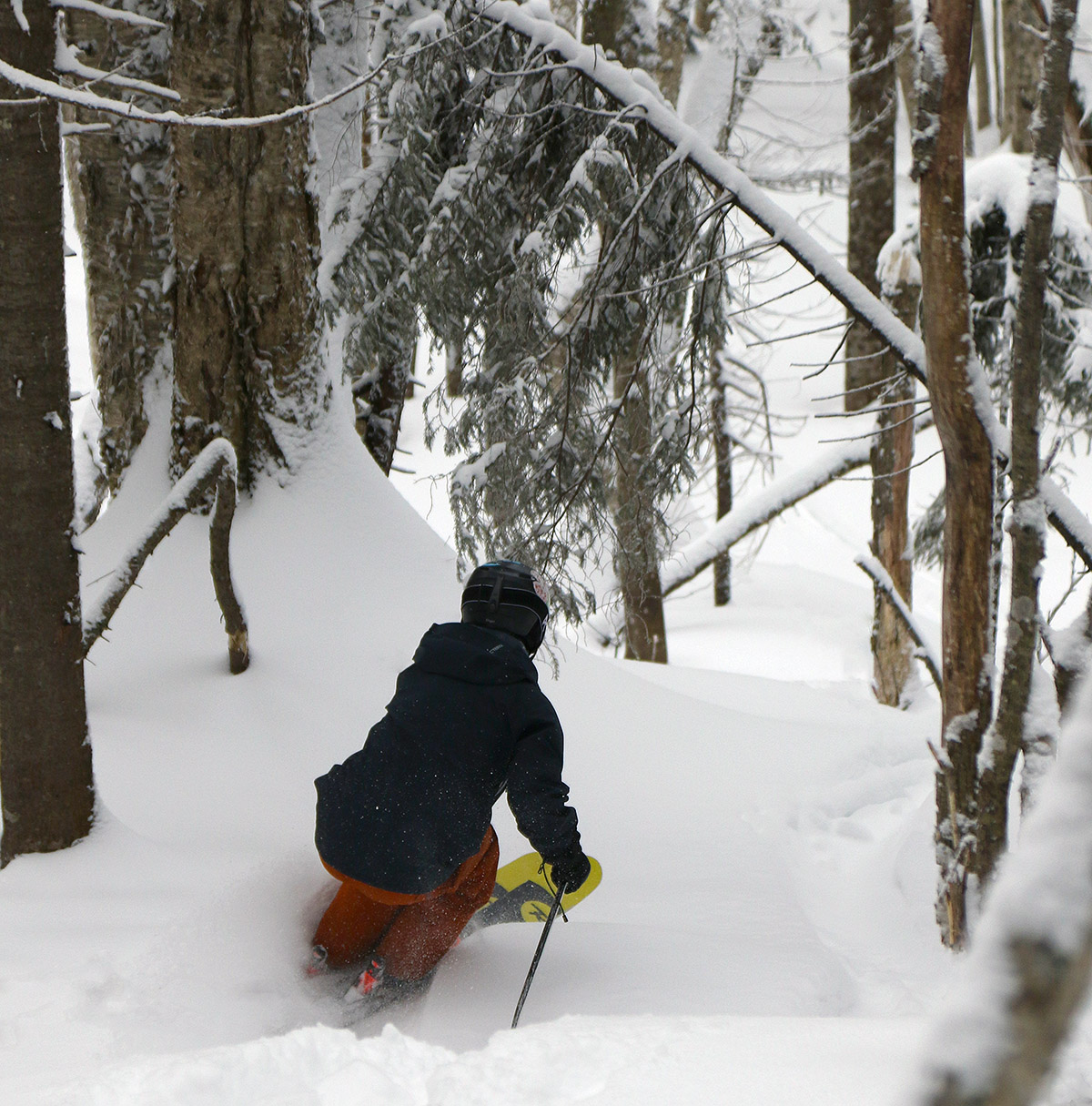
The powder is great and the backcountry ski traffic has generally been light – as I passed by, I saw just one old set of tracks in the Cup Runneth Over area.
Our current storm cycle started up back on Wednesday, with low pressure deepening as it passed over southeast New England and up into Maine. It then headed on up into eastern Quebec, stalled there for a bit, and finally moved to northwest to James Bay, where it’s expected to sit until about Monday. While this isn’t a stacked low-pressure system sitting in the Canadian Maritimes feeding continuous 1+”/hr. snows into the Northern Greens, the broad cyclonic flow supported by the various positions of the low pressure has kept the area in a nice moist westerly/northwesterly flow that’s been feeding snow into the mountains. So, this isn’t a typical 24-, 48-, or 72-hour type of storm cycle; it’s a much more drawn-out sort of “cycle”. I wasn’t sure how the positions of this low would actually play out with respect to snowfall, but since well before the start of the storm the National Weather Service Office in Burlington has been on it – they felt that the potential was there for solid amounts of snow over the protracted period. And they certainly weren’t wrong. It’s been a little tough to total up the mountain accumulations for the full event because it’s already been going on for four days, and the resorts typically only report up to 48-hour accumulations, but it looks like anywhere from roughly 1.5 to 3 feet have fallen in the Northern Greens from the system as of today.
Bolton Valley was reporting 4 to 6 inches of new snow overnight on top of their previous accumulations from the system. I’d already been finding snow accumulations of 9 to 10 inches when I was out touring at Bolton on Thursday, so between whatever fell Thursday night into Friday, plus these additional Friday night accumulations, there seemed to be some good powder potential out there. Temperature forecasts for the mountains were in the single digits F today, so touring seemed to be the best option. E was initially going to join me for a ski tour, but after thinking about the temperatures for a bit, she ultimately decided to work out at home instead.
I headed up to the mountain a bit after noontime, and people certainly didn’t seem to care about the temperatures – the signs were up for visitors to park at Timberline because the upper lots were full. Being after noon, I knew I’d be able to get a spot from someone who was leaving for the day, so I headed up to the main base anyway. I still ended up getting a spot in the lowest tennis court lot though, and that changed up my touring plans a bit. I had initially planned to ascend at the start of the Wilderness Uphill Route and then make my way toward Gardiner’s Lane, but since I was parked right down by the Pond Loop area with easy access to the Bryant Trail, I ascended there instead. I had just planned to loop around Bryant Cabin and then head out to start my descent on North Slope, but the temperatures felt great while touring, so I continued on up to Heavenly Highway, topped out around 2,800’, and started my descent via the “Not a Trail” glade. From there I continued down North Slope and then made a second ascent to ski some of the glades in the Snow Hole area.
Up above 2,500′ there were frequently areas with 24 inches of powder atop a substantial base for what must have been a snowpack depth in the range of 40 inches
It was clear that powder depths had increased at the resort since I was last there on Thursday. Winds have died down substantially now, so measuring the snow is much easier, and right at the car at ~2,000’ I was getting 8-12” depths for the surface snow above the base. By 2,500’ the typical depths were in the 12-16” range, and around 2,800’ I’d say they were 12-18”. I’d still think that’s somewhat conservative though, because I was often finding powder depths of 24” up around 2,700’-2,800’. Right now, getting up above 2,500’ makes a real difference in the snow though, because those areas must have done really well during our previous warmup – the interface between the surface snow and the base has mostly disappeared by that point (making it harder to measure just the new snow), and the skiing is really good. Dropping into my initial descent, I could tell that the overall snowpack was really deep. Below that top 24” of powder there was substantial base, and I’d say the snowpack there has to be 40 inches. The snowpack at the Mt. Mansfield Stake was at 39” as of a couple of days ago, and it hasn’t been updated since then, but based on what I found out there today a few miles to the south, it’s got to be over 40 inches by now.
Anyway, I’d recommend doing most of your touring up in that 2,500’ to 3,500’ elevation range if you can – it’s just a notable improvement in the overall snowpack below 2,500’. It’s still nice skiing down there, but it’s sort of mid-fat powder conditions below 2,500’, and full-fat conditions above 2,500’. I toured on mid-fats today, but I was wishing I had fat skis in that deep snowpack above 2,500’. The powder is of medium weight, so there’s plenty of liquid equivalent in there to really keep you off the base. As of this evening we’re approaching an inch of liquid equivalent from this system at our site in the valley, so you know the mountains have had at least an inch of two of liquid equivalent from this system so far, and it definitely felt like it based on what I experienced above 2,500’ today.
A Google Earth/GPS map of today’s tour out on the Bolton Valley Nordic & Backcountry Network
With respect to the ongoing storm, there was generally light but consistent snow falling when I was out on the mountain today. The flakes were small, in the 1 to 2 mm range, so it was hard to gauge snowfall rates, but I had to clean a decent layer off my car when I got back to it after just an hour or two of touring. Toward the end of my tour, the flake size was picking up noticeably to roughly 2 to 8 mm flakes. Down here at the house, we’ve had light snow all day, but it’s picked up more this evening with larger flakes, especially when strong echoes come through as more pronounced shortwaves embedded in the overall cyclonic flow move through the area. Based on what we’ve been seeing here at the house this evening, there should be at least another few inches out there by tomorrow morning for the mountains.
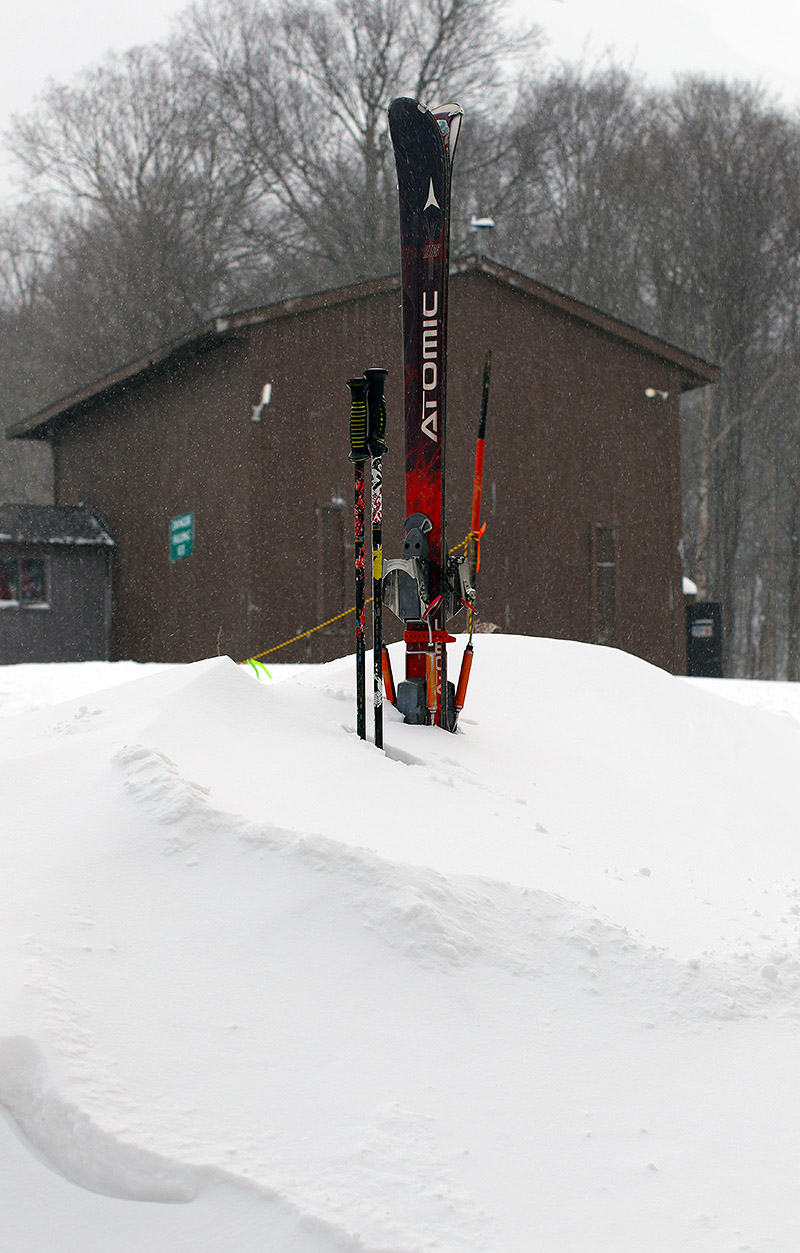
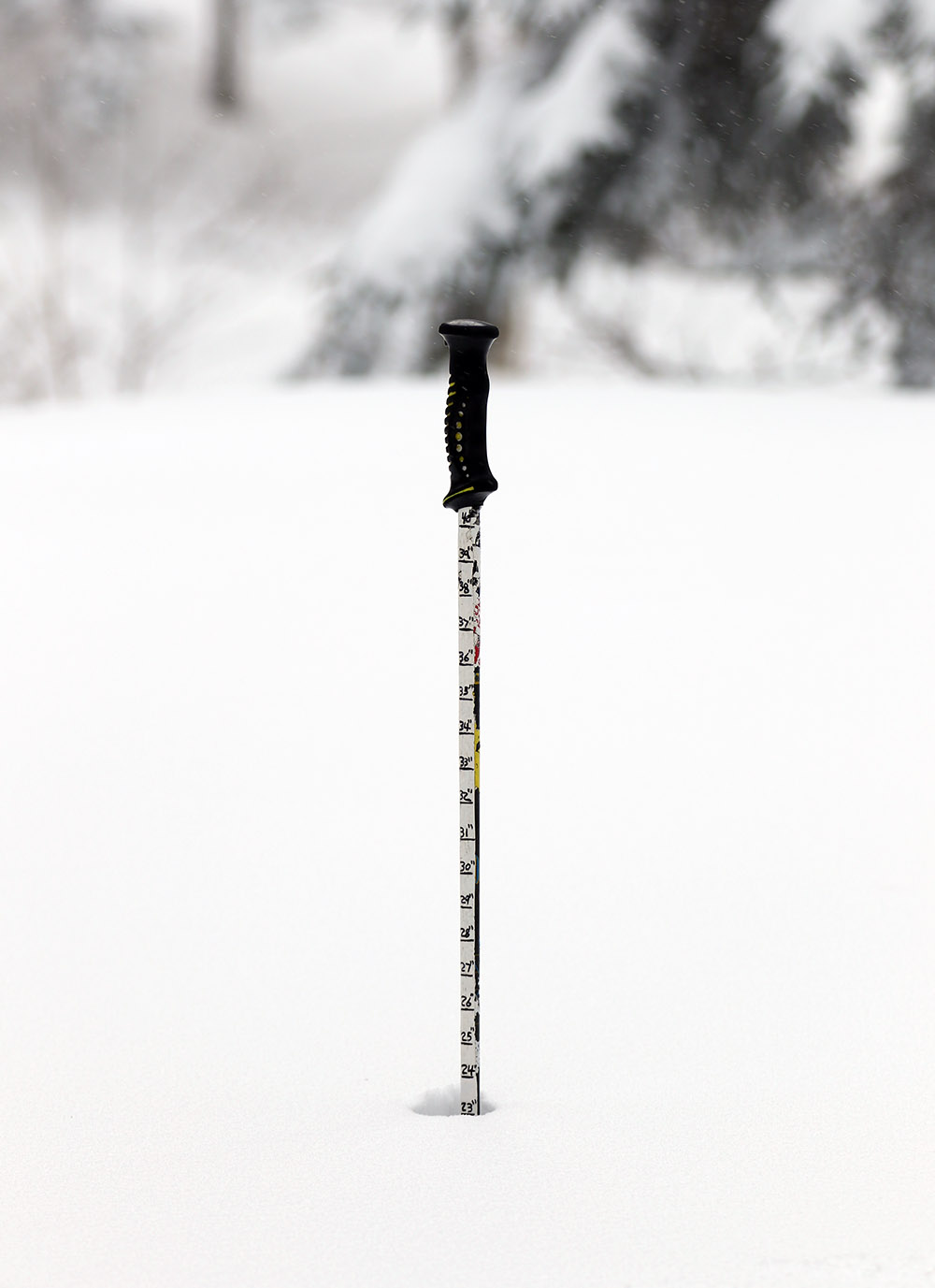
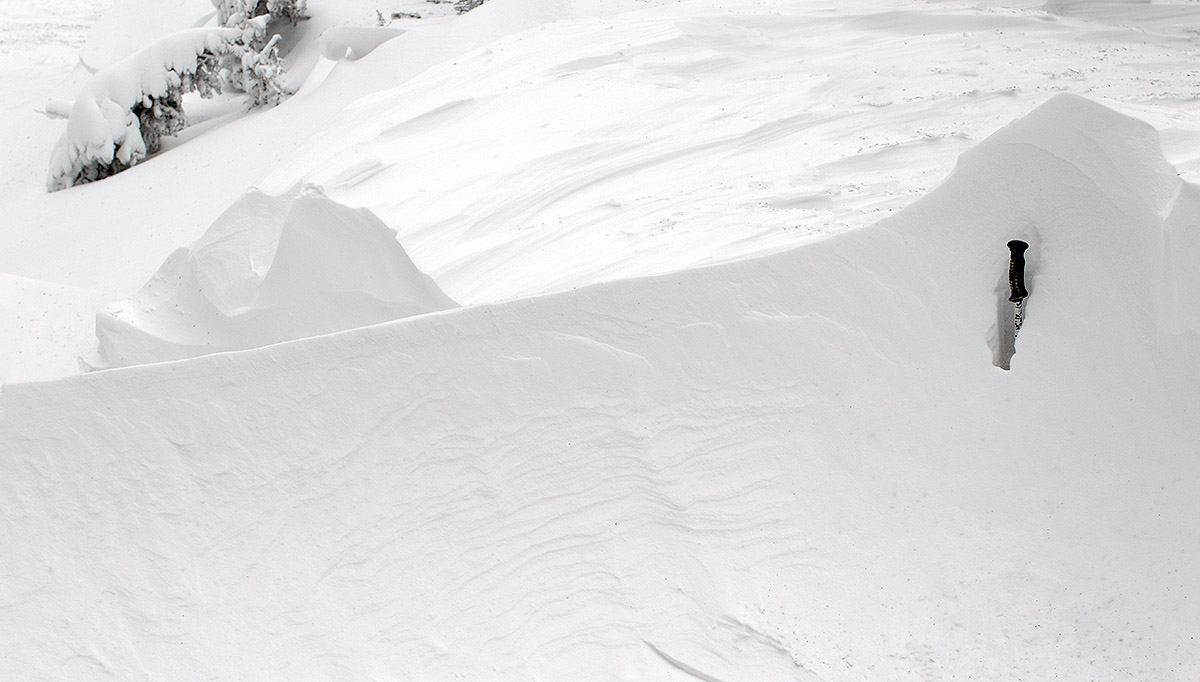
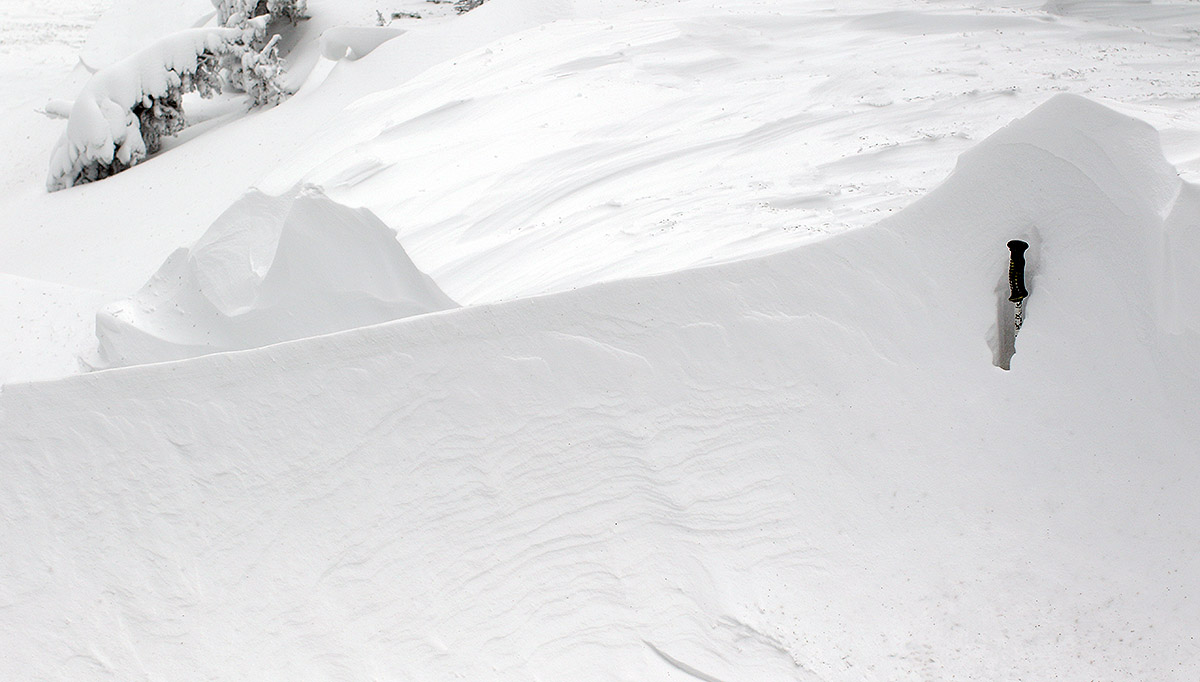
Snowdrifts were certainly on the menu during today’s ski tour. Howling winds from the upslope portion of our current storm cycle have pounded the Northern Greens and whipped up the snow into formations 5 to 6-feet deep as my buried ski pole can attest.
Our anticipated long-duration storm system began in the area yesterday with some light snow accumulations for the mountains and valleys, but snowfall really picked up overnight, so I decided to head up to Bolton today for some turns. As of this morning, Bolton Valley was reporting 7 inches of new snow from the storm, and snowfall has continued today. Their reported storm total seemed like a good amount for some ski touring, so that was my plan if I was heading up to the mountain alone. Dylan didn’t work until the afternoon, so he was planning to head up for a morning lift-served session with his fried Parker, and E had the day off due to school closures from the storm and she was thinking of going as well. Those plans fell through though – the winds were so strong that the Vista Quad Chair was on wind hold before it ever opened, and even the Mid Mountain Chair quickly went on wind hold in the morning. The only chairlift running by mid-morning was the Snowflake Chair, and with most of the Snowflake terrain not open, we generally felt that it wasn’t worth heading up for such minimal terrain. That brought me back to my original plan of ski touring on Wilderness.
Down at our place in the valley we’d picked up 4 to 5 inches of snow from the storm at that point, but the contrast in accumulations was stark as I dropped down into Bolton Flats on my way to the mountain – the snow accumulation there looked like an inch at most. Accumulations were the same at the base of the Bolton Valley Access Road at 340’, and I had to get above 1,000’ before I really started seeing accumulations of at least a few inches. Up in the Village parking areas, it was impossible to find a sheltered spot to get a reliable measurement of accumulations at 2,000’, so I had to wait until I got into the relative shelter of the Wilderness Uphill Route to really check the snow depth. Once one the ascent though, I checked the snow depth along the sheltered edge of Wilderness numerous times, and the measurements were all between 8 and 9 inches, with one measurement of 7 inches. At 2,500’ I was measuring 9 to 10 inches of accumulation, and I never got any reliable measurements higher than that, even up above 3,000’. I stress “reliable” because the winds had wreaked havoc on the snow in many areas. Some spots were scoured down to the old base, and some places had 5-foot drifts. Up at the Wilderness Summit at 3,150’ the winds were absolutely howling – they had to be in the 50 to 60 MPH range at times. Finding a sheltered spot to pack up my skins was a huge challenge. Thankfully, temperatures were in the 20s F, so there wasn’t frigid cold to go with those winds. Photographs of gentled-settled powder snow were difficult to come by today, but if you wanted to get images of drifts… they were everywhere.
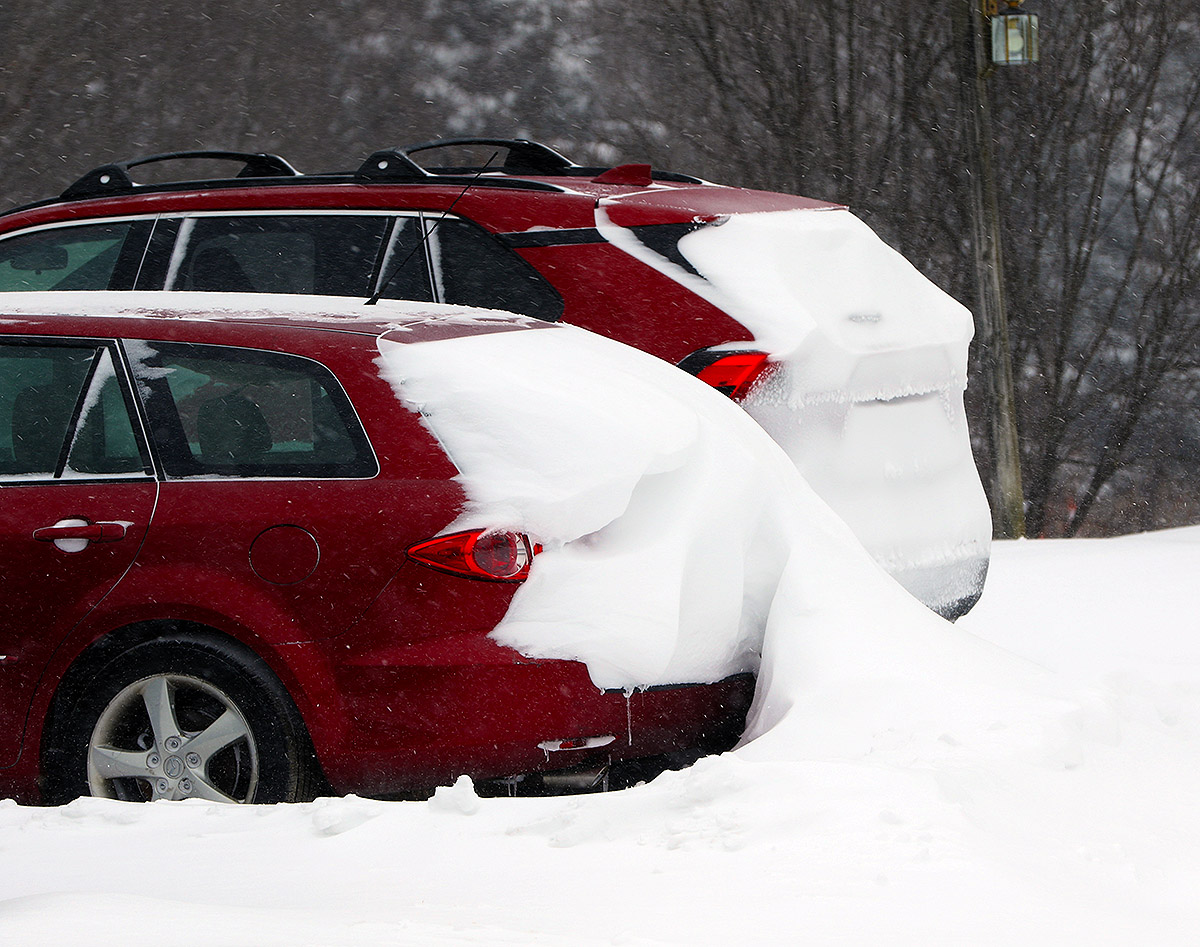
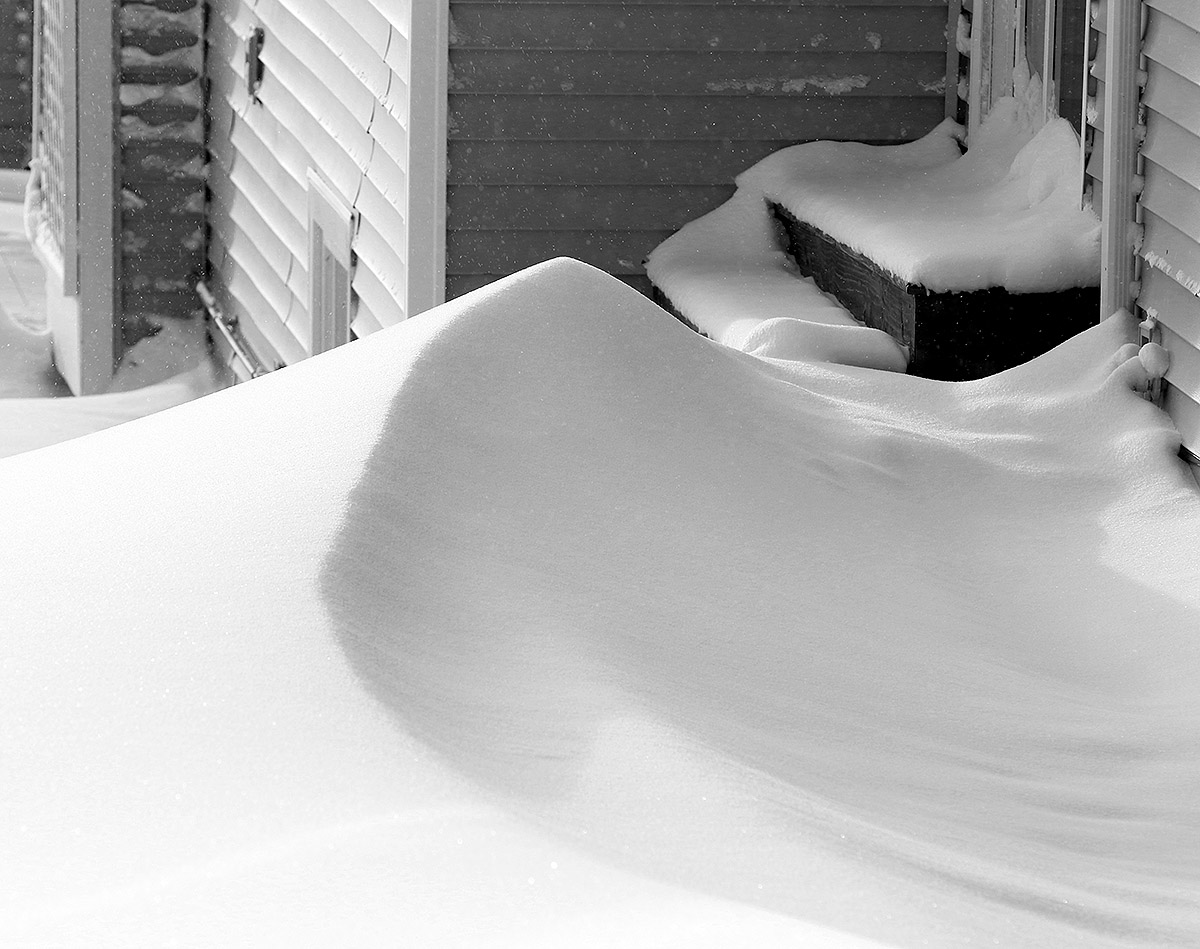
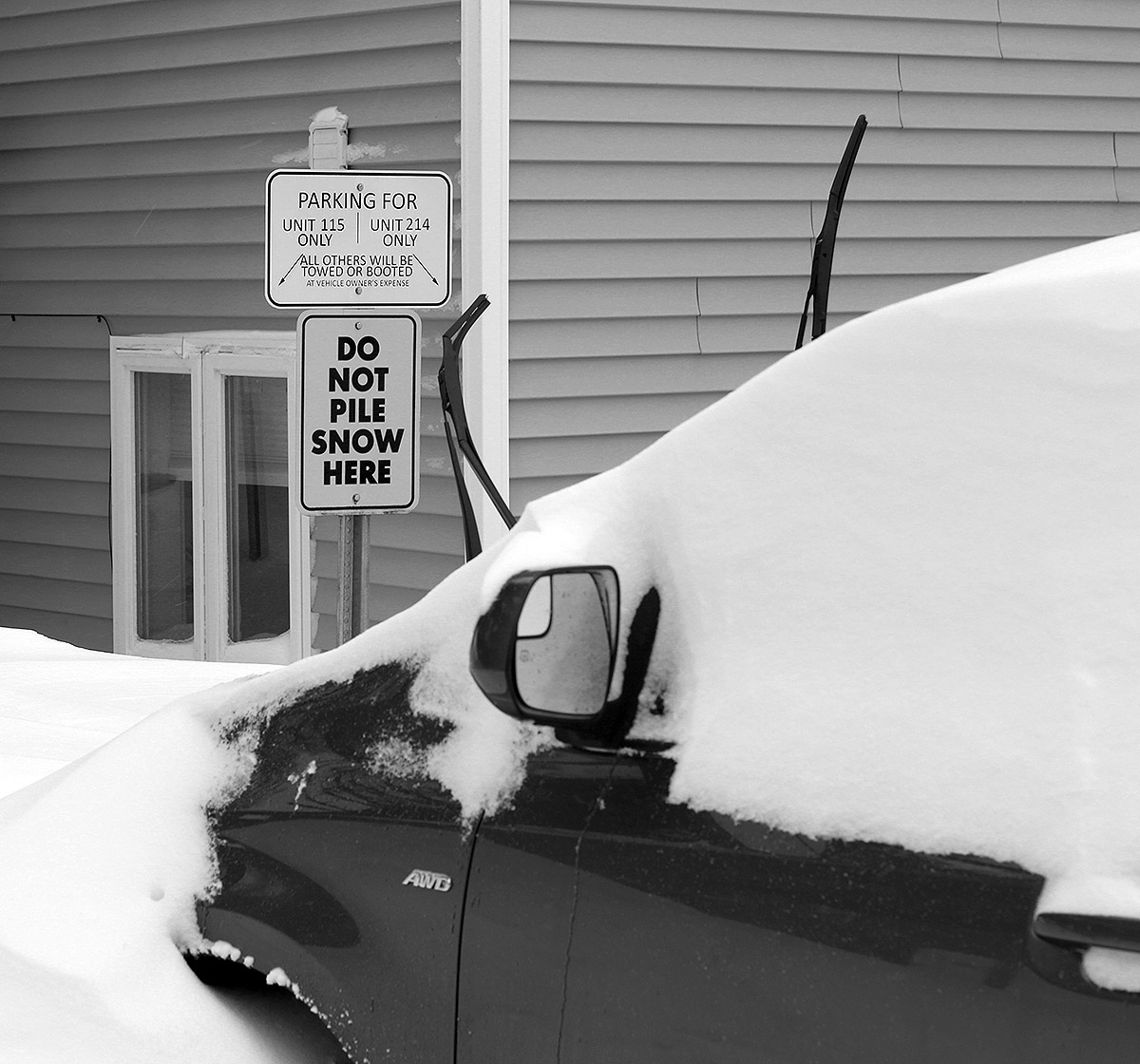
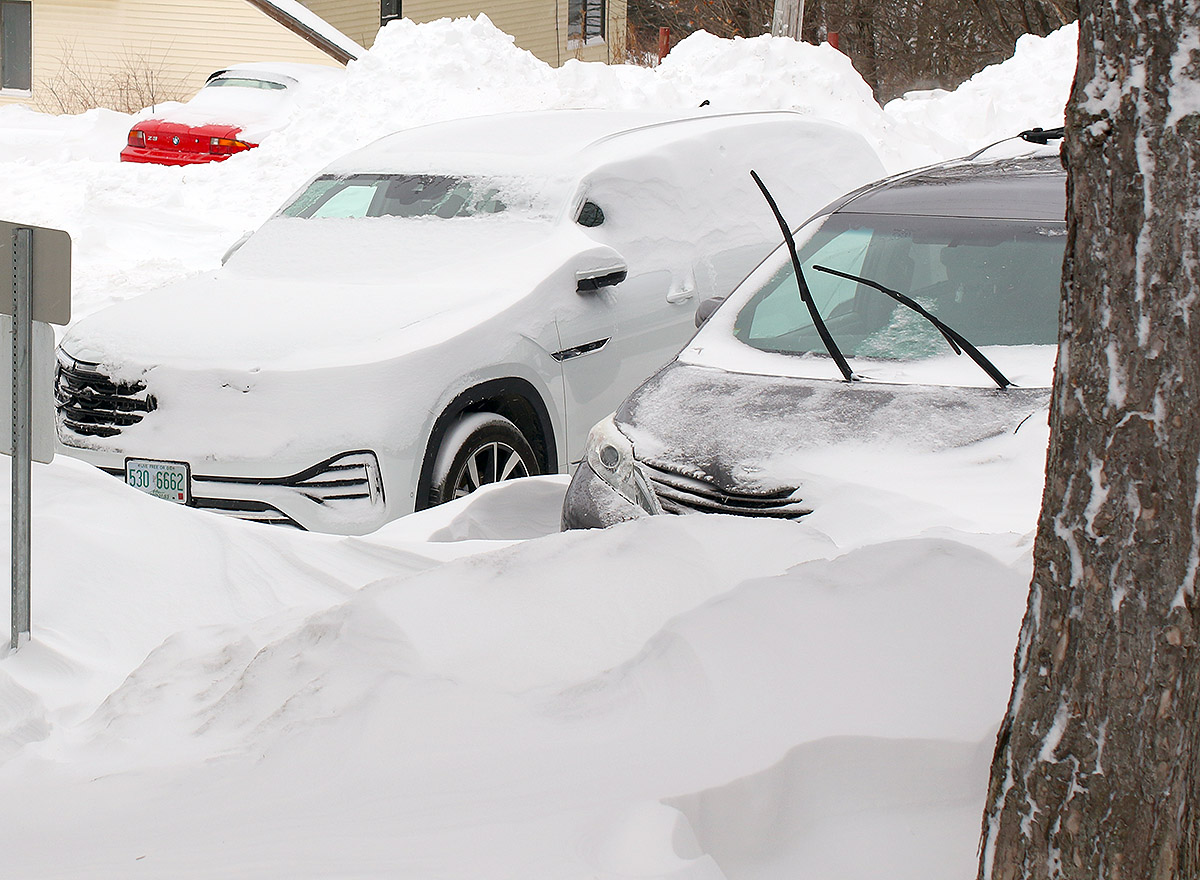
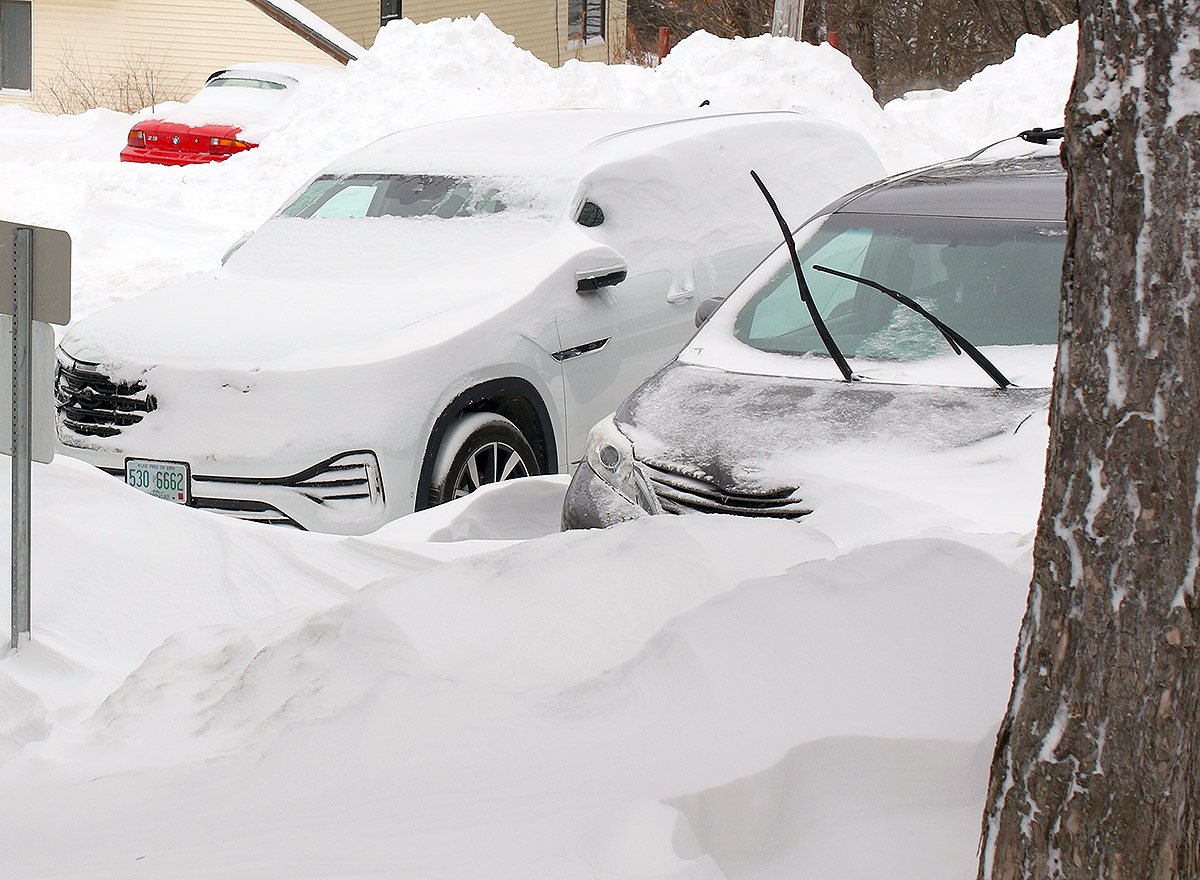
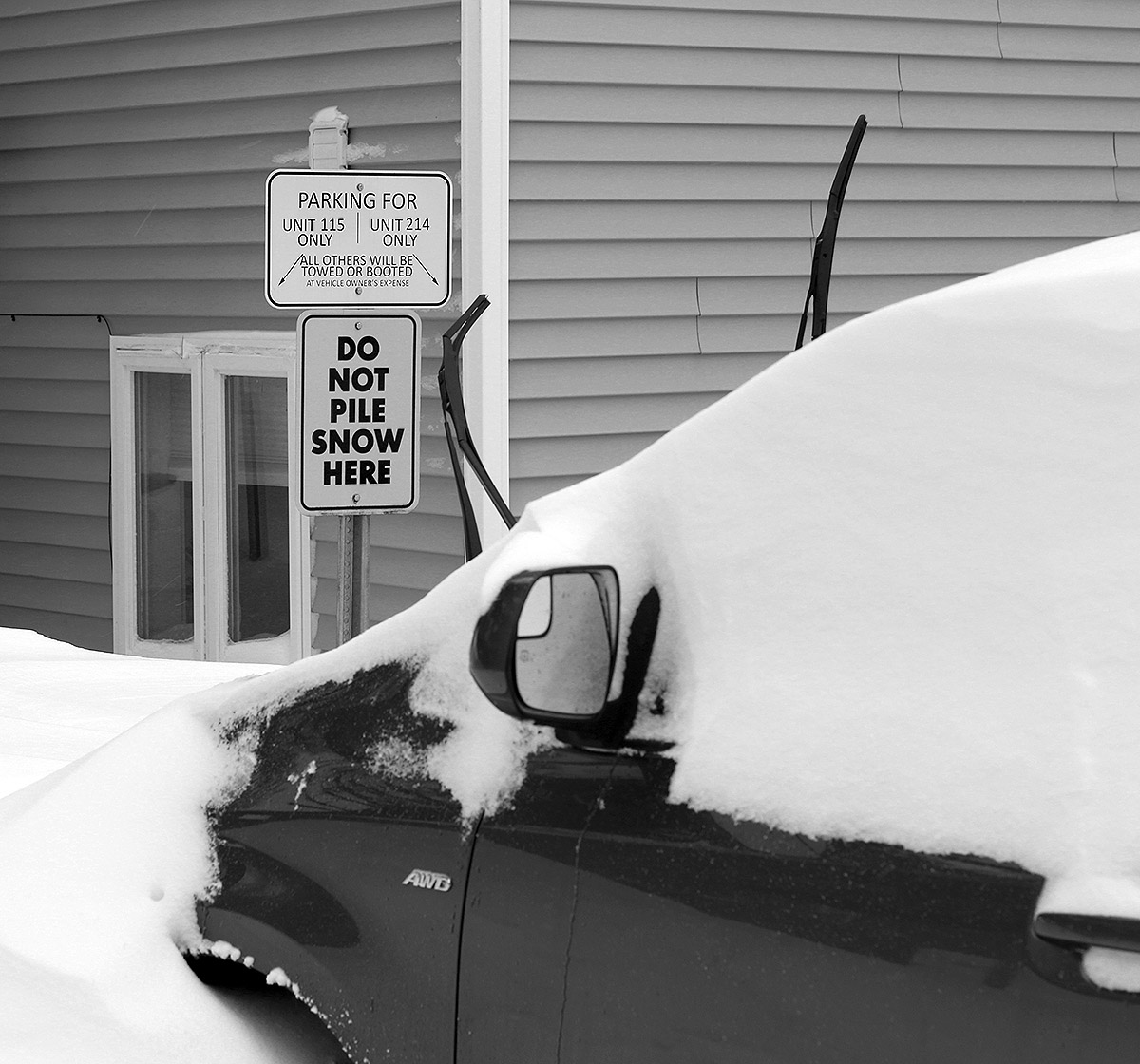
Oh those drifts out there today! Even down at the Village elevations, the wind had sculpted the new snow into all kinds of formations and covered objects in many different ways.
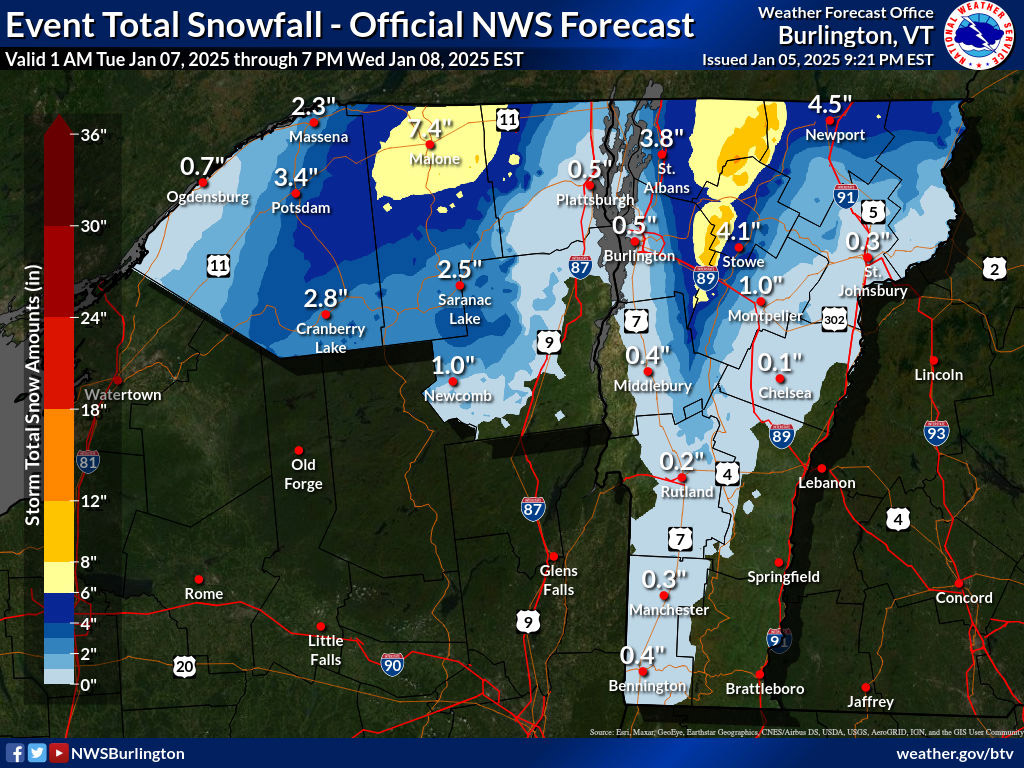
Here’s the snow accumulations profile I saw as of midday in the Bolton Valley area for this ongoing storm:
The skiing turned out to be excellent though. As long as you avoid any wind-scoured areas, there’s been a really decent resurfacing from this storm so far. We’ve picked up ¾” if liquid equivalent from the storm at our site down in the valley, and the mountains should have had at least that much, so an inch of new liquid equivalent up there seems very reasonable based on what I experienced today. The new snow our there certainly wasn’t fluff; with all the wind, it was actually feeling like typical 10% H2O synoptic snow, and out of the wind, the new snow was substantial enough to even resurface black diamond pitches. So, while it wasn’t sublime champagne powder, it was decent medium-weight powder, and it was much more what the slopes needed with respect to resurfacing.
We didn’t get too much accumulation (about an additional half inch) during the day today here at our house along the spine because as forecast, the Froude Numbers went well above 1.0, but they may have come back down a bit because we’re getting some decent accumulation this evening with these more recent bands of moisture pushing through.
Erica on Sprig O’ Pine as we enjoy some of Bolton’s great Christmas Eve ski conditions thanks to 8 inches of snow from our most recent Alberta Clipper system
As of their early morning snow report, Bolton Valley had received 8 inches of accumulation from the clipper that began affecting the area yesterday evening, so I headed up for some morning turns with my wife and our younger son. We’re not fully into the holiday week yet, so visitation at the resort was still fairly modest – around the time of the opening of the early lifts, folks were parking in the second and third tiers of the main Village parking areas.
I’d say we found about 8 inches of new snow at most elevations, so that’s right on track with the snow report. The powder was dry, midweight snow – my snow analyses for the storm up to that point came in at 7 to 8 % H2O. Total liquid equivalent from the system stands at 0.42 inches at our site in the valley, so that’s very much in line with the forecasts, and the mountain was probably somewhere in the range of a ½ inch of liquid equivalent. While not enough for a massive resurfacing, it did a decent job of resetting the surfaces atop subsurfaces that are already of decent quality from the past couple of systems.
After a couple days of below average temperatures, we’ve warmed back up into the 20s F now, and with light snow falling and no wind, the weather was fantastic out on the slopes today. We started off with a run on the Vista Quad, and Alta Vista had nice powder and chowder available – it was enough to be bottomless in untouched areas on moderate slope angles. Our timing was perfect for catching the opening of the Wilderness Lift, so we did a couple runs there, then finished off with more runs off Vista and Snowflake. The resort even hit Spillway hard with snowmaking and it’s good to go – my wife and I didn’t ski it, but my son and his friend did and said it was fine for manmade snow.
Conditions on the slopes are certainly good, but the natural snow trails could still use more cover, and the resort will need that to expand terrain into areas where they aren’t making snow. They haven’t yet opened Timberline, most of the Snowflake area, or the Cobrass area, so there’s a lot of terrain still to be made available.
A view from near the Bolton Valley Snowflake Lift summit station amidst today’s snowfall
It was a cold one out there today; indeed, it was really a good day to just enjoy lots of indoor activities. But we did just have another storm push through the region, and the conditions on the slopes are good and keep getting better, so I still wanted to get out to see what the new snow was like and get some exercise.
Bolton’s Wilderness Chair was set to open at 10:00 A.M. again, and with the cold temperatures I definitely wanted to warm up with some touring. So, I decided to go with a session like the one on Thursday, which I kicked off with some touring before moving to lift-served turns. When I arrived midmorning in the Bolton Valley Village, it was 7 F according to the car thermometer, and single digits F is definitely midwinter cold. There wasn’t much for wind in the parking area at that moment, so I was encouraged by that while gearing up.
Catching sight of an old Snow Hole trail sign covered with snow along the Wilderness Uphill Route during today’s ski tour ascent
Ascending via the Wilderness Uphill Route was quite comfortable, since it’s well out of any wind, and I was generating plenty of heat. I stopped my tour at 2,500’, enjoyed a run through the powder along the edges of Lower Turnpike, and then hopped on the Wilderness Chair for a ride. My body was warmed up for the touring and Telemark turns, and the wind was happily at my back while I was on the lift, but I could tell it was pretty brutal up there at the Wilderness Summit above 3,000’. The calm conditions from below were gone, and the biting winds along the ridgelines made their presence known. After that trip, I didn’t have much interest in heading up to check out the Vista Summit, so I just stayed low and enjoyed a run off the Snowflake Chair. The warm-up touring definitely helped me stay comfortably warm for a couple of lift rides at least before I headed home.
Powder depths have obviously been bolstered by this most recent system, and conditions are good, but certainly nothing stratospheric for the Northern Greens. One factor in that assessment is that this latest storm was nice, but the snow was quite dry, and it was less of a resurfacing than the previous storm. We picked up about 0.20” of liquid equivalent from this system compared to 0.40” of liquid equivalent from the previous one, so scale those up a bit according for Bolton’s elevation and it gives you a sense for their contributions to resurfacing. The resort is opening more terrain all the time, but lift-served natural snow terrain could still use another solid resurfacing storm with an inch or two of liquid equivalent to take care of the tougher areas. Overall, the natural snow terrain that’s open is quite skiable with good coverage and quality surfaces, and there’s a decent, consolidated base above 2,000’, but you still need to pick and choose your lines somewhat in those spots exposed to wind that get scoured.
The resort was indicating 3-6” of new snow in their early morning report, and I can’t separate out accumulations from this storm specifically, but the changes in surface snow depths between Thursday and today give a sense of the contributions from this most recent event at various elevations. Thursday’s surface snow depths are on the left, and the approximate depths I observed today are on the right in bold:
So, there’s a lot of nice, fairly deep powder above 2,000’, and it’s right-side-up and skiing great thanks to this latest storm’s snow being dry. My observations from down at the house have been giving me snow densities in the 2 to 6% H2O range throughout this latest storm, so indeed it’s some quality powder. The back side of this system has actually been aided by some direct lake-effect off Lake Champlain. The bands were mostly oriented to affect the Champlain Valley earlier in the morning, but as midday approached, the bands shifted such that they were more directly hitting the mountains. That definitely helped keep it extra snowy throughout the day and boost accumulations.
Enjoying some of the snowy trees in the Wilderness glades on my ski tour this morning at Bolton Valley
Tomorrow is supposed to be even a bit colder than today, so if I head out it will just be for a tour vs. riding any lifts. After the warming and consolidation earlier this week, it looks like Timberline is probably getting in shape to support some good touring and powder skiing again, so I may stay low and tour there if a ski session comes together. We’ll see how much additional snow the resort is reporting in the morning, but since we were getting hit at our place by those lake effect bands right into the evening today, Bolton should have been getting even more of that snow. The models suggest we’ve got another couple of clippers affecting the area over the next few days, with warmer temperatures as well, so that’s looking nice moving into the holiday week.